Axios Live: 90% of farmers today face economic challenges, former agriculture secretary says

Add Axios as your preferred source to
see more of our stories on Google.
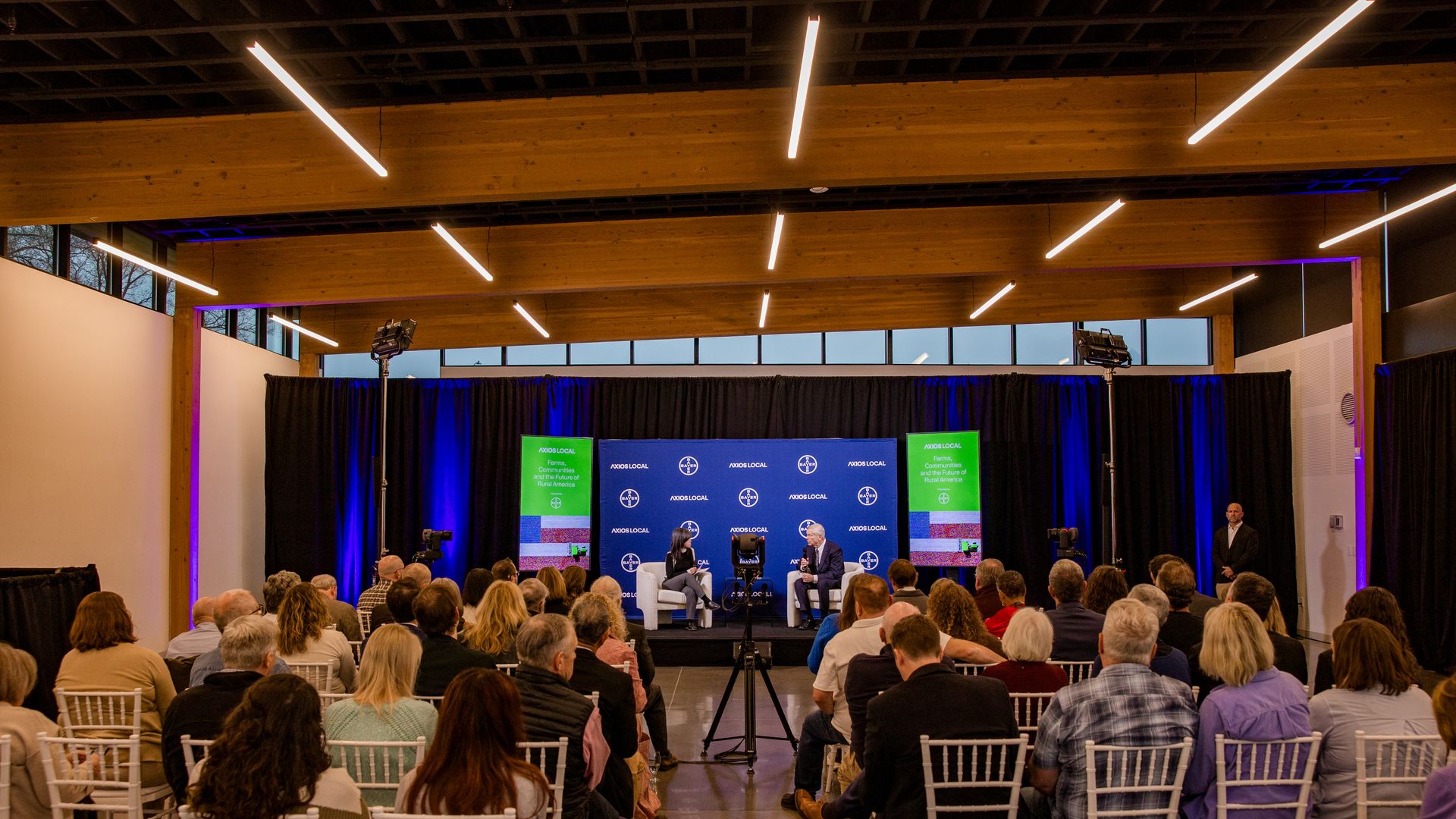
Former agriculture secretary Vilsack in conversation with Linh Ta. Photo: Amanda Parker for Axios
DES MOINES, Iowa – Farmers are struggling with high costs while dealing with environmental issues affecting their livelihoods, speakers said at an Axios Live event last week.
Why it matters: Volatile markets are squeezing the agriculture industry, and policy and industry leaders are working to counteract those threats.
Axios' Jason Clayworth and Linh Ta spoke with World Food Prize Foundation CEO and former Agriculture Secretary Thomas Vilsack and Iowa Cattlemen's Association CEO Bryan Whaley at the event, sponsored by Bayer.
What they're saying: "90% of farmers today have a very difficult time making a living," Vilsack said.
- "88% of all farm families in the country today have to have off-farm income to keep the farm," he said.
- Vilsack has concerns about regulations for farmers, he said in response to questions from Iowans about the effects of fertilizer or manure runoffs causing high nitrate levels in drinking water.
- "When folks say, 'We're going to regulate,' the question is, 'What's the cost of that?'" he asked, questioning whether it's feasible for farmers to keep up with the requirements they face.
The intrigue: "Wouldn't it be, in my view, a better way for this state to invest in strategies to convert that manure into something far more valuable?" Vilsack asked.
- "For example, there are dairies now in both Iowa and in Wisconsin that are using that manure for purposes of creating methane. That methane is going to be used in renewable natural gas, and it becomes its own commodity."
Zoom in: Farmers in Iowa are also struggling with limited land and grazing for cows, Whaley said.
- A lot of land in the state is used for row crops, he said, but many ranchers are switching to more environmentally sensitive acreage through programs like the Conservation Reserve Program.
- "But one of the thing[s] that's unique about this is it's limited the amount of grazing opportunities that we can have to graze more cows."
The big picture: "I think we've been in a farm crisis for 90% of our farms since 1973. We changed our farming process and our farming policy in 1973, and we basically told farmers around the country, 'Produce as much as you possibly can,'" Vilsack said.
- "They were told, 'You've got two options: you can get big, or you can get out.'"
- Since then, "one out of every three farms that existed in 1973 is gone," a total of 970,000, he added.
Content from the sponsor's remarks:
In a View From the Top conversation, Brian Naber, Bayer president of crop science for North America, said there's "no doubt" farmers are in a tough spot right now.
- They are concerned about demand for their products and the need for innovation to solve pressing and future problems.
- "Their office is Mother Nature, and they're contending with weeds and pests and diseases every single day," he said.
- Farmers are "extremely determined, and the results speak for themselves. Every single year, they continue to produce a bit more using less resources."
