Axios House: The business case for taking water seriously

Add Axios as your preferred source to
see more of our stories on Google.
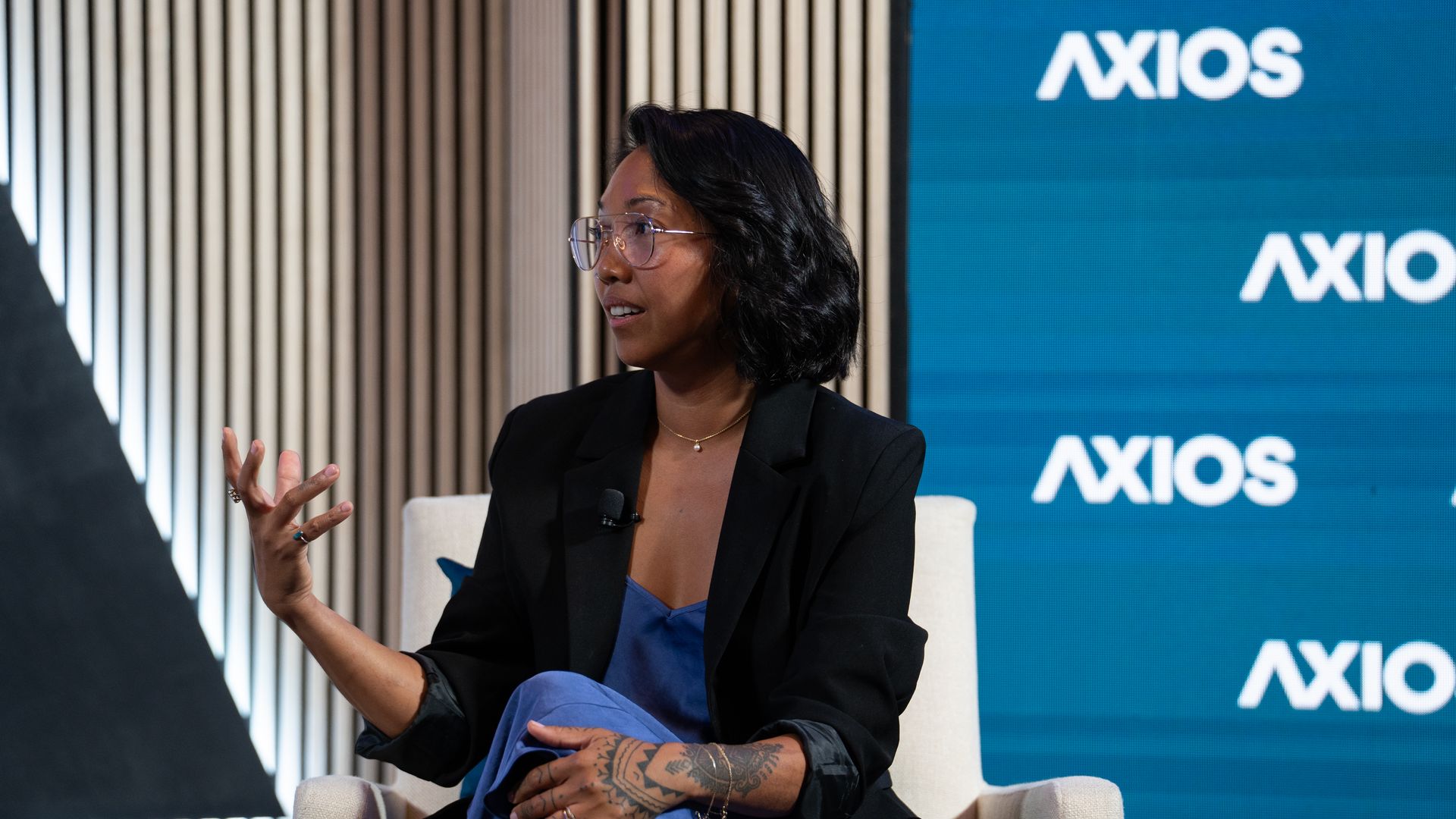
Ria Montes, executive chef of Fish Shop. Photo: Sam Popp for Axios
NEW YORK — Water has moved beyond solely a sustainability conversation to become a business strategy.
Why it matters: Industries such as food and beverage, manufacturing and agriculture need a union between responsibly sourced supplies and ongoing sustainable water practices.
Axios Pro Climate Deals reporter Alan Neuhauser spoke with Jim Andrew, executive vice president and chief sustainability officer at PepsiCo, and Ria Montes, executive chef at Fish Shop, at Axios House at Climate Week. Suntory sponsored the Sept. 22 event.
Zoom in: Because Montes wants the freshest fish quickly for her D.C. restaurant, she chooses to source it from the North Carolina-to-New York area.
- As water ecosystems change, the availability and location of certain fish — like rockfish, which she said are starting to migrate farther north — change their migration patterns and seasonality.
- Warming waters caused tuna and mackerel, typically available in the summer, to be sourced in her defined access area in early spring.
What they're saying: Sustainability can come at a premium for restaurants, which factor into their menu pricing costs like diesel for shipping food and supplies.
- "We do little things like only getting whole fish in and, sure, is it more on labor? Is it more time-consuming to butcher a whole fish versus just getting a filet, which is what everybody wants?" said Montes. "Absolutely, but in this way, we can utilize the whole fish instead, and that way we have more insurance on the quality of the fish as well."
Zoom out: For a large food and beverage company like PepsiCo, water scarcity is a business risk.
- Water is used as a beverage ingredient, and since PepsiCo is 60% a food company, it also needs water to grow crops like oats, potatoes and corn.
- Additionally, water is vital for factory sanitation and clean packaging, Andrew said, adding that membrane bioreactors take the water used at 21 plants and make it drinkable.
What's next: When looking to enter a new market, a water risk assessment determines the viability of this shared resource, he said.
- "Sustainability at scale is a team sport," said Andrew.
Content from the sponsor's segment:
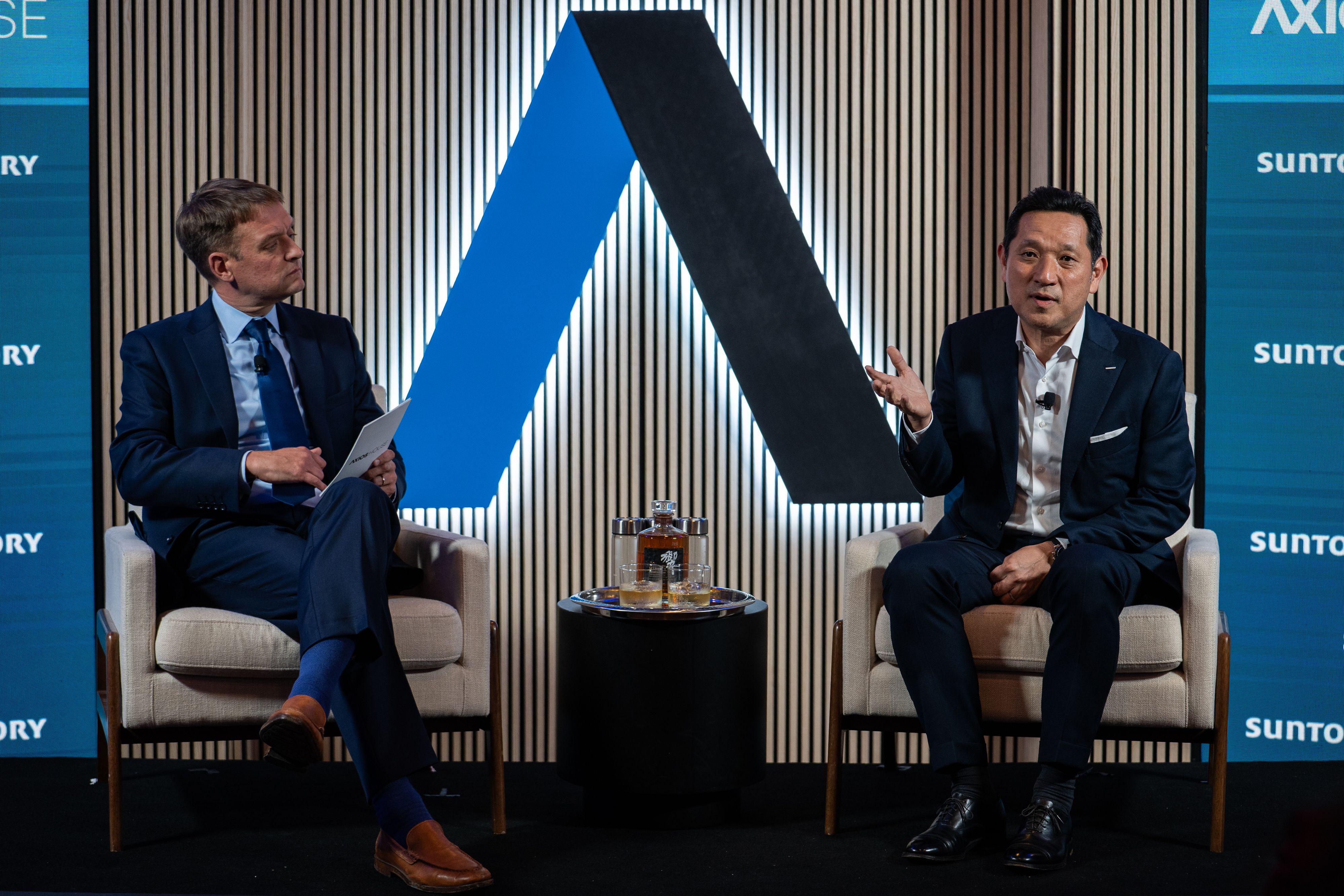
In a View from the Top conversation, Suntory chief sustainability officer Jun Asaki said collective actions, even involving competitors, are essential when it comes to watersheds, because they are shared.
- "When you realize that we're lacking or [there is] a shortage of water, then it's too late," Asaki said.
Go deeper: Watch the full conversations here.
