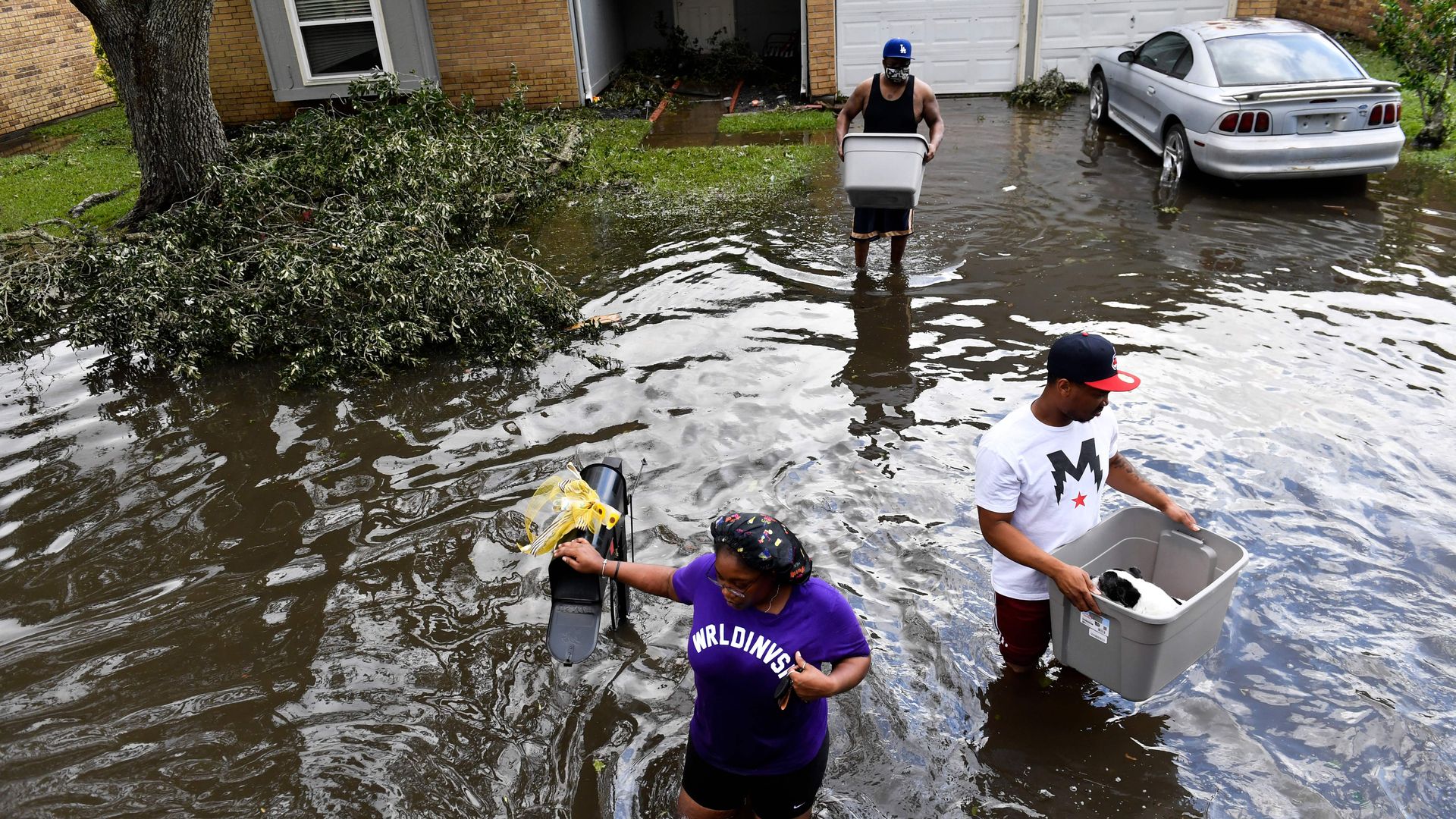
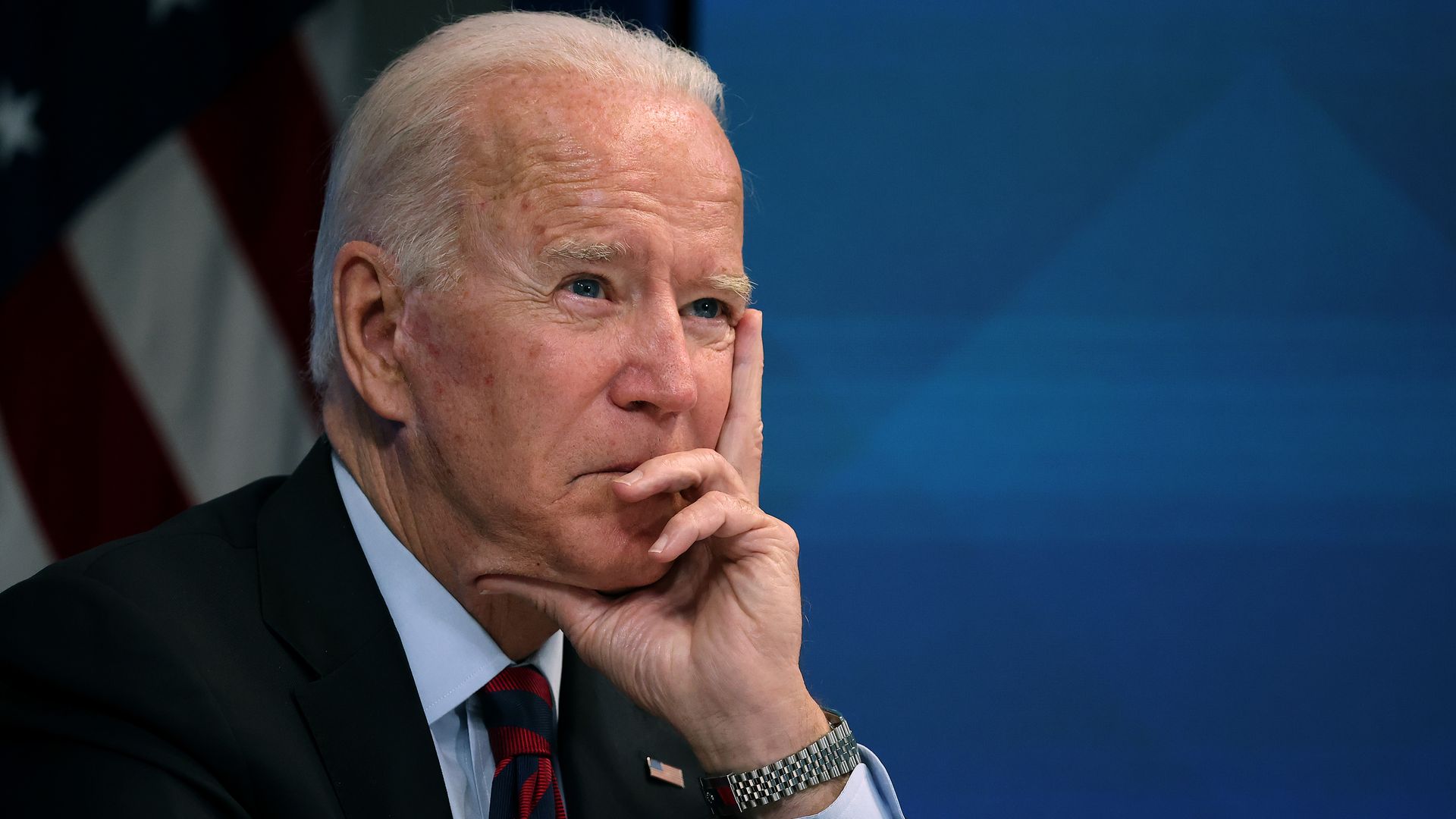
Louisiana Gov. John Bel Edwards (D) warned Tuesday that evacuated residents should not return to their homes until officials say it's safe due to the damage Hurricane Ida caused.
Driving the news: More than 1 million customers in Louisiana and nearly 50,000 in Mississippi were still without power on Tuesday, according to PowerOutage.us.
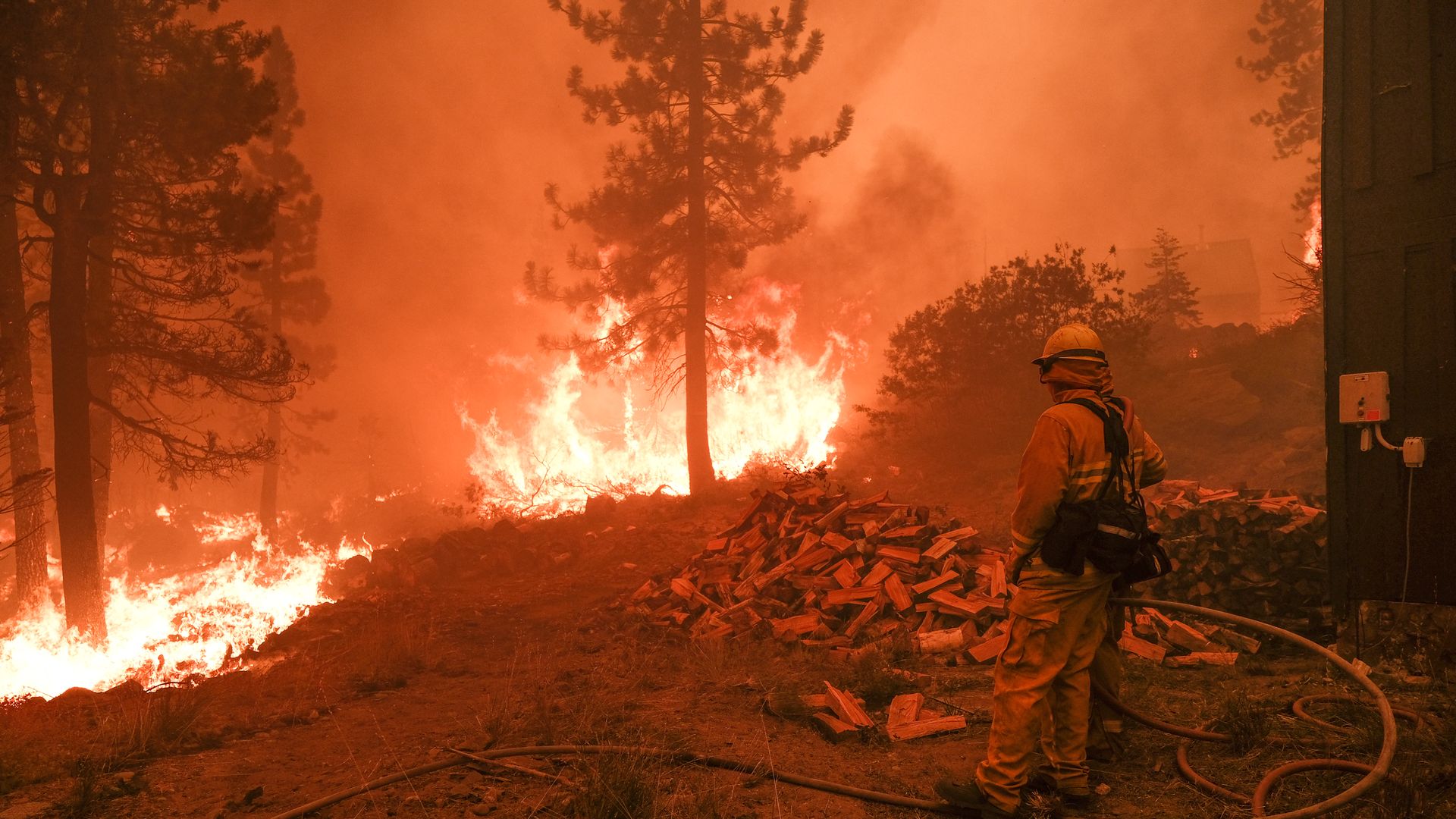
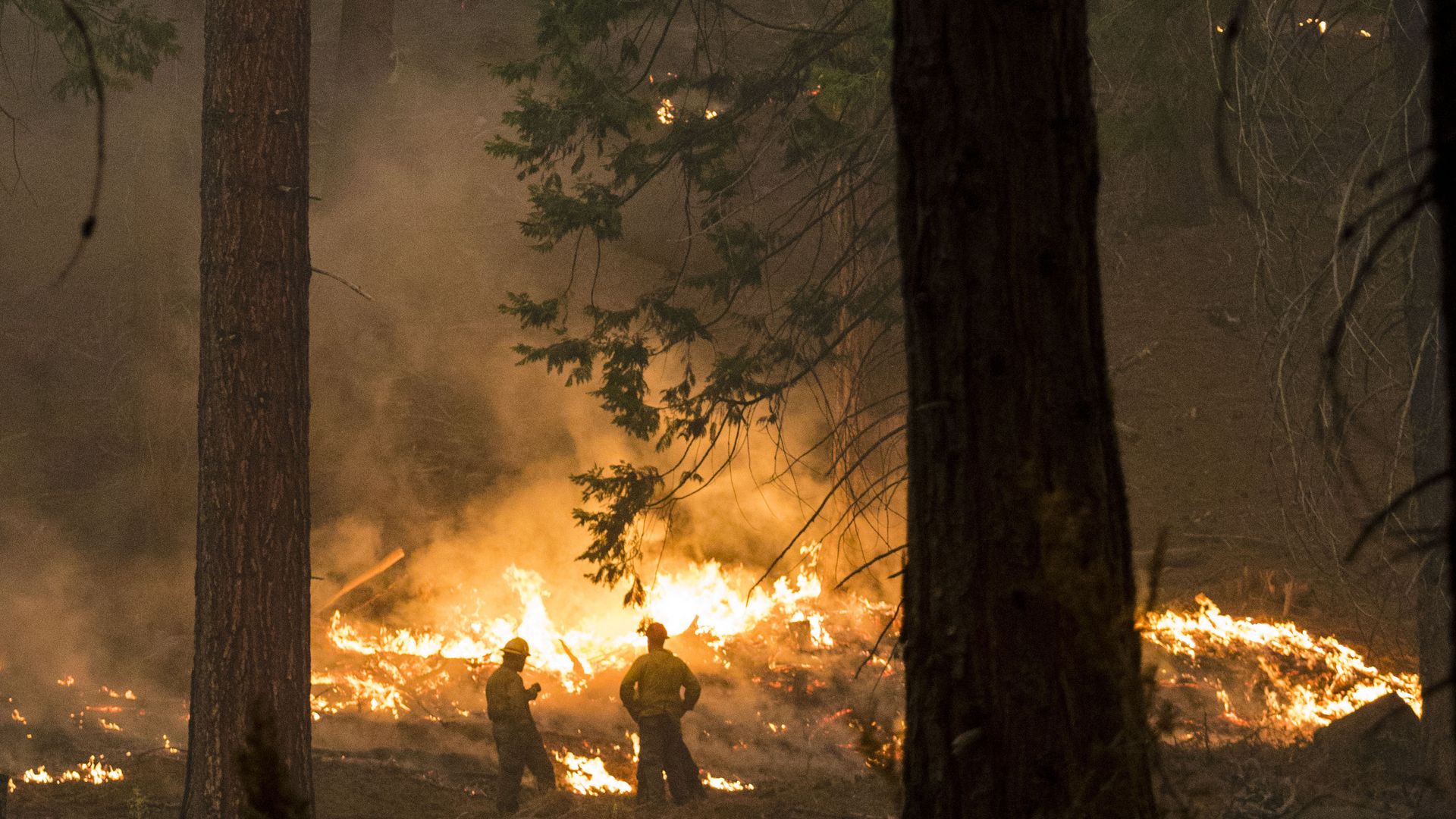
The big picture: The blaze has already destroyed more than 660 structures and damaged dozens of others. It had grown to more than 191,607 acres and was 16% contained as of Tuesday morning.
The National Weather Service has issued a heat advisory for New Orleans, Baton Rouge and Houma, Louisiana, to Gulfport, Mississippi, as residents swelter in the wake of Hurricane Ida. The storm knocked out electricity to power air conditioning.
Why it matters: Heat tends to be the top weather-related killer annually in the U.S., and prolonged exposure to hot temperatures without any relief — either from air conditioning or cooler temperatures at night — significantly raises the risks of heat-related illness.
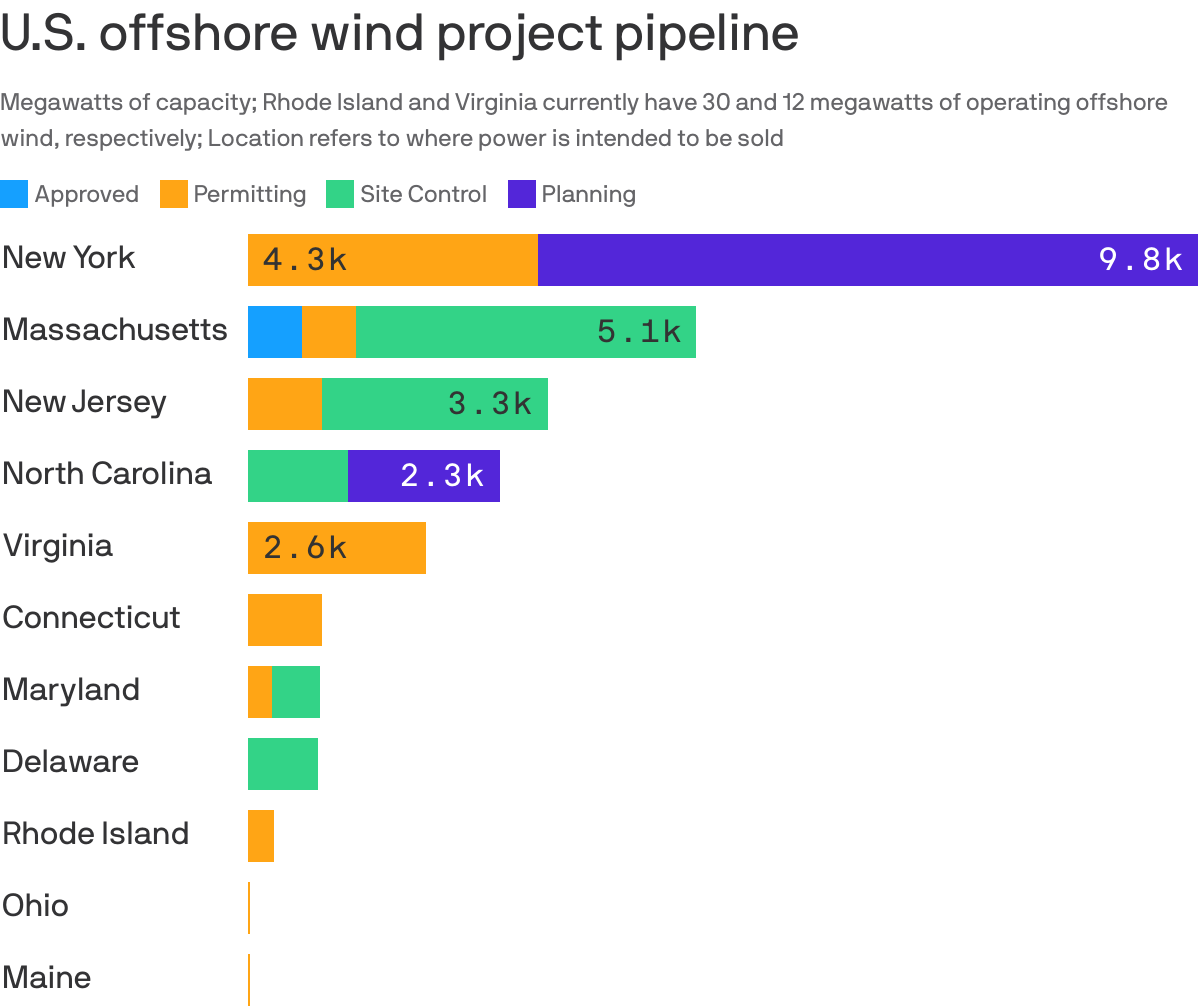
There's enough U.S. offshore wind on the drawing boards to surpass President Biden's goal of 30 gigawatts (30,000 megawatts) of capacity by 2030, but getting there means transforming lots of planning into actual development.
Driving the news: A new Energy Department report takes stock of the emerging U.S. sector. The chart above looks at the project pipeline by state (and officials are also in the early stages of planning for California development).
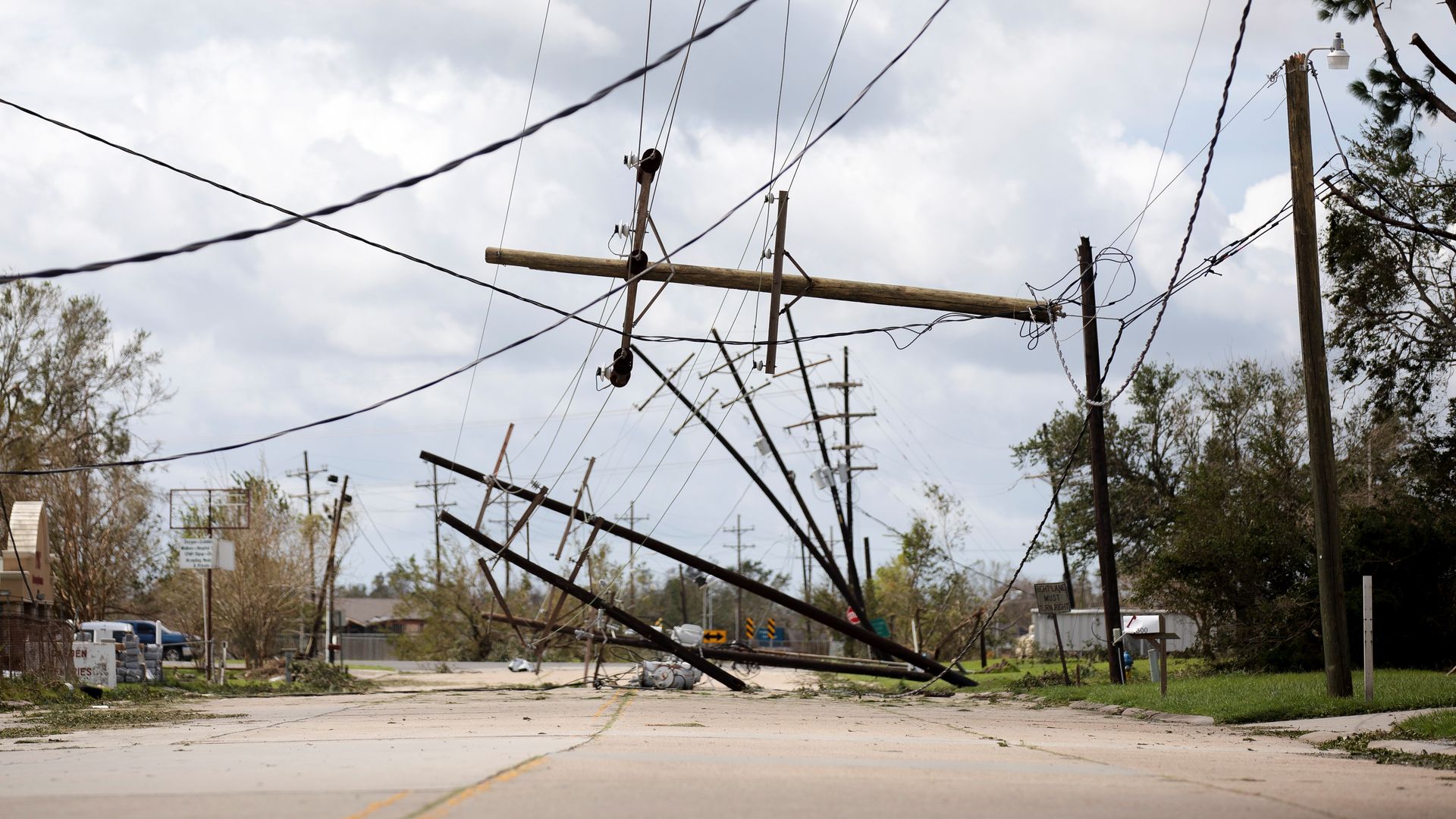
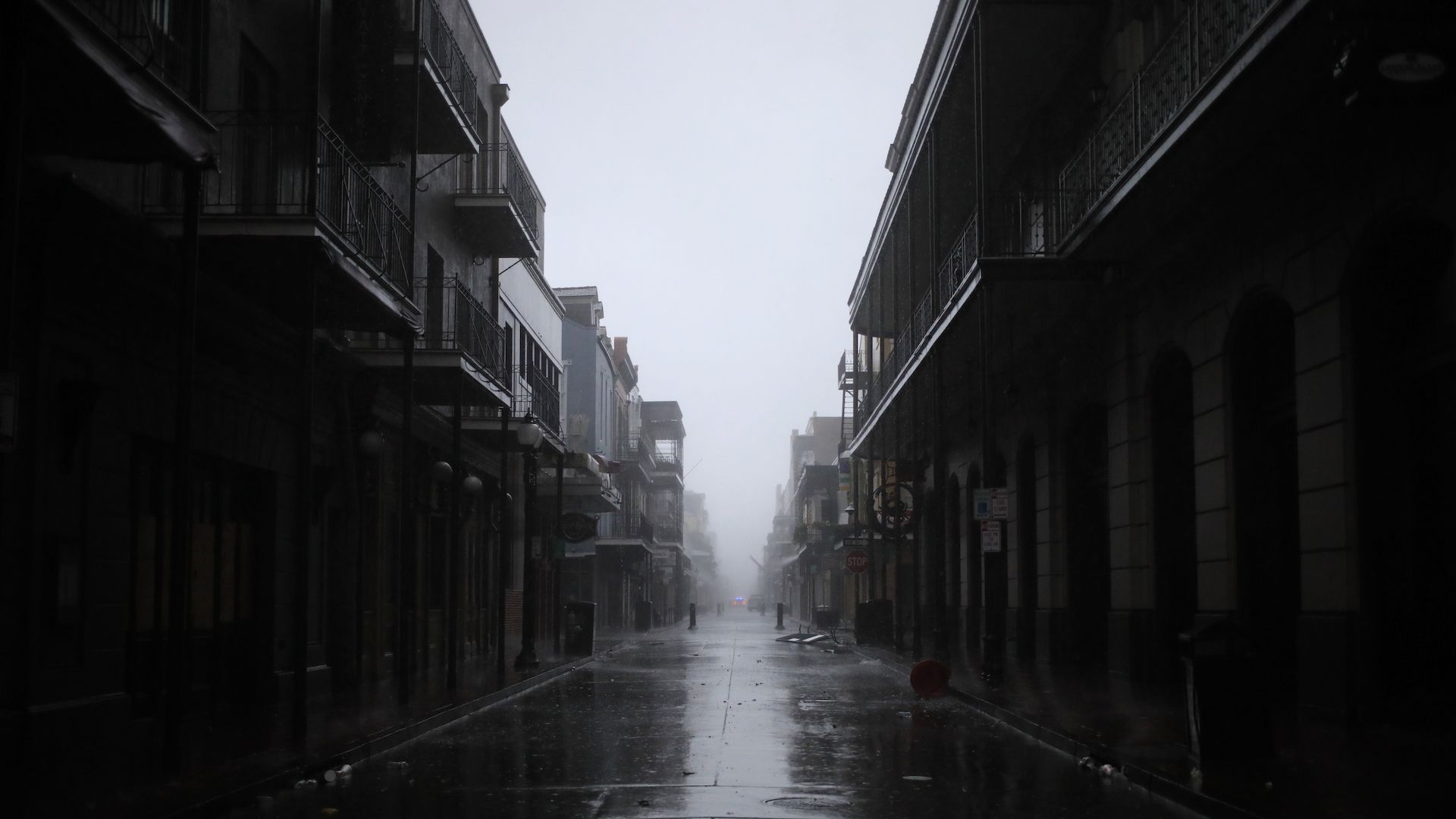
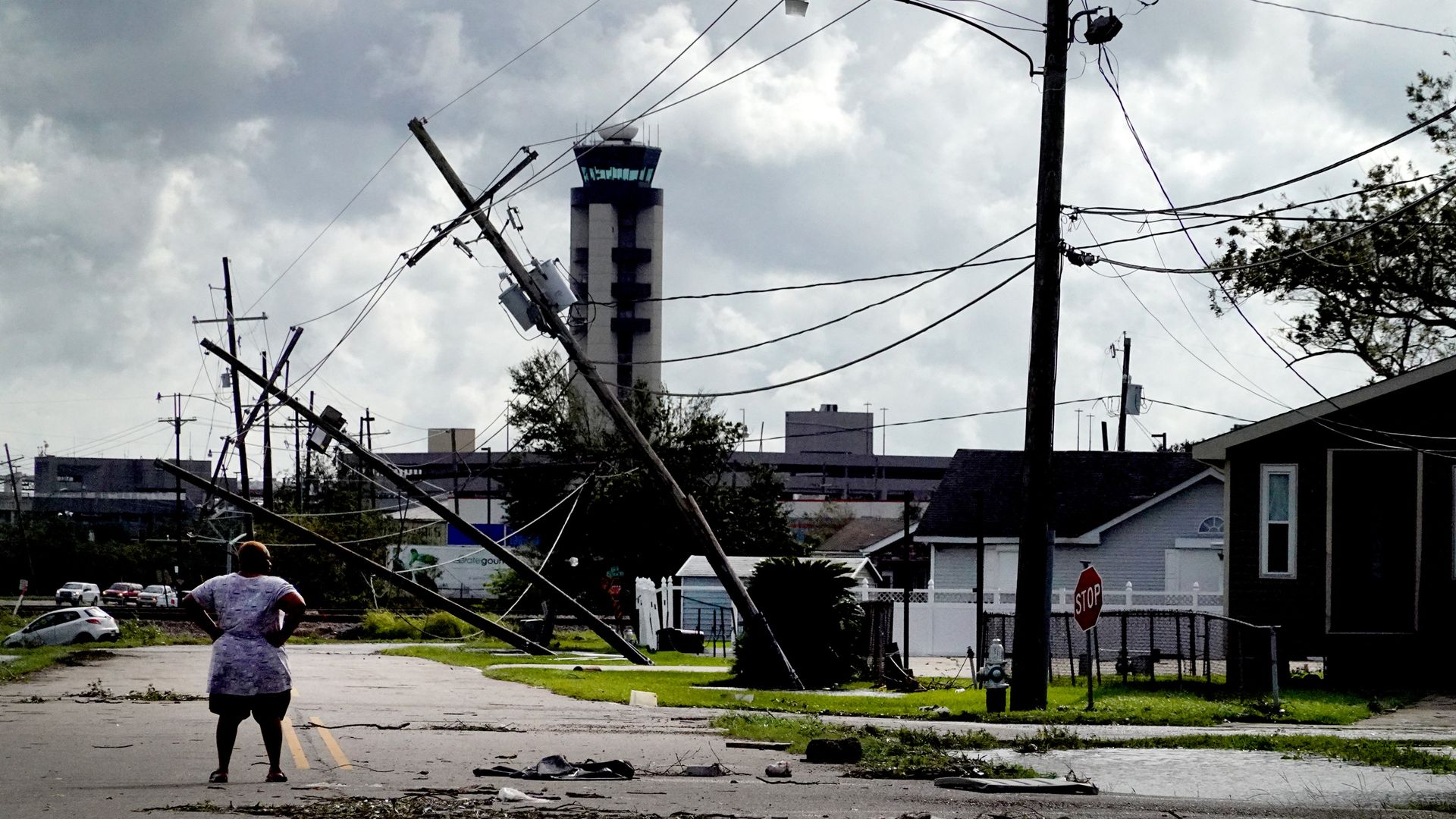
The powerful hurricane that plunged New Orleans into darkness for what could be weeks is the latest sign that U.S. power systems are not ready for a warmer, more volatile world.
The big picture: “Our current infrastructure is not adequate when it comes to these kinds of weather extremes,” Joshua Rhodes, a University of Texas energy expert, tells Axios.
These two things both happened Monday: The Health and Human Services Department unveiled its climate office, and the White House promoted efforts to keep gasoline prices in check.
Why it matters: The two moves show how the White House is now operating simultaneously in the old and new world of energy and climate policy.
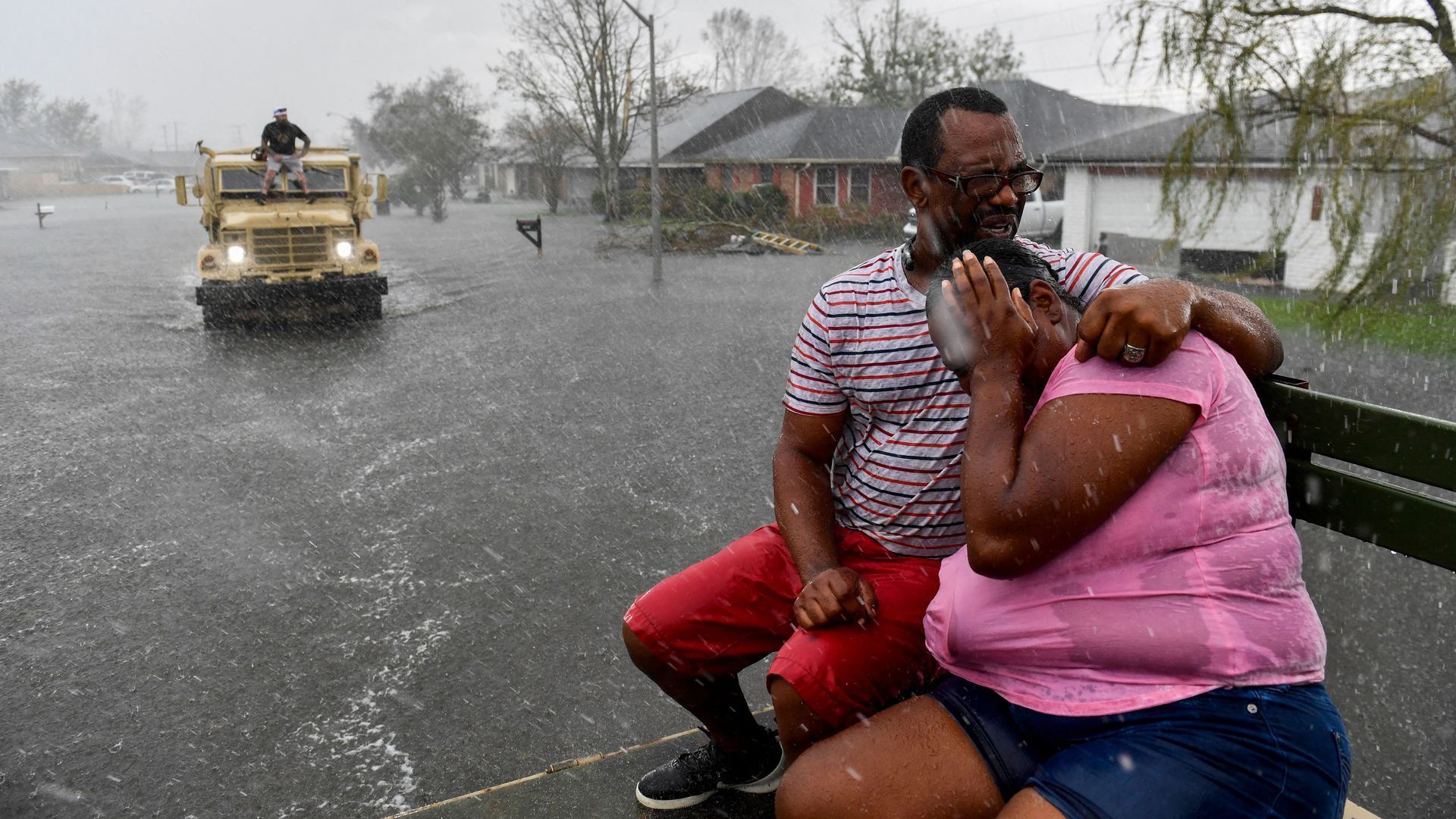
Crews were working to rescue people trapped by former Hurricane Ida's floodwaters as utility workers moved to try and restore power to over 1 million customers in Louisiana and nearly 60,000 others in Mississippi Monday, per AP.
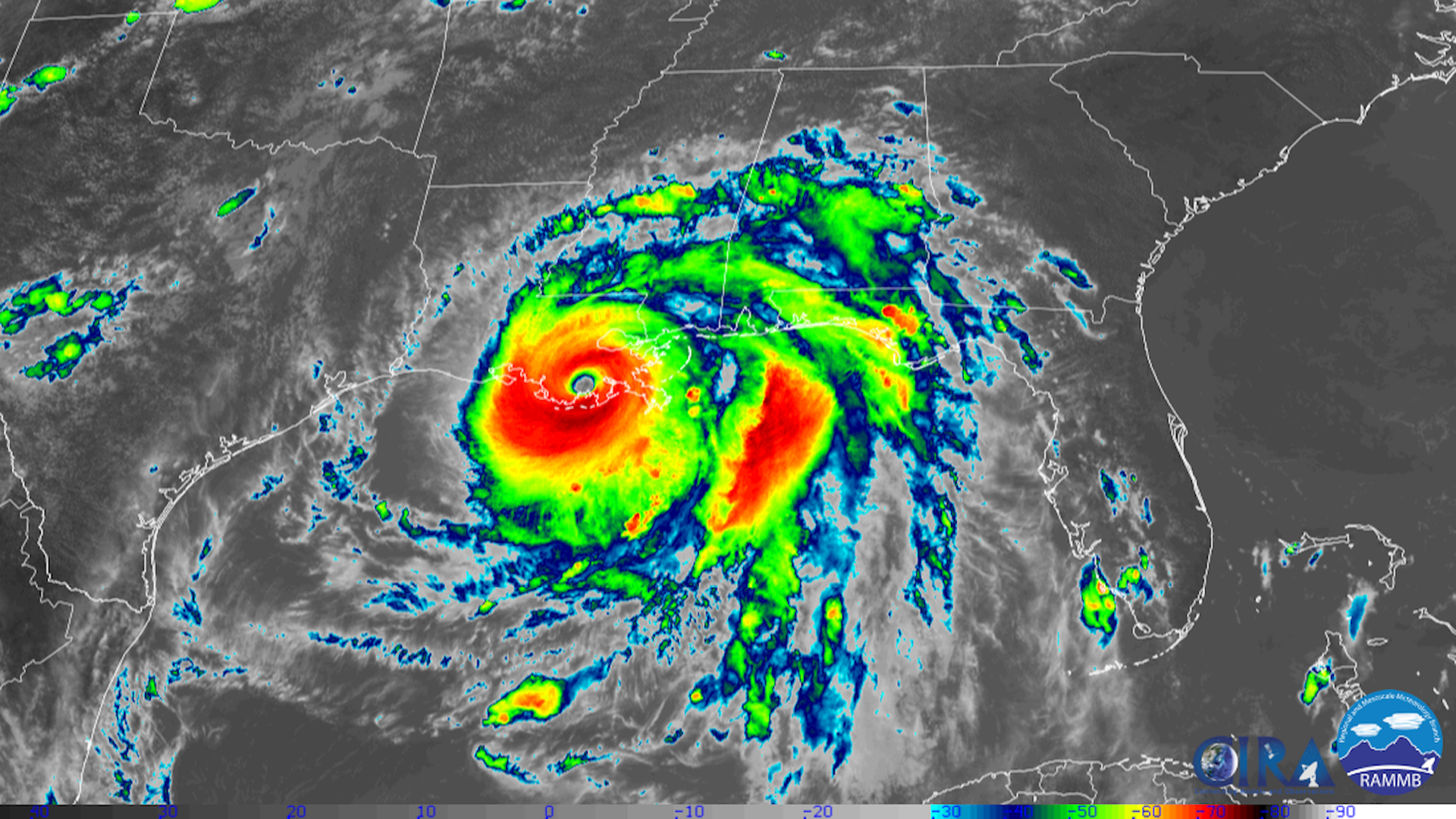
The big picture: NASA Earth said preliminary data suggests Ida was the fifth-strongest storm "ever to make landfall in the continental U.S." when it hit Louisiana as a Category 4 hurricane Sunday, leaving New Orleans with no electricity except power from generators.
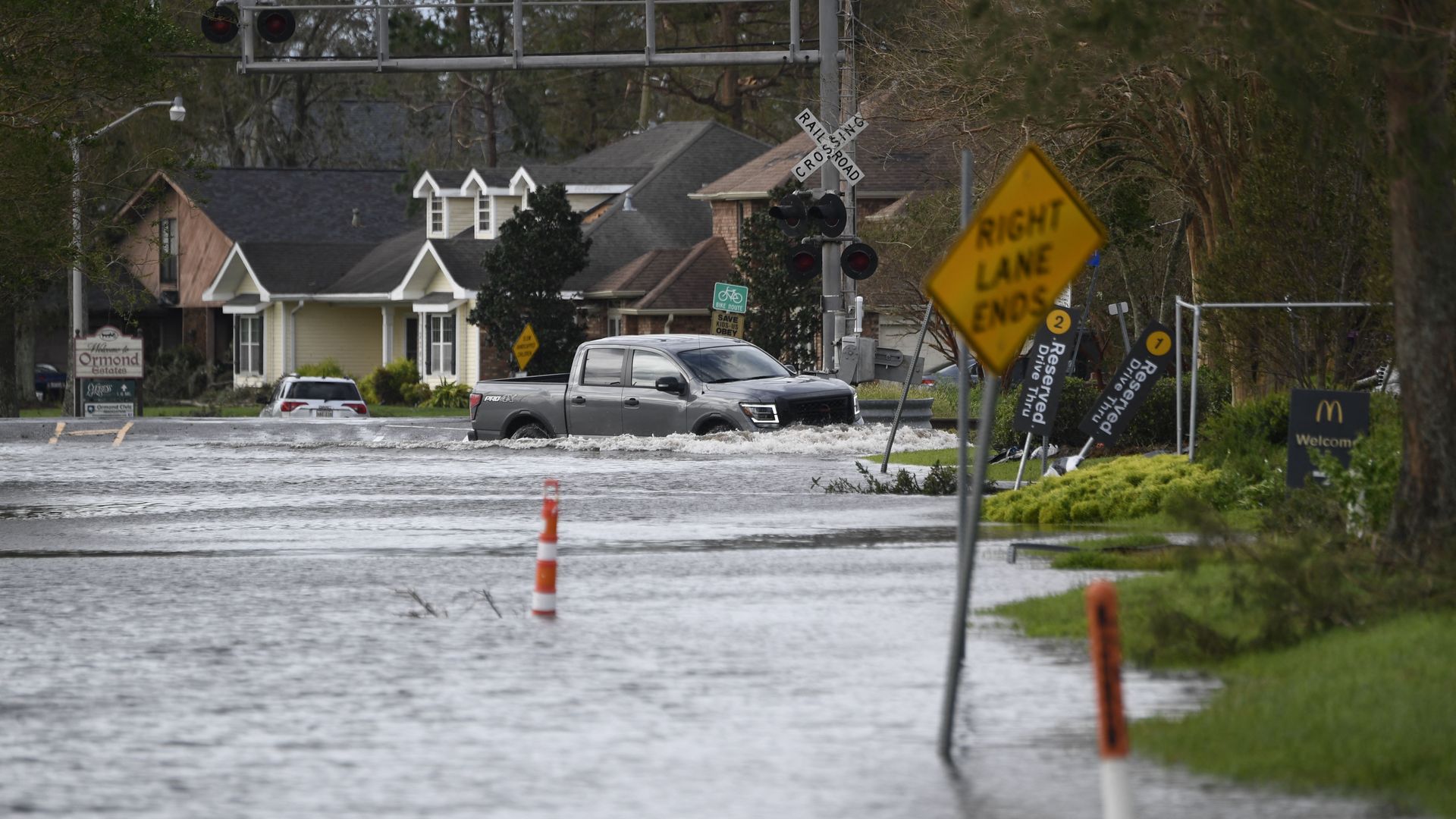
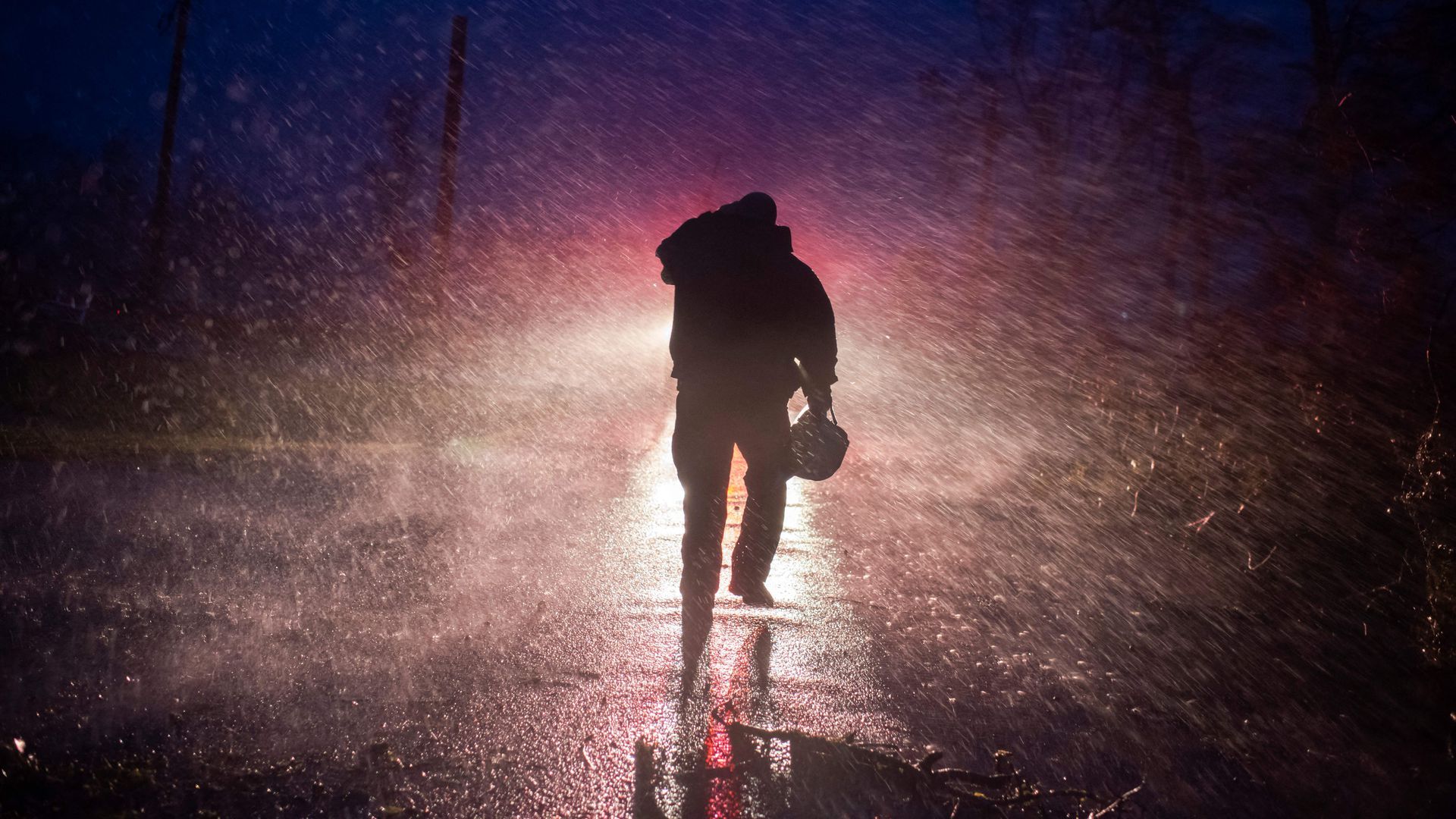
The deadly former Hurricane Ida was bringing heavy rains, "dangerous" flash flooding, storm surge and extreme winds as the tropical depression moved northeast across Mississippi overnight.
Threat level: "Ida will continue to produce heavy rainfall tonight through Tuesday morning across portions of southeast Louisiana, Mississippi, and western Alabama, resulting in considerable flash and urban flooding and significant river flooding impacts," the National Hurricane Center warned.
A federal judge on Monday tossed out a Trump administration rule that rolled back protections for streams, marshes and wetlands across the U.S.
Why it matters: Environmental and tribal groups have pushed the court to vacate the rule, which the Biden administration has kept in place while coming up with its own protections policy. The new ruling will expand protections for drinking water supplies for millions of Americans and thousands of wildlife species, per the Washington Post.
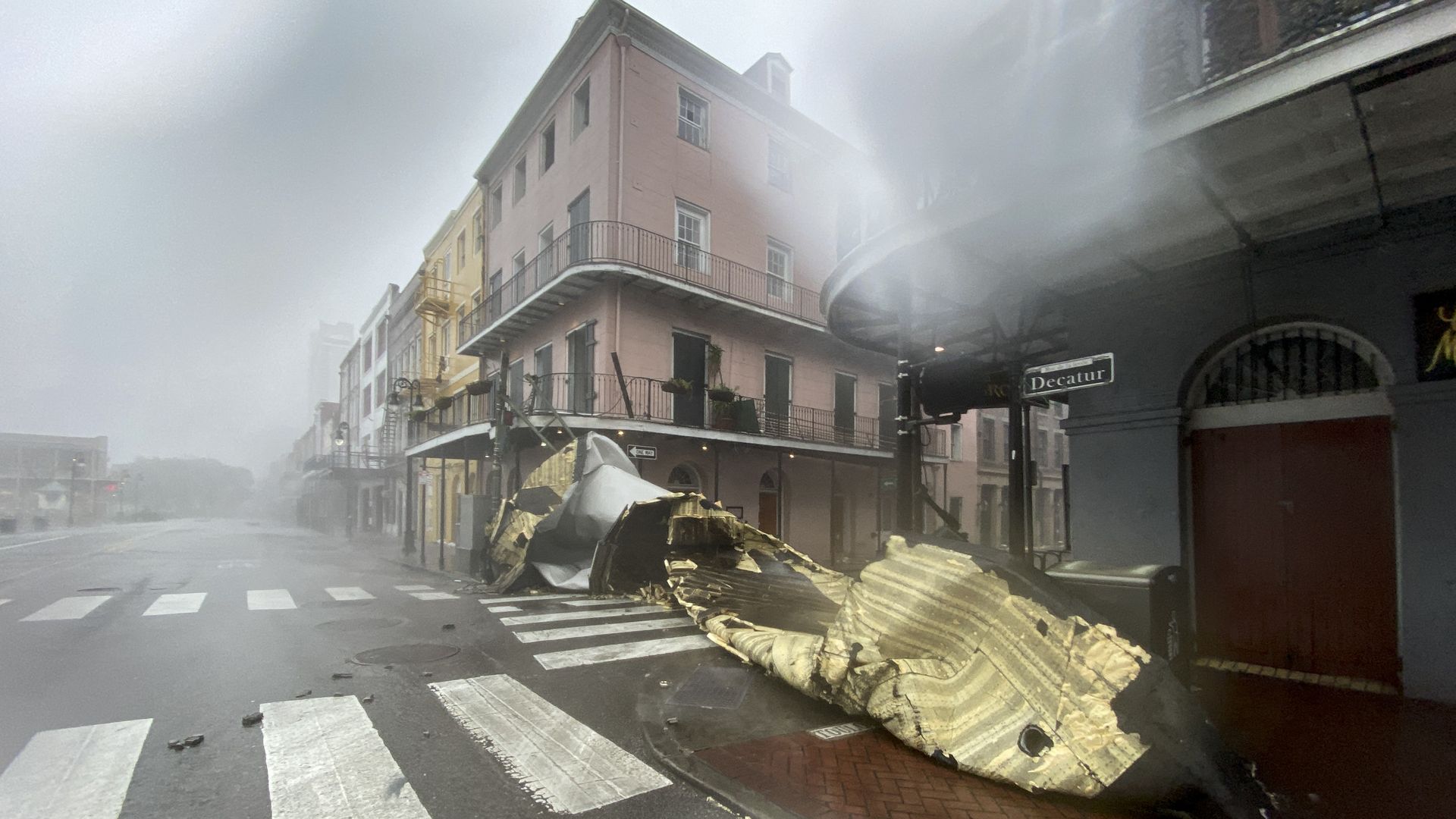
Louisiana Gov. John Bel Edwards said Monday the damage in the aftermath of Hurricane Ida, one of the strongest hurricanes to hit the state on record, "is really catastrophic."
The latest: New Orleans' emergency services are back online and working to respond with power still out. The city has warned residents to beware of downed power lines, flood waters and storm debris.
The head of the Federal Trade Commission, Lina Khan, told the White House in a letter released Monday that she plans to probe mergers of retail gasoline stations in order to avert potentially anti-competitive behavior that could drive up the cost of gas, according to a letter obtained by Axios.
Driving the news: The letter indicates Khan will act on a request White House National Economic Council director Brian Deese made earlier this month.
Hurricane Ida jumped from a 105-mph Category 2 hurricane on Saturday to a high-end Category 4 monster by Sunday morning, in a feat enabled by climate change, seasonal timing and a dose of bad luck.
Why it matters: Understanding how Mother Nature's most powerful storms are changing is key to learning how to better protect coastal communities around the world — everywhere from the mega-cities of Southeast Asia to the small towns of the Louisiana Bayou.
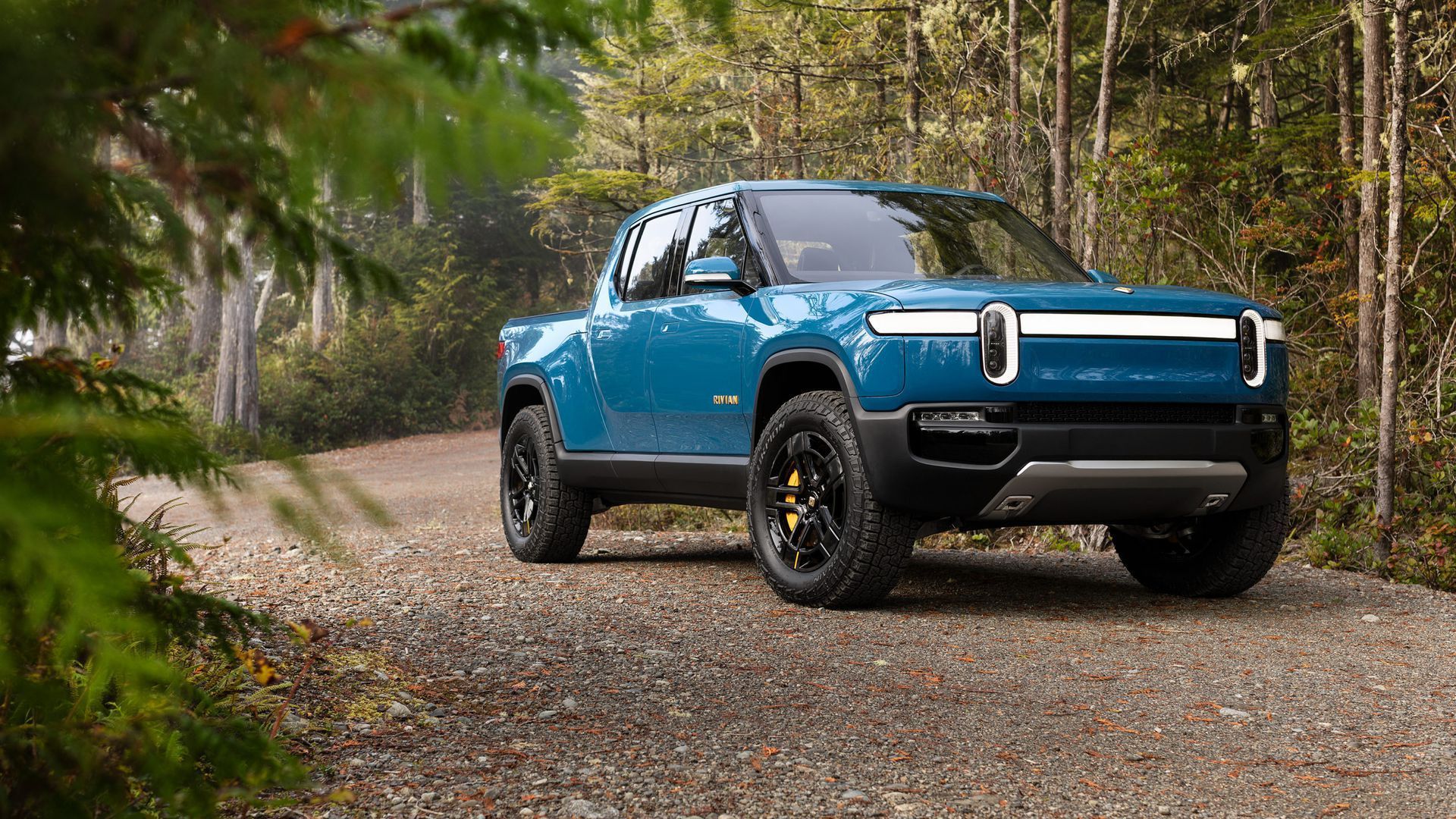
Rivian, the well-financed electric vehicle startup about to start delivering its pickup truck, says it has filed plans to go public with securities regulators.
The big picture: The company is quite well-capitalized. Rivian's financial backers include Ford, Amazon and BlackRock.
Hurricane Ida has left over 1 million homes and businesses without power, mostly in Louisiana, after making landfall as a powerful Category 4 storm on Sunday.
Driving the news: Ida also greatly disrupted Gulf of Mexico and Gulf coast oil-and-gas and petrochemical operations, but the full scope of the damage — and environmental hazards — will take time to assess.
Hurricane Ida continued to lash Louisiana overnight, as the first death from the Category 2 storm was reported and an estimated 1 million-plus customers were left without power in the state.
The latest: President Biden approved Louisiana's disaster declaration late Sunday, enabling federal funding for parishes affected by the storm, which will go toward grants for temporary housing and home repairs, low-cost loans to cover uninsured property losses, and other programs.
California's Caldor Fire triggered fresh evacuation orders for communities in Amador County, near Sacramento, as it neared the Lake Tahoe Basin on Sunday night.
Driving the news: Containment of the blaze dropped to 13% as it grew to over 168,000 acres Sunday amid extremely dry conditions. The wildfire razed at least four cabins near Echo Summit on Sunday, the Sacramento Bee notes.
Hurricane Ida lashed New Orleans Sunday evening on the 16th anniversary of Hurricane Katrina — with part of the deadly Category 2 storm pummeling the city with extremely heavy winds and rains.
What's happening: Officials confirmed that the city had lost all power "due to catastrophic transmission damage" from the storm, with the only electricity in New Orleans coming from generators amid reports of flash flooding from Ida's rains.