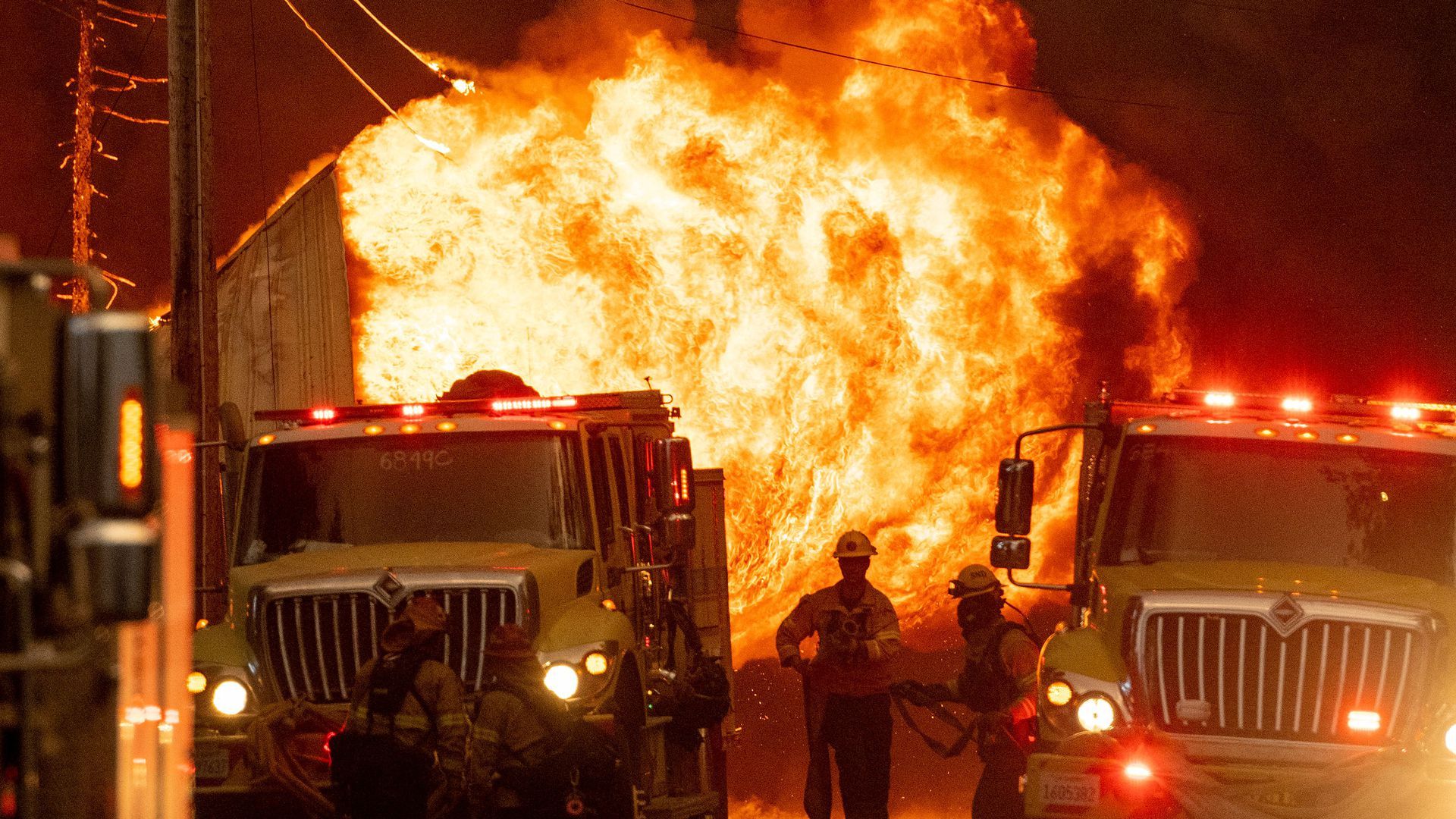
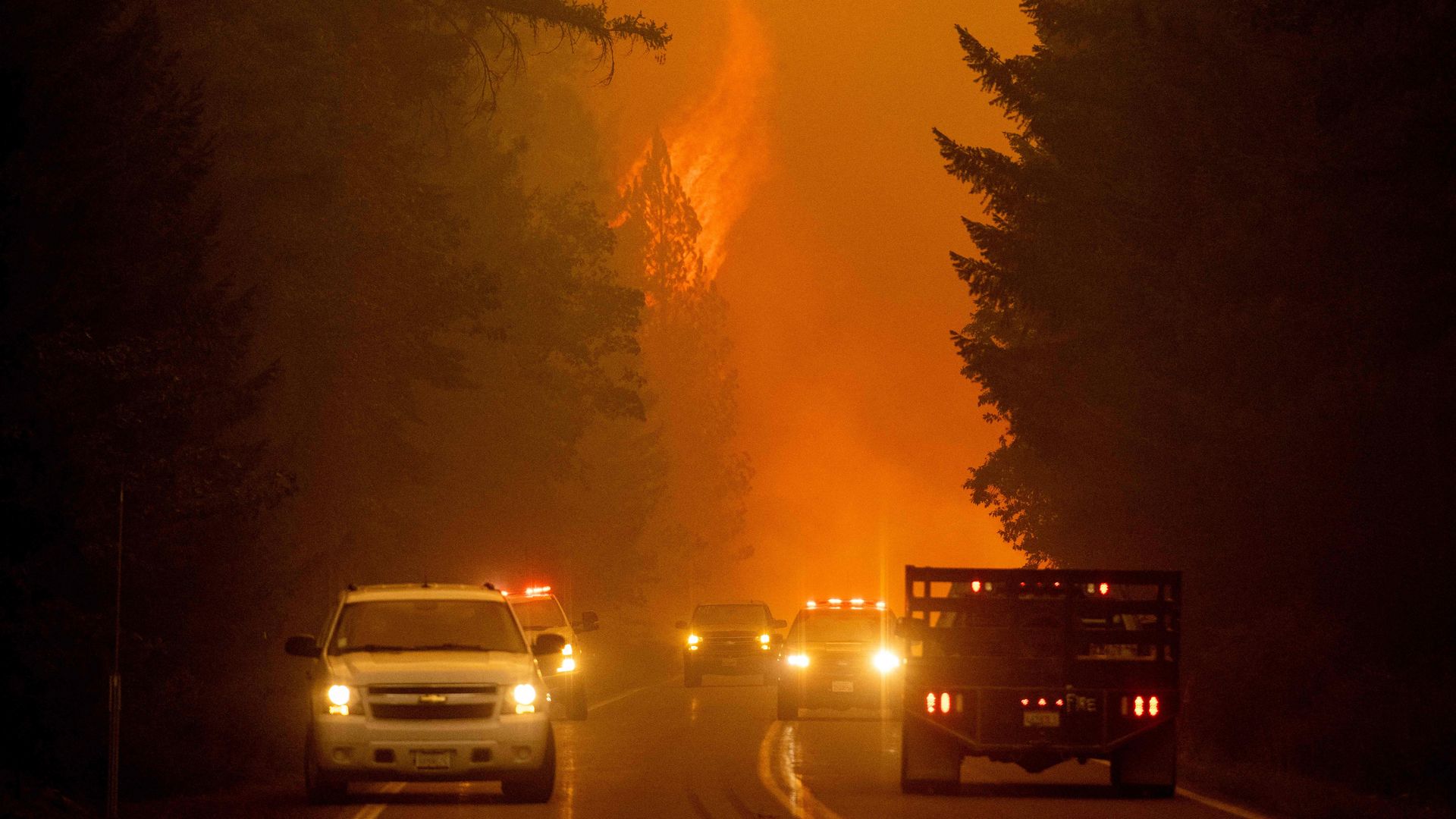
Officials in the northern California town of Greenville on Thursday said they were at a loss for words to describe the widespread destruction left by the massive Dixie Fire, which razed businesses and homes Wednesday night.
What they're saying: "Our beloved small town of Greenville, CA faced our biggest nightmare," Plumas County Supervisor Kevin Goss wrote on Facebook. "Our historical buildings, families homes, small businesses, and our children's schools are completely lost."
Moody's is acquiring climate and natural disaster risk modeling company RMS for about $2 billion from Daily Mail and General Trust.
Why it matters: Modeling climate risk exposure is becoming critical for a growing number of industries, especially as extreme weather events are dramatically picking up in frequency and impact. Supply chain disruptions are of particular concern.
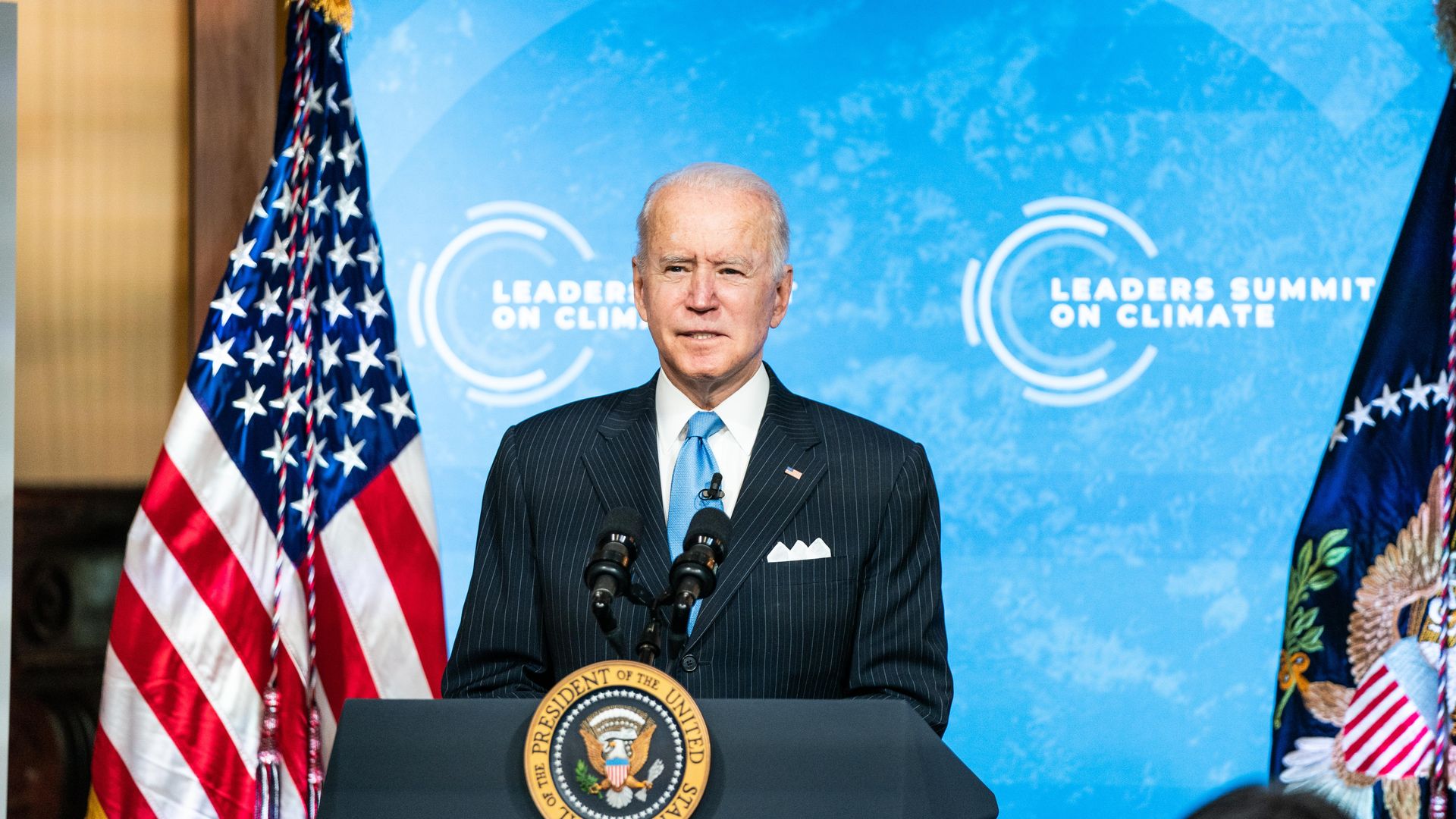
High-profile progressive Senate Democrats have expanded their climate wish list for the multitrillion-dollar package the White House and Democratic leaders hope to move via budget reconciliation.
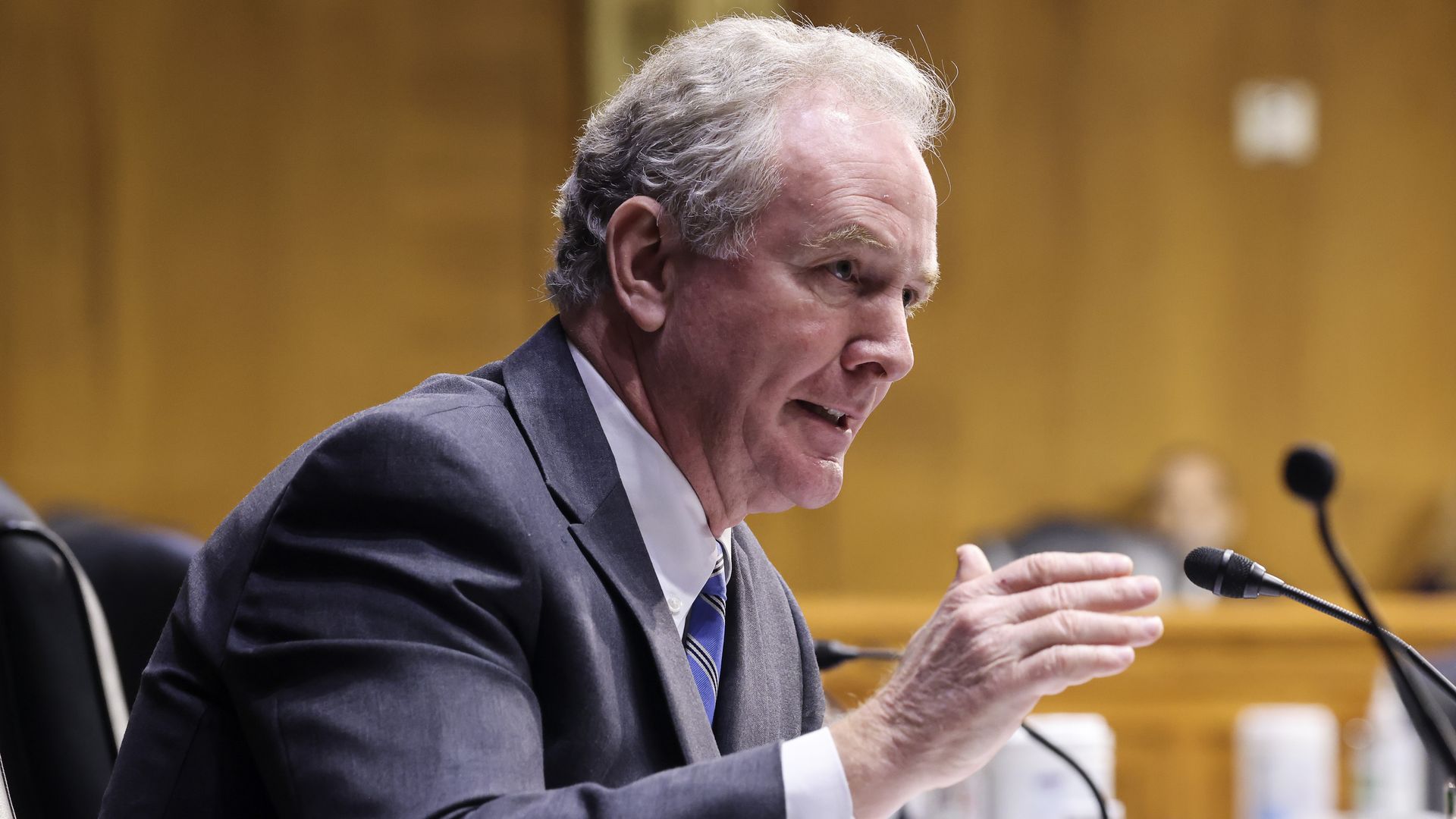
Driving the news: Sen. Chris Van Hollen (D-Md.) is leading a push for $500 billion in fees over 10 years from large fossil fuel companies — with a big chunk hitting Big Oil — to help finance climate initiatives.
The Wall Street Journal reports this morning that Exxon is "considering a pledge to reduce its net carbon emissions to zero by 2050."
Why it matters: It would be a major shift for Exxon, the U.S.-based multinational giant, which to date has opposed the long-term targets embraced by European giants like Shell and BP.
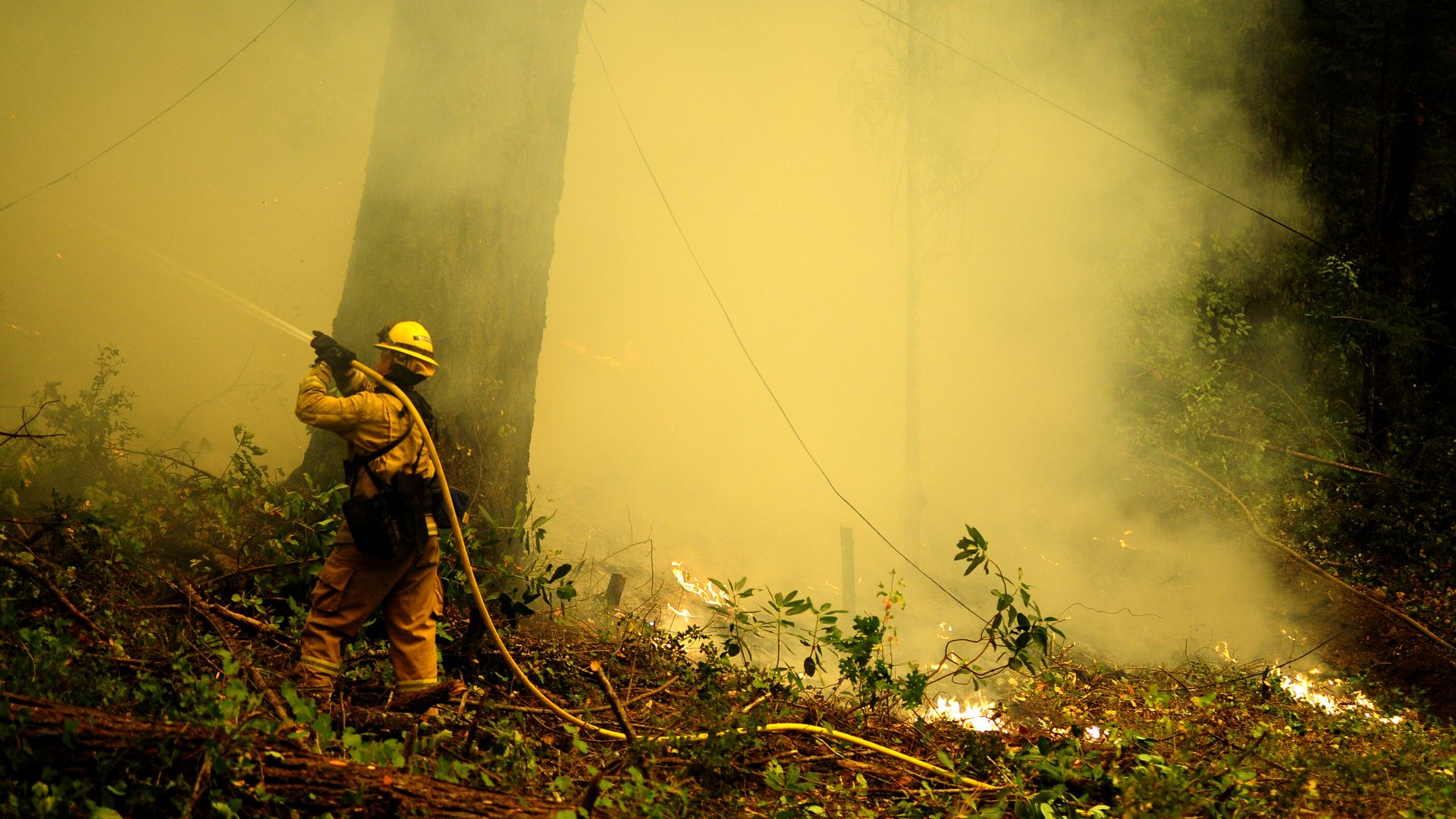
Two massive California wildfires have triggered new mandatory evacuation orders for thousands of people and destroyed homes and businesses in the state's north overnight.
Details: The Dixie Fire, California's biggest blaze, razed houses and businesses as it ripped through the town of Greenville and surrounding areas in Plumas County Wednesday night. The rapidly spreading River Fire burned "multiple" homes as it tore through Placer and Nevada counties, KOVR notes.
The White House on Thursday is unveiling draft mandates and aspirational targets aimed at drastically cutting vehicle carbon emissions and accelerating the shift to electric models.
Why it matters: Transportation is the largest source of U.S. emissions.
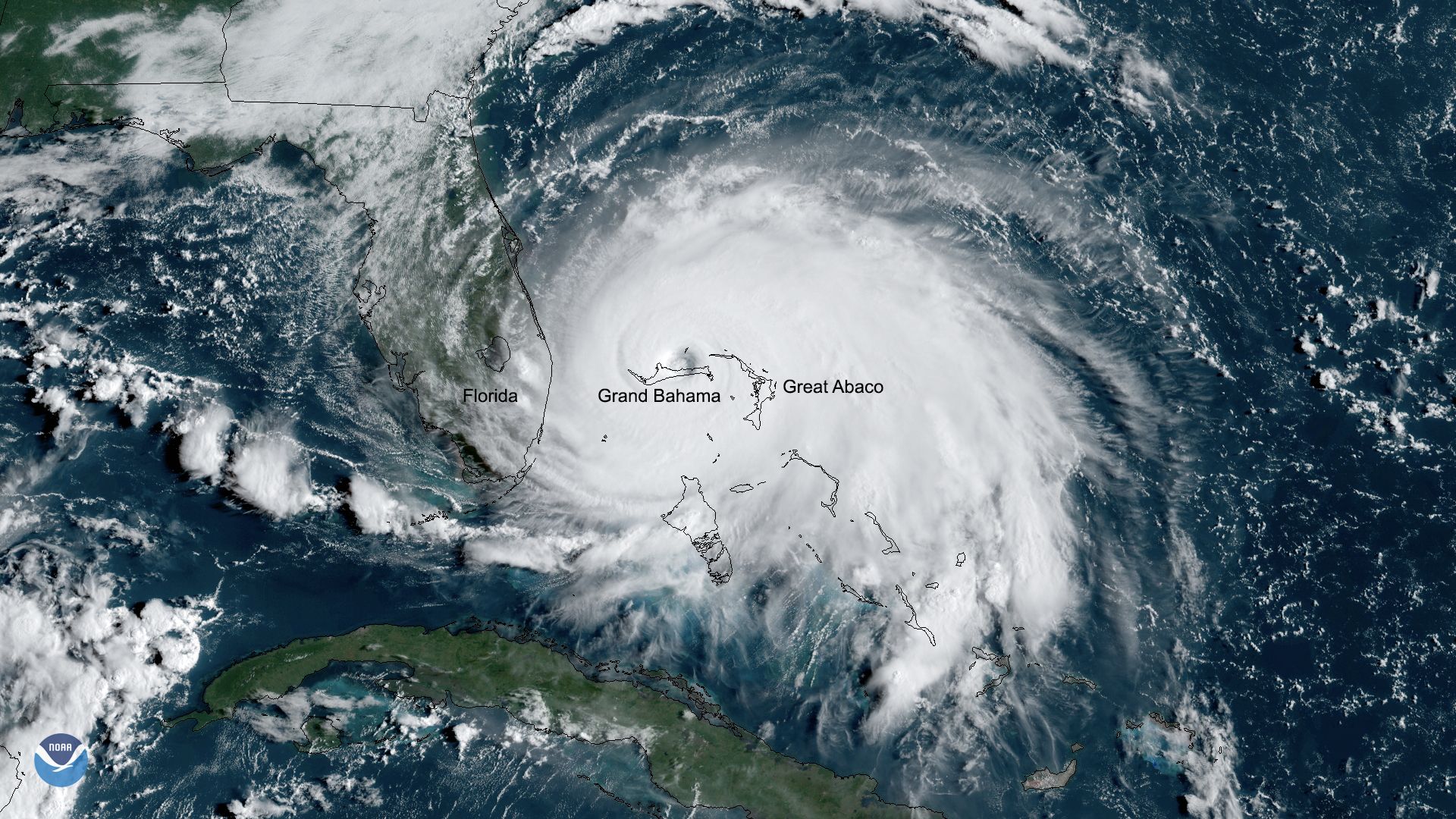
The National Oceanic and Atmospheric Administration on Wednesday updated its 2021 Atlantic hurricane seasonal forecast, slightly increasing expectations for the number of named storms and powerful hurricanes.
Why it matters: With the U.S. already reeling from extreme heat and wildfires, disaster response agencies are overstretched. A particularly destructive and active hurricane season could overwhelm some of its response capacity.
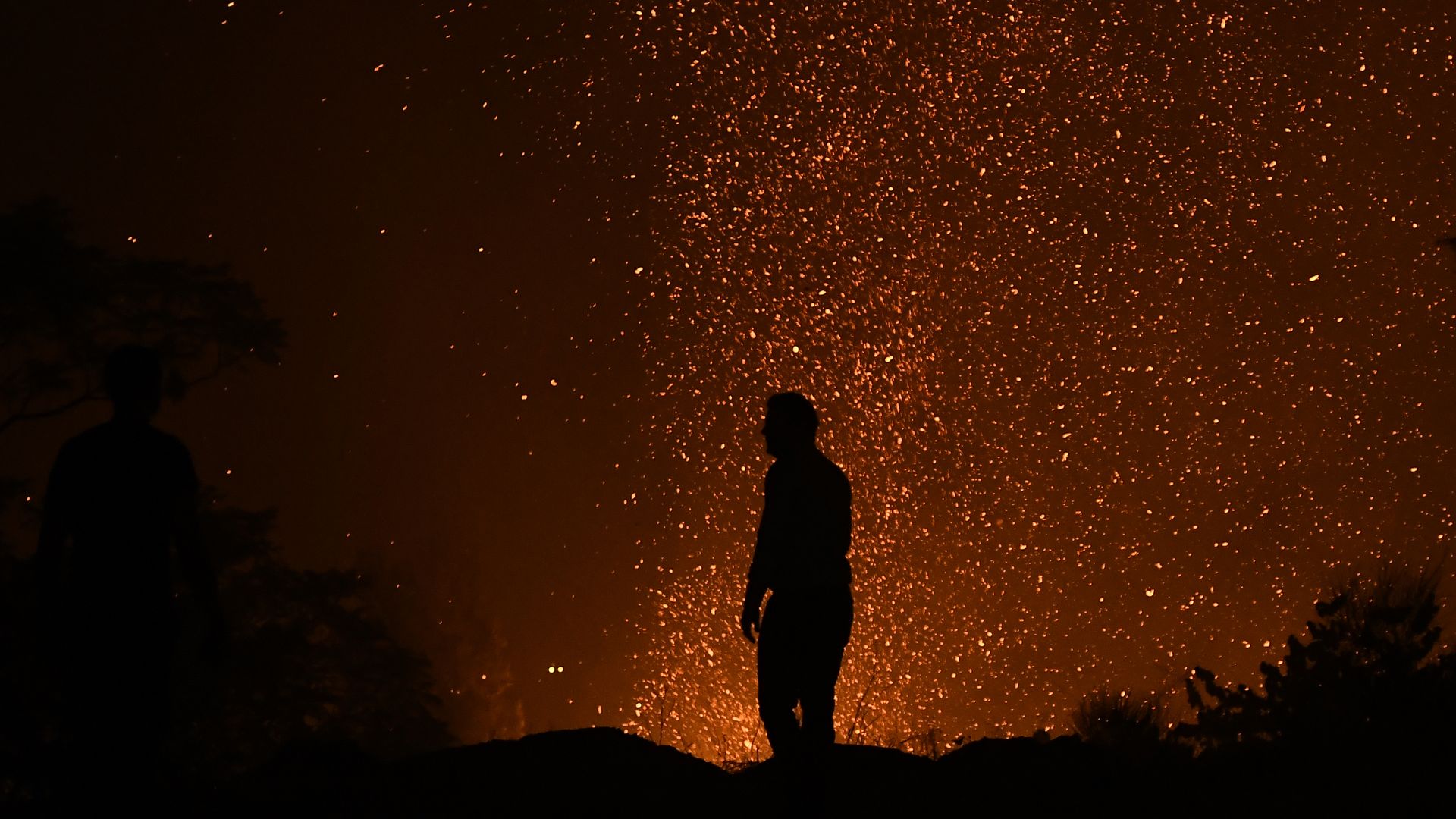
Over 500 firefighters have been leading efforts to control wildfires near Athens, with Greece’s fire service saying on Wednesday that it hopes to bring the flames under control "in the coming hours," AFP reports.
The big picture: More than 75 wildfires broke out in Greece on Tuesday and Wednesday as the country faces its most intense heat wave in decades — temperatures in Athens have reached 43°C (109.4°F), according to Meteo France meteorologist Etienne Kapikian.
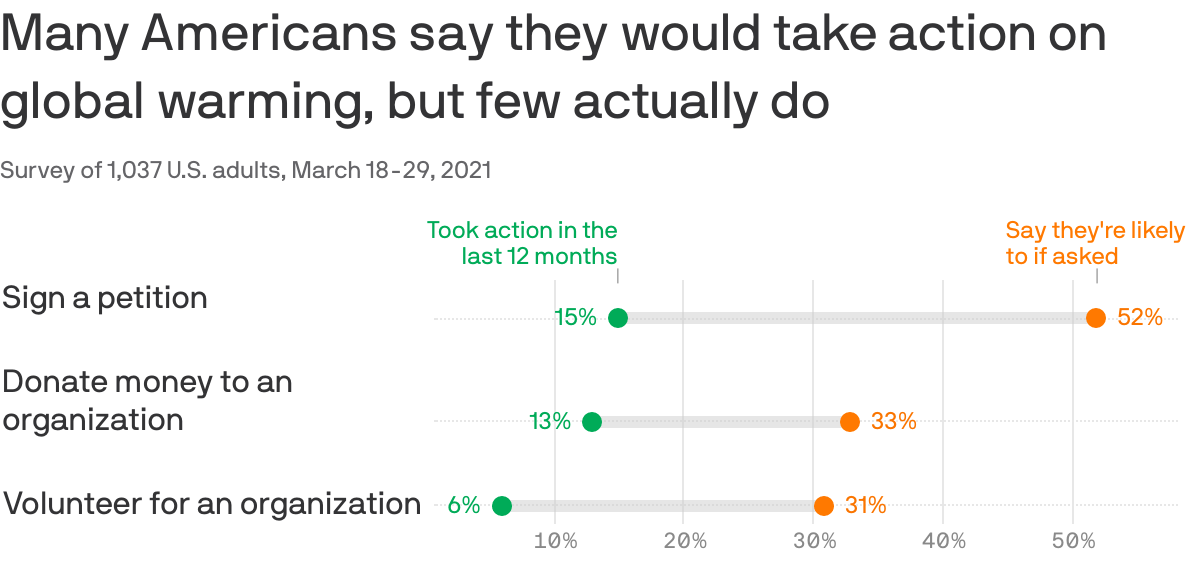
Yale Program on Climate Change Communication/George Mason University Center for Climate Change Communication; Chart: Will Chase/Axios
Despite a widespread recognition among a majority of Americans that climate change is a problem, and a willingness to take actions to combat it, there’s a large gulf between what people say they would be willing to do and what they are actually doing.
Why it matters: This finding, from a new polling analysis conducted by climate opinion researchers at Yale University and George Mason, suggests there's considerable room for expanding the climate movement beyond current activists.
John Kerry said the Biden administration is still grappling with ripple effects from former President Donald Trump’s rejection of the Paris Agreement and eschewing of multilateralism writ large.
Driving the news: In an interview with The New Yorker’s David Remnick, Kerry, the special envoy for climate change, said Trump "did a whopper of a job putting America’s credibility in a terrible place, destroying it fundamentally."
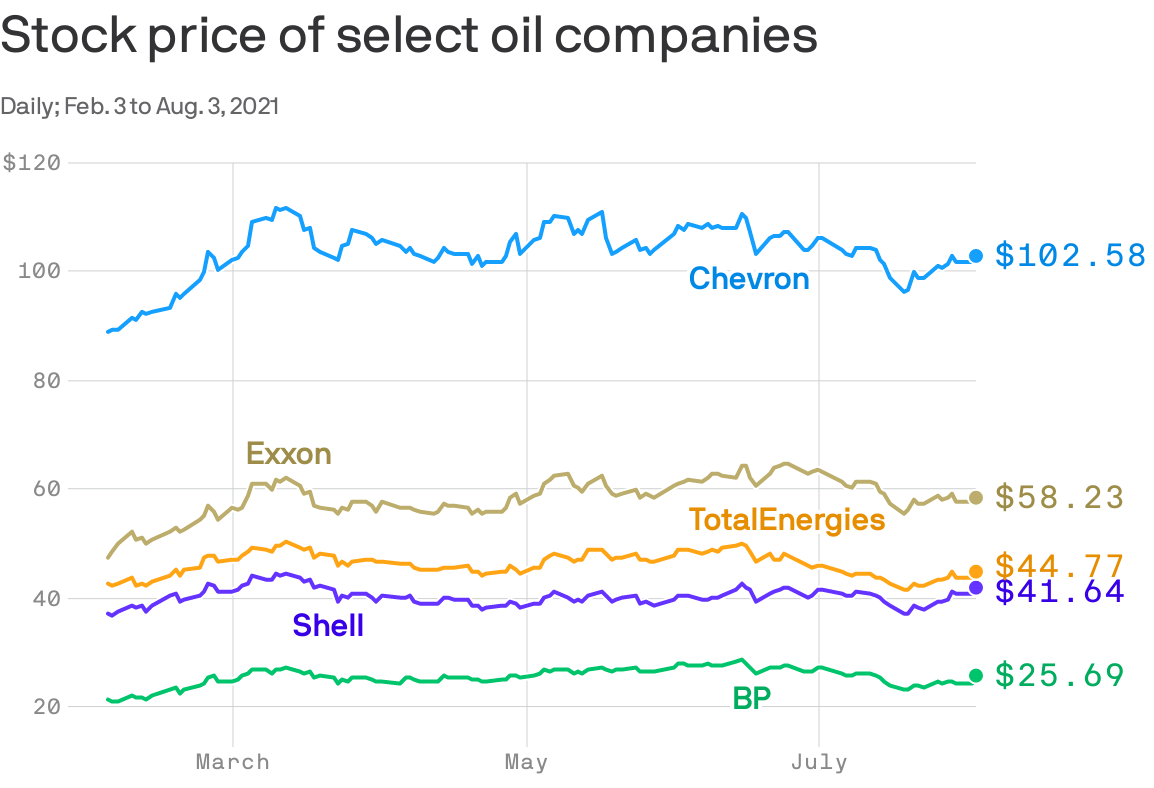
The just-concluded Big Oil earnings season highlighted two things at once: The sector's on far more solid footing than last year, but still faces big headwinds.
Driving the news: BP's stock rose 7% Tuesday after it reported a $2.8 billion Q2 profit after losing $6.7 billion that period last year, and announced higher dividends and new share buybacks.
A new high-performance electric scooter is being billed as the transportation solution for urban residents who want an EV but don't have dedicated parking and can't exactly hang a charging cable out their apartment window.
What's happening: The $7,495 Zapp i300 is positioned as a daily commuter vehicle for urban dwellers — offering the convenience of a scooter and the performance of a motorcycle. Debuting this month in Paris, it's headed to Asia and the United States next year.
Banks are coming under fire from all sides for their role in funding fossil fuel companies, even though most have pledged to pull back over the coming decades.
What's happening: Despite pressure from activists, shareholders and Democratic politicians to finally divest from carbon-spewing businesses as the planet warms, the biggest American banks are still energetically backing dirty energy.
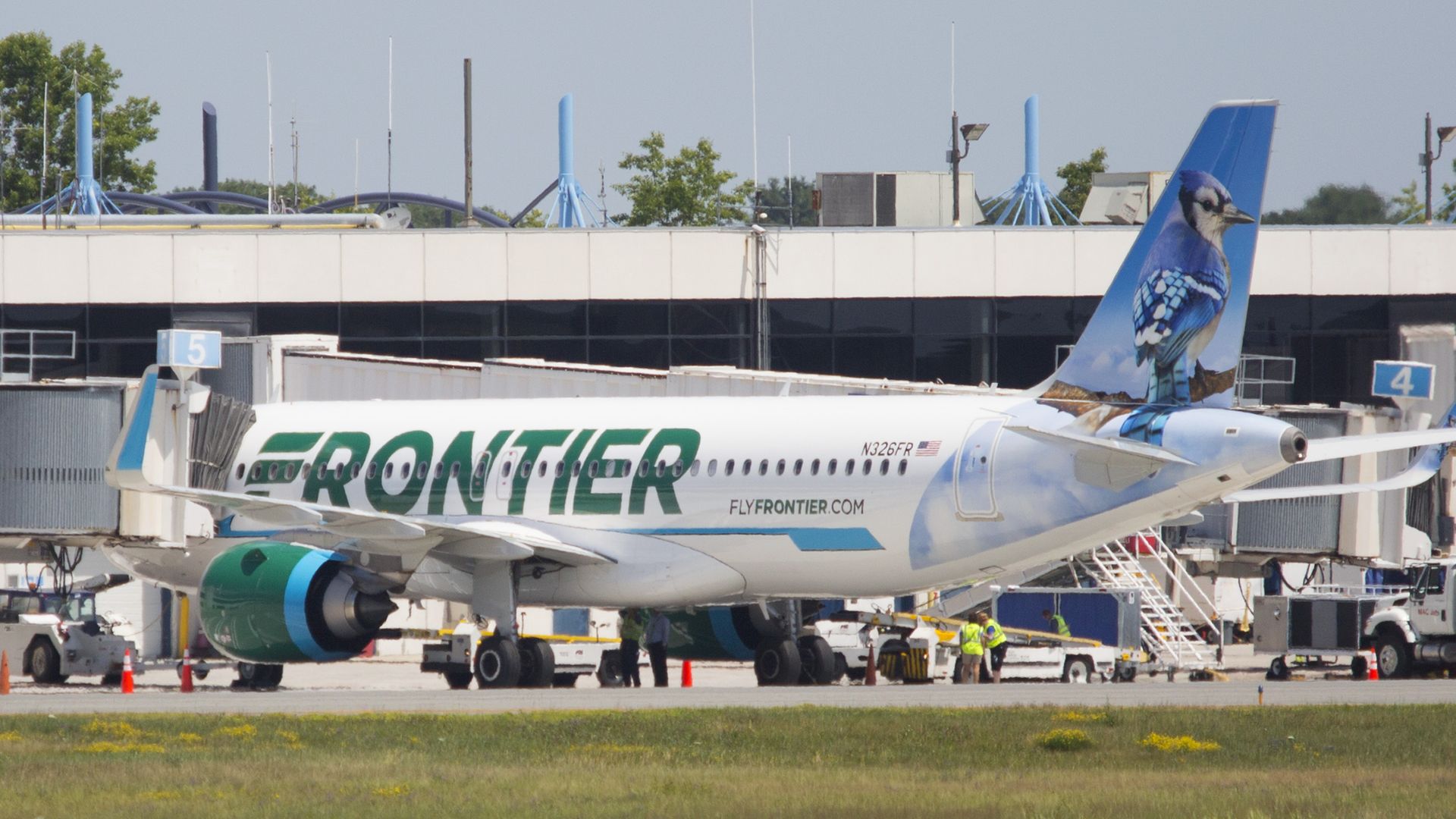
A Frontier Airlines passenger was arrested for allegedly groping the breasts of two attendants and punching a third before being taped to his seat for the remainder of his flight from Philadelphia to Miami, per multiple reports.
The big picture: It's been an unprecedented year for reports of unruly and violent airline passengers, with the Federal Aviation Administration dealing with hundreds of cases despite announcing in January a new "zero tolerance" policy.