The Climate Leadership Council and its advocacy arm, Americans for Carbon Dividends, has suspended Exxon's membership in the group.
Why it matters: The move comes in the the wake of a leaked video in which senior Exxon lobbyist Keith McCoy says the oil giant has only come out in favor of a carbon tax for public relations reasons.
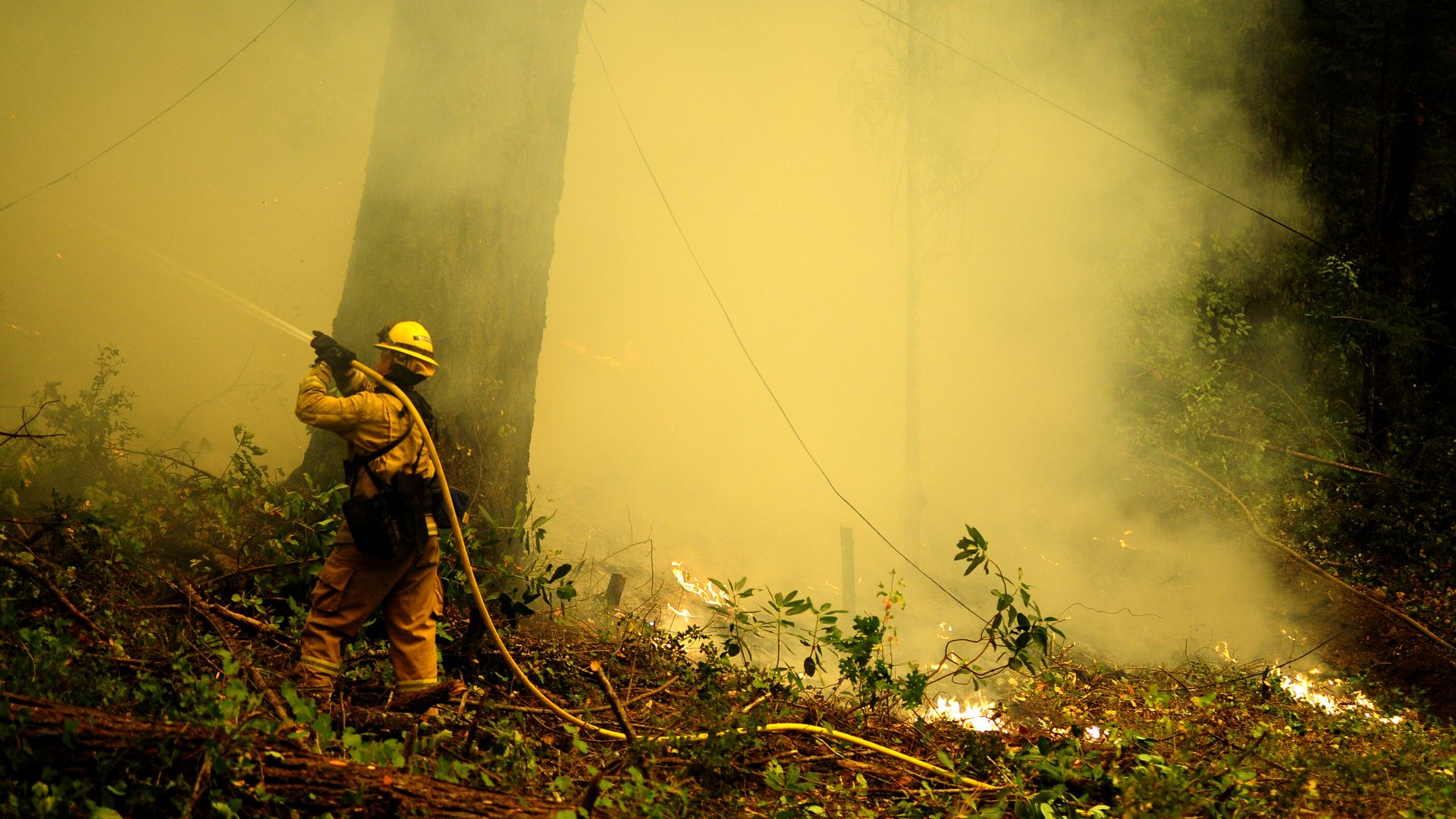
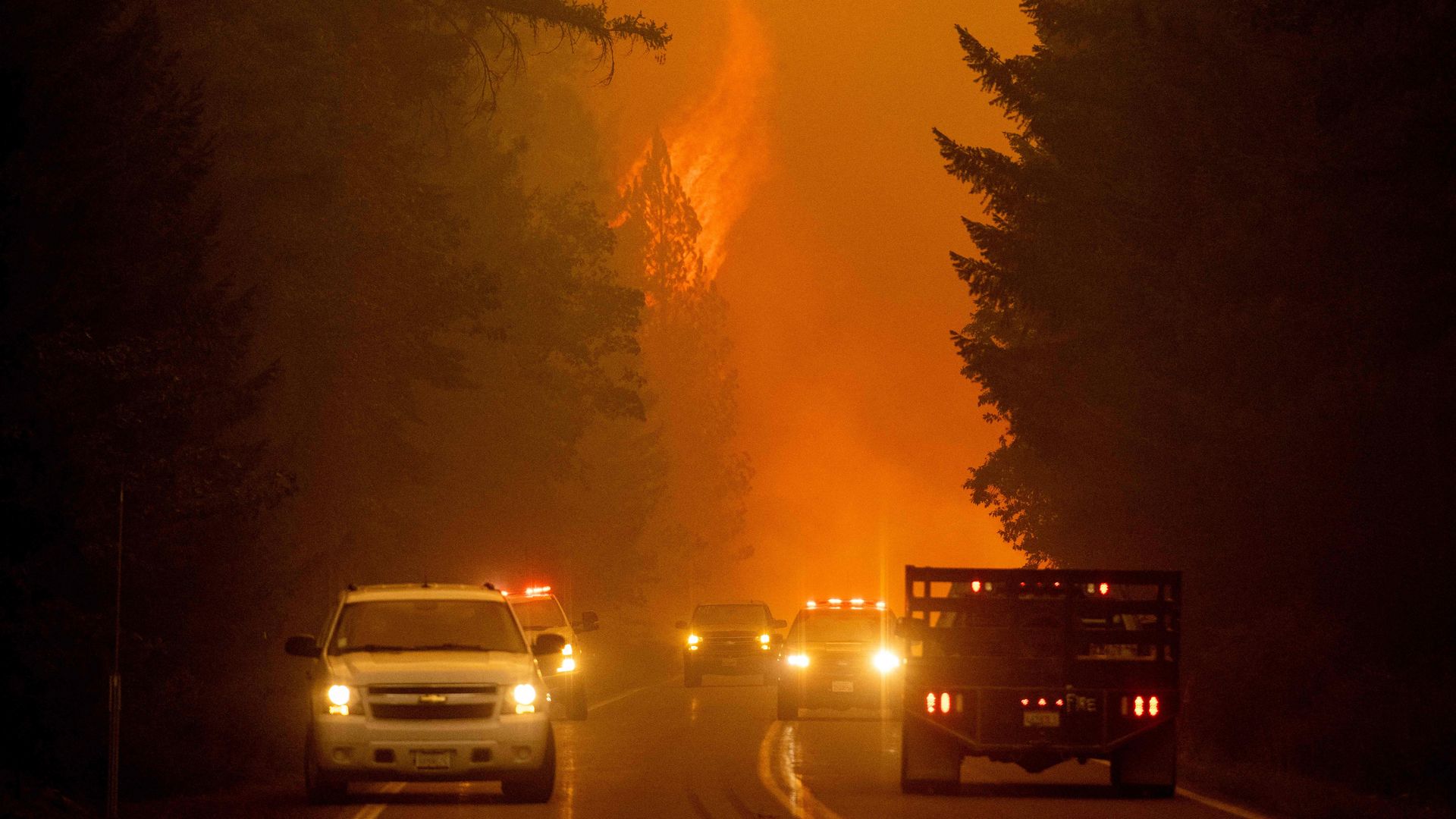
Wildfires are expanding in Northern California after destroying communities nestled in the Sierras on Wednesday night and Thursday, with the Dixie Fire now ranking as the third largest blaze in state history.
Why it matters: Yet again, California is giving the country a lesson in what climate change looks like after just 1.2°C (2.16°F) of global warming.
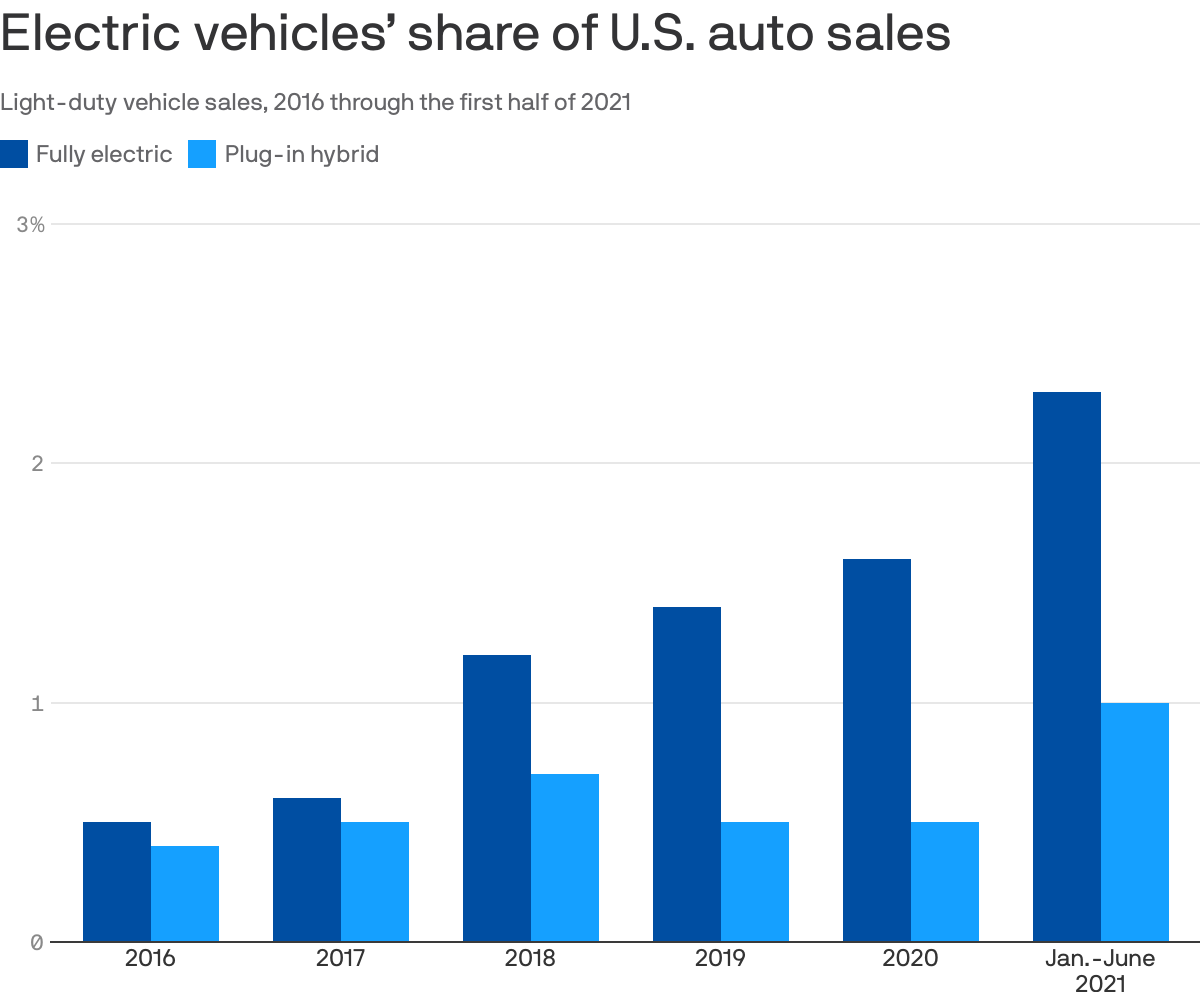
The White House target of zero-emissions models reaching 50% of U.S. car and light truck sales by 2030 is hardly impossible, but a lot of things will have to break right.
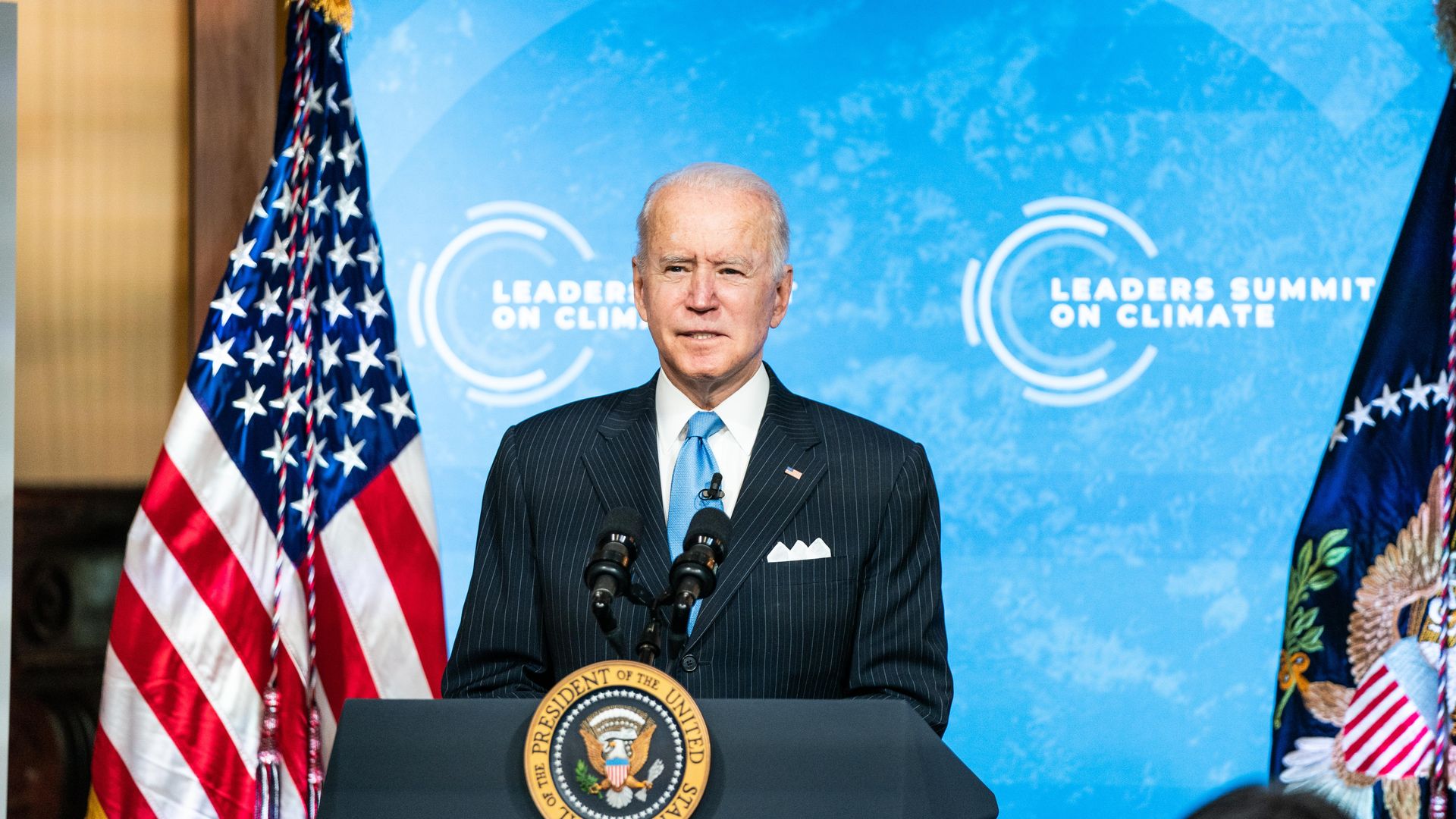
Catch up fast: President Biden's executive order Thursday set the nonbinding 50% target of sales from battery-electric, plug-in hybrid or fuel cell electric models.
The White House is using a multimedia public sales pitch and press strategy to promote a dual message: The bipartisan infrastructure plan has really good stuff for the climate — but it can’t be anywhere close to the final word from Congress.
Details: The administration has sent out a blitz of fact sheets and favorable press clippings to reporters.
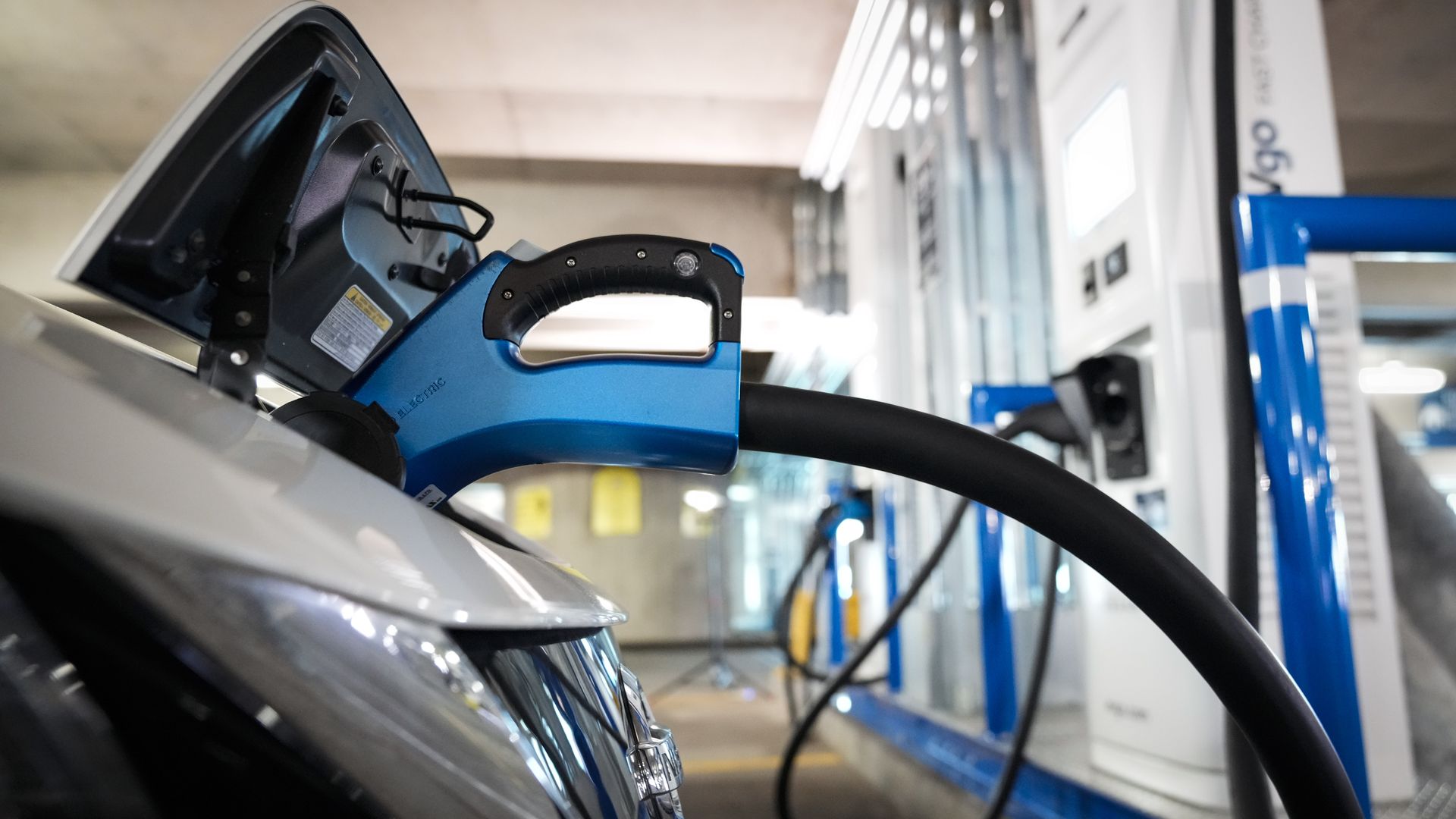
Fewer than 10% of Americans have easy access to an electric vehicle charging station, and those who do tend to be wealthy and white.
Why it matters: The Biden administration wants EVs to comprise 50% of all new car sales by 2030, an ambitious target that will likely require broader consumer incentives. But if electric vehicles are going to achieve mass market adoption, people also need to be able to find charging plugs.
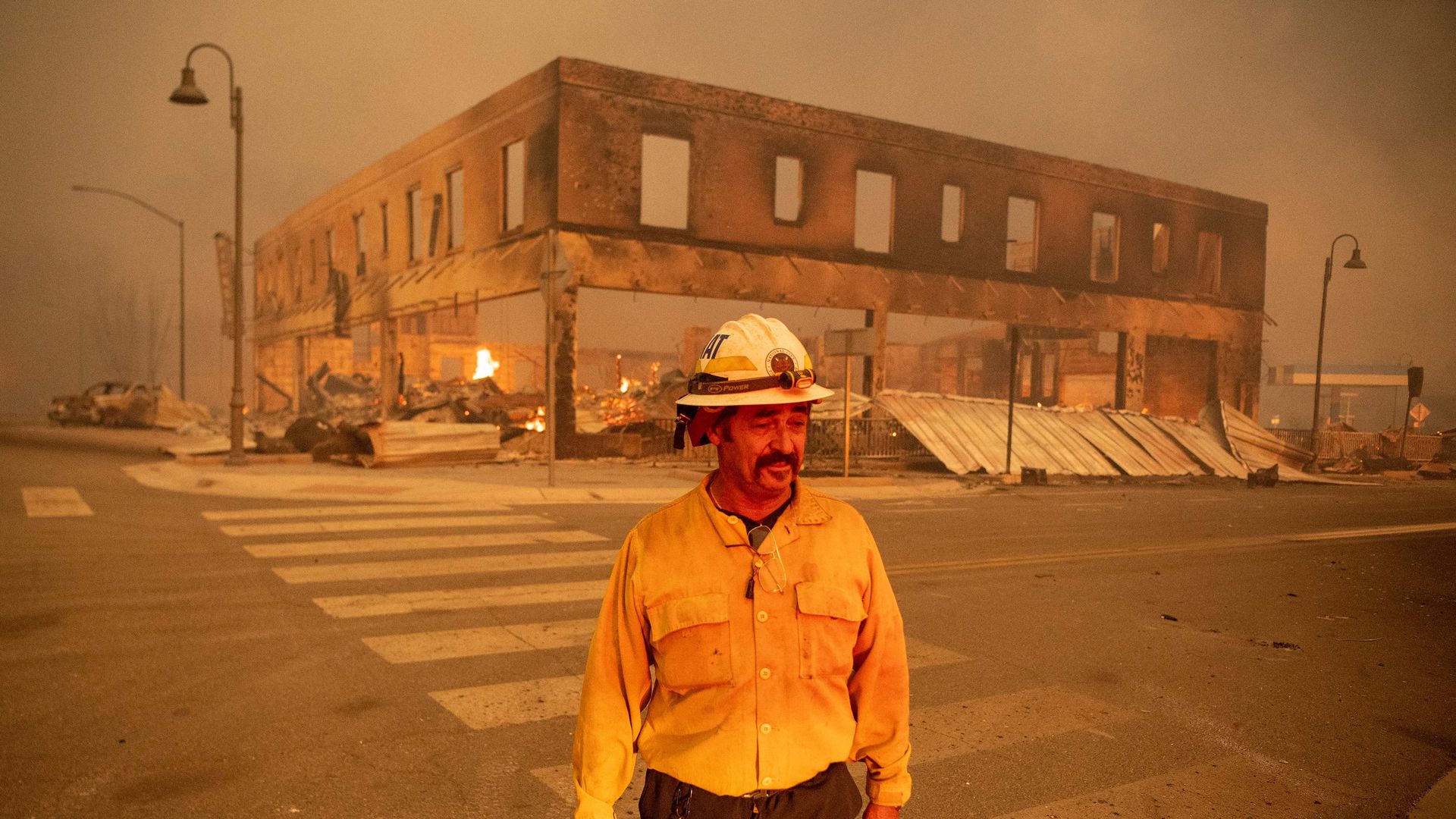
The small Sierra town of Greenville, California, was heavily damaged on Wednesday night into early Thursday as the Dixie Fire surged northward amid high winds, extremely dry air and hot temperatures.
The latest: The Dixie Fire, California's biggest blaze, continued to threaten communities in Plumas County into Thursday night, as more mandatory evacuation orders were issued in the region.
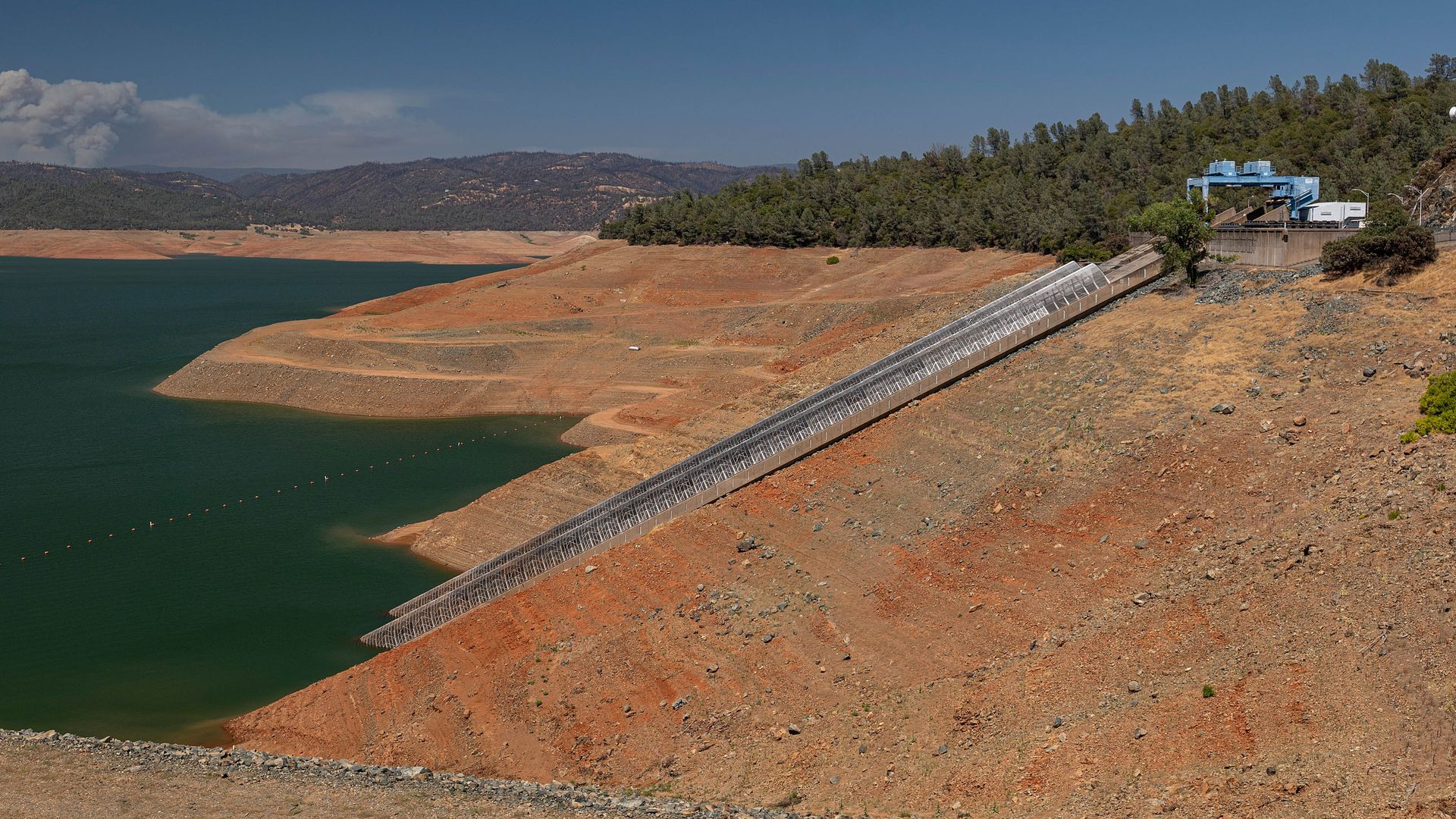
A largescale California hydropower plant was shut down on Thursday after ongoing drought conditions reduced water levels in Lake Oroville to historic lows, according to the Sacramento Bee.
Why it matters: It is the first time the Edward Hyatt hydroelectric power plant has ceased operations since it was constructed in 1967, at a time when California is warning about the potential for rolling blackouts.
The plant feeds from a reservoir at Lake Oroville in Butte County, the foothills of the Sierra Nevadas in Northern California, and has the capacity to power almost half a million households, according to the Bee.
But the lake is less than one-quarter full — surpassing its record lowest level set in 1977 — amid the state's ongoing water crisis.
What they're saying: “This is just one of many unprecedented impacts we are experiencing in California as a result of our climate-induced drought,” said Karla Nemeth, director of the California Department of Water Resources, in a statement.
"DWR anticipated this moment, and the state has planned for its loss in both water and grid management," the statement adds.
“Falling reservoir levels are another example of why it is so critical that all Californians conserve water. We are calling on everyone to take action now to reduce water use by 15 percent, to preserve as much water supply in storage as possible should we experience another dry year. We are all in this together.”
The big picture: California Gov. Gavin Newsom (D) has asked households this summer to voluntarily reduce water usage.
He also declared a regional drought state of emergency in 50 of the state's 58 counties, where more than 40% of Californians live.
Officials in the northern California town of Greenville on Thursday said they were at a loss for words to describe the widespread destruction left by the massive Dixie Fire, which razed businesses and homes Wednesday night.
What they're saying: "Our beloved small town of Greenville, CA faced our biggest nightmare," Plumas County Supervisor Kevin Goss wrote on Facebook. "Our historical buildings, families homes, small businesses, and our children's schools are completely lost."
Moody's is acquiring climate and natural disaster risk modeling company RMS for about $2 billion from Daily Mail and General Trust.
Why it matters: Modeling climate risk exposure is becoming critical for a growing number of industries, especially as extreme weather events are dramatically picking up in frequency and impact. Supply chain disruptions are of particular concern.
High-profile progressive Senate Democrats have expanded their climate wish list for the multitrillion-dollar package the White House and Democratic leaders hope to move via budget reconciliation.
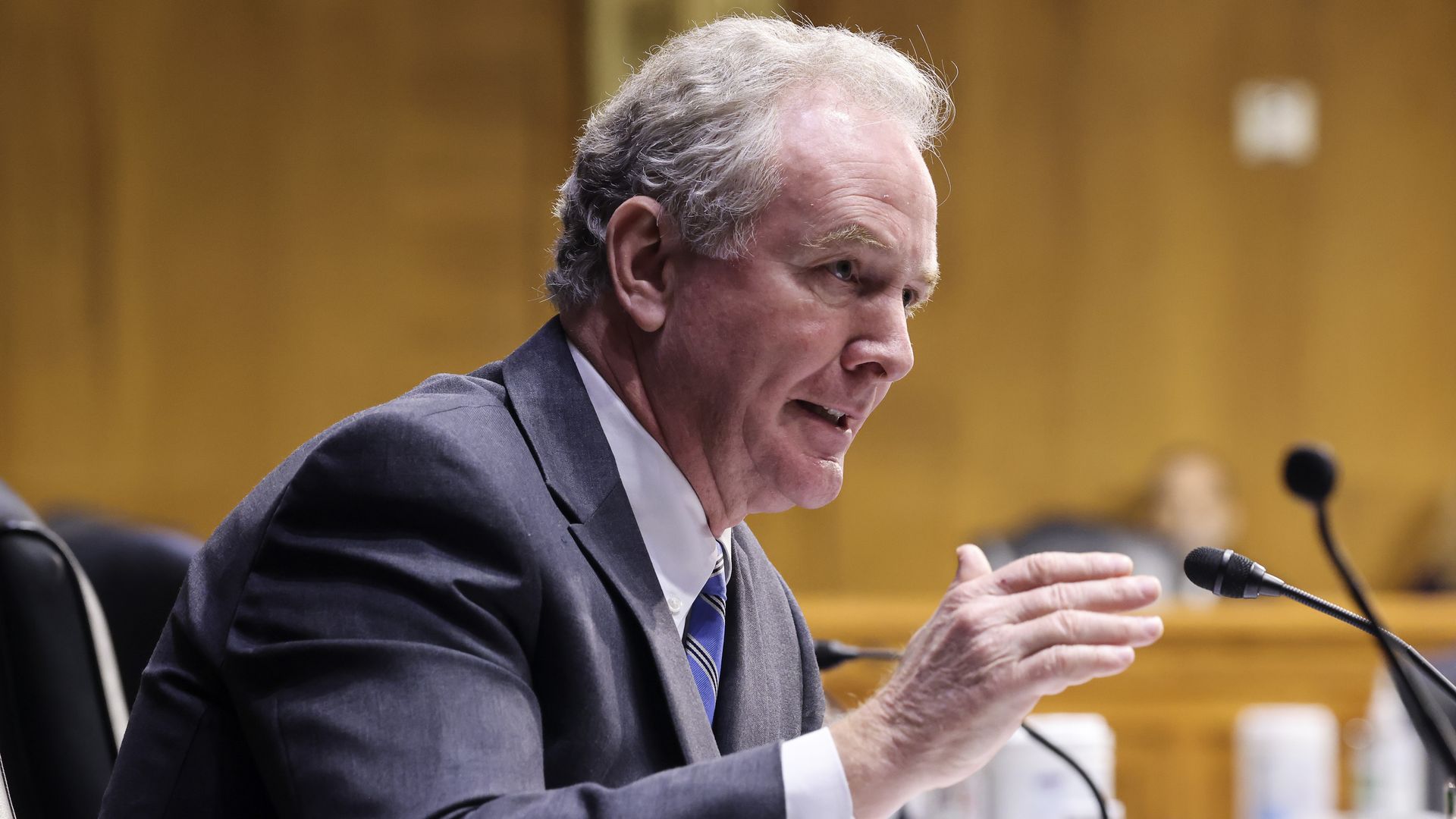
Driving the news: Sen. Chris Van Hollen (D-Md.) is leading a push for $500 billion in fees over 10 years from large fossil fuel companies — with a big chunk hitting Big Oil — to help finance climate initiatives.
The Wall Street Journal reports this morning that Exxon is "considering a pledge to reduce its net carbon emissions to zero by 2050."
Why it matters: It would be a major shift for Exxon, the U.S.-based multinational giant, which to date has opposed the long-term targets embraced by European giants like Shell and BP.
Two massive California wildfires have triggered new mandatory evacuation orders for thousands of people and destroyed homes and businesses in the state's north overnight.
Details: The Dixie Fire, California's biggest blaze, razed houses and businesses as it ripped through the town of Greenville and surrounding areas in Plumas County Wednesday night. The rapidly spreading River Fire burned "multiple" homes as it tore through Placer and Nevada counties, KOVR notes.
The White House on Thursday is unveiling draft mandates and aspirational targets aimed at drastically cutting vehicle carbon emissions and accelerating the shift to electric models.
Why it matters: Transportation is the largest source of U.S. emissions.