California and 23 other states filed suit against the Trump administration's plan to revoke the state's authority to set stricter tailpipe emissions rules than the rest of the country.
Why it matters: The outcome could have myriad effects, from which vehicles Americans drive years from now to the balance between state and federal power, the Washington Post notes. Automakers, some of which sided with California's stricter emissions targets, are dreading a drawn-out legal battle and being left not knowing which standards to follow.
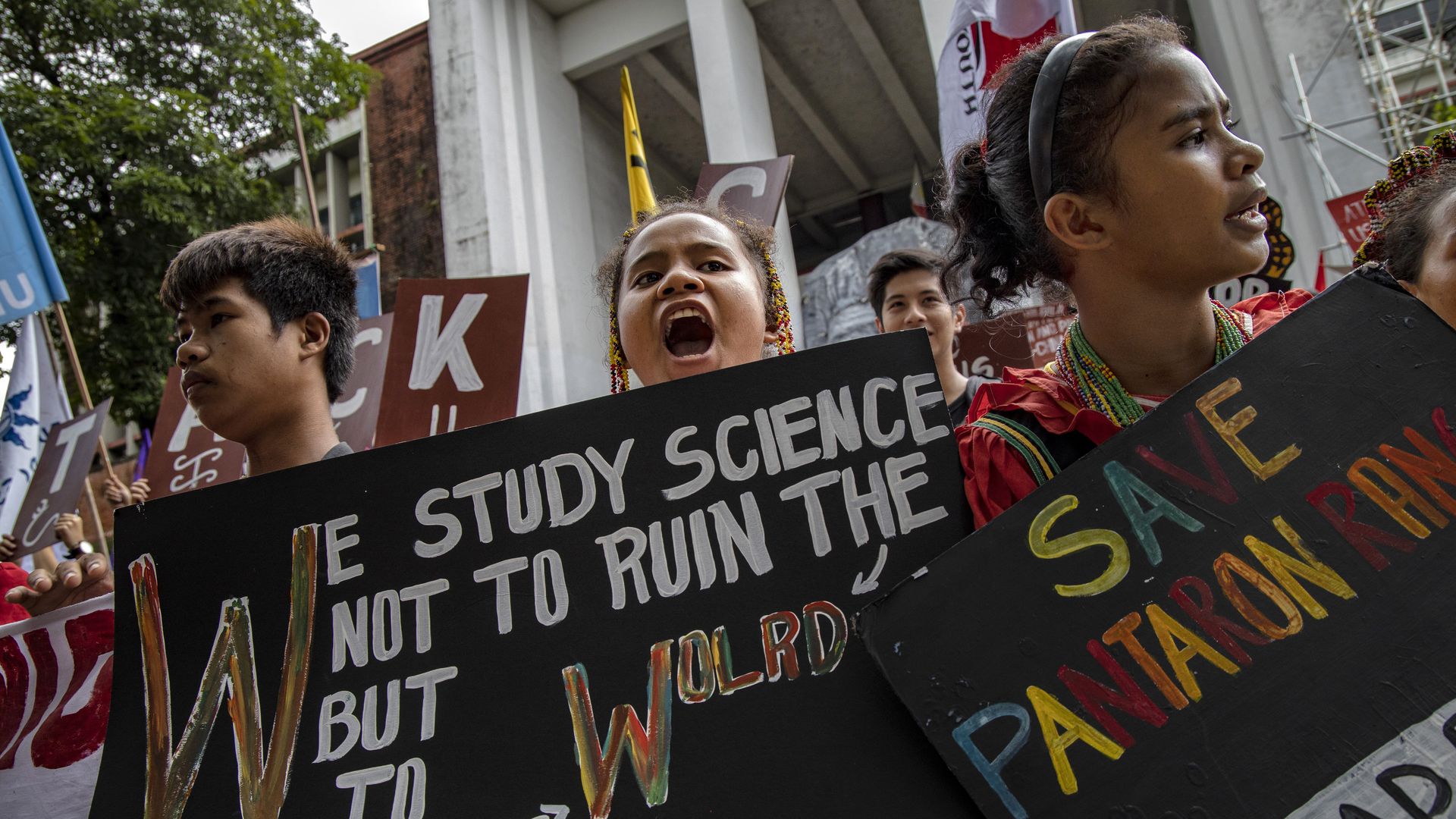
Millions of young people across 150 countries are protesting climate change on Friday, with many students skipping school to participate, the Washington Post reports.
What's next: The protests come days before world leaders are set to meet at a climate summit at the United Nations. UN Secretary-General António Guterres wants leaders to come with actionable plans and not empty promises, per the Post.
Hindering the expansion of natural gas pipelines could drive a reversion to dirtier energy sources like coal and heating oil, especially when sufficient infrastructure for renewable energy is not yet in place.
Why it matters: Greater demands on the power grid have led to more natural gas pipelines in the Northeastern U.S., but several proposed pipelines have been canceled or delayed due to public pushback. Inhibiting their construction could inadvertently produce greater emissions and lead to more air pollution.
Automakers are beginning to offer subscription packages that include insurance, typically via a third-party provider. Tesla has gone a step further, recently announcing it will offer its own policies, which may signal a larger shift in auto insurance.
Why it matters: The volume of vehicle behavioral data that connected vehicles will generate could be leveraged by automakers to edge into the insurance market, while enabling them to proactively protect drivers by recommending safer routes.
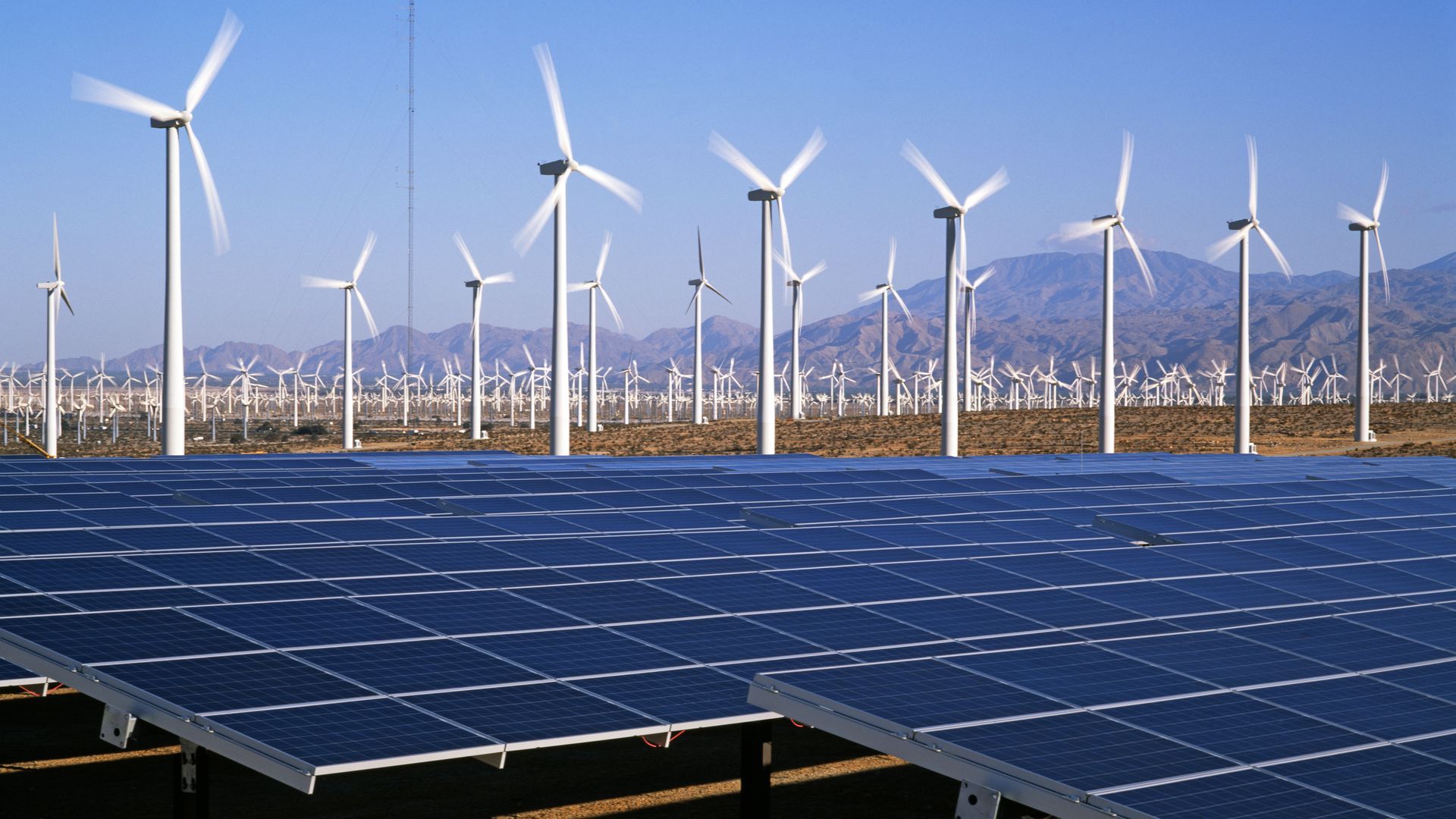
Growth of renewable power capacity resumed in 2019 after stalling last year, the International Energy Agency said in an estimate Friday.
The big picture: Last year was the first time since 2001 that growth was flat, but IEA estimates that capacity additions this year will grow almost 12% to nearly 200 gigawatts. However, despite the growth, it's not consistent with keeping warming in check. "Renewable capacity additions need to grow by more than 300 GW on average each year between 2018 and 2030 to reach the goals of the Paris Agreement," the agency said.
Amazon unveiled sweeping new energy and climate plans yesterday, and hours later, Google announced its biggest renewable power buys ever.
Why it matters: While the announcements by 2 of the world's biggest companies are stark signs that corporate giants are getting more aggressive about climate change, corporate commitments won't change the underlying trend of global carbon emissions on track to bring warming that blows past the Paris Agreement's temperature goals.
NEW YORK — Climate activists are rallying in the streets here and around the world today calling for urgent action curbing carbon emissions, while a controversial but carbon-free nuclear power plant 180 miles away quietly goes offline.
The big picture: It’s an ironic moment in history. Nuclear power provides America — and the world — with one of the largest sources of carbon-free electricity. Many environmentalists nonetheless don’t support it because of fears about safety and radioactivity. Plants are shutting down under economic duress, and in some states and countries carbon emissions are rising as a result.
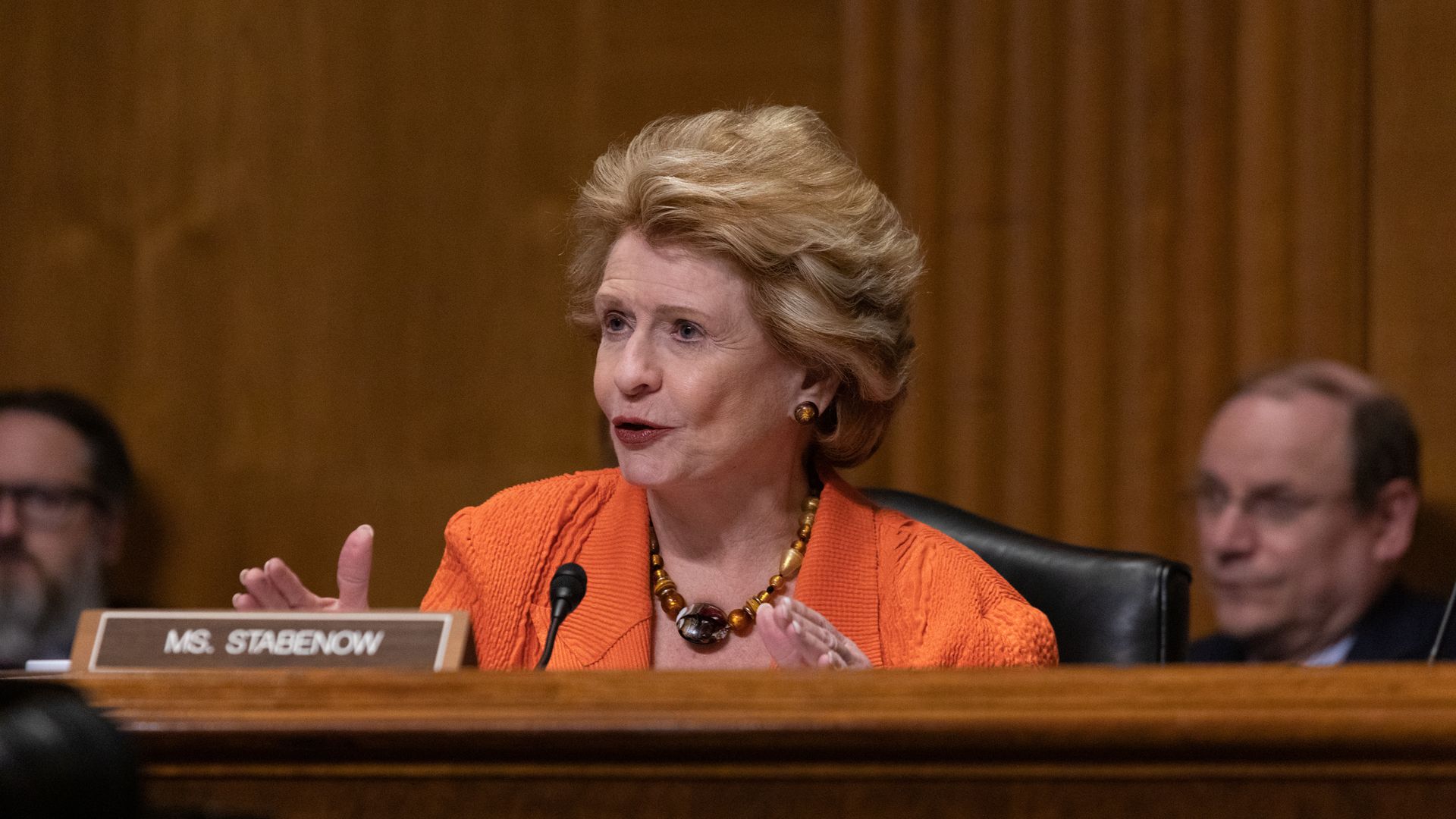
Senate Democrats alleged in a new report Thursday that the Trump administration has censored more than 1,400 studies on climate change across the government, Politico reports.
Why it matters: To the extent these claims are accurate, it illustrates the reach of President Trump's moves to stifle established climate science. It's also a sign of how much of a political football climate change has become between the two parties.
Google on Thursday announced a 1.6 gigawatt package of renewable power deals in the U.S., South America and Europe that the tech behemoth is calling the "biggest corporate purchase of renewable energy in history."
Why it matters: The announcement signals how buys from large companies, including several tech giants, are becoming an increasingly important driver of solar and wind power growth. It also arrives the same day that Amazon vowed to power its facilities and operations with 100% renewables by 2030 as part of wider new climate pledges.
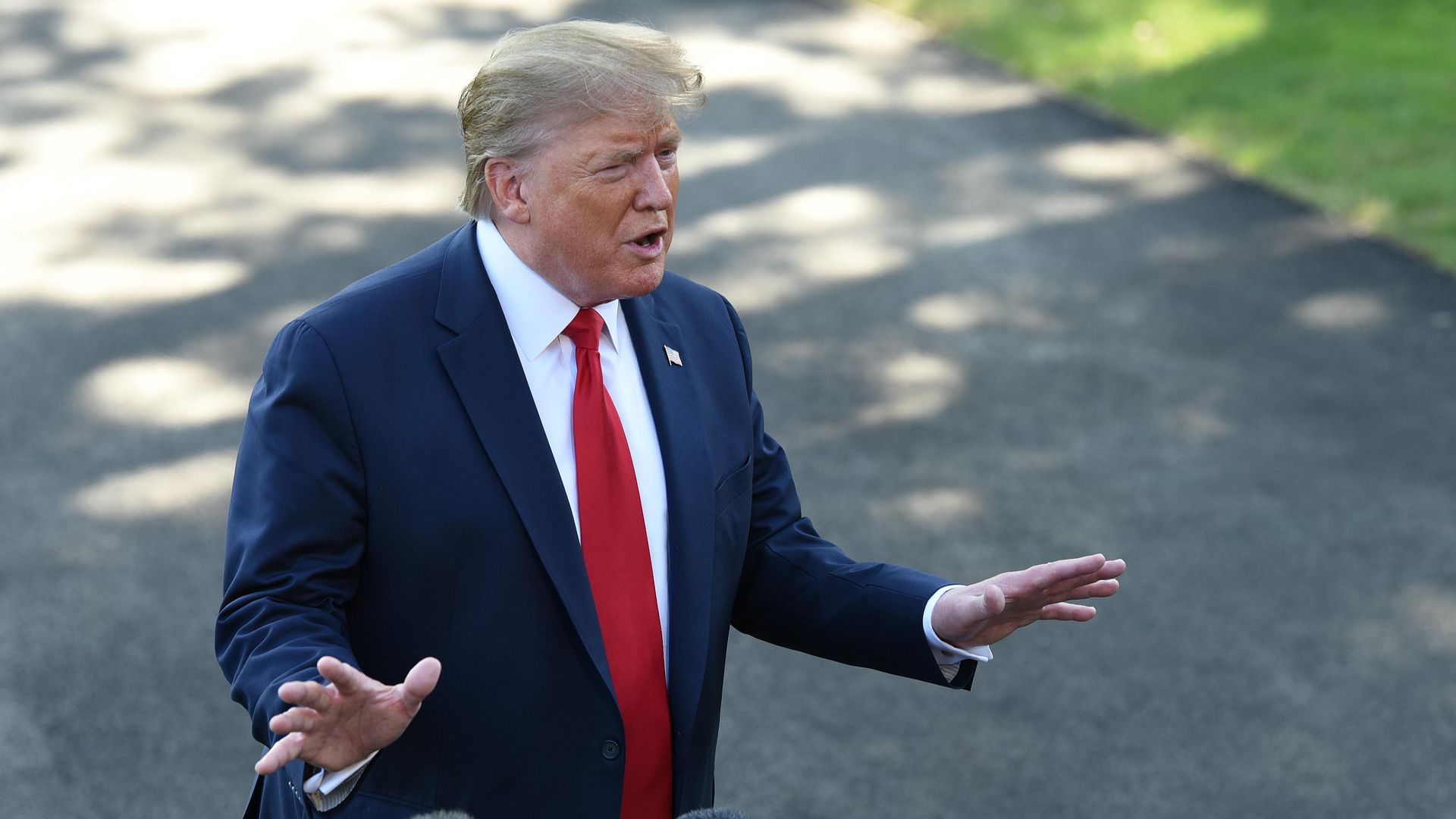
President Trump's effort to yank California's power to impose vehicle carbon emission rules that are tougher than federal standards is very of-the-moment.
Driving the news: EPA this morning announced that they’re indeed revoking California’s waiver, stating it’s needed to ensure “there will be one, and only one, set of national fuel economy and greenhouse gas emission standards for vehicles.”
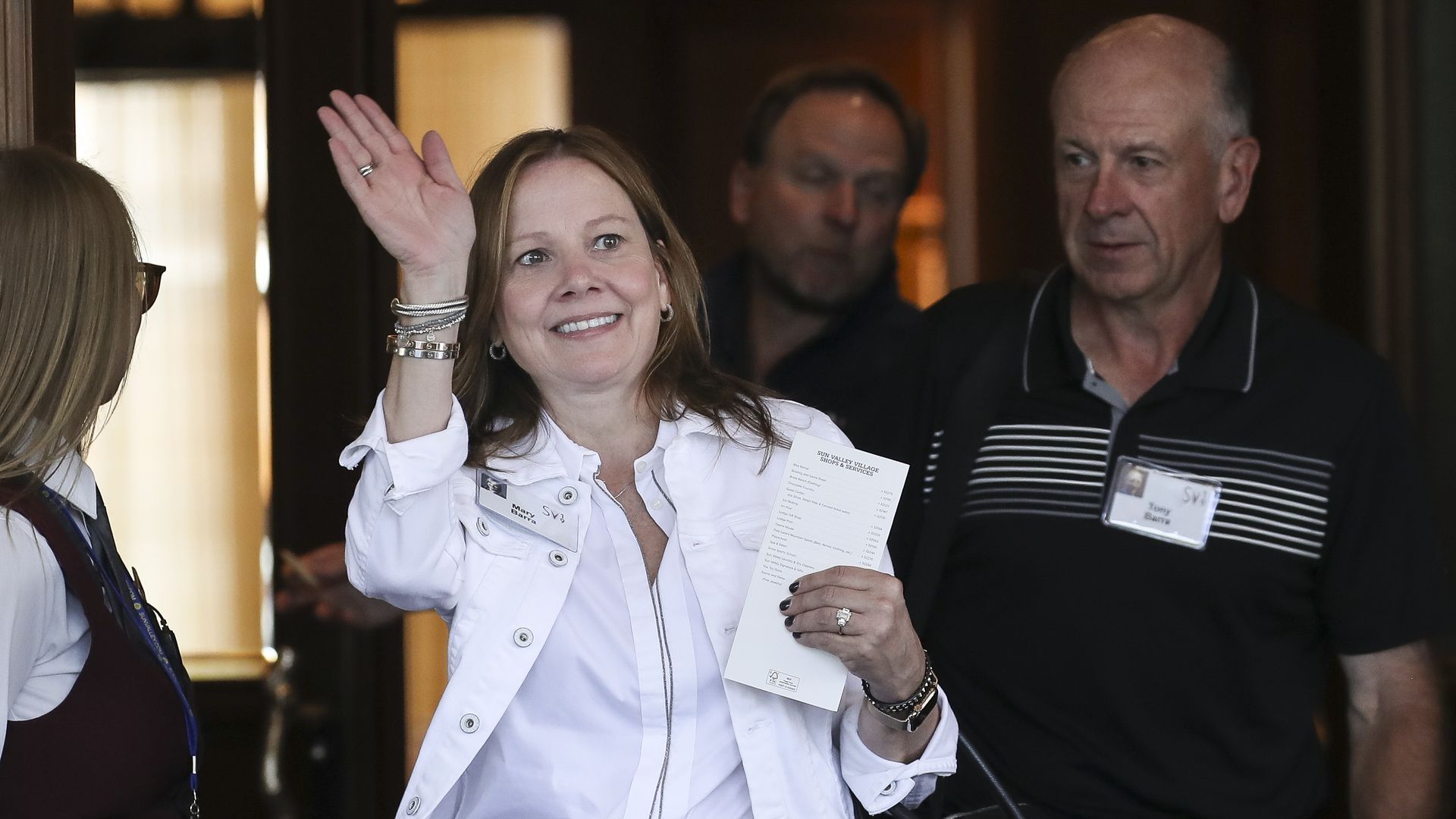
GM CEO Mary Barra is willing to bet her company's future on massive investments in electric and self-driving vehicles — even at the expense of its traditional gasoline-powered base, writes Bloomberg Businessweek.
The big picture: "Taking vast resources from businesses that make money and moving them toward businesses that (so far) lose mountains of it is obviously a large and risky bet," according to Bloomberg. However, the biggest challenge for GM will be to get the right timing as it goes full steam on electric vehicles.
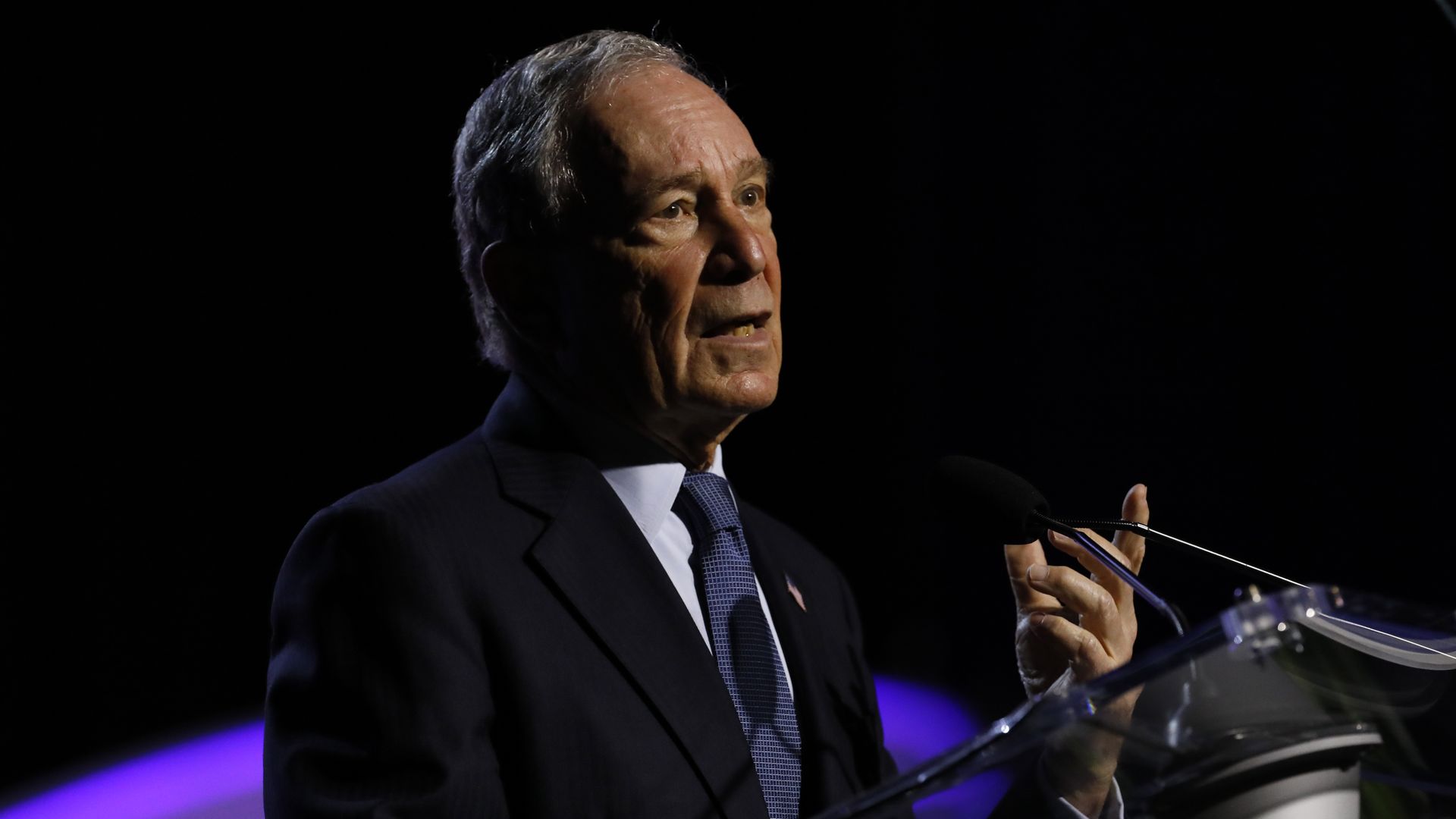
The Michael Bloomberg-backed Beyond Carbon campaign has launched a 6-figure digital ad buy just ahead of the 2-day climate forum with 2020 Democratic hopefuls that MSNBC is co-hosting Thursday and Friday.
Where it stands: The campaign — running on Facebook, Instagram, Twitter, and YouTube — features commentary from former New York City mayor Bloomberg, Hip Hop Caucus CEO Rev. Lennox Yearwood Jr. and others.
United Nations Secretary-General António Guterres sought to underscore the urgency of climate change on Wednesday, even as other topics grabbed the spotlight during a press conference ahead of a major UN summit next week.
Why it matters: Given both the cause and effect of climate change are decades in the making, the issue often gets crowded out of the top of diplomatic agendas when more imminent crises emerge. In Wednesday’s case, the conversation was dominated by the weekend attacks on Saudi Arabian oil infrastructure — which produces the very products helping warm Earth’s temperature.
Gasoline prices have gone up across more than half the country following last weekend’s attacks on Saudi Arabia oil infrastructure.
Where it stands: Since Monday, the national gasoline price average has increased 9 cents to $2.65 a gallon, according to AAA, which predicts the average could jump as much as another dime this month. Spokeswoman Jeanette Casselano wouldn’t speculate when prices would start going back down.
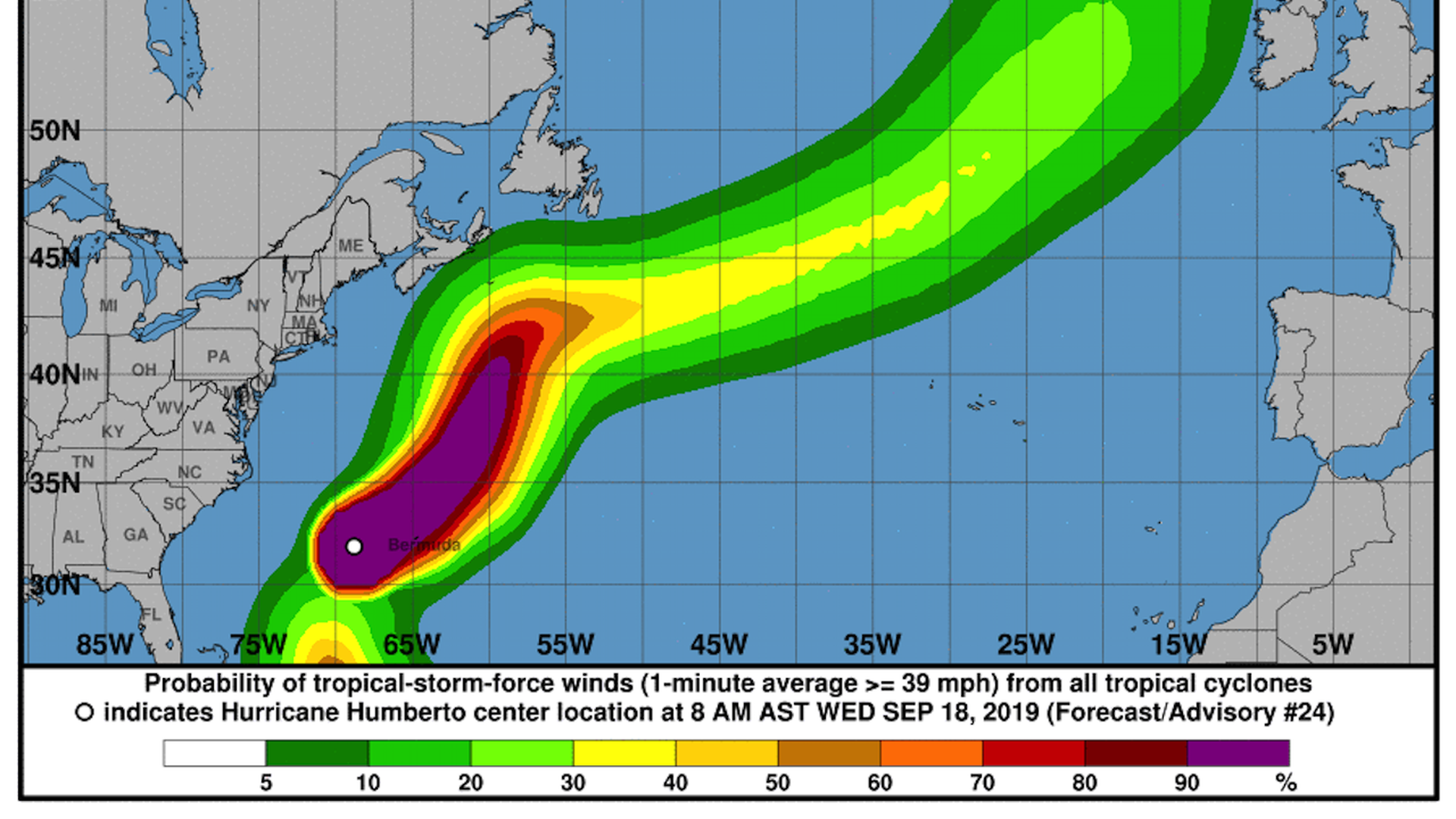
Bermuda was spared the brunt of Hurricane Humberto, but the Royal Gazette reports that the Category 3 storm's 125 mph winds cut power to almost 20,000 British island territory residents — about 80% of the population.
Details: Bermuda Fire and Rescue Service reported 17 minor incidents including gas leaks and transformer fires and 9 medical incidents, the government tweeted. By 2am, Humberto was 195 miles north-northeast of Bermuda, but its winds were still plaguing coastal areas, per the National Hurricane Center.