Tuesday's economy stories

Space X and Tesla exploring merger, CEO Elon Musk says
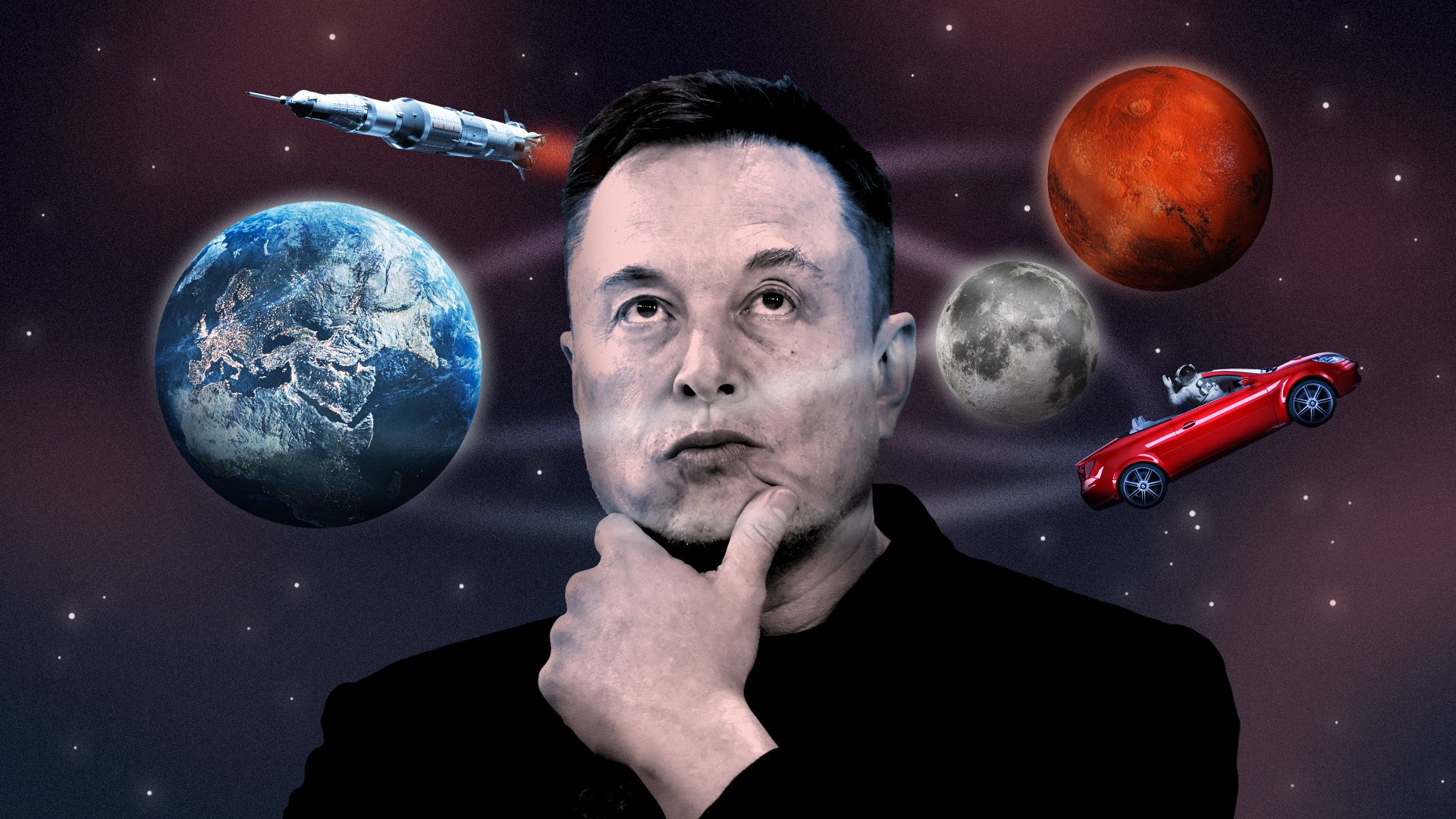
SpaceX and Tesla have formed special committees to discuss a potential merger — and Elon Musk thinks "it's a good idea," the CEO of both companies said Tuesday.
Why it matters: SpaceX and Tesla have increasingly been collaborating on chips and AI projects — and Musk leads both companies — prompting widespread speculation that they could join forces.

Axios Live: AI shopping takes off as trust concerns linger

LAS VEGAS — Digital agents are researching and purchasing products for consumers, but questions remain around security, authorization and liability, commerce leaders said at an Axios Live roundtable at Money20/20.
Why it matters: Merchants and financial institutions are under pressure to establish safeguards that protect shoppers while still enabling a seamless buying experience.
Axios' Dan Primack and Lucinda Shen moderated the Oct. 18 roundtable discussion. The event was sponsored by Synchrony.
5 big takeaways from the conversation:
- "A significant amount of commerce" will become "at least agent-assisted or initiated," predicted Sherri Haymond, Mastercard executive vice president and head of digital commercialization, pointing to how consumers could use the technology to look for the best price on a specific product.
- One-off transactions are already building trust with consumers easing into the habit of using agents to make purchases, Stripe Link business lead Jay Shah said. This includes big-ticket items like travel.
- Assistants integrated with infrastructure "will win the consumer agent battle," said Blue Language Labs CEO Zor Gorelov. "Real traction" will come from assistants that can anticipate needs by being integrated with calendars, emails and payments, he added.
- Permission is a bottleneck, Oscilar co-founder and CEO Neha Narkhede said. This will continue to be an obstacle until there's a process to establish whether agents should be making purchases or who is liable if something goes wrong, she added.
- "A catastrophic event of loss" may trigger greater regulation, said Natural CEO Kahlil Lalji. In the meantime, organizations and leaders can get clear on how they plan on operating their businesses within the policy and governance frameworks that do exist
The bottom line: There are many opportunities to wield AI in commerce, but leaders aiming to do it well are prioritizing the user experience, trust, and clarity on governance.
Content from the sponsor's remarks:

In opening remarks, Rachel Moore, Synchrony SVP of agentic commerce, payments and incubation, said AI is touching every corner of the industry and bringing segments together.
- "Commerce is changing with AI … [and] every part of the customer journey is changing. From discovery, to how someone is making decisions, how commerce is ultimately happening. Synchrony sits at a really interesting intersection of merchants meeting consumers meeting payments and technology."

SpaceX earnings soar past expectations as AI business surges
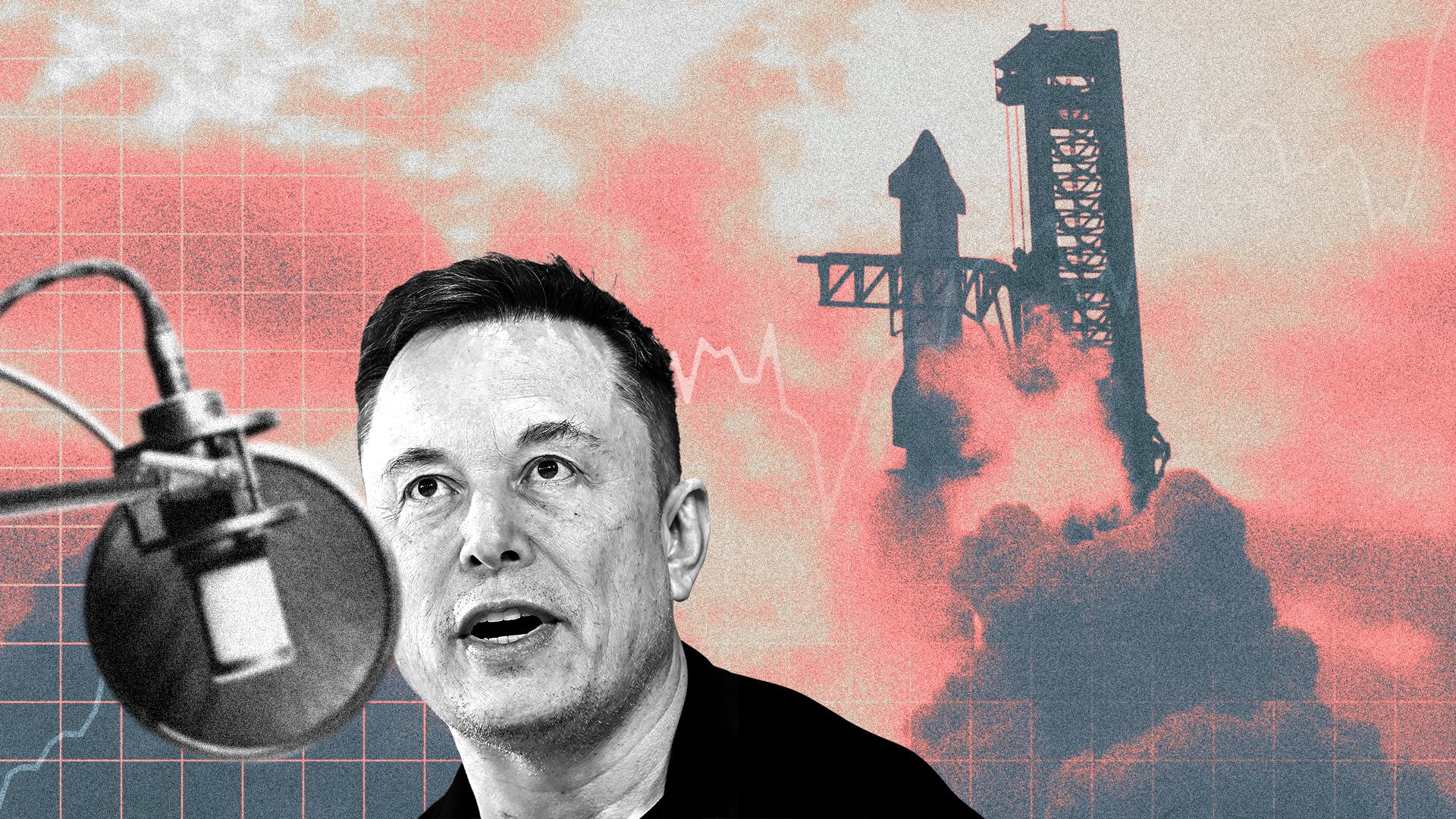
SpaceX rocketed past expectations on revenue and profit in its second earnings report as a publicly traded company — with its space, connectivity and AI businesses all delivering strong performances.
Why it matters: With a market cap of about $2 trillion, SpaceX is one of the most powerful companies in the AI economy and has aggressive plans to uproot entire industries, such as telecommunications.

Deflation is served
Scrambled eggs are one option, but you can make plenty more with foods that are getting cheaper.
- We asked chef David Deshaies, co-owner of Unconventional Diner and L'Ardente in Washington, D.C., to share a recipe.
What they're saying: "Growing up in France, my grandmother used to make oeufs cocotte," Deshaies tells Axios. "She could always make something so delicious with just a few simple ingredients."

Egg prices dropped. Really.
Eggs and more are back on the budget menu.
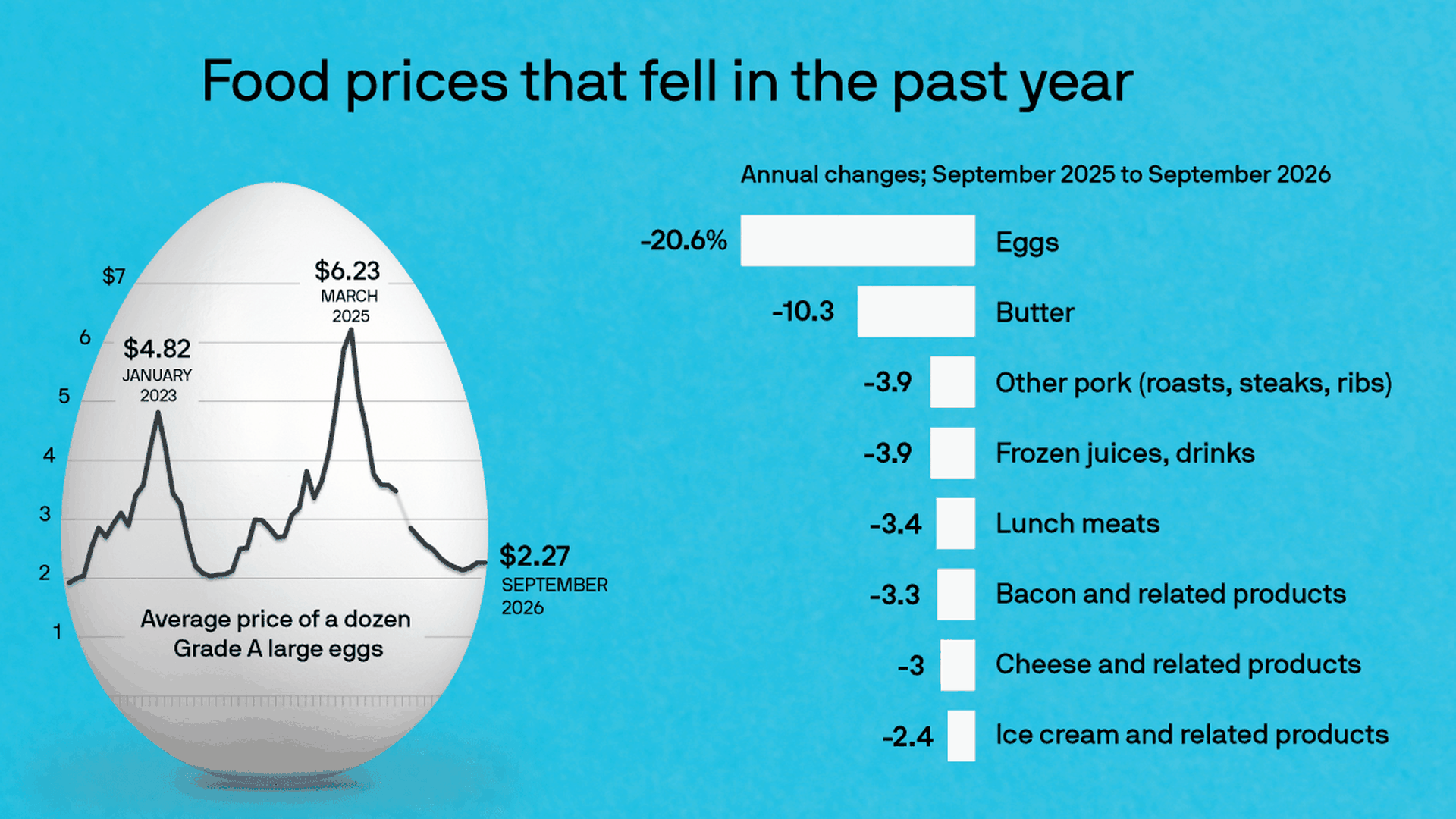
- The average price of a dozen large eggs is down $4 since peaking at $6.23 in March 2025, according the Bureau of Labor Statistics. Butter has fallen more than 10% in the past year.
The big picture: Food prices are up 2.5% since last September, but some essential grocery store items are moving in the opposite direction.

Wall Street brings blockchain into the fold
LAS VEGAS — The buzz at Money 20/20 is focused on consumers being on the verge of near-instant banking transfers, including at night or on weekends, Axios' Ryan Lawler and Lucinda Shen report.
Why it matters: America's financial giants have talked for years about bringing blockchain — the technology that cryptocurrencies like bitcoin are built on — into their systems. Now they're actually doing it.
That shift to instant transfers could also make investing faster and more convenient: Digital versions of stocks could let investors transfer shares around the clock, even when exchanges are closed.
- "It's becoming more mainstream institutionally than it ever has been," Digital Currency Group investor Aaron Fu tells Axios, pointing to financial institutions building more blockchain infrastructure in-house.
💡 How it works: Financial institutions have begun using private blockchains to instantly track money and investments as they change hands.
Yes, but: Using the technology behind cryptocurrencies doesn't necessarily mean using the currencies themselves.
- Banks can create digital versions of the dollars customers already have on deposit.
💰 State of play: Money 20/20 attendees say that the conversation has moved from "Is this possible?" (the answer is yes) to figuring out exactly how banks will put these services into the electronic hands of consumers like you and me.
- The industry group that handles much of the recordkeeping and settlement behind U.S. stock trades is preparing a service that creates digital tokens representing securities held in its system. This is called "tokenization."
- Already, Citibank has said its tokenized-deposit service operates in seven markets, letting clients move funds between Citi accounts on a private blockchain.
🔎 Reality check: Competing tokenization efforts could create different versions of the same asset trading on separate networks.
- That could confuse investors, reduce liquidity, and make it harder to establish reliable prices.
The bottom line: Blockchain is closer than ever to revolutionizing banking. First, banks, brokers and asset managers must connect systems so consumers and investors can move assets between them as easily as within them.

MLB lockout looms over small-market World Series showdown
The Tampa Bay Rays will face the Milwaukee Brewers in a World Series featuring two of baseball's smallest spenders, just weeks before a labor standoff that threatens to bring the sport to a halt.
Why it matters: MLB owners argue that baseball needs a salary cap to give smaller teams a fighting chance. But a championship matchup between two budget teams gives players fresh ammunition to argue that the current system works.

Mo money, mo kids: The highest earners are more likely to raise 3
One clue that might distinguish the rich from the very rich: Count their kids.
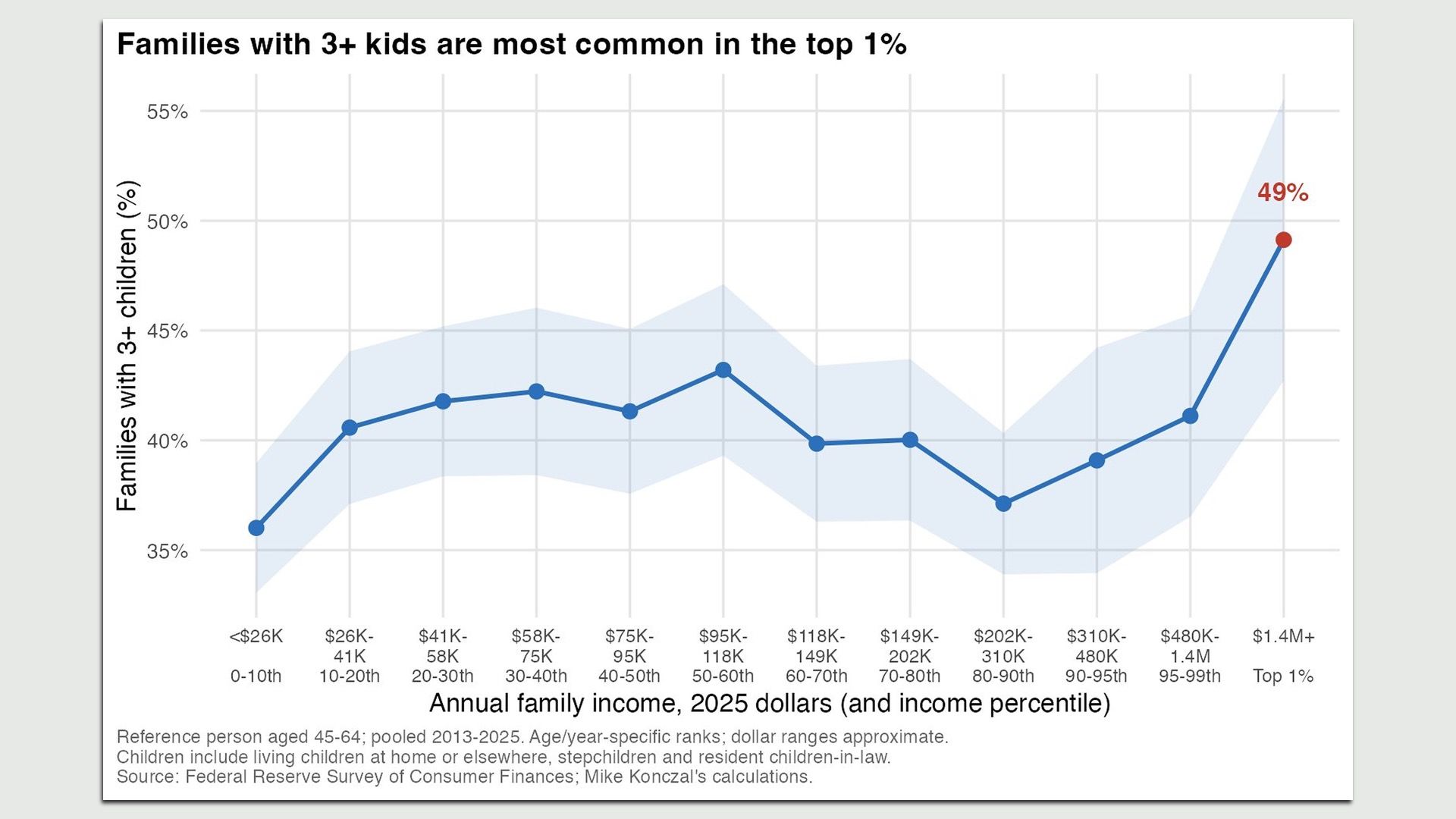
- Having a third child has become less common in America for every income group — except the highest earners, according to a buzzy analysis of Federal Reserve data by economist Mike Konczal, a former Biden economic official who is currently the vice president of the Economic Security Project.
Why it matters: The findings suggest that having a third child may be a luxury that even well-off Americans struggle to afford.

Housing is grim for builders, buyers, and homeowners right now
The AI boom is sucking up all the capital. The Federal Reserve is raising rates to try to cool inflation. And one sector is bearing the brunt of the pain from both: housing.
The big picture: The situation is lose-lose for both homebuilders and homebuyers. Builders are facing more expensive capital and bidding for scarce construction-related resources. Would-be buyers are being quoted some of the highest mortgage rates of this century.
- New September housing starts data out Tuesday morning puts an exclamation point on what has been a slow-moving disaster for a sector that plays an outsized role in the economic cycle and in Americans' basic living standards.

Antitrust officials try to block playground equipment merger
The Federal Trade Commission and a dozen state attorneys general have sued to stop Platinum Equity and portfolio company PlayPower from buying rival playground equipment maker BCI Burke from Bertram Capital.
Why it matters: It's been rare in Trump 2.0 for federal and state antitrust regulators to work in concert.

Salesforce is buying Braze for $5.7 billion
Salesforce on Tuesday agreed to acquire marketing platform Braze for $5.66 billion in cash.
Why it matters: We're a long way since 2023, when Salesforce dissolved its board M&A committee, in part because of how hard it was to integrate a trio of mega-deals (MuleSoft, Tableau, and Slack).

How the energy crisis could become a food security crisis
The Iran war and the Ukraine-Russia conflict are creating a "multidirectional squeeze on world agriculture" that could spiral into a crisis, a new report finds.
Why it matters: Wars and extreme weather are colliding to threaten global food supplies and drive up prices, especially in vulnerable economies.

This neocloud may have a silver lining
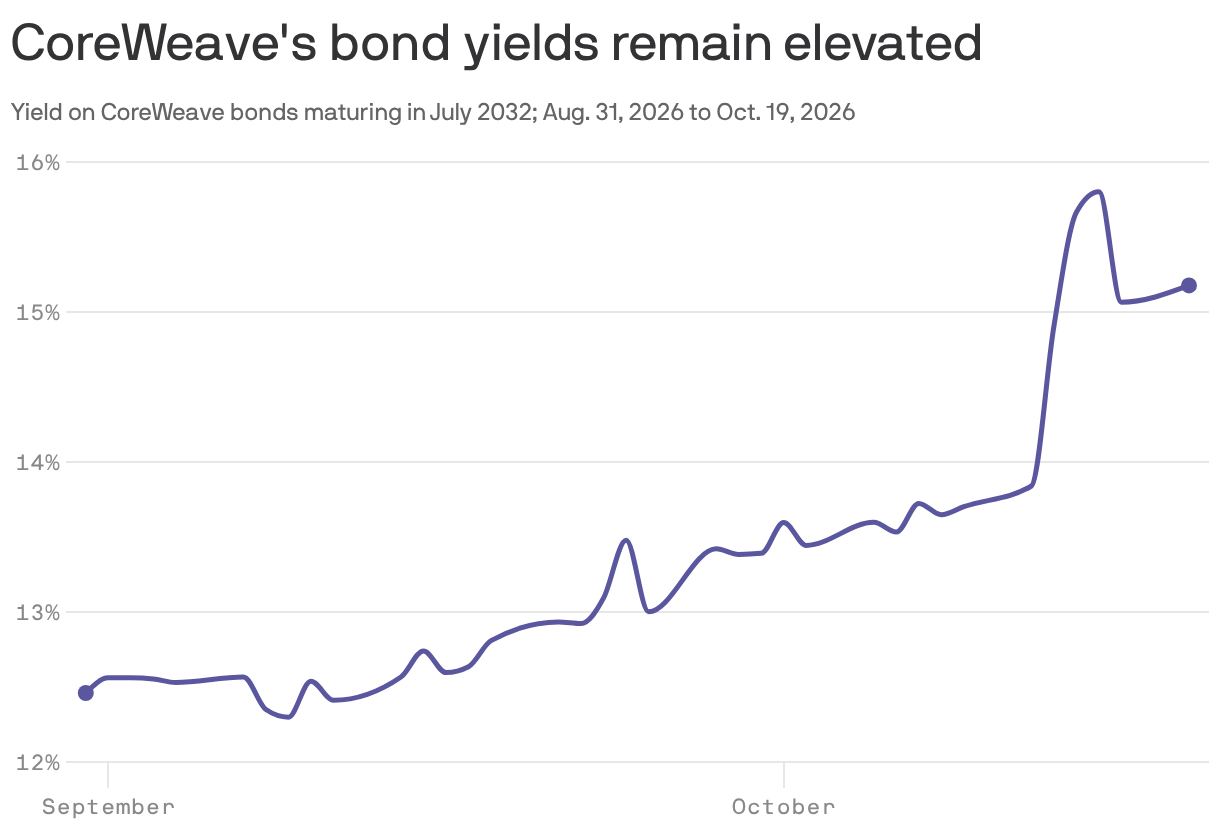
Goldman Sachs has raised its rating on the shares of CoreWeave to a "buy" recommendation after a brutal week for the data center operator.
Why it matters: That view may come as a surprise given that the tumble in CoreWeave bonds and stock last week had appeared to encapsulate all what markets fear about the debt-dependent AI boom: too much money, most of it borrowed, chasing returns that may prove elusive.

The deficit is getting real expensive to deal with


The U.S. budget deficit is ballooning, reaching $2 trillion this fiscal year, according to the latest figures.
Why it matters: That's the largest deficit since 2021, when the U.S. was climbing out of the pandemic recession.
- The deficit is being driven in part by the cost of servicing the nation's enormous debt at a time when interest rates are rising due, in part, to the inflationary impact of the Iran war.

Albertans reject push for independence from Canada
Voters in oil-rich Alberta overwhelmingly rejected a push to bring the province one step closer to secession in a historic referendum.
Why it matters: The result is a win for Canadian Prime Minister Mark Carney, who has touted a united, energy-dominant Canada and sought to appeal to Albertans, who have expressed resentment over the nation's energy policies.

Exclusive: The AI race is hitting an energy wall
Silicon Valley moves fast and breaks things, but the U.S. electrical grid moves slowly and requires permits.
- The explosive growth of AI is colliding with the glacial pace of building out new power infrastructure, prompting a new warning from Goldman Sachs that energy bottlenecks are set to stall the AI race.
Why it matters: Amid a wave of anxiety from Wall Street about the debt-fueled AI buildout, Goldman points to power as the biggest risk to trillions in spending in a new report shared exclusively with Axios.