AT&T CEO says Elon Musk's SpaceX phone strategy not "viable"

Add Axios as your preferred source to
see more of our stories on Google.
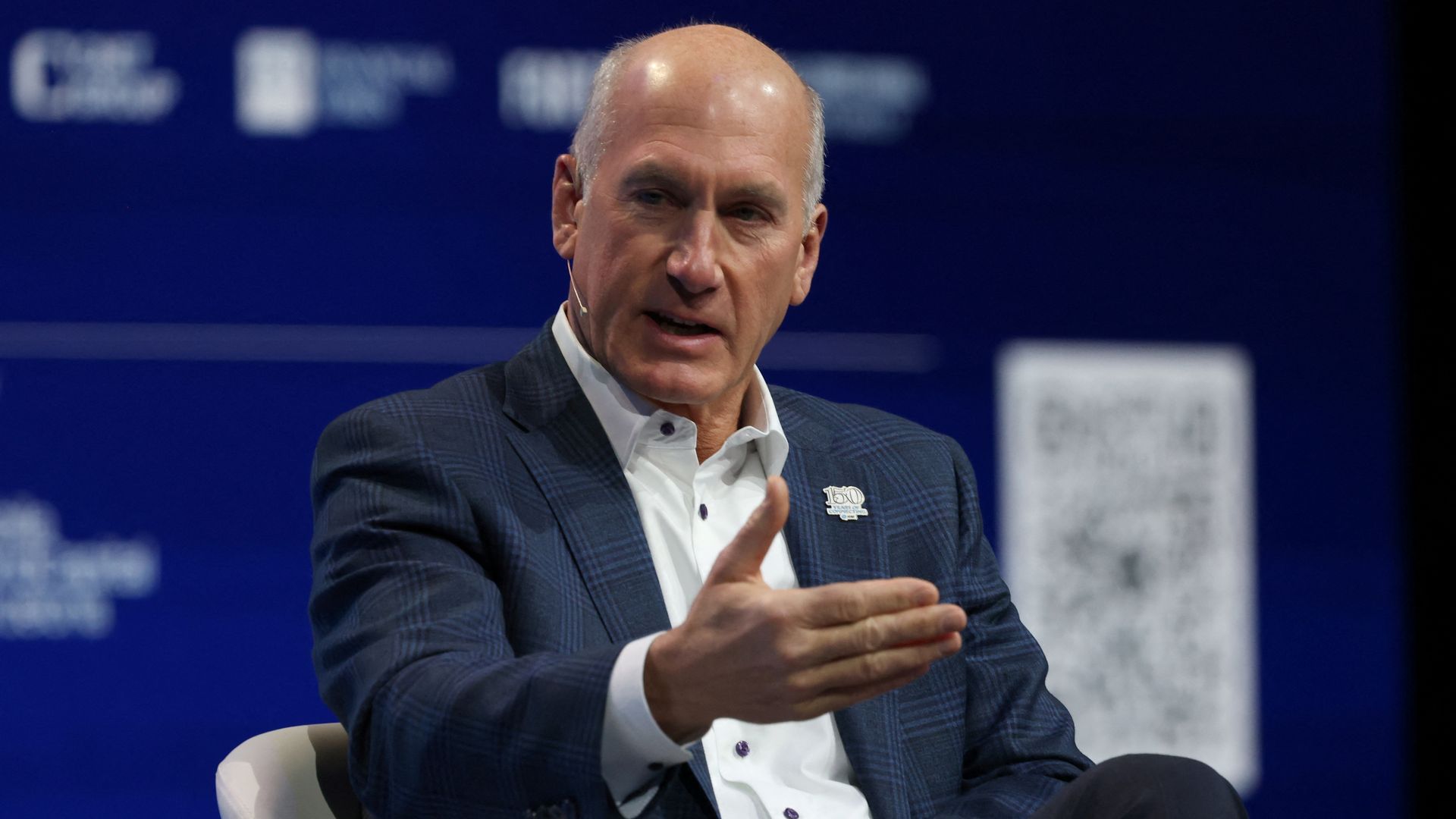
AT&T CEO John Stankey speaks at Mobile World Congress on March 2 in Barcelona. Photo: Lluis GENE / AFP via Getty Images
Elon Musk's plan to turn SpaceX into a major threat to the legacy telecom companies is "not a viable strategy," AT&T CEO John Stankey tells Axios.
Why it matters: Musk and SpaceX president Gwynne Shotwell recently touted their plan to turn the company's Starlink satellite business into a global competitor to traditional phone-and-internet-service companies.
Driving the news: AT&T is betting on its strategy of deploying fiber infrastructure to boost its internet business at a time when AI is driving booming demand.
- The company on Tuesday announced a $3 billion deal with Corning to provide the infrastructure, saying fiber is three times faster than satellite.
- "Nothing beats it," Stankey told Axios in an interview, adding that "satellite, at its best — if everything happens right over the next 10 years" — is "still not going to beat fiber."
State of play: Starlink already competes with traditional telecom companies for home and business internet customers — and SpaceX is now talking about a mobile business that would put it in more direct competition with wireless carriers.
- "I anticipate us to be able to acquire quite a few of their customers because I think our service will be better," Shotwell said in August on SpaceX's first earnings call after going public.
- The shot across the bow caused shares to drop the next day for AT&T, Verizon and T-Mobile.
Zoom in: Starlink had 12 million subscribers with 10,200 satellites providing coverage in 167 countries as of June 30, according to the company's first earnings report as a public company.
- While SpaceX's rockets and AI efforts get much of the publicity, its connectivity business is its biggest revenue driver, representing 55% of its sales.
- To become a true fourth U.S. mobile carrier, however, SpaceX would need more terrestrial infrastructure to provide the capacity of a traditional cellular network — potentially costing over $100 billion to build, per one analyst's estimation.
- SpaceX believes it has a more efficient option.
How it works: The company has outlined plans to install small cellular base stations alongside Starlink dishes on homes and businesses.
- The ground network could add capacity where satellites alone aren't enough — without requiring SpaceX to to build a traditional sprawling network of large cell towers.
- Musk says those small stations could provide connectivity directly to cellphones on the ground, potentially offering "better and higher bandwidth than what is currently available from cellular providers."
AT&T's Stankey said the economics and technical aspects of that plan don't line up.
- "It would cost as much to do that as it would to build a macro network to be able to handle those capabilities," he told Axios Tuesday.
- "There's all kinds of other issues, like you can't radiate cellular signals from somebody's house without their permission, unless somebody changes the law on that. We can go down a whole bunch of reasons why that won't effectively work."
- If that were viable, he argued, AT&T would be installing antennas on its own massive existing fiber network.
SpaceX reps did not immediately respond to a request for comment.
What they're saying: Analysts are also skeptical that SpaceX can quickly seize significant market share from the legacy telecom companies.
- "Everybody relax — towers aren't going anywhere, even if Elon gets creative," Bernstein analyst Madison Rezaei wrote in a recent report, noting the technical hurdles of extending satellite coverage indoors, brand awareness and customers' unwillingness to switch carriers.
- "Starlink Mobile may fill a meaningful gap in the market (i.e. remote, rural, maritime, disaster scenarios), but we believe it is a long way from replacing terrestrial carrier networks," Rezaei added.
Yes, but: AT&T must avoid falling prey to the innovator's dilemma, where a dominant industry player seeks to protect its business only to get disrupted by an outsider that doesn't have market share to protect.
- "I think we're the disruptor," Stankey said.
"We made a decision several years ago that we were going to do something that was very, very hard to swallow, which was invest at record levels in fiber, and it's a technology that is a superior technology that, unfortunately, the business case doesn't generate payback into our company for generally anywhere from six to eight years," he said.
- He added: "It's a long-term bet, but it's a bet that will change the industry and be very disruptive and durable because of its capabilities."
- Fiber will also be critical to meeting the growing connectivity needs of AI, Corning CEO Wendell Weeks said in the joint interview Tuesday. Including AI agents "and similar technologies that will help serve people and make them more productive."
The bottom line: The competition between SpaceX and the major telecom companies is heating up.
