This weekend brought violence in the streets of France. Monday brought violence in its bond market. And therein lies a warning for other rich countries staring at big fiscal imbalances.
Driving the news: There were outbursts of violence and looting in several French cities, following demonstrations over school quality and cost of living. They included rioters setting fire to the city hall in Limoges.
China's economy grew faster than expected in the third quarter, extending a yearslong pattern in which surging exports have compensated for weak spending and investment at home.
Why it matters: The stronger that China's economy performs, the less pressure Beijing faces to address the domestic imbalances that have made it so reliant on selling goods abroad.
But what is working for China is becoming harder for its trading partners to tolerate, raising the prospect that its growth model is reaching political and economic limits overseas.
DALLAS — The aerospace industry's growth is pushing Dallas employers and educators to focus on training more skilled workers as technology redefines the sector's standards.
Why it matters: Heightened national security needs and rising commercial aviation demands are fueling investment in North Texas' aerospace and defense industries, underscoring the importance of a highly skilled workforce.
Axios' Colin Demarest and Naheed Rajwani-Dharsi spoke with Tarrant County College Aviation Technology department chair Phillip Craig, Bell SVP for the Bell 525 Michael Deslatte, Lockheed Martin Missiles and Fire Control VP of operations Michael Patton, and Workforce Solutions Greater Dallas president and CEO Laura Ward. The Oct. 14 event was sponsored by GE Aerospace.
What they're saying: Patton said Lockheed Martin is aiming to hire 2,000 Texas employees over the next year, citing a growing sense of "national security urgency."
"We are definitely seeing people wanting to migrate into our industry," he said.
Retaining young workers and bolstering the talent pipeline supported by job training investments comes down to "communicating opportunity often," Ward said.
"I think upskilling while they're on the job is really important," Ward said of maintaining a robust workforce for the industry.
New technology, including AI, is speeding up the productivity and efficiency of young aerospace engineers, Deslatte said. "It used to take a better part of a decade for a brand-new engineer to become fairly productive within an OEM [original equipment manufacturer] setting. We're seeing that timeline accelerate drastically," he added.
Zoom in: Commercial airline and aerospace industries are facing a projected shortage of aviation maintenance technicians over "the next 20 years," Craig said. TCC aims to prepare students for the most in-demand skills in aerospace, he added.
Content from the sponsor's segment:

Axios Live's Hope King with GE Aerospace's Christian Meisner. Photo: Jacque Manaugh for Axios
In a View From the Top conversation, chief human resources officer for GE Aerospace Christian Meisner said the aerospace industry needs to prioritize building long-term career opportunities for employees, starting with apprenticeship and training programs.
"Whether it's an apprenticeship program, whether it's a partnership with a local community college or a tech school … we really need to scale."
The Pine Ridge Reservation in South Dakota sits in one of America's poorest counties, with a poverty rate estimated to hover above 50%. It's also where Devyn Valandra has started a business, now with support from one of venture capital's most successful investors.
Why it matters: Devyn isn't competing with Dario or Elon. But what he and others like him are doing is just as challenging — trying to grow in the literal and figurative badlands.
Tenstorrent, a Santa Clara, California-based inference chipmaker, on Monday announced that it's raised $1.5 billion at a $6.2 billion post-money valuation led by Trace Capital and Innovation X.
Why it matters: The startup was courted earlier this year by Intel and Qualcomm, but is opting to remain independent. At least for now.
President Trump's moves to avoid new penalties on Russian energy sent shockwaves through Washington, sparking diplomatic tensions and political turmoil.
Why it matters: Trump's push to lower energy prices ahead of the midterms could provide Russia an economic lifeline and is exposing divisions within his own party.
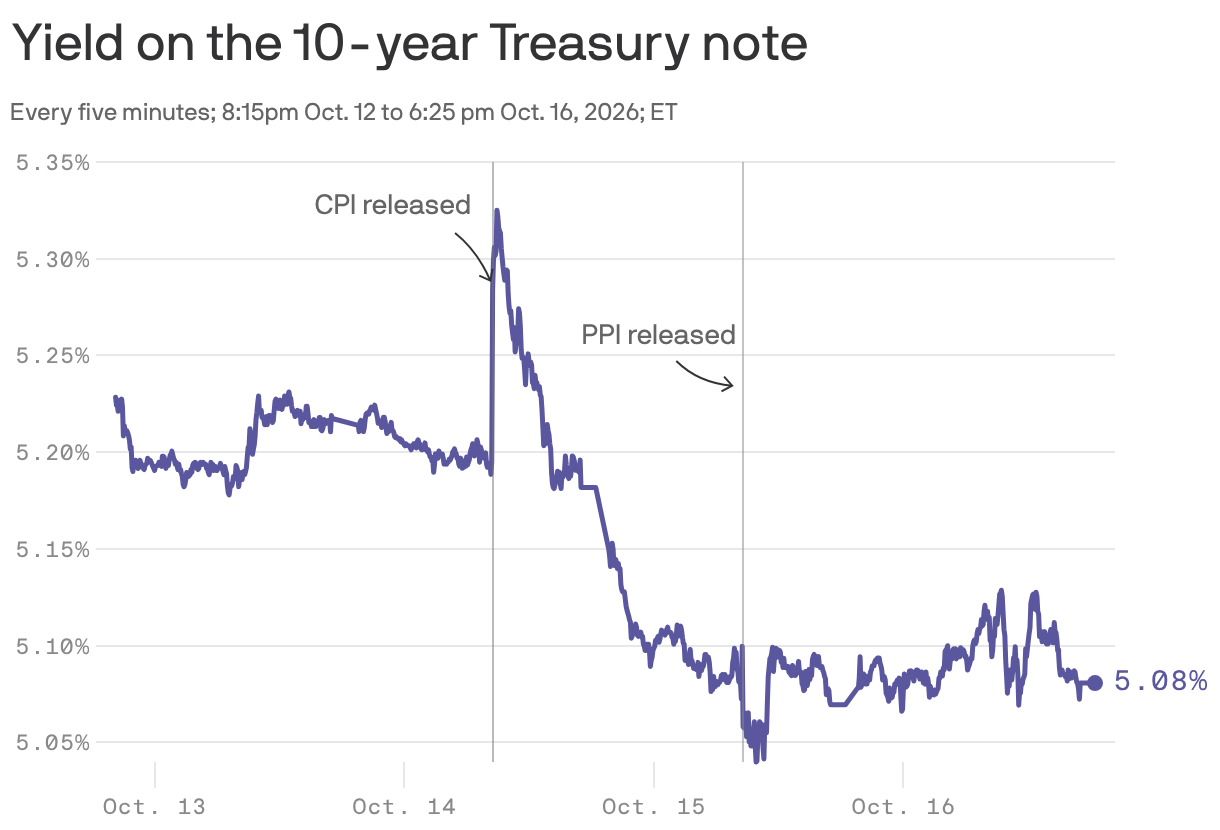
It got kind of wild in the U.S. Treasury market last week: The yield on the benchmark 10-year note swung in surprising ways as investors digested hot inflation reports and AI jitters.
Why it matters: Get used to it. Volatility could be a new normal.
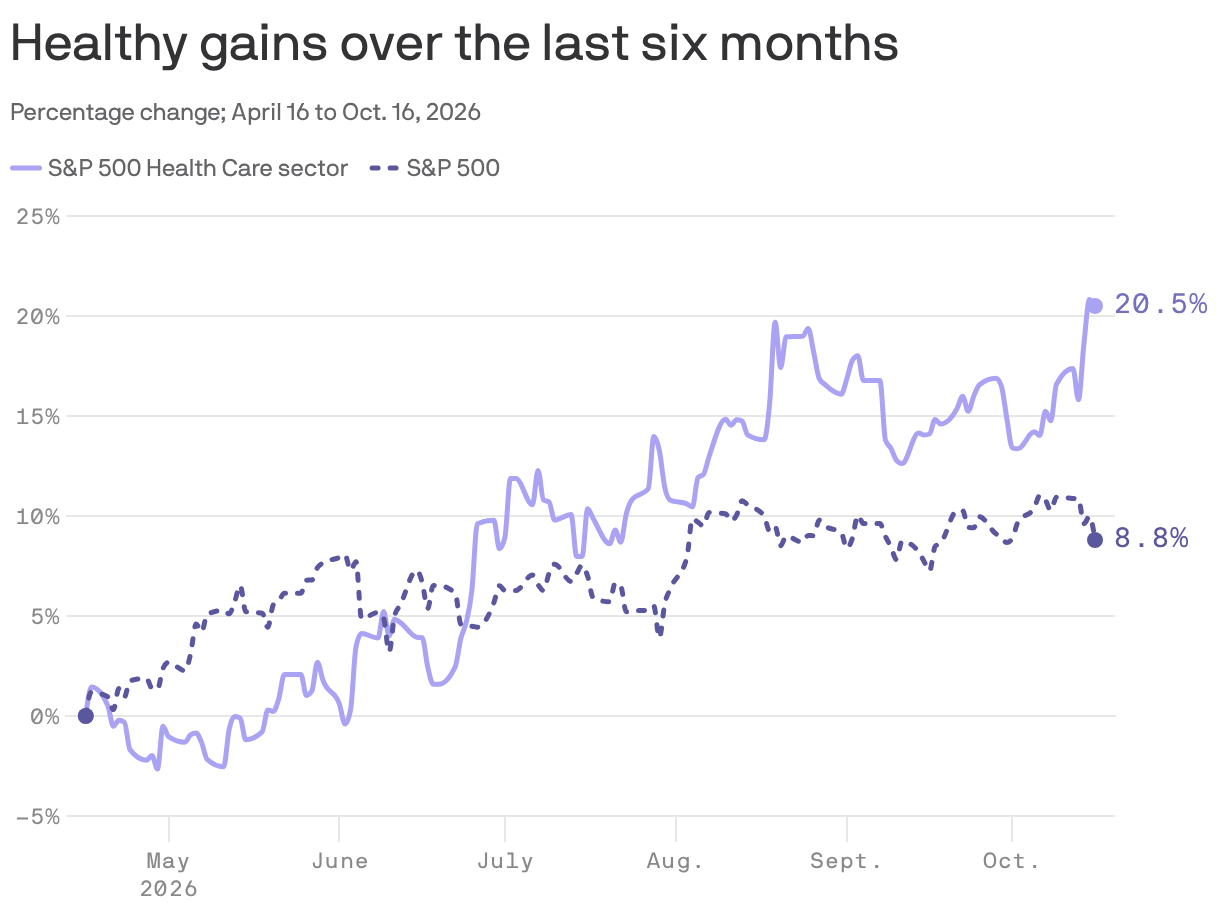
Health care stocks have done well in recent months as investors turn toward "defensive" shares and appear to have priced in increasing odds of Democrats gaining power in the midterm elections.
Why it matters: The price moves suggest that traders and investors see increasing odds that some cuts to federal health spending imposed by President Trump's big 2025 spending bill could be undone, analysts say.