Tuesday's economy stories

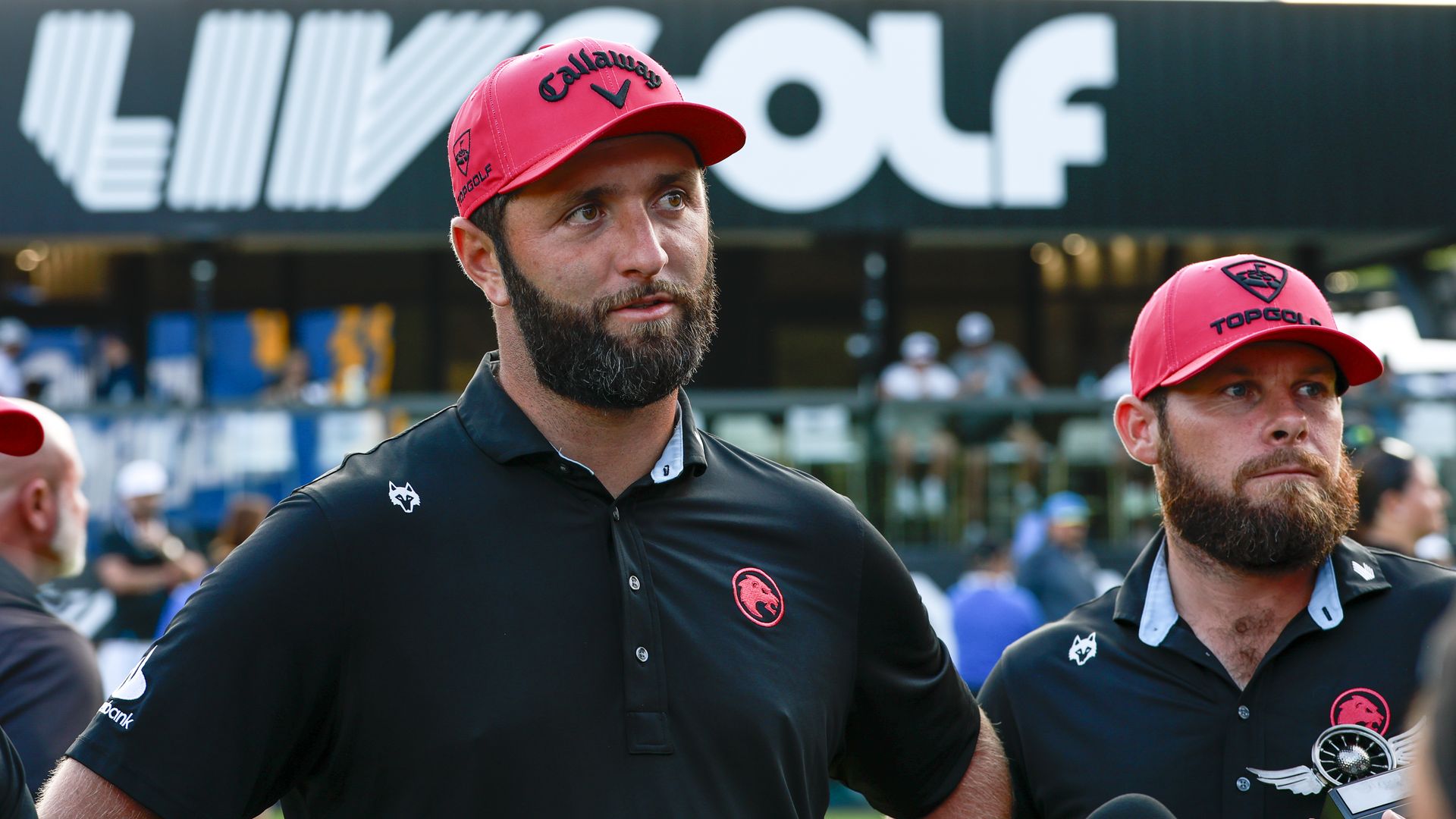
Should LIV Golf deals be kept secret? Judge will decide
A federal judge is expected to hear arguments Wednesday on whether LIV Golf should be allowed to keep its player severance deals secret in bankruptcy court.
Why it matters: The Saudi-backed league filed for Chapter 11 bankruptcy protection in September after its strategy of paying big money to lure players away from the PGA Tour proved unsustainable.


Exclusive: Fed eyes AI, tariffs, energy for inflation outlook
Some companies are preparing for an AI-fueled chip squeeze that could push up prices far beyond the data center boom alone, Mary Daly, president of the Federal Reserve Bank of San Francisco, tells Axios.
Why it matters: The Fed can usually look through supply shocks that come and go. Daly's concern is that AI, tariffs and higher energy costs could last longer than expected or compound each other — keeping inflation elevated and requiring more tightening.

PE/VC campaign contributions lean toward Republicans
Private equity and venture capital aren't leaning into a Blue Wave, according to an Axios analysis of campaign donations made by political action committees affiliated with the American Investment Council and National Venture Capital Association.
Why it matters: Political alignment could impact issues like expanded retail investor access to alt investments, crypto market structure, qualified investment definitions, and AI regulation.

KKR buying fund administrator Gen II for $5.1 billion
KKR has agreed to acquire Gen II, a New York-based private capital fund administrator, for $5.1 billion from Hg and General Atlantic.
Why it matters: The business of private equity keeps creating new business for private equity.

Western AI labs challenge China's open-model lead
A new crop of powerful, Western open-weight AI systems are mounting a comeback, with fresh models from Reflection and Mistral narrowing China's recent lead.
Why it matters: These models and others will give businesses and governments alternatives to the closed ecosystems of OpenAI and Anthropic, as well as to Chinese options they may have eschewed for security reasons.

Trump's AI co-chair defends flexible AI strategy
President Trump's new "super intelligence" task force will work to reconcile competing views on AI regulation without rushing into rules that could quickly become outdated, co-chair Scott Kupor tells Axios.
Why it matters: The approach reflects the administration's effort to balance its push to win the AI race with pressure to address the technology's risks, said Kupor, a Silicon Valley veteran and director of the federal government's Office of Personnel Management.

Axios Live: Safety takes priority as autonomous vehicle technology accelerates
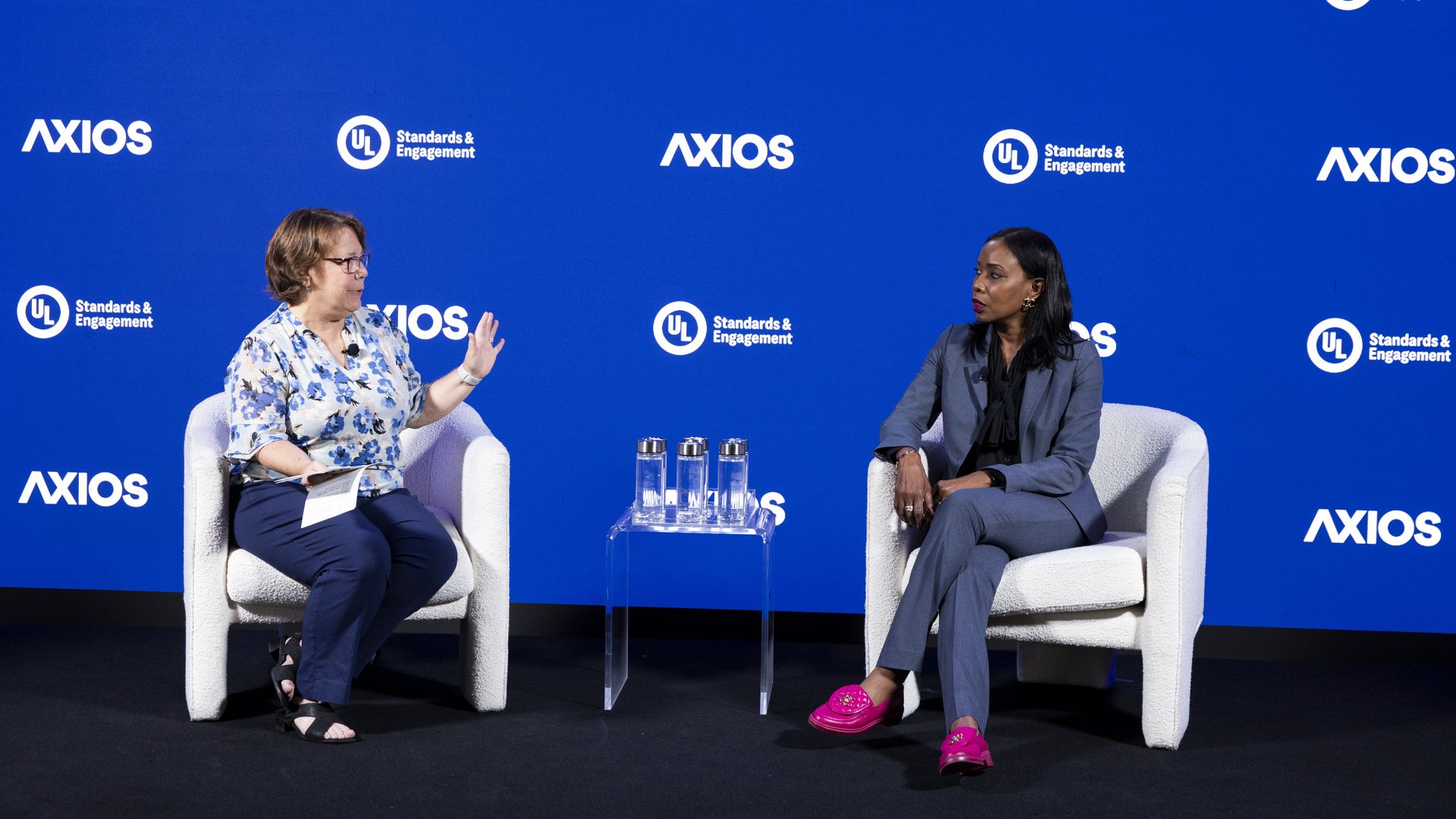
WASHINGTON — Safety standards for autonomous vehicles are coming into sharper focus as the technology develops, transportation industry experts said at an Axios event.
Why it matters: As autonomous vehicles are spotted more frequently in major U.S. cities — often showing up in ride-share services — the necessity of guidelines gains urgency.
Axios' Joann Muller spoke with Northern Virginia Transportation Authority CEO Monica Backmon, Advocates for Highway and Auto Safety president Cathy Chase and Nuro co-founder and co-CEO Dave Ferguson. The Oct. 1 event was sponsored by UL Standards & Engagement.
What they're saying: Chase said AVs have the potential to be safer than human-driven vehicles but warned she is "concerned" about "imperiling people on the roadways without federal safety standards."
- "Consumers would certainly benefit from having federal safety standards so that we know there's a bar that they have to meet," Chase said.
- The Trump administration proposed updated brake pedal requirements to account for AV growth, but it has not set a federal safety framework.
The other side: Ferguson contended AVs are already proven to be a reliable option, pointing to safety transparency initiatives from companies like Waymo.
- "If you're choosing between a human Uber ride versus a robotaxi today, there's no question which one is safer," said Ferguson. "I think that we're now at a point where the question of will this technology work and can it work has been answered."
Follow the money: Uber plans to invest more than $10 billion in the AV industry, making the calculation that driverless vehicles will become more profitable and common. The ride-sharing company is also partnering with Nuro and Lucid on driverless vehicle ride-share options set to launch this year.
Zoom in: Cybersecurity considerations around robotaxis are a priority for members of the Northern Virginia Transportation Authority, Backmon said. "These are conversations that are being had."
What's next: Backmon said her organization is looking to integrate AI into transportation planning for safety improvements, including work toward eliminating traffic fatalities. "We are always talking about AI because it's here … and you can't ignore it."
Reality check: Pushback from local activists, from church leaders to labor unions, against legislation to legalize robotaxis in D.C. could stymie the industry's expansion efforts in the nation's capital.
Content from the sponsor's segment:
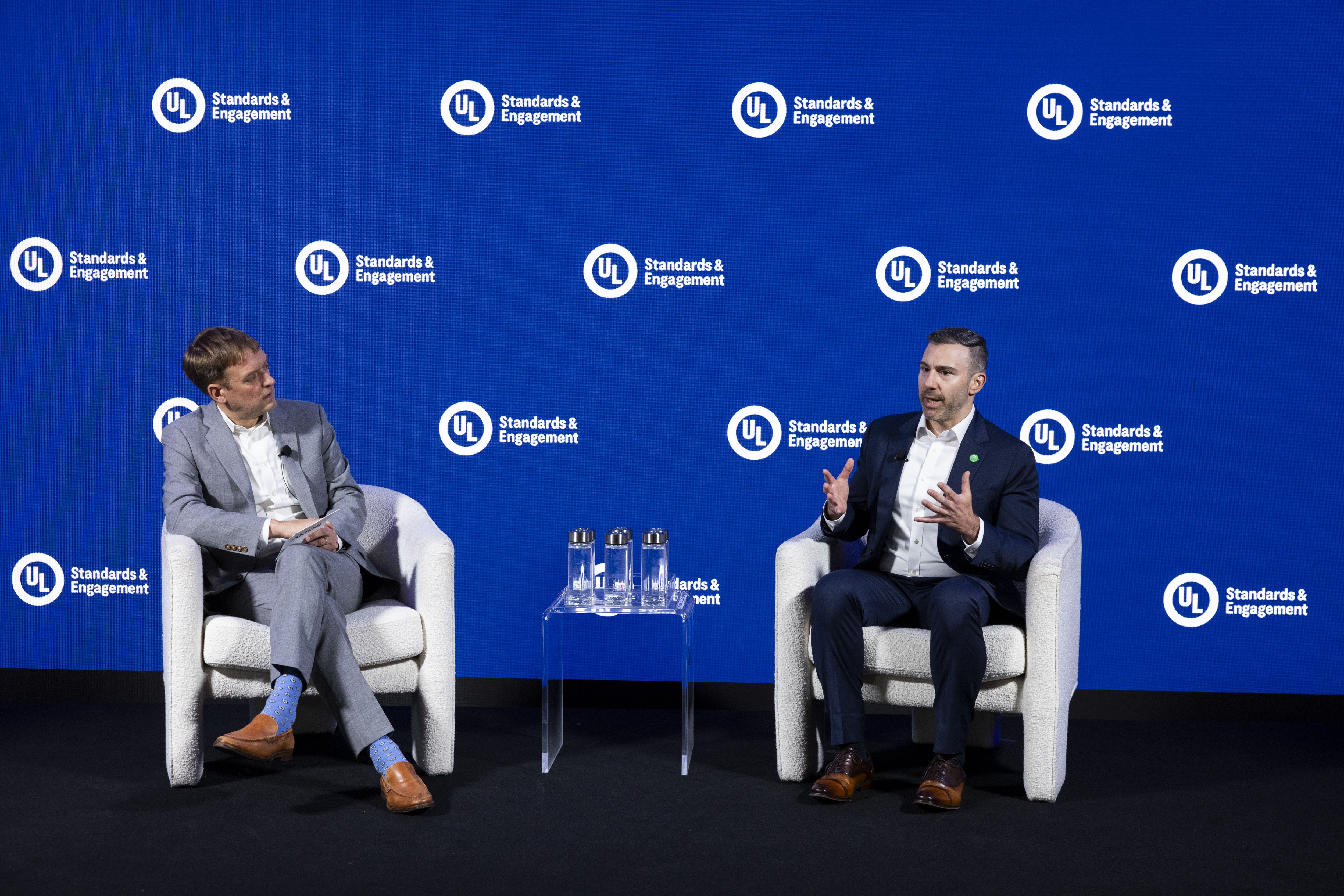
In a View From the Top conversation, UL Standards & Engagement president and CEO Jeff Marootian said safety groups should be engaged in regulatory conversations in the early stages of new technology development.
- "I think we're all seeing right now in real time some of the implications of when that isn't the case, when folks are hearing about technology that may be deployed in their own backyard and they don't necessarily trust that it's going to be safe," he said.
Go deeper: Watch the full event.

Trucking costs getting elevated on 2 fronts
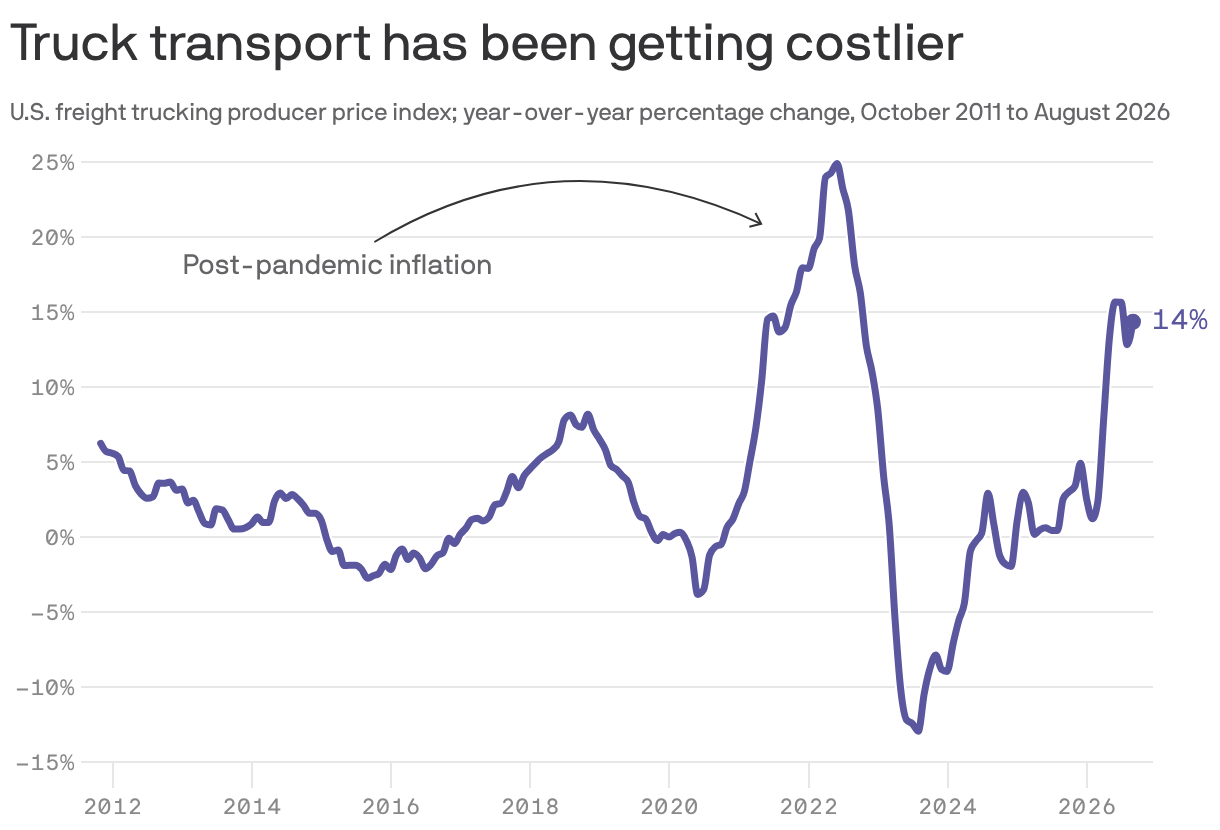
It's not just diesel. The Trump administration's regulatory clampdown on truckers is adding to surging transportation costs.
Why it matters: Trucking is a major way that price shocks get transmitted through the economy.
- And limits on available drivers could amplify the impact of the spike in fuel costs, with diesel now averaging $6.32 a gallon — up over 70% from last year.

Why Brazil's markets rallied
Global investors did not expect Flávio Bolsonaro to convincingly top the first round of Brazil's presidential election, but now their expectations are running high that Latin America's largest economy could soon be transformed.
Why it matters: Should the right-wing candidate win the run-off on Oct. 25, nearly all of South America would become aligned with the Trump administration on trade, national security and other issues.
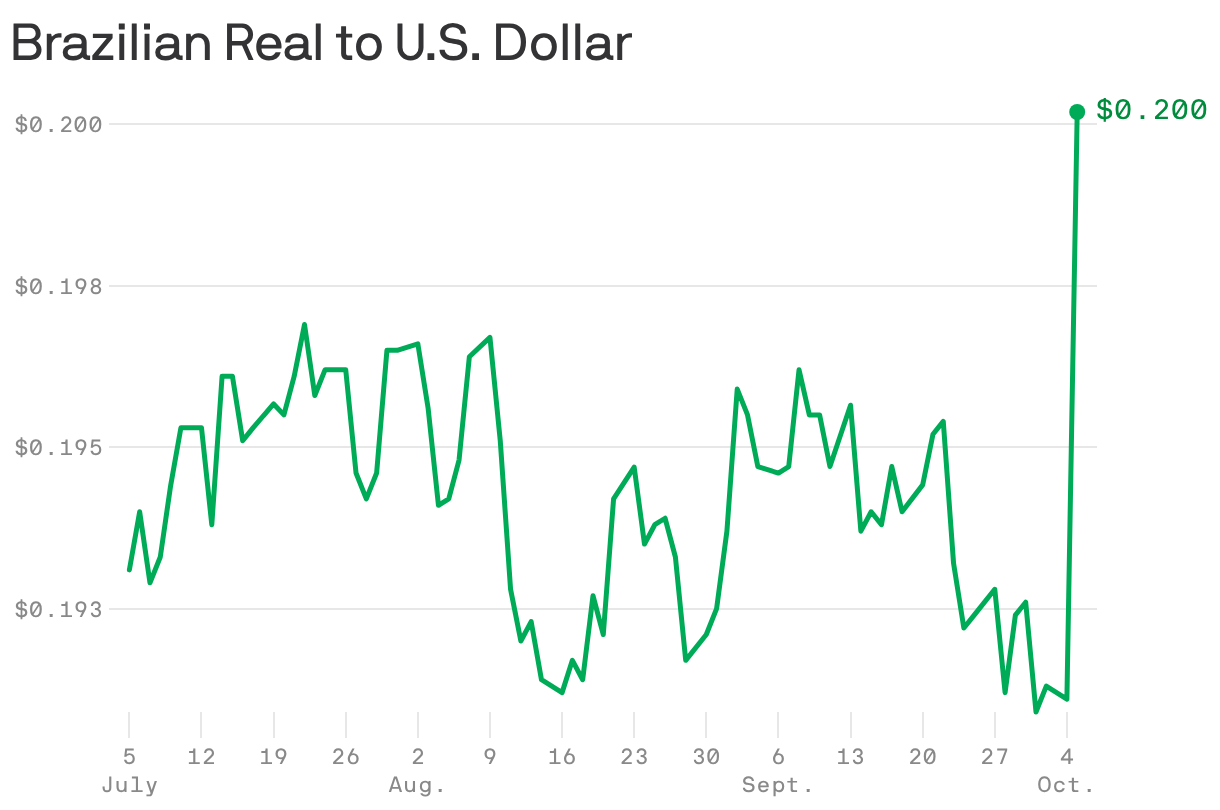
Driving the news: Brazilian markets surged Monday after Bolsonaro captured 47% of the vote Sunday.
- The Brazilian currency, the real, surged in value.
- After soaring more than 9%, the benchmark Bovespa stock index closed up 7.7%, its best daily gain since March 2020.
Zoom in: Bolsonaro, the eldest son of the former president known as the "Trump of the tropics," has pledged to cut public spending, which has helped push borrowing costs in Brazil higher.
- While it's unclear how fiscally prudent Bolsonaro might be, "markets are likely to give him the benefit of the doubt," said Thierry Larose, portfolio manager at Vontobel, per Reuters.
It's not just Bolsonaro's surprising show of strength: Other right-wing candidates made gains as well.
- And no presidential candidate who came in second in the first round has gone on to win the run-off since 1989, says the Economist Intelligence Unit.
What they're saying: "An increased likelihood of a change in government, together with the composition of the new congress, raises the probability of a credible fiscal anchor," UBS analysts wrote in a note Monday.

Wall Street on track for record profits
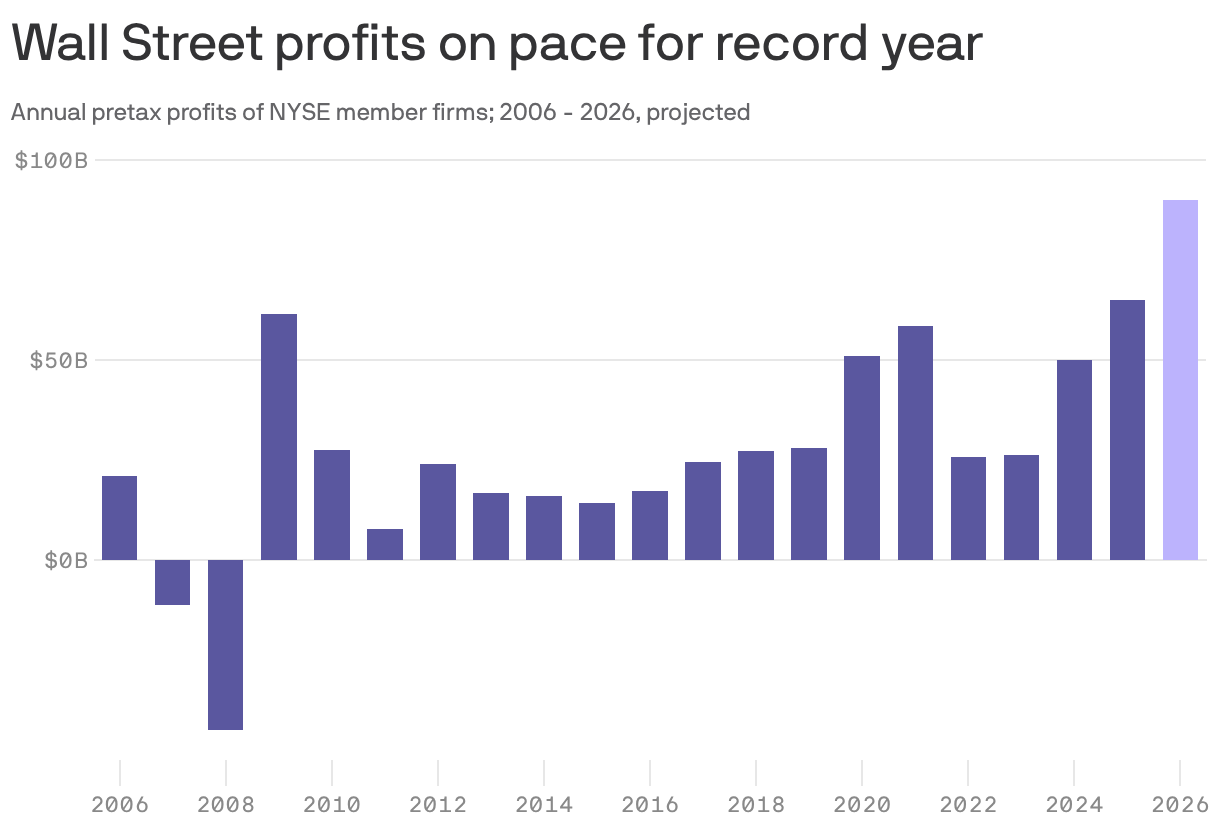
Wall Street profits are blowing past expectations this year, the New York State Comptroller's office finds in a new report.
Why it matters: Profits are on track for an all-time record, a sign of how the AI boom is fueling dealmaking and how volatile markets are helping trading.

Inside Trump's new AI playbook
President Trump's newly minted "super intelligence" task force faces a daunting mandate: Reconcile fiercely divided Cabinet factions to create a tech policy that keeps pace with the blistering AI race.
Why it matters: The task force brings the administration's scattered AI work under one roof, but it also makes it likely that any new rules will be forged in the crossfire of competing internal camps.
- In an interview, task force co-chair Scott Kupor rejected the assertion that the administration is asleep at the wheel on AI policy, arguing that rigid, static legislation would risk becoming instantly obsolete.