Axios Live: Safety takes priority as autonomous vehicle technology accelerates

Add Axios as your preferred source to
see more of our stories on Google.
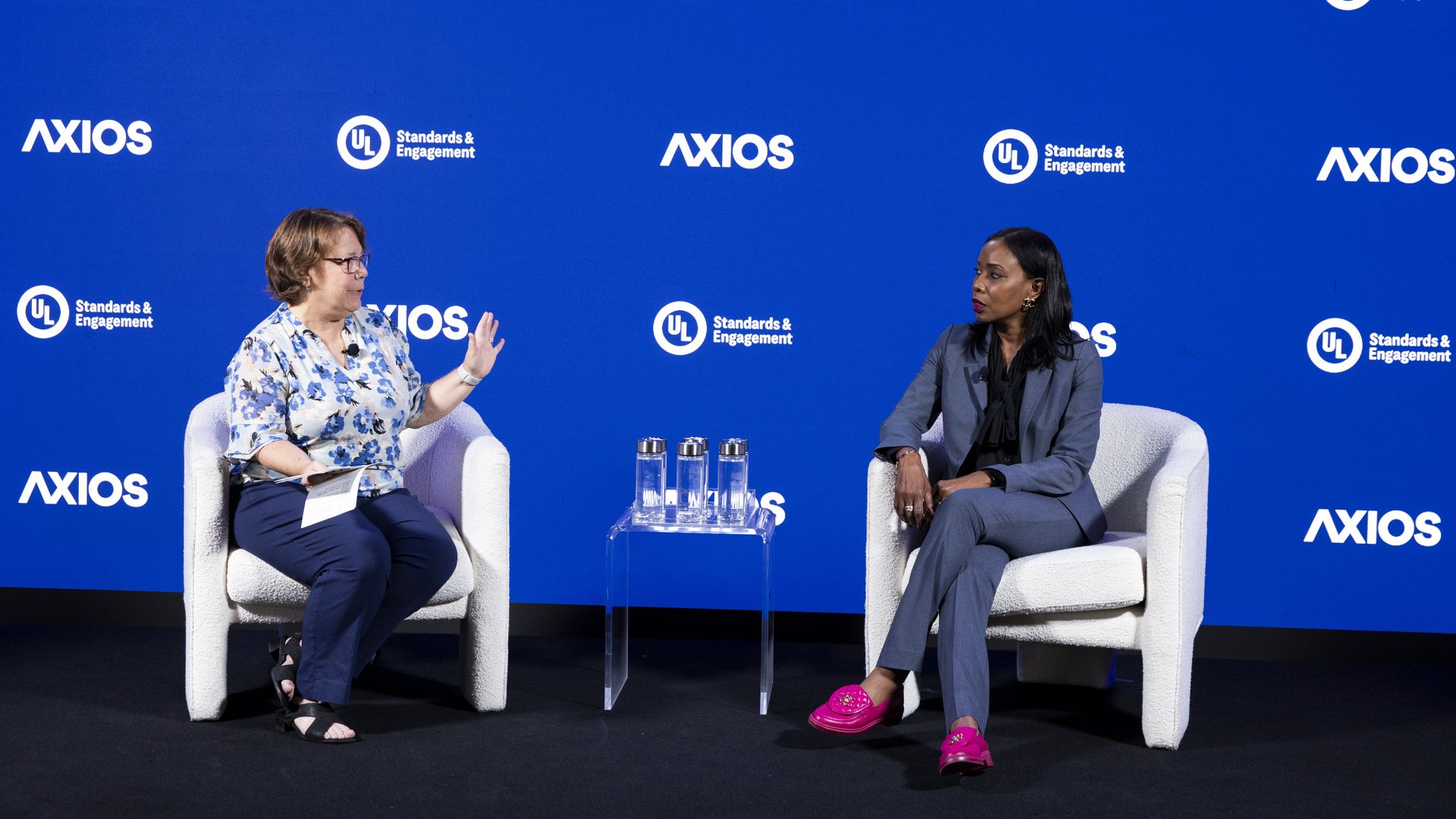
Axios' Joann Muller (left) with Northern Virginia Transportation Authority CEO Monica Backmon. Photo: Kristoffer Tripplaar for Axios
WASHINGTON — Safety standards for autonomous vehicles are coming into sharper focus as the technology develops, transportation industry experts said at an Axios event.
Why it matters: As autonomous vehicles are spotted more frequently in major U.S. cities — often showing up in ride-share services — the necessity of guidelines gains urgency.
Axios' Joann Muller spoke with Northern Virginia Transportation Authority CEO Monica Backmon, Advocates for Highway and Auto Safety president Cathy Chase and Nuro co-founder and co-CEO Dave Ferguson. The Oct. 1 event was sponsored by UL Standards & Engagement.
What they're saying: Chase said AVs have the potential to be safer than human-driven vehicles but warned she is "concerned" about "imperiling people on the roadways without federal safety standards."
- "Consumers would certainly benefit from having federal safety standards so that we know there's a bar that they have to meet," Chase said.
- The Trump administration proposed updated brake pedal requirements to account for AV growth, but it has not set a federal safety framework.
The other side: Ferguson contended AVs are already proven to be a reliable option, pointing to safety transparency initiatives from companies like Waymo.
- "If you're choosing between a human Uber ride versus a robotaxi today, there's no question which one is safer," said Ferguson. "I think that we're now at a point where the question of will this technology work and can it work has been answered."
Follow the money: Uber plans to invest more than $10 billion in the AV industry, making the calculation that driverless vehicles will become more profitable and common. The ride-sharing company is also partnering with Nuro and Lucid on driverless vehicle ride-share options set to launch this year.
Zoom in: Cybersecurity considerations around robotaxis are a priority for members of the Northern Virginia Transportation Authority, Backmon said. "These are conversations that are being had."
What's next: Backmon said her organization is looking to integrate AI into transportation planning for safety improvements, including work toward eliminating traffic fatalities. "We are always talking about AI because it's here … and you can't ignore it."
Reality check: Pushback from local activists, from church leaders to labor unions, against legislation to legalize robotaxis in D.C. could stymie the industry's expansion efforts in the nation's capital.
Content from the sponsor's segment:

In a View From the Top conversation, UL Standards & Engagement president and CEO Jeff Marootian said safety groups should be engaged in regulatory conversations in the early stages of new technology development.
- "I think we're all seeing right now in real time some of the implications of when that isn't the case, when folks are hearing about technology that may be deployed in their own backyard and they don't necessarily trust that it's going to be safe," he said.
Go deeper: Watch the full event.
