The Federal Reserve on Thursday announced leaders of five outside task forces that chairman Kevin Warsh has formed in his push to reform the central bank — a list that includes a number of outsiders to the often insular institution.
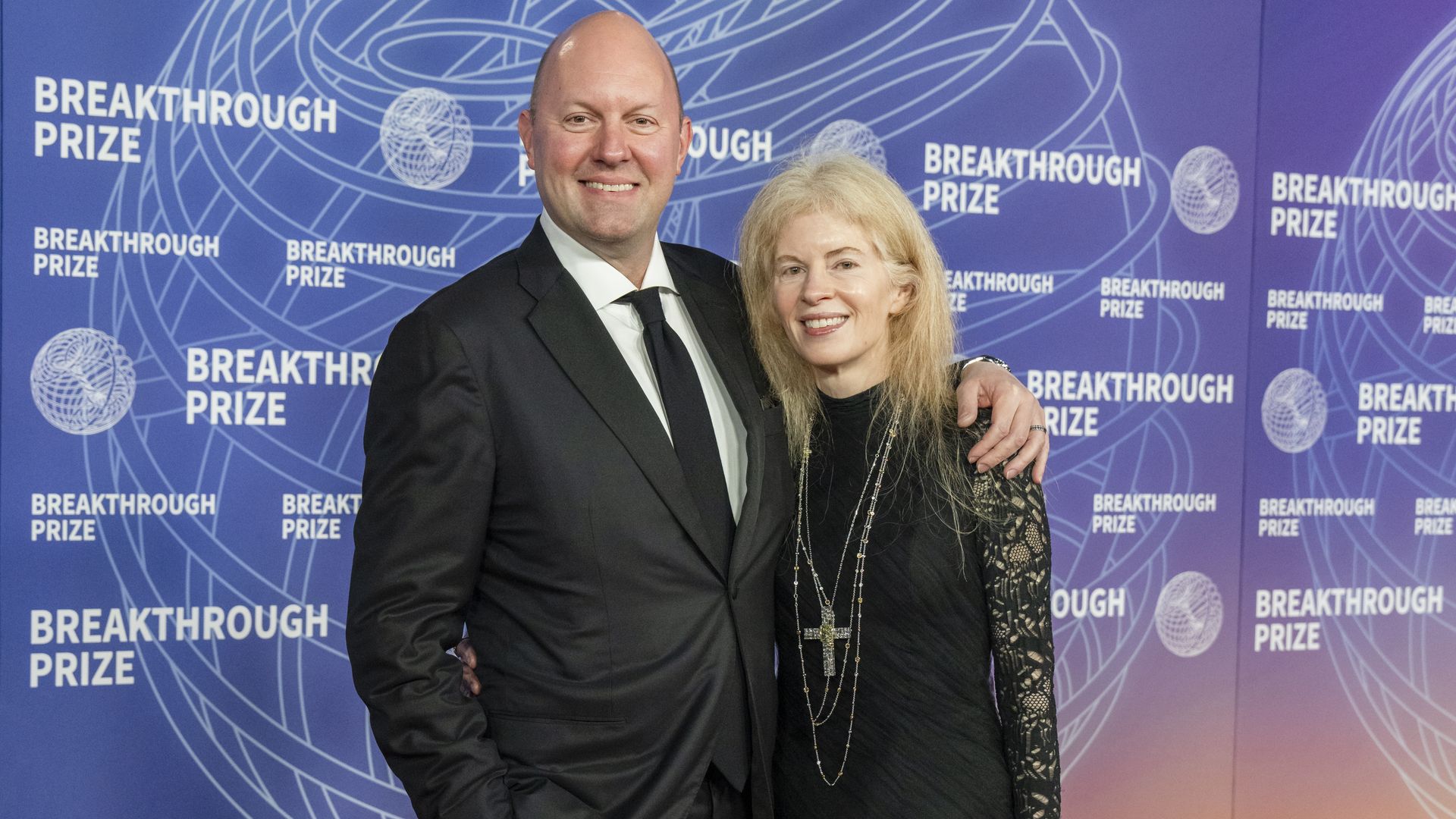
Driving the news: The panels include a range of well-known figures from finance and economics, as well as business — including top venture capitalist Marc Andreessen and former Walmart CEO Doug McMillon.
Other bold-faced names include former top central bankers in other countries: Mervyn King, the former governor of the Bank of England, Raghuram Rajan, former governor of the Reserve Bank of India, and Arminio Fraga, former president of the Central Bank of Brazil.
Prominent economists participating include Greg Mankiw, Karen Dynan, Jeremy Stein, and Raj Chetty, all at Harvard, as well as Charles I. Jones, a Stanford professor on leave at the AI firm Anthropic, and Thomas Sargent, a New York University professor and Nobel laureate.
Just a few weeks ago, there were plenty of reasons to expect inflation pressures to fade in the back half of 2026. The latest evidence makes that seem a little less sure.
Why it matters: These are new cracks in the disinflationary narrative, which raises doubts about the Federal Reserve's ability to forestall interest rate increases.
For years, the economy has looked K-shaped. There's new evidence that some of that divide is beginning to narrow.
The wage-growth gap between lower- and middle-income workers has disappeared — with pay gains among lower-income workers nearly matching those of their higher-income counterparts.
Spending growth among lower- and higher-income households is the most similar in years.
Why it matters: A resilient labor market is chipping away at one dimension of the K-shaped economy, even as the wealth divide remains firmly intact.
More venture capital dollars were invested in U.S. companies during the first half of 2026 than in any full year, according to data released Wednesday by PitchBook and the National Venture Capital Association.
By the numbers: U.S. companies raised $412.7 billion between January and June, a whopping 29% increase over what U.S. companies raised in all of 2025 and a 15% increase over the all-time record set in 2021.
B Capital and CalPERS on Wednesday agreed to acquire Russell Investments from TA Associates and Reverence Capital Partners.
Why it matters: It's not normal for a venture capital firm to buy a 90-year-old business from private equity, but we could see more of this as legacy industry looks to AI for growth and relevance.
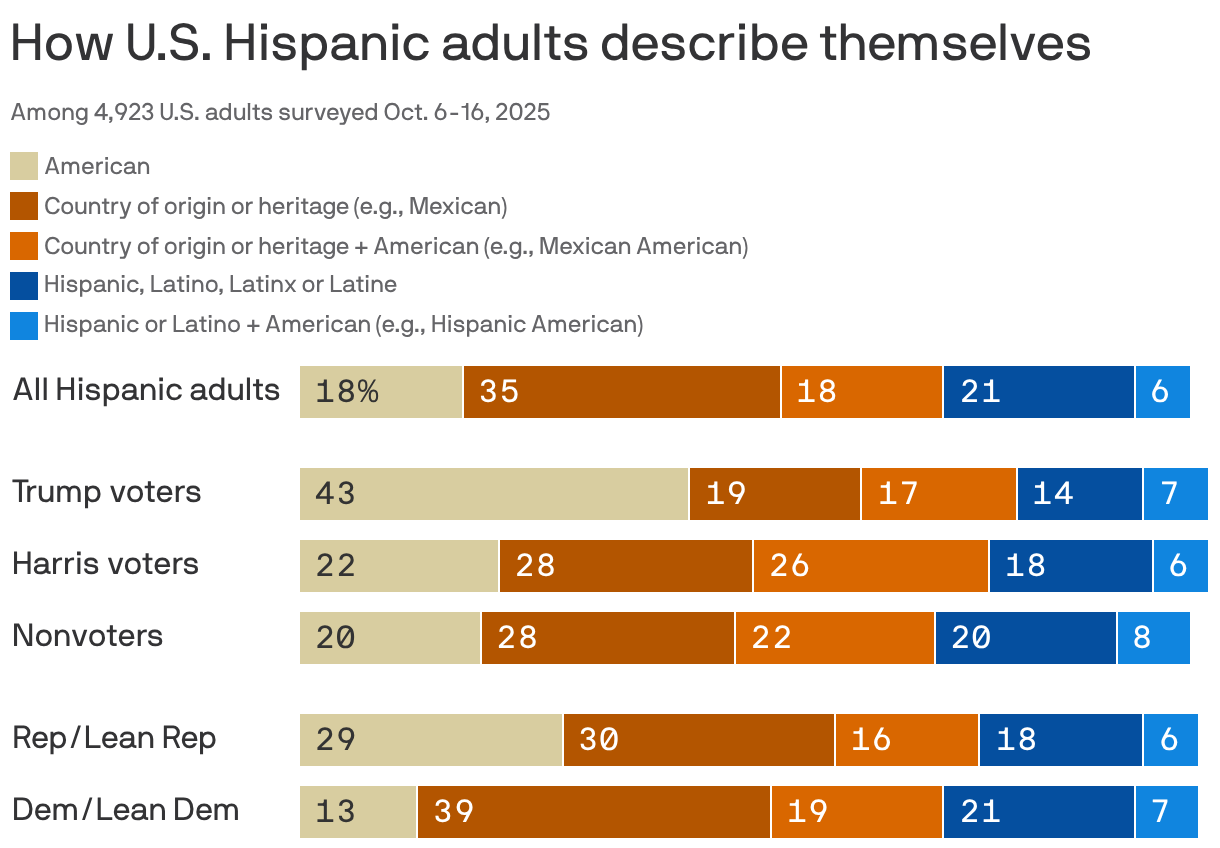
Data: Pew Research Center; Chart: Danielle Alberti/Axios
Latino voters aren't just splitting over President Trump. They're divided over how being Latino shapes their identity in America, according to a new Pew Research Center report.
Why it matters: This is a deeper fracture than a typical partisan divide — Latino voters are splintering over whether their ethnicity feels like a barrier, an asset or is politically irrelevant.
As civic leaders and policymakers look to strengthen economic opportunity for all Americans, new research from the Capital One Insights Center unpacks small business owner confidence and how they are unlocking efficiency and new levels of growth.
President Trump's threat to "cut off all trade" with Spain was immediately a market event — at least in Europe.
Why it matters: Well into Trump's second term, foreign investors aren't totally dismissing the president's trade threats, even if the legal authority, the path to implementing them and the ultimate outcome remain unclear.
Three AI trends are accelerating and colliding, forcing government, business and investors to rethink strategies in real time:
AI is getting bigger and better, both here and in China.
The U.S. government is scrambling to keep pace by creating a regulatory framework, perhaps with international reach.
Both America and China are considering blocking access to their best AI, in recognition of the rising stakes.
Why it matters: The explosive rise of truly autonomous agents is forcing Washington and Beijing away from light-touch oversight, transforming the global AI race from a commercial sprint into a national-security standoff.
The group behind a 2025 report predicting dire outcomes from AI development is out with a new prescription: To avoid dangerous outcomes from superintelligent AI, slow everything down.
Why it matters: The researchers behind the new essay, first shared with Axios, are saying that while people can't stave off the development of superintelligence, they can slow it down so the world is ready when it comes.
America's state governments now run on two very different tax engines: income in many coastal and professional-class states, and consumption in much of the Sun Belt and low-tax-growth belt.
Why it matters: States are not just competing over tax rates. They've built systems around which parts of the economy to tax — and which residents feel it most.
The U.S. military struck Iranian targets near the Strait of Hormuz on Wednesday, a U.S. official said.
Why it matters: This was the second day in a row that the U.S. had attacked Iranian targets in what U.S. officials say is an effort to stop Tehran from striking commercial ships in the Strait of Hormuz.