2 Fed officials warn of interest rate hike potential

Add Axios as your preferred source to
see more of our stories on Google.
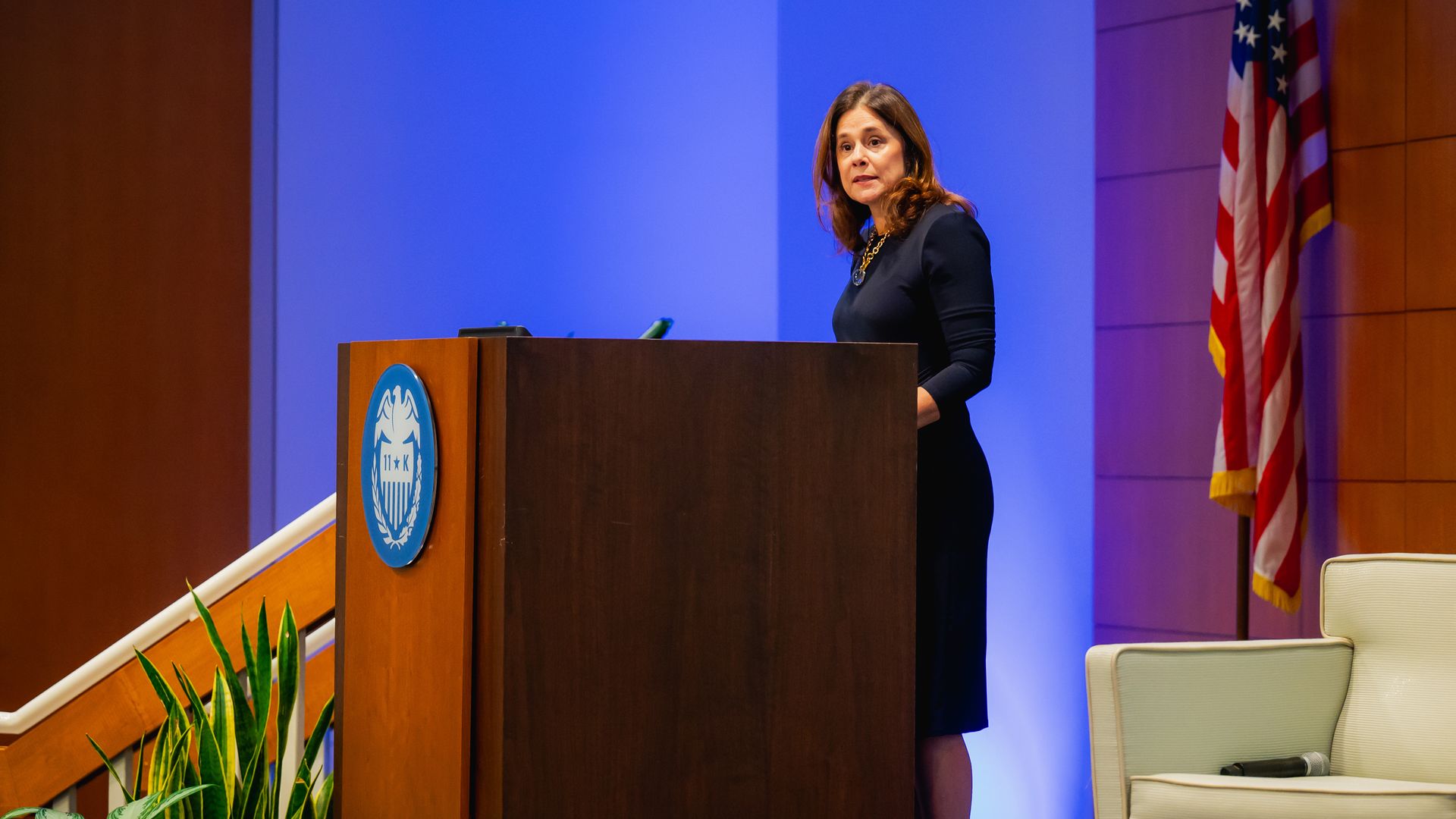
Dallas Federal Reserve president Lorie Logan speaks at a conference in Texas last year. Photo: Desiree Rios/Bloomberg via Getty Images
With a steady labor market and still-high inflation, two Federal Reserve officials are on the record this week noting that the next rate move might be up, not down.
What they're saying: In a speech Wednesday in El Paso, Dallas Fed president Lorie Logan said that consumer spending remains robust, corporate earnings are "going gangbusters" and the AI investment was continuing to boom.
- "These conditions indicate that monetary policy is not restraining the economy," she said.
- "I am increasingly concerned that higher interest rates could be necessary later this year to fully restore price stability and appropriately balance both sides of the Fed's dual mandate."
The intrigue: Notably, Logan said that "the U.S. economy as a whole has weathered the shock so far," even as higher energy prices weigh on lower-income households.
The big picture: After five years of above-target inflation, Fed officials worry that businesses, workers and markets will start pricing in higher inflation permanently, making the path back to 2% steeper and more costly to travel.
- "For today, it's reasonable to keep rates steady given the uncertainties around the economic outlook," Cleveland Fed president Beth Hammack said in a speech earlier this week. "But if recent trends continue, it may soon be appropriate to act."
- Both Logan and Hammack were among the three Fed presidents who dissented at the Fed's last monetary policy meeting, preferring to drop language in the statement signaling the next move could be a cut.
- "Based on the data, I'm more concerned about the growing risks of persistently elevated inflation than the risks to full employment and also that monetary policy may not be sufficiently restrictive to bring inflation down to 2%," Hammack said.
- "If we wait for definitive evidence that high inflation has become embedded in the economy, it may require larger policy adjustments, at greater cost."
The bottom line: Concerns are rising among Fed officials about whether policy is tight enough to keep inflation at bay, ahead of Kevin Warsh's first meeting as Fed chair later this month.
