American shoppers are still spending — but they're becoming pickier about where their money goes.
Why it matters: Results Thursday from Dollar Tree, Burlington, Best Buy and Kohl's suggest that consumers are still willing to spend on bargains and small indulgences — yet are becoming increasingly selective as higher gas prices and other everyday costs pressure household budgets.
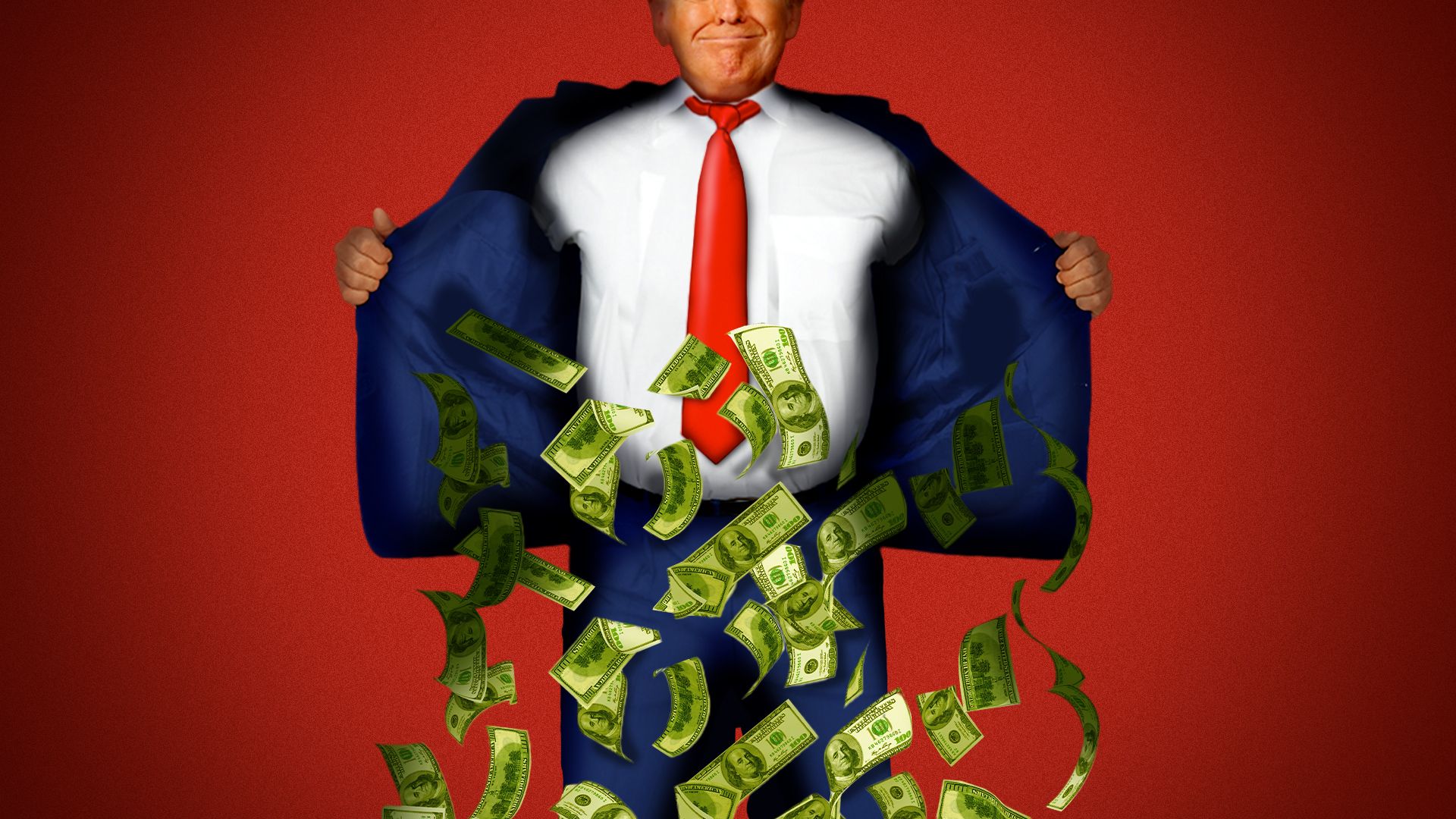
Republican lawmakers want a $250 bill featuring President Trump for the nation's 250th anniversary celebration, but the proposal faces legal and legislative hurdles.
Why it matters: Federal law bars living people from appearing on U.S. currency, creating a significant obstacle to the proposal without congressional action.
Prediction market platform Kalshi is rolling out a new index to measure which political party has a firmer grip on power in Washington, the company shared exclusively with Axios.
Why it matters: Kalshi is wading deeper into politics even as prediction markets are coming under a spotlight in Washington.
Americans are burning throughtheir financial cushion at an accelerating pace, spending faster than their income is growing, as the energy shock from the Iran war slams household budgets.
Why it matters: Consumer spending has indeed held up, defying rock-bottom sentiment readings. But there's new evidence that suggests households are increasingly drawing down savings to support their spending, a fragile dynamic for the broader economy.
In 65 years of economic data, the personal saving rate — that is, what's left of a paycheck after taxes and spending — has been lower only in two other periods: briefly in 2022 and in the mid-2000s, before the financial crisis.
What they're saying: "Detroit has had an amazing convergence in the last five to seven years of all of our professional teams, our cultural activities, as well as a dramatic increase in food and beverage offerings, all within a very concentrated core district," Antoine Bryant, managing director of Gensler's Detroit office, tells Axios.
"There's been a very distinct effort to reinvest in our sidewalk infrastructure, in our vegetation, and in lighting, so people feel safe, people have access, and they have a variety of things to do for a variety of demographics."
Stunning stat: Detroit also nabbed top honors for most enjoyable U.S. city to walk around in, adds Sofia Song, global leader of cities research at Gensler's Research Institute.
The big picture: Among all cities included in the report, Gensler found that fewer than half of residents visit their central business district weekly, while less than a third spend recreational time there.
Part of that is structural, the report says: "Comfort deficits (shade, seating, restrooms), safety concerns, and poor mobility act as barriers, even where residents rate their downtown highly."
The other side: Phoenix came in dead last among the included U.S. cities — perhaps not a surprise, given its relatively poor walkability and often-hostile heat.
How it works: The design, architecture and urban planning firm's research wing gathered feedback from 35,000 residents of 75 cities worldwide via an online survey conducted from July 8 to Nov. 4, 2025.
Fertitta Entertainment, owner of the Golden Nugget casino chain, on Thursday agreed to buy Caesars Entertainment for $5.7 billion in cash, or $31 per share.
The deal also includes $11.9 billion in assumed debt, bringing the headline price to $17.6 billion.
By the numbers: The share price represents a 49% premium over where Caesars was trading on Feb. 25, when deal talk first leaked, and a 7.7% premium to Wednesday's close.
At least $2 million in settlements has been agreed to after employees and other critics were fired or penalized over their posts about Charlie Kirk following his killing.
Why it matters: The settlements illustrate the limits employers can have in regulating their workers' political rhetoric.
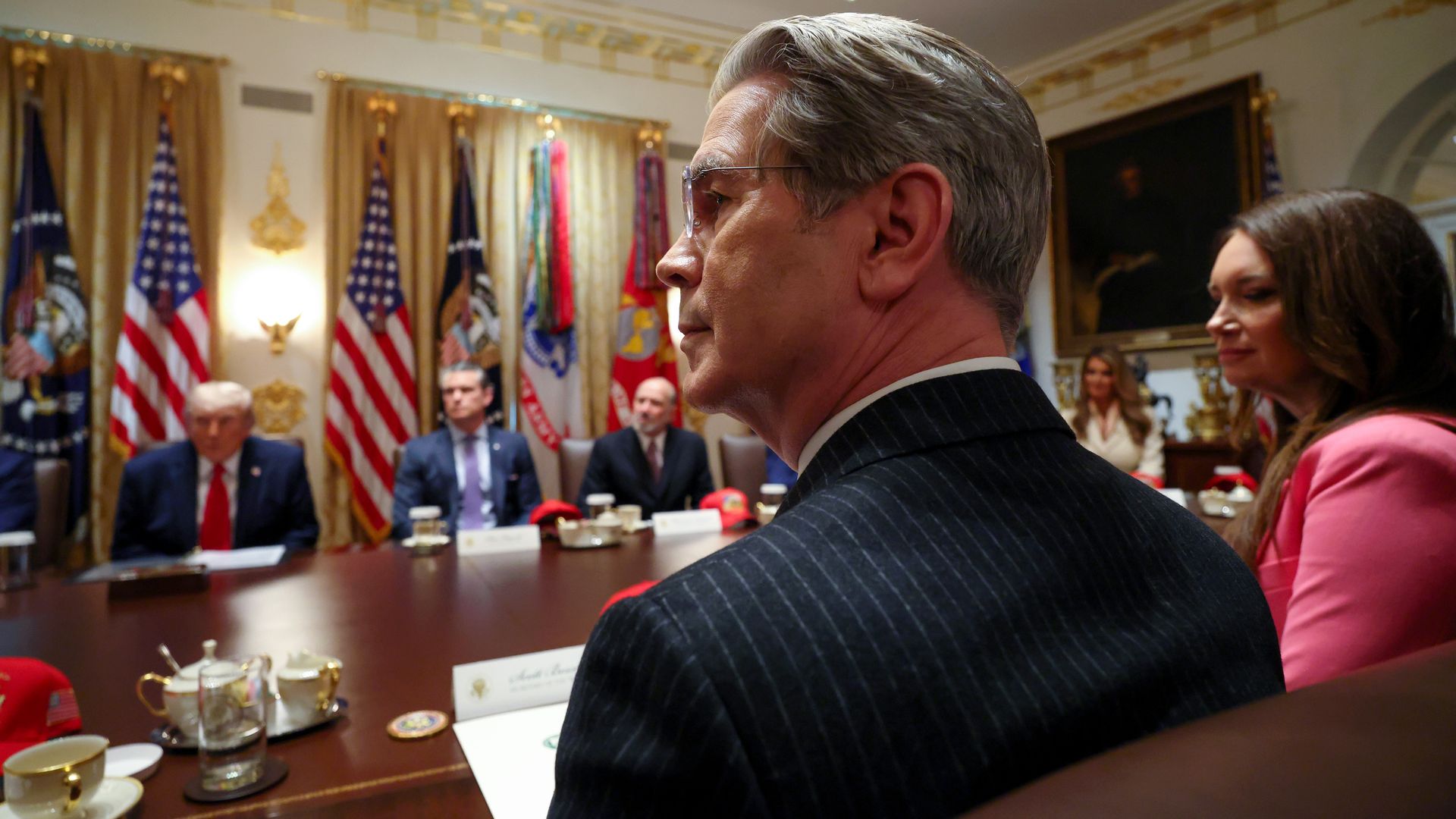
Decades of failures by both political parties left the U.S. strategically vulnerable, Treasury Secretary Scott Bessent will argue in a speech Friday, and the Trump administration is focused on turning the tide.
Driving the news: Bessent's talk, titled "While America Slept," which invokes U.S. strategic failures before World War II, will argue that this has been an era of dangerous complacency and the deterioration of U.S. manufacturing strength, a Treasury official tells Axios.
Founders Fund was one of the earliest investors in SpaceX, investing $20 million in 2008. It kept backing the company, with a stake that could be worth more than $60 billion.
Scott Nolan was an early SpaceX employee who later became a Founders Fund partner. Axios spent some time speaking with him ahead of what's expected to be the largest IPO ever.
What follows is lightly edited for clarity and length.
Groq is raising up to $650 million from existing investors, after the AI chipmaker previously signed a $20 billion licensing deal with Nvidia that saw much of its senior team depart, Axios has learned.
Why it matters: Groq is one of the biggest AI wins so far for venture capitalists, and those same investors now get a second bite at the apple.
An increasing share of regular folks in South Korea are going all in on the country's stock market — borrowing money so as not to miss out on the AI-fueled stock boom there.
Why it matters: The entire economy is now hanging on the success of a few chipmakers.
The latest: South Korea's KOSPI index, which crossed 8,000 for the first time on Tuesday, is up 207%from a year ago.
A few big, newly minted trillionaire chipmakers are behind the surge, including SK Hynix and Samsung.
The big picture: A mania for stocks has swept the country, as Bloomberg reported earlier this year.
Zoom in: And retail traders are borrowing to fuel the buying binge: Margin loans are at a record high, according to reporting earlier this month in the Korea Times.
Middle-aged and older Koreans are increasingly getting in on this — borrowing money so as not to miss out, "mirroring" younger generations but "often with larger sums at stake."
Threat level: Some of these folks are risking retirement money with leveraged bets — Korea already has a high poverty rate (40%) for older adults.
If the AI trade falters, the country's entire economy is on the line, writes Ed Yardeni at Yardeni Research.
"Asia's fourth‑largest economy increasingly resembles a giant leveraged bet on AI."
The bottom line: What could go wrong? See our piece on how American investors are using a record amount of borrowed money to bet on stocks.
Investors are using a record amount of borrowed money to bet on stocks.
Why it matters: Trading with borrowed money — known on Wall Street as "margin" — can amplify both returns on the way up and losses if the market turns.
Even investors who do not trade on margin should watch it: Borrowed money has played a key role in market crashes, from 1929 to the dot-com bust.
A Trump administration plan to overhaul wage levels for visa holders is jolting hospitals and long-term care facilities that are heavily reliant on foreign-born workers.
Why it matters: It's the latest immigration-related policy change to loom over the health care workforce, coming after President Trump's $100,000 H-1B visa fee and the suspension of certain immigrants' work authorization renewals.