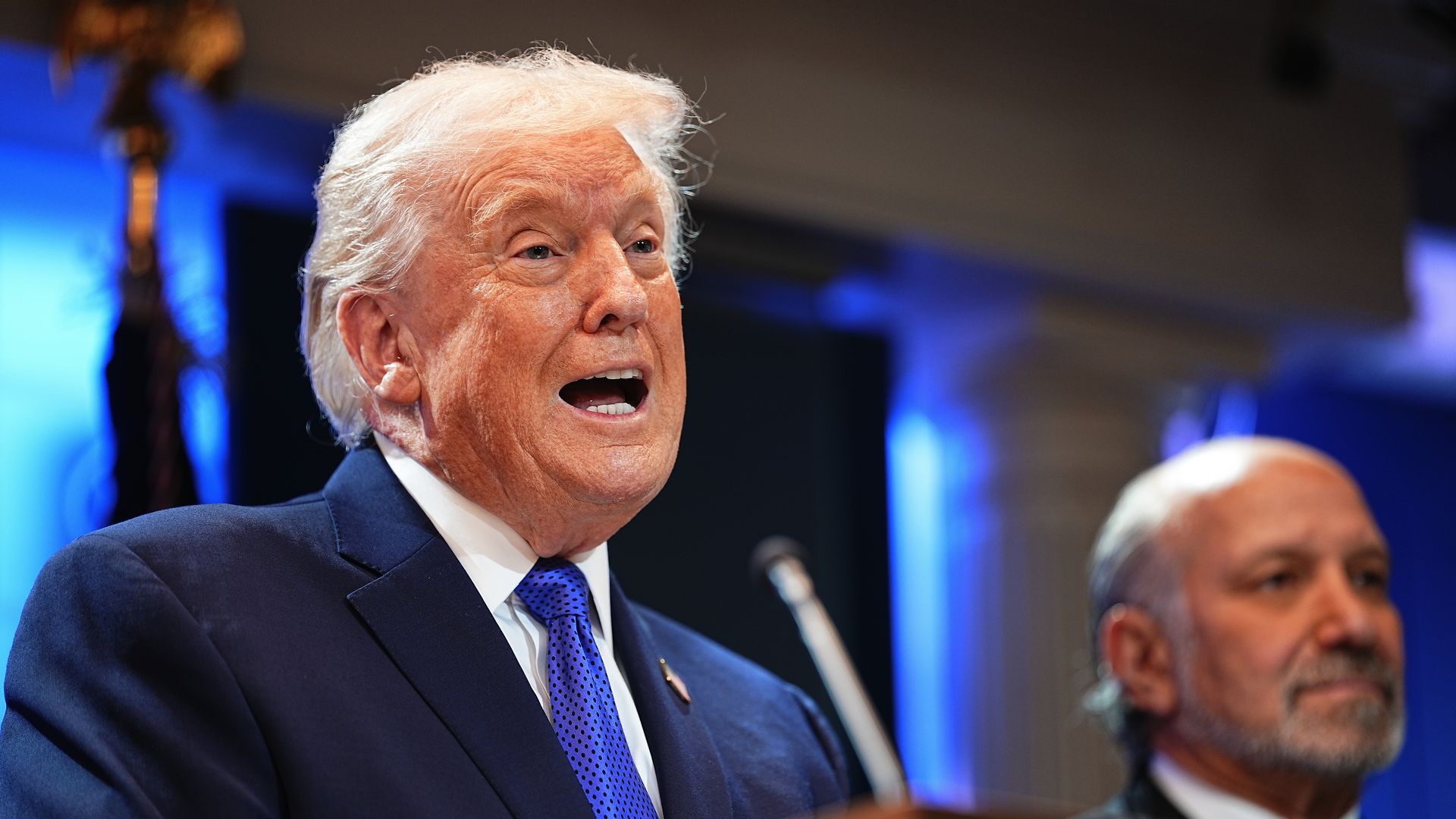
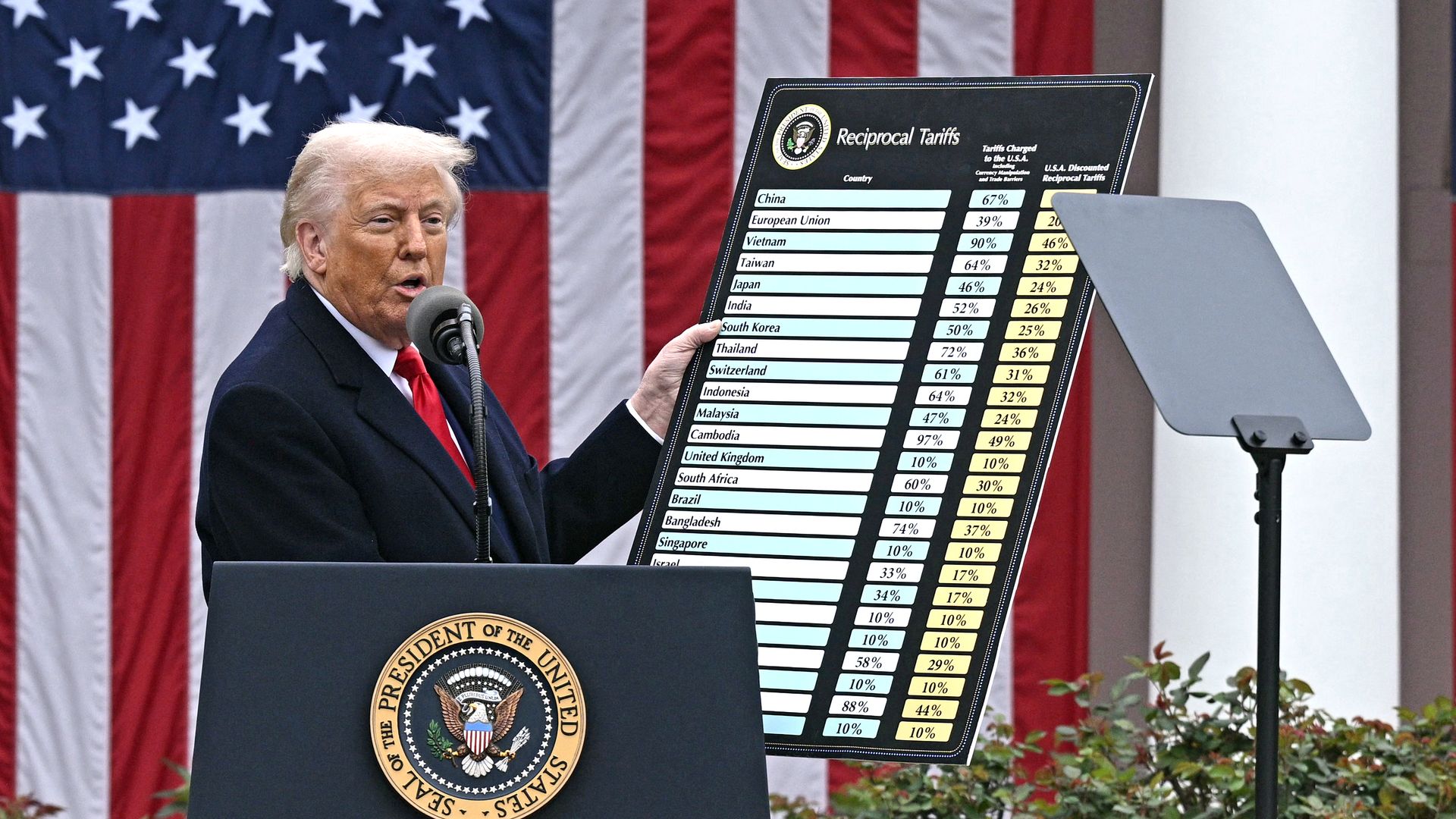
President Trump signed a proclamation on Friday to impose 10% tariffs on all nations, replacing part of the tariffs overturned by the Supreme Court.
Why it matters: It might be just the beginning of a patchwork of new tariffs imposed by the administration to remake the sweeping levies deemed illegal.
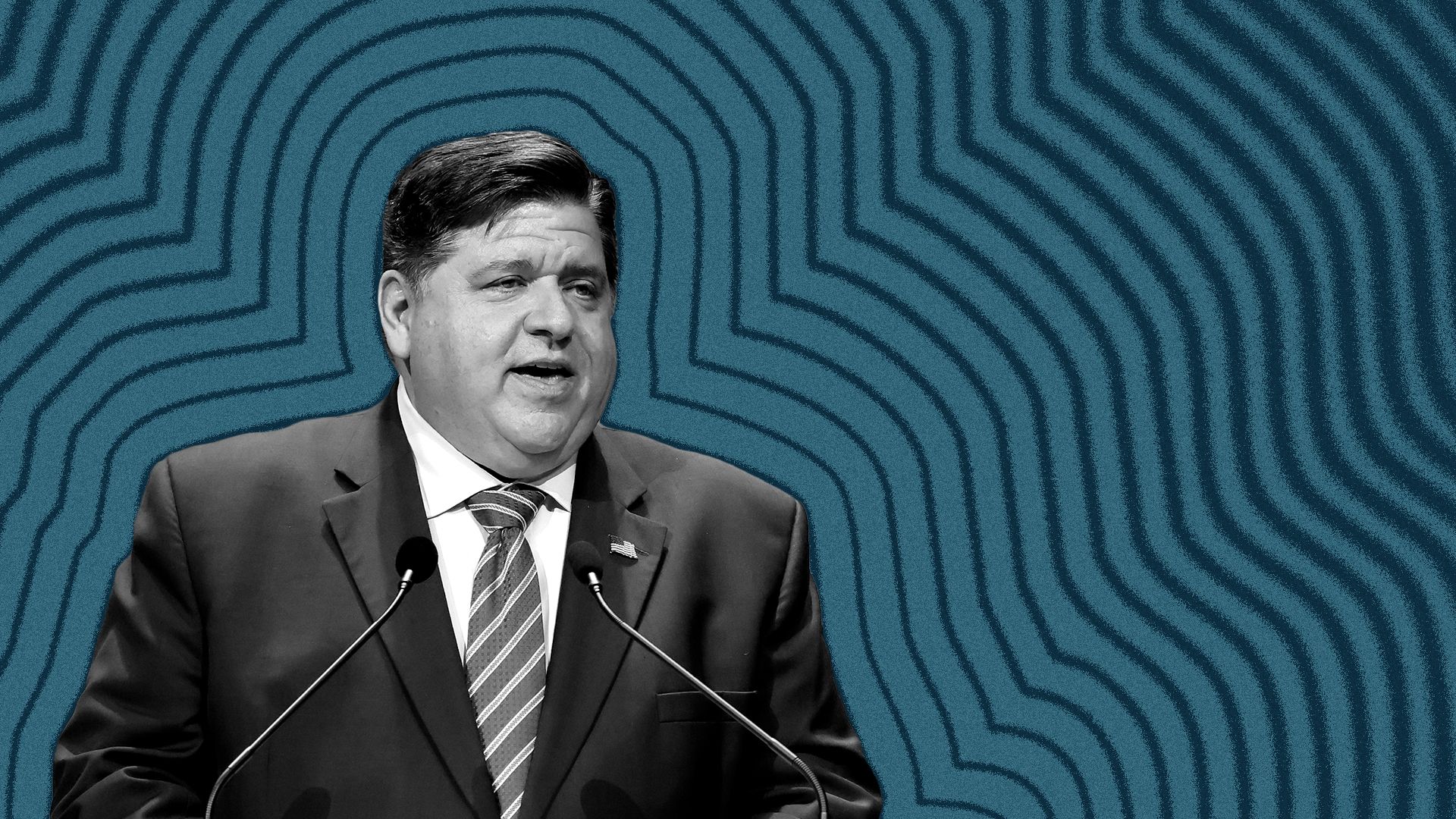
Illinois Gov. JB Pritzker is demanding a $1,700 tariff refund for every family in his state from President Trump after the Supreme Court ruled many of the tariffs illegal.
Why it matters: Pritzker's demand underscores the rivalry between Trump and the governor — who is widely believed to be eyeing a 2028 White House run — but also the enormity of potential refund liabilities.
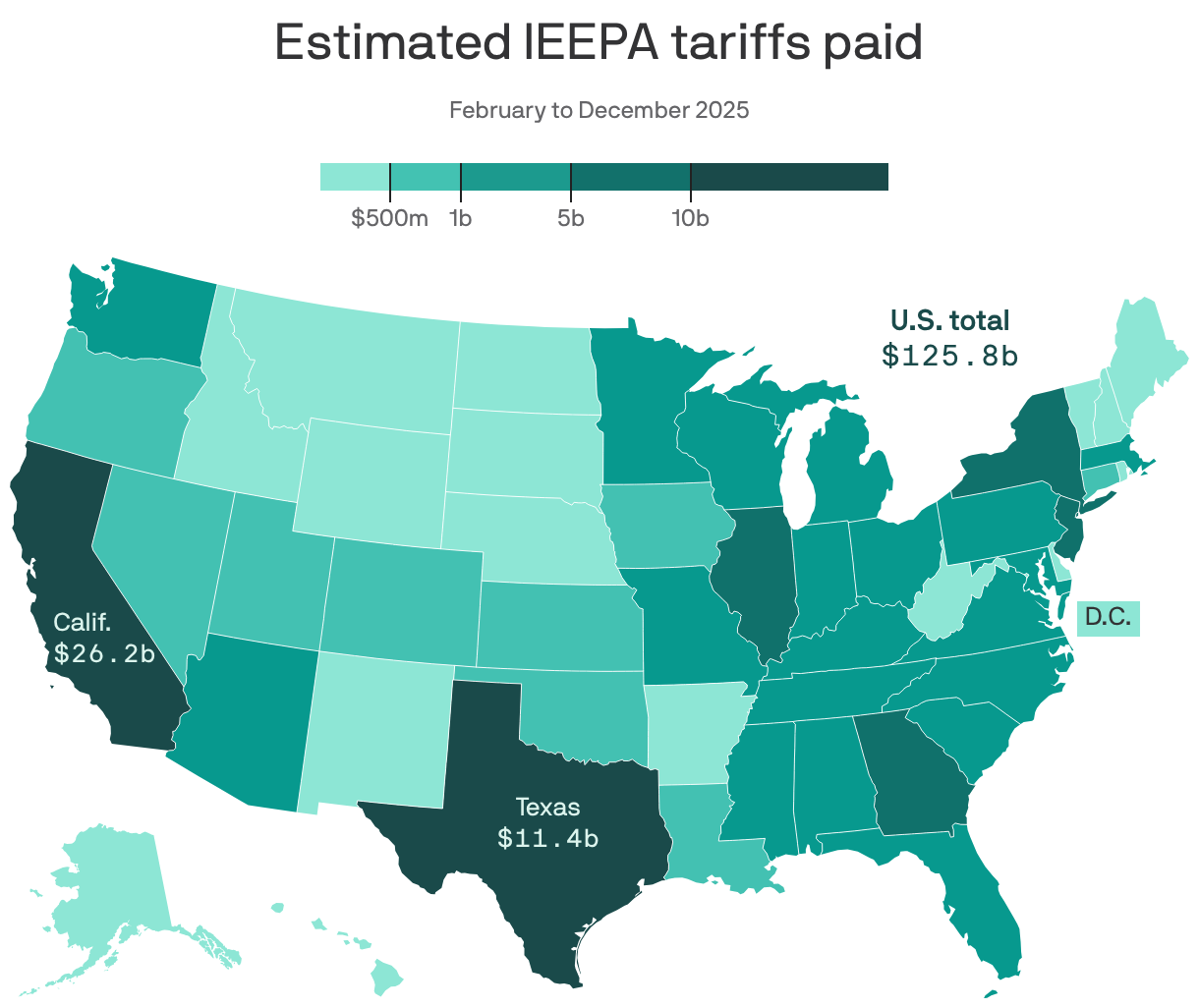
Roughly $126 billion is now potentially up for grabs after the Supreme Court struck down a swath of President Trump's tariffs on Friday, according to the Trade Partnership Worldwide.
Why it matters: Those tariffs likely made all kinds of stuff more expensive as businesses passed higher costs onto everyday Americans, but the ruling now could lead to a chaotic refund process — and it's unclear who gets to pocket that cash.
The small bloc of Republicans who have publicly broken with President Trump on trade policy aren't the only ones thrilled about the Supreme Court overturning his global tariffs, Axios has learned.
Why it matters: Cracks in GOP support for protecting Trump's trade barriers had already grown significant by the time of the ruling, and Republicans tell Axios a "messy" full-scale revolt on the issue was just around the corner.
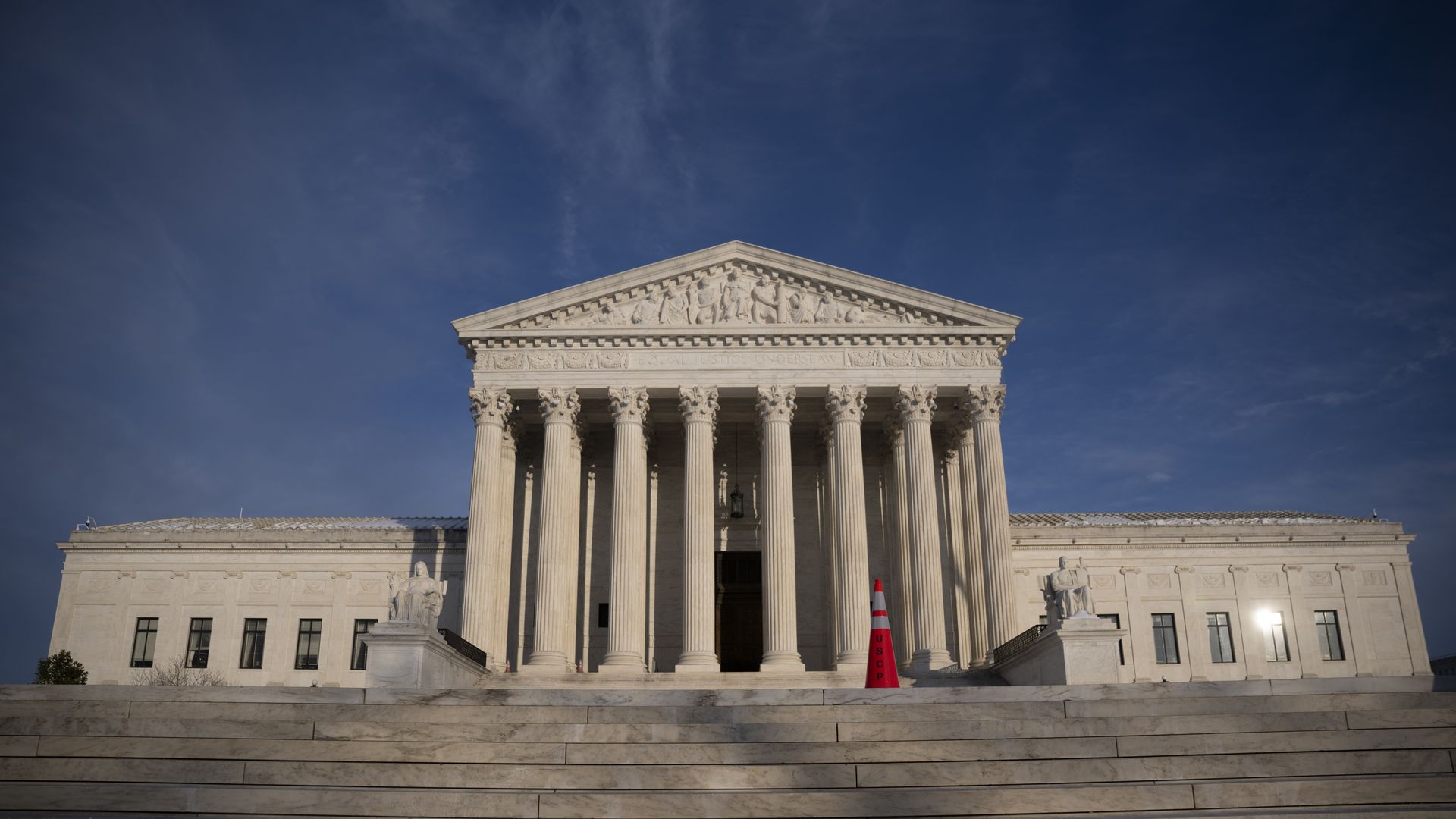
The Supreme Court on Friday delivered a historic blow to President Trump's sweeping tariff agenda, declaring most of it illegal.
Why it matters: Trump used the International Emergency Economic Powers Act to enact his globe-shaking tariffs last year, but the nation's highest court drew a red line in the sand on when a president can invoke the law.
The Supreme Court struck down President Trump's tariffs but was silent on whether that money must be refunded — leaving the $175 billion question to an obscure trade court.
Why it matters: If you're a business — or even a consumer — hoping for some kind of tariff refund, somehow, from somewhere, prepare to wait years for any decisions to be made.
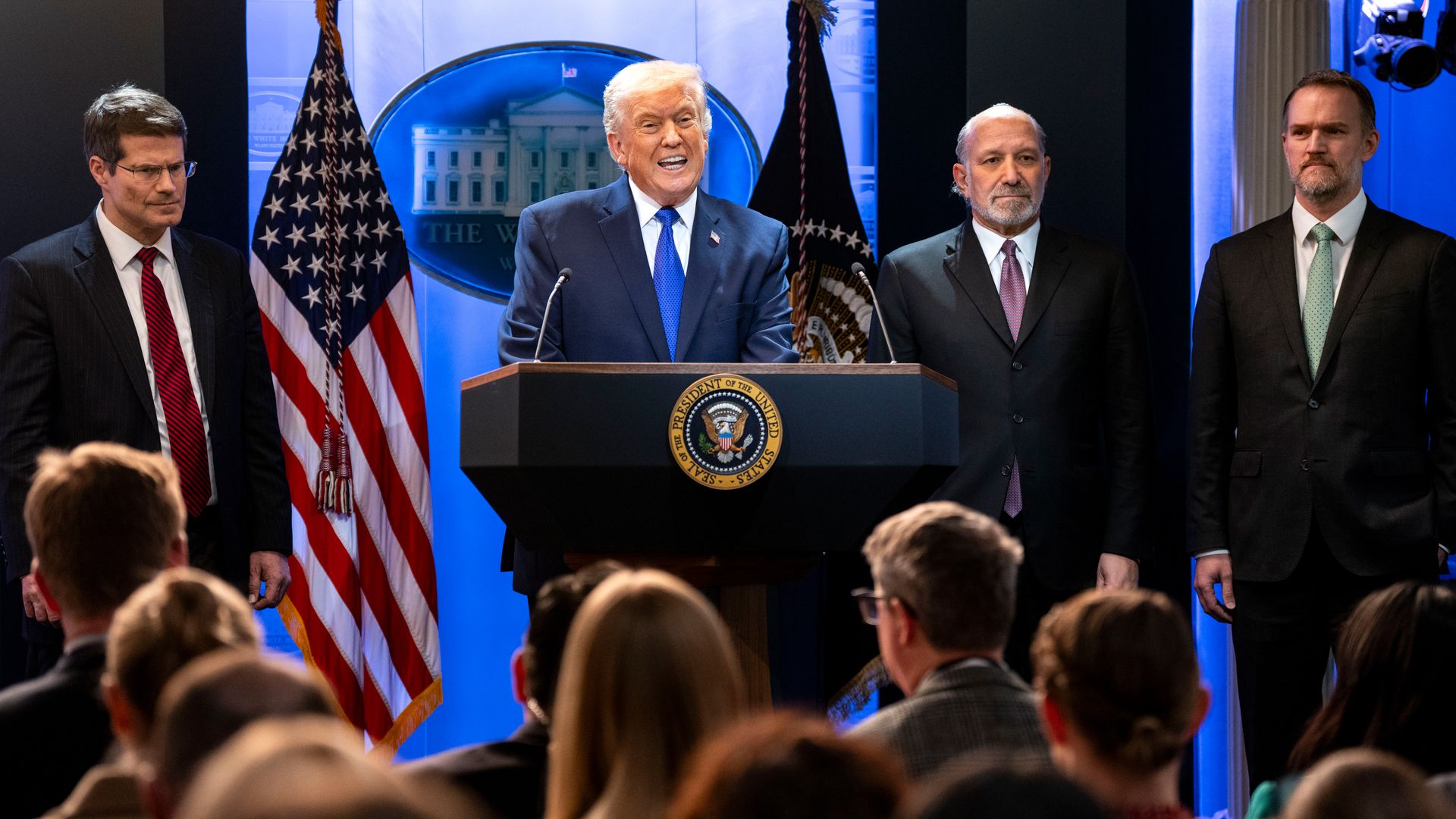
President Trump said Friday that he is "absolutely ashamed" of the Supreme Court after it struck down his sweeping tariffs agenda.
Why it matters: Trump, who previously called the lawsuit the "most important case ever," was banking on tariffs to boost the U.S. economy, pay down the national debt, and fund domestic policy plans.
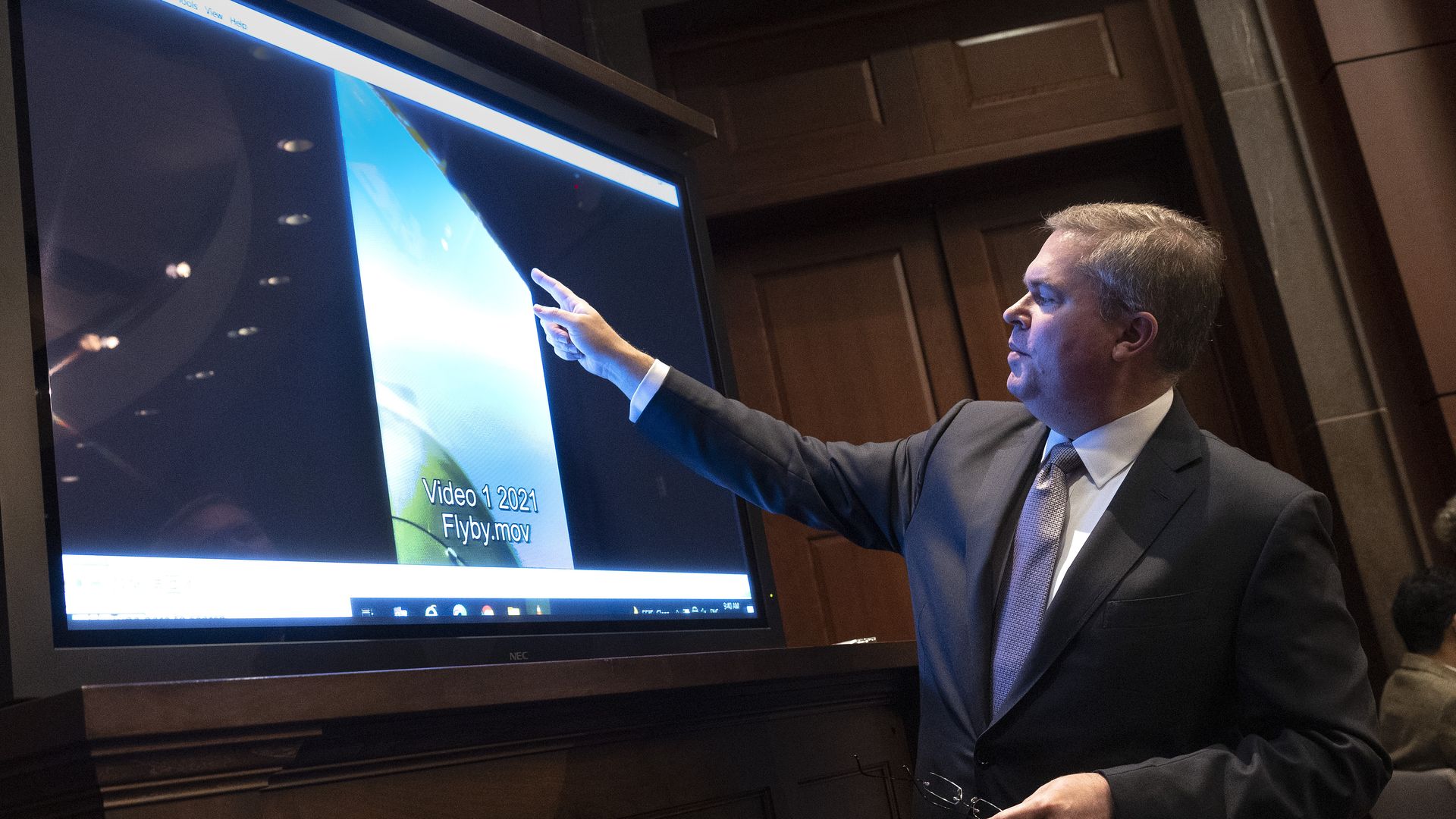
President Trump's decision to release government files related to aliens and UFOs is reigniting one of America's longest-running mysteries.
The big picture: While it's unclear whether any new significant surprises await, the belief that government secrets may prove extraterrestrial life exists has fueled curiosity and speculation for decades.
Volkswagen workers in Chattanooga, Tennessee, voted 96% in favor of their first labor contract negotiated by the United Auto Workers union.
Why it matters: The contract, which includes 20% wage increases over four years and lower healthcare costs, is considered a historic breakthrough in the UAW's decades-long effort to unionize foreign-owned auto plants in the South.
Businesses are the big winners from the Supreme Court ruling invalidating President Trump's global tariffs after a bruising year in which the duties bludgeoned bottom lines and prompted price hikes.
Why it matters: The ruling tees up a fight over corporate refunds — a potential windfall for companies that paid extra costs to import goods under the Trump tariff regime, though nothing is guaranteed.
First, the good news about the disappointing fourth-quarter GDP number released Friday morning: Q1 ought to be a blockbuster.
The big picture: The underlying trend of U.S. economic growth looks quite solid, despite a weak headline number from a quarter when the federal government was shuttered for 43 days.
American consumers keep spending, and American businesses keep investing.
The Supreme Court struck down a suite of President Trump's tariffs on Friday, a historic blow to the administration's economic agenda.
The big picture: In a rare rebuke of Trump's power, the nation's highest court said many of the administration's tariffs were illegal. The 6-3 ruling sets a new boundary for what policies presidents can impose without congressional approval.
The U.S. economy grew at only a moderate pace in the final months of 2025, as GDP rose at a 1.4% annual rate amid a steep pullback in federal spending.
Why it matters: Growth decelerated at the end of the year in the broadest measure of economic activity, as job creation slowed sharply. But two recent drivers of growth — consumer spending and business investment — remained robust.
Rick Ross is a 50-year-old American rap icon who broke out in 2006 with the hit song "Hustlin'."
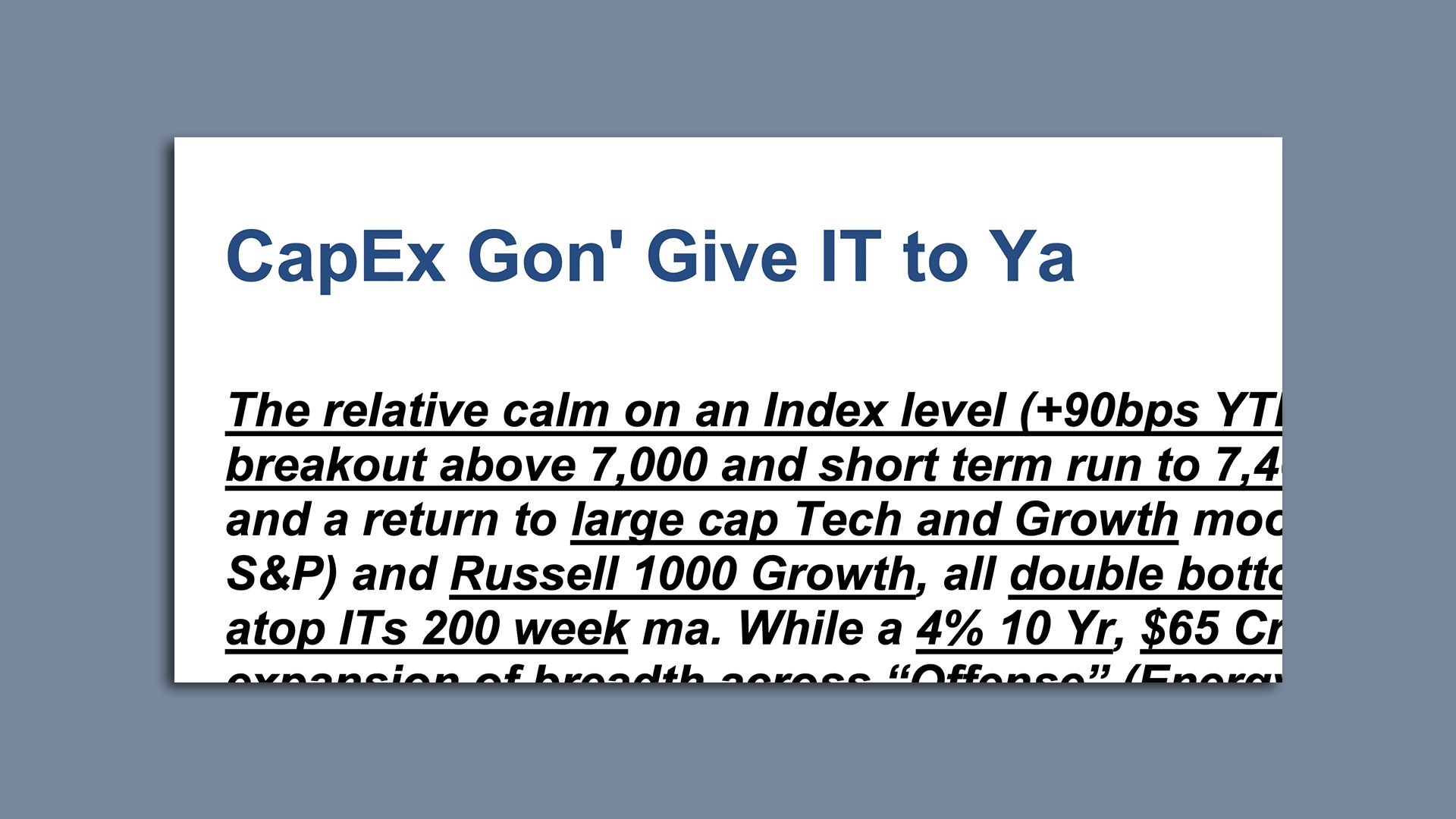
Rich Ross is a 55-year-old analyst with Evercore ISI based in Westport, Conn., who broke out earlier this week with a research note titled "CapEx Gon' Give IT to Ya," a riff on the 2002 hit song by hip-hop icon DMX.
Why it matters: Ross is one of a few Wall Street analysts who is spinning a more positive take on the software selloff.
But as far as we know, he's the only one to zhuzh his work up with copious pop culture references from the past two decades.
Zoom in: One of his charts on mortgage rates falling is titled: "30 Yr Mortgage: Shawty Get LOW LOW LOW" (a riff on Flo Rida's "Low").
A section on the importance of software references both the hit Apple TV show "Ted Lasso" — "Software is life" — and lyrics from OutKast, "Forever ever" from "Ms. Jackson," off the group's 2000 album "Stankonia."
By the numbers: Across 20 pages of technical analysis, we counted at least five hip-hop references, one to Linkin Park and one to the Grateful Dead.
"I'm kind of a deadhead underneath the surface," Ross tells Axios. The word play is "sort of a calling card."
The titles of his notes in January and December feature riffs on a 1980s Quincy Jones hit, a Nelly reference and one for New Kids on the Block.
Between the lines: Ross says he did not use AI for help on this latest report. "I've been trying to build AI insulation" into the job, he says, and the way to do that is by being more creative.
"You know, I'm an English major in a finance profession."
"I take my job very, very seriously," he says. "I don't take myself as seriously. I think it's how you survive in this business."
There's a rising chorus that the big selloff in software stocks — the dreaded Saaspocalypse — has been overdone.
Why it matters: Yes, AI is upending the software business. No, that doesn't mean software is going extinct.
Where it stands: Over the past few weeks, software stocks had their deepest selloff outside of a recession in 30 years, JPMorgan analysts noted earlier this month.
Although the decline in share prices now appears to be moderating, investors are still, to put it technically, freaking out.
"We have been asked more questions on software this past month than in the past 25 years," UBS strategists wrote in a note yesterday.
State of play: "Software is down, not out," says Rich Ross, a senior managing director at Evercore ISI That's the growing sentiment among cooler and more seasoned heads inside the tech industry and on Wall Street.
Those arguments got a little boost after the stock price of Figma, a design software firm, jumped after it reported a 40% increase in revenue from last year, and its CFO said it was "winning in AI." (The stock is still down 30% for the year.)
Zoom in: There's even a case that AI will make software more necessary, explains Steven Sinofsky, former head of Office and Windows at Microsoft, in a lengthy Substack.
"AI changes what we build and who builds it, but not how much needs to be built," he writes.
JPMorgan analysts put it more wonkishly: "Emerging evidence suggests that AI is more likely to be additive to software workflows."
In other words, software companies are moving to fold in AI features, "thereby enhancing existing platforms and creating upsell opportunities rather than rendering incumbents obsolete overnight."
Flashback: Sinofsky compares the current AI disruptions to three past pivot points in tech, all moments when people predicted an apocalypse, but what happened was more nuanced.
Advent of the PC. People predicted the data center would be eliminated, among other blown calls. (Data center growth now is a huge and growing part of the economy.)
Shift to online retail. Amazon was supposed to crush Walmart and all other stores. Walmart now has a $1 trillion market cap.
Pivot to streaming. Music was going to be free, along with information. (The tally of subscriptions I'm shelling out for each month tells a different story.)
How it works: There is no software apocalypse. That doesn't mean there isn't enormous change and pain. There is a repricing of stocks, and some IPOs will never see the light of day.
Who survives? The software companies more likely to make it have:
Proprietary data. Some software companies own information that you can't get anywhere else, for example, Bloomberg terminals. "You can't just scrape it. You can't recreate it," Nicolas Bustamante, the CEO of Fintool, a financial services AI company, writes on X.
Regulatory lock-in. This is software, in the health services space, for example, that deals with sensitive areas that can't simply be scrapped.
Network effects. If everyone is using the same specific tool, they're not likely to pivot to a vibe-coded DIY app.
Reality check: Worth noting no one knows what is about to happen.
The bottom line: To butcher a line from Mark Twain, reports of software's death are greatly exaggerated.
The Supreme Court may finally decide the fate of President Trump's trade agenda as soon as Friday.
The big picture: Small businesses sued to block Trump's tariffs last spring. Analysts had initially expected a swift ruling from the highest court, but the uncertainty has dragged on for longer than expected.
Barring a surprise, Congress and its elected leaders are on track to give President Trump the equivalent of a green light ahead of a potential major war in the Middle East.
Why it matters: War Powers Act resolutions, including one that Rep. Ro Khanna (D-Calif.) intends to force next week, are meant to restrain the president.