Americans are socking away a record percentage of their income in retirement accounts, according to a new analysis from Fidelity Investments.
💰The total 401(k) savings rate — when including employer contributions — hit an all-time high of 14.3% of gross incomes in the first quarter, Fidelity reports.
The big picture: Investment advisers say the ideal percentage is 15% — so we're almost there.
🤖 Between the lines: Automatic enrollment and automatic increases are a big reason for the higher rate.
35% of employerplans were defaulting automatic-enrolled workers at a 5% contribution rate or higher in Q1, while more than 1 in 4 offered automatic escalation, Fidelity notes.
👶 👵 The savings rate increased for workers in every generation.
Businesses say they're raising prices on goods unaffected by tariffs, according to surveys and anecdotes released by the Federal Reserve on Wednesday.
Why it matters: This could be a sign that price hikes might be more widespread than expected, with concerns that some companies might use tariffs as cover to unnecessarily raise costs.
Impulse Space, a California-based maker of spacecraft for "tugging" satellites across orbits, has raised $300 million in Series C funding led by Linse Capital.
Why it matters: This is the picks and shovels of defense-tech, akin to what oilfield service companies were to the fracking boom.
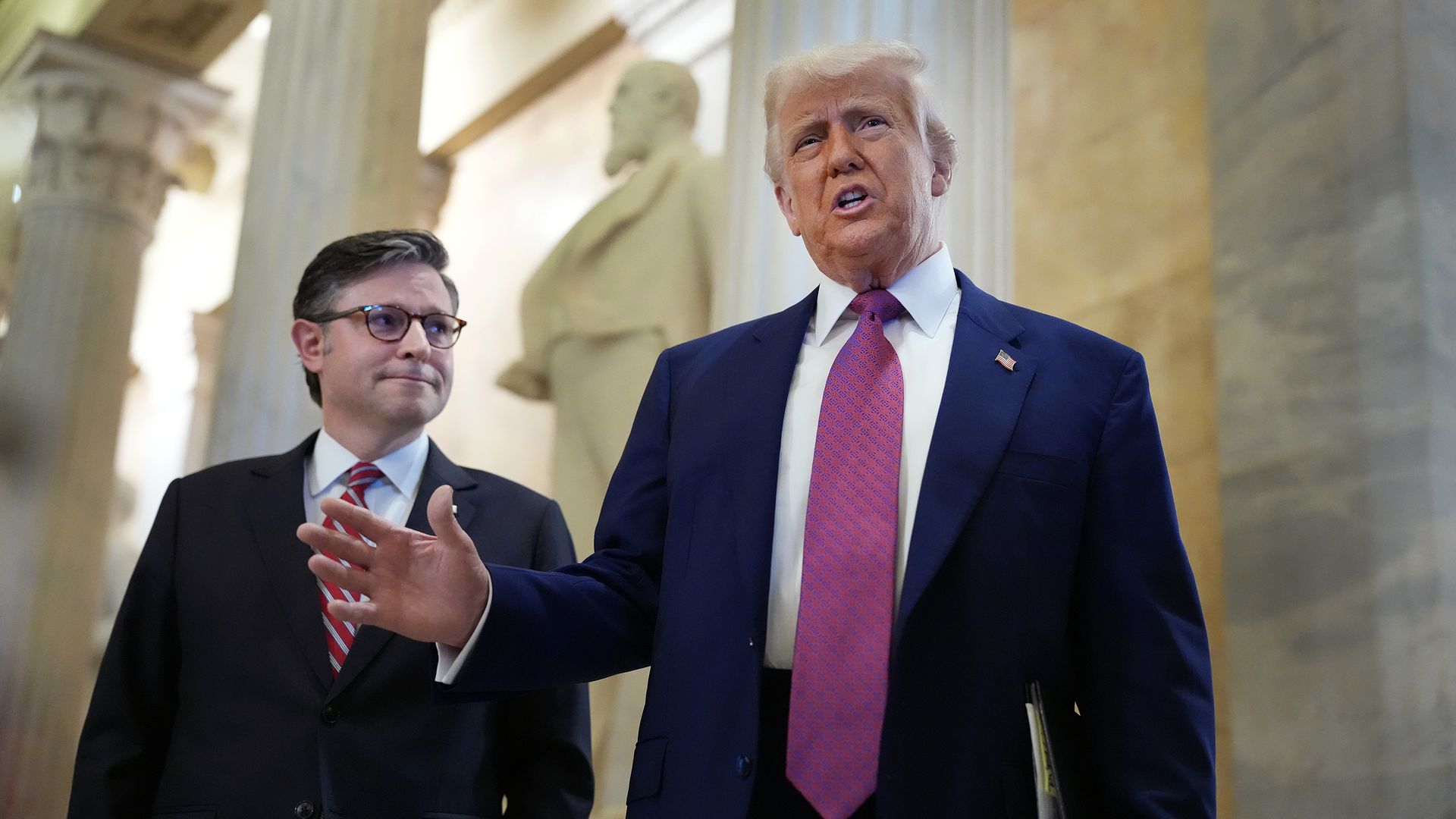
The Congressional Budget Office delivered a double shot of projections for the fiscal outlook Wednesday, finding that the Trump administration's signature tax bill would widen deficits, while tariffs would narrow the fiscal gap.
Why it matters: The Trump administration argues its trade policies will reduce the deficit, a notion that the new CBO estimates support.
Whipsawing tax policies in Washington threaten to put billions of dollars in manufacturing investments at risk across the U.S. battery belt from Michigan to Georgia.
Why it matters: New battery plants are less viable without lucrative tax credits that a Democrat-controlled Congress approved in 2022, but which the new Republican majority aims to undo.
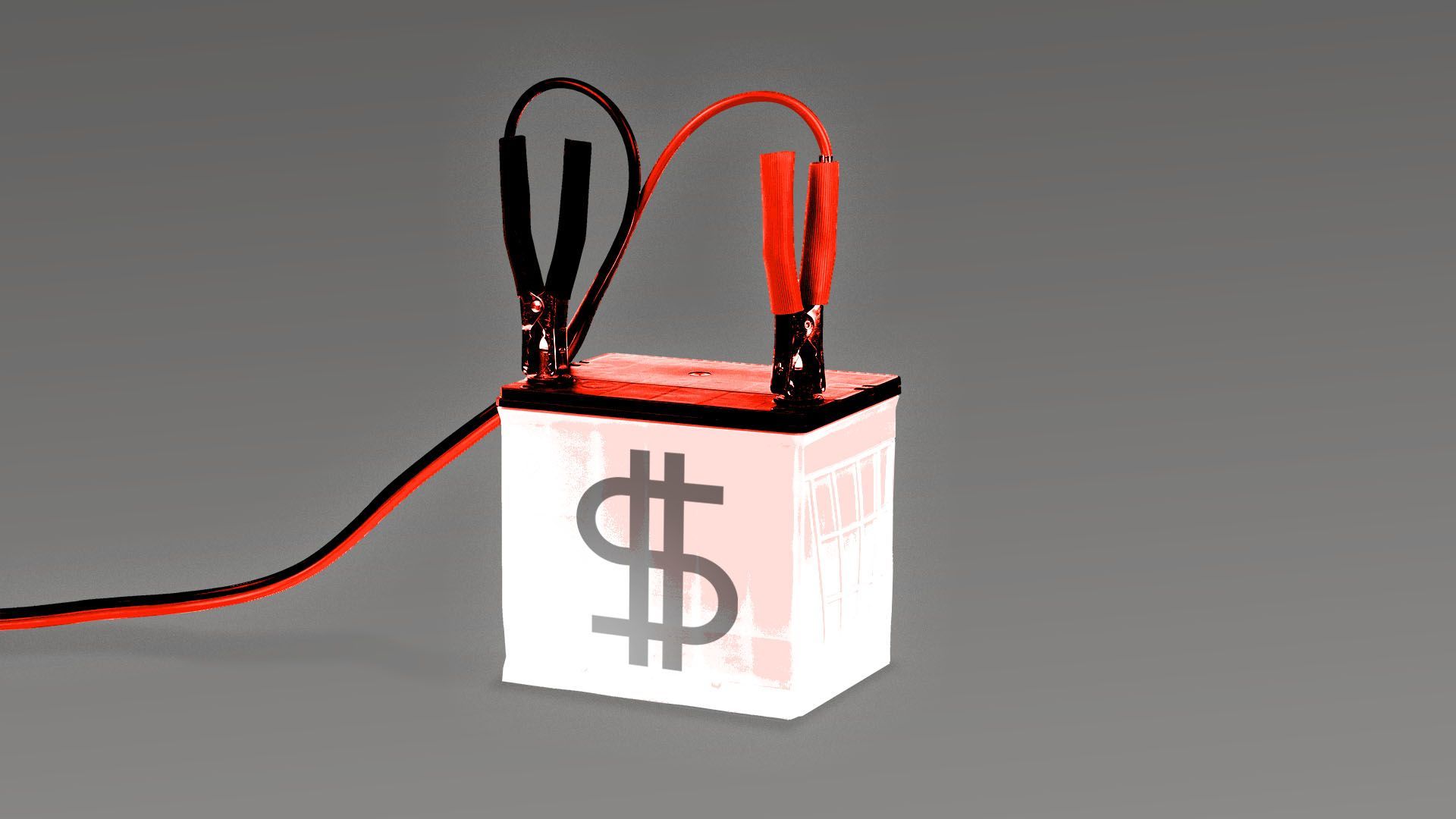
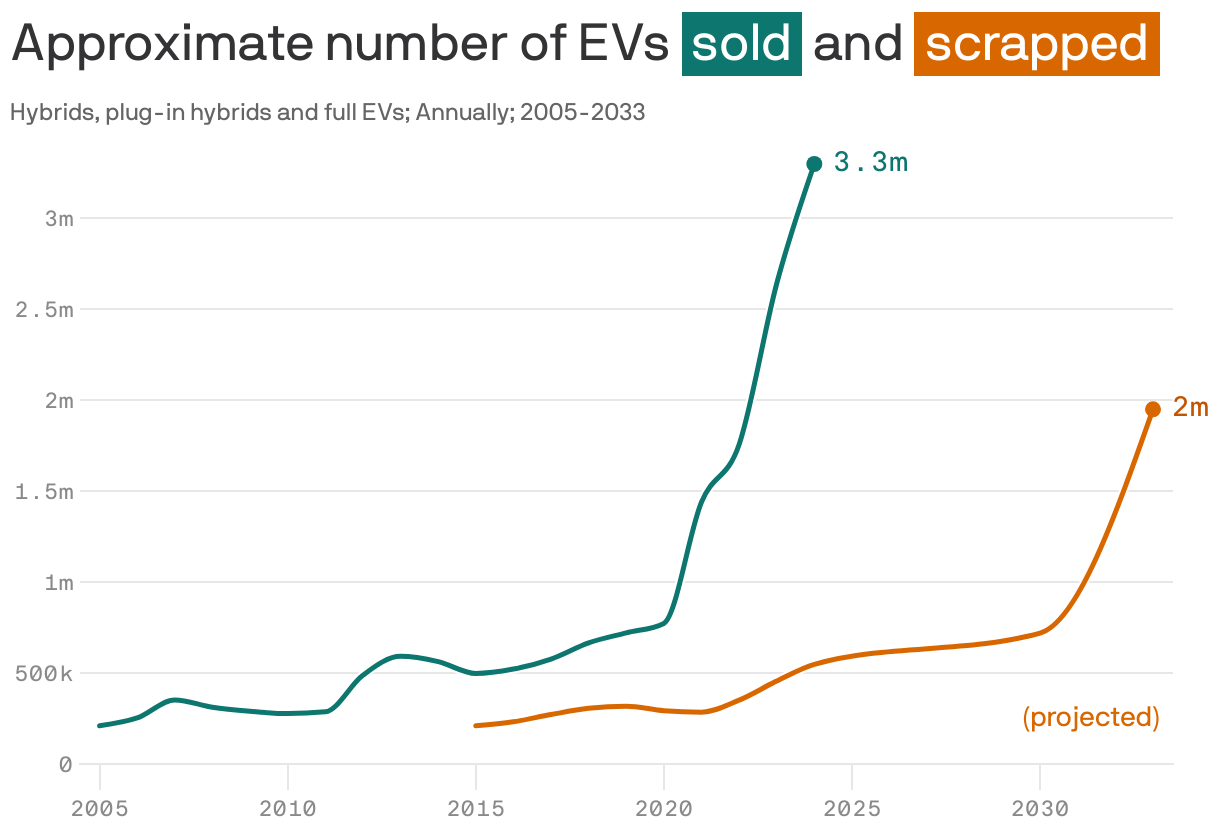
Battery recycling is one way to secure critical minerals for electric vehicles without getting caught up in geopolitics, but it's not going to break the U.S. of its dependence on China any time soon.
Why it matters: In order to produce new batteries with recycled minerals, you need to collect enough dead batteries to extract those materials.
In case there were any doubt, Wednesday's developments put them to rest.
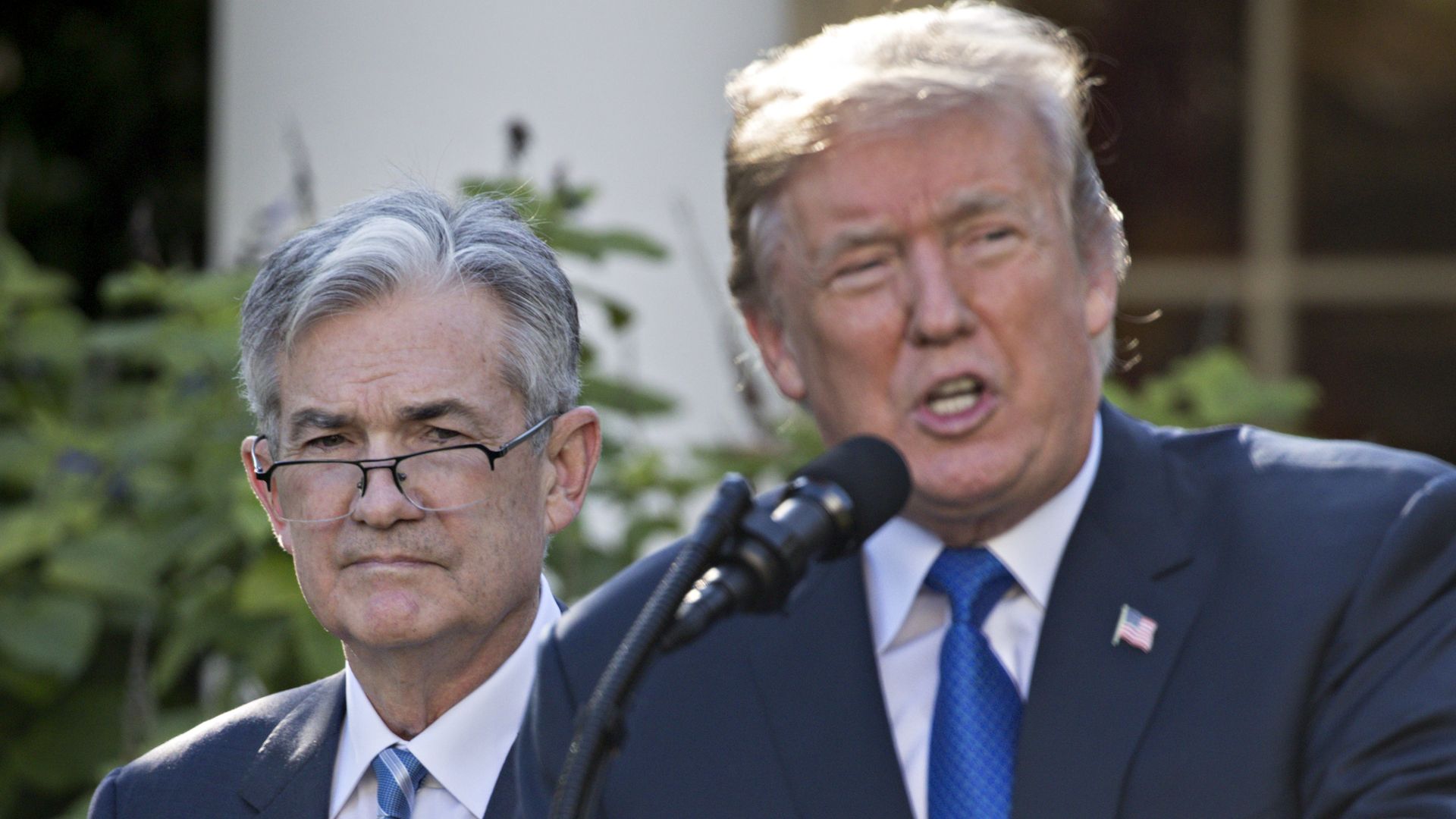
If the economy starts to seriously buckle due to the trade war, President Trump will blame the Federal Reserve and its leader, Jerome Powell.
The big picture: Trump has made no secret that he thinks the Fed should be proactively cutting interest rates to ease the pain of any economic bumps ahead — despite the inflation risk also fueled by tariffs.
President Trump demanded on Wednesday that Federal Reserve chair Jerome Powell lower interest rates, minutes after an economic report showed sluggish private sector hiring in May.
Why it matters: Trump, who met with Powell last week, has been pressuring the Fed to lower borrowing costs since taking office.
American manufacturers are having pandemic flashbacks: some say tariff disruptions are starting to stack up to the COVID era, with nearly as much difficulty securing critical inputs.
Why it matters: Tariffs were supposed to spur a manufacturing renaissance, not bring the manufacturing economy to a grinding halt.
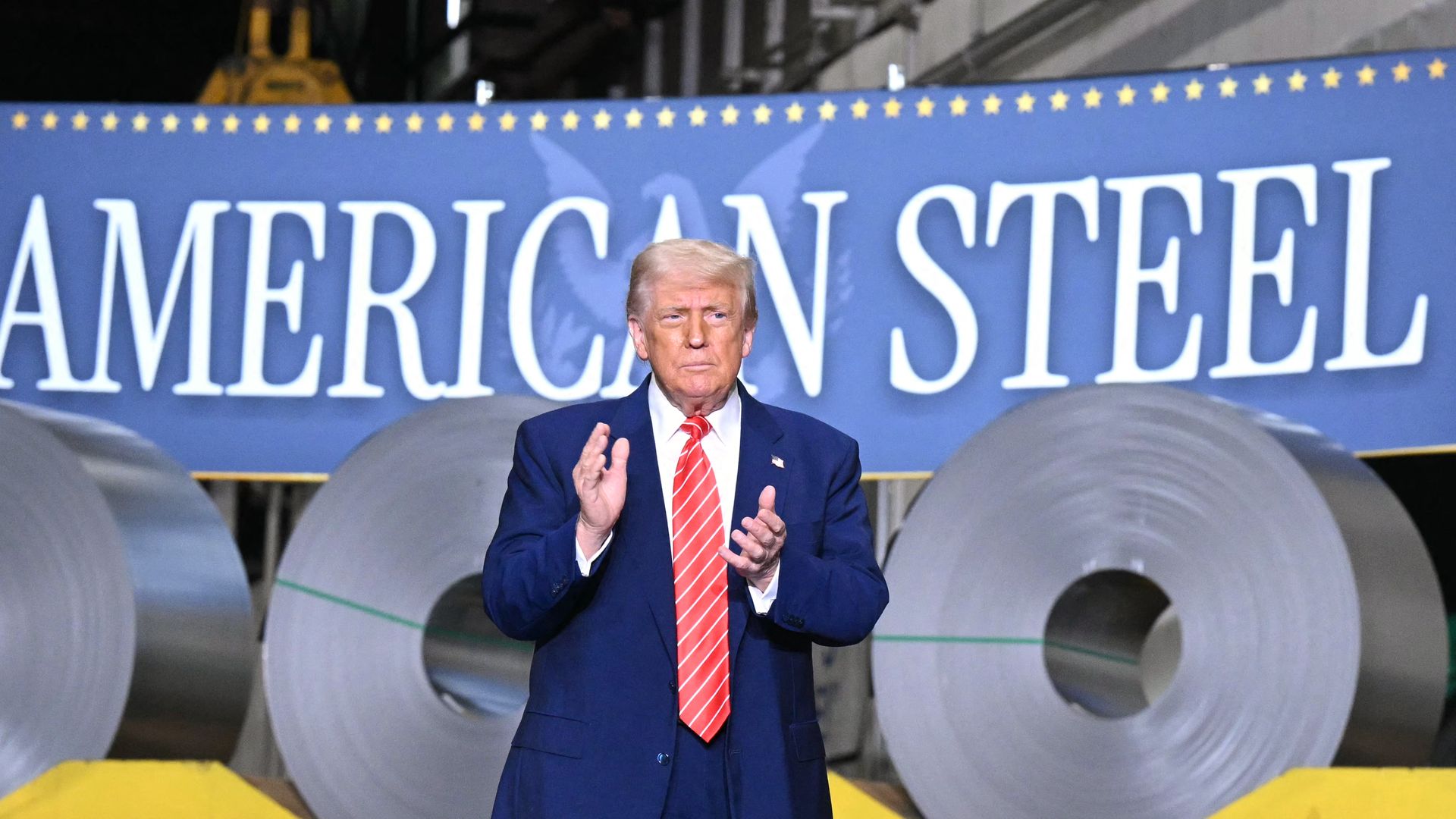
President Trump signed an order Tuesday doubling tariffs to 50% on steel and aluminum imports — drawing swift criticism from officials in neighboring Canada and Mexico.
Why it matters: Trump's order said the increased tariffs that took effect early Wednesday "will more effectively counter" countries that "offload low-priced, excess steel and aluminum" in the U.S., but economic officials have said such levies would lead to higher consumer prices and inflation.
President Trump formally asked Congress on Tuesday to rescind $9.4 billion in already approved funding for foreign aid and the Corporation of Public Broadcasting (CPB), which funds NPR and PBS.
Why it matters: The rescissions package is an attempt to codify DOGE-driven cuts amid a wider push from the Trump administration to target news organizations perceived to be biased against Republicans.










/2025/06/04/1749043765930.gif?w=3840)

/2025/06/03/1748985458097.gif?w=3840)