Axios Event: U.S. needs more critical minerals to compete with China, experts say

Add Axios as your preferred source to
see more of our stories on Google.
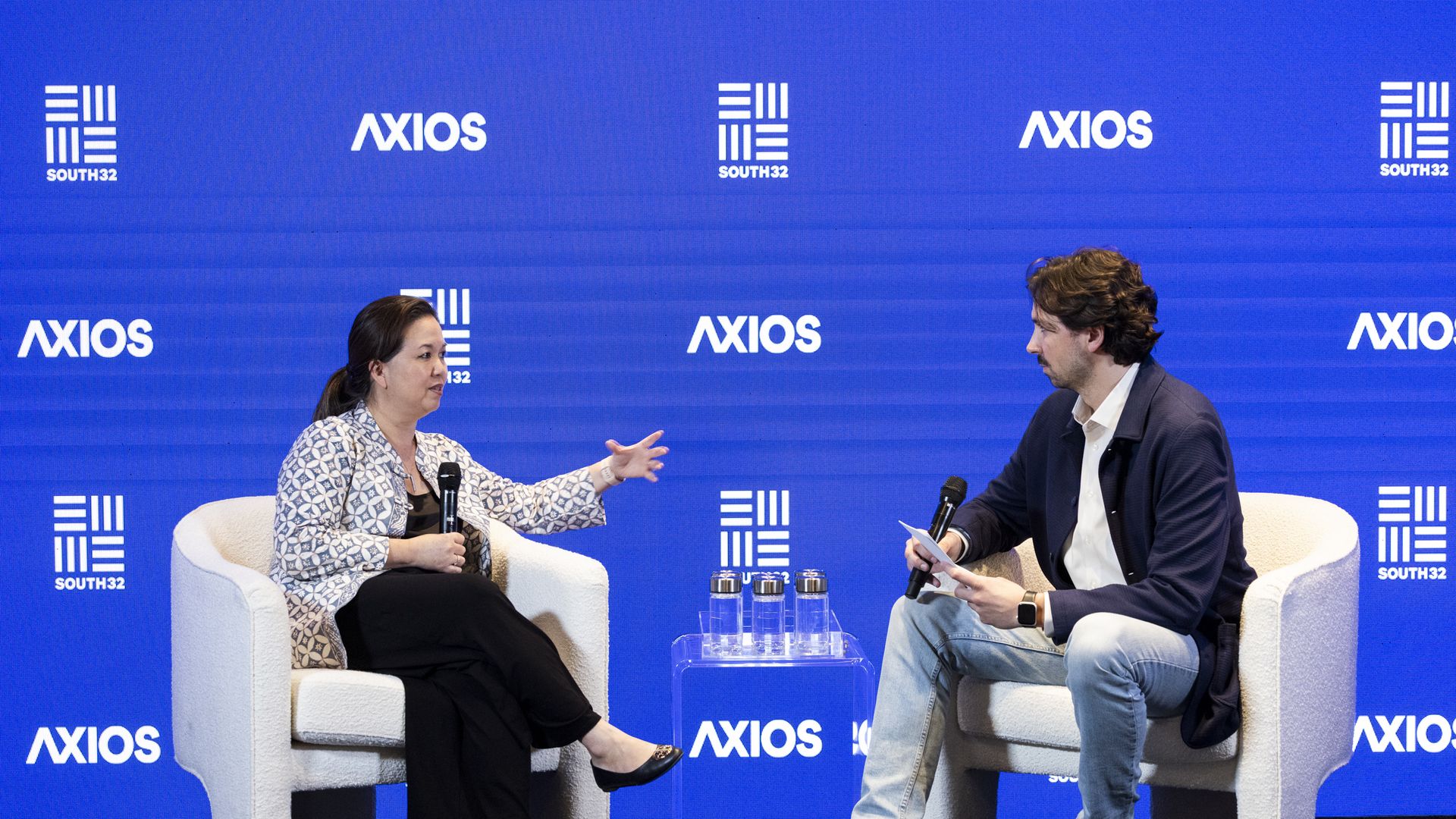
Rep. Jill Tokuda on stage with Axios' Colin Demarest. Photo: Kristoffer Triplaar on behalf of Axios
WASHINGTON – Competition with China and tariff threats are fueling U.S. efforts to secure more critical minerals used to make semiconductor chips and other defense infrastructure, speakers said at a May 6 Axios event.
Why it matters: Critical minerals have become a national security asset and subject of global politics, with the Trump administration recently signing a deal with Ukraine locking in preferential access to strategic elements from that country.
Axios' Colin Demarest spoke with Reps. Jack Bergman (R-Mich.) and Jill Tokuda (D-Hawaii), as well as Gracelin Baskaran, critical minerals security program director at the Center for Strategic and International Studies (CSIS), at the May 6 Axios event, sponsored by South32 Hermosa.
Zoom out: China has been building up its technological capabilities for decades under its Belt and Road Initiative, investing in minerals and other critical industries, speakers said – and the U.S. is behind.
What they're saying: "Some minerals are here at home, we have good copper reserves … but some minerals we just don't have enough of," Baskaran said.
- The U.S. Energy Act of 2020 defined "critical minerals" as "any non-fuel mineral, element, substance or material that … has a high risk of supply chain disruption [and] serves an essential function in one or more energy technologies."
- The list of about 50 such elements includes lithium, nickel, cobalt and graphite.
Catch up quick: The U.S. relies on China for many critical minerals, but export controls and tariffs have limited access amid growing trade tensions.
- China's recent restrictions on rare earth elements and magnets are a "dangerous game," Bergman said.
- However, removing China suppliers from the critical minerals equation – even with the security risks – wouldn't be realistic, he said. "The attainable goal would be to marginalize their dominance in it, because there's always going to be more than one player."
The latest: It's not clear what impact the recent Ukraine minerals deal will have on U.S. supply, speakers said.
- "We don't know what the outcome is going to be in Ukraine yet, but we do know if we don't establish the relationship at a different level that hasn't been tried … that Ukraine is still vulnerable," Bergman said. "So it's a good thing to have those deals inked."
- "For me, it doesn't change the needle any," Tokuda said of the deal. Ukraine doesn't process these materials as well as China, where most of the processing also takes place, she said.
State of play: "Let's be very honest, right? This is about making sure that we are in a state of readiness, that we're able to deter," Tokuda said.
- "Right now we have so much vulnerability because of our dependence on these critical and rare earth minerals with China, that we really, we need to start yesterday in terms of really shoring up that supply chain."
Content from the sponsored segment:
In a View From the Top conversation, Pat Risner, president of South32 Hermosa, said gaps in the zinc supply haven't gotten enough attention in the critical minerals conversation.
- "Zinc is used to galvanize steel, it's very important for infrastructure, all forms of energy … even battery storage, and other defense applications," Risner said.
- "If you look at the global zinc supply and demand picture, we see by 2034 … there being a 4 million ton gap between global zinc supply and zinc demand."
