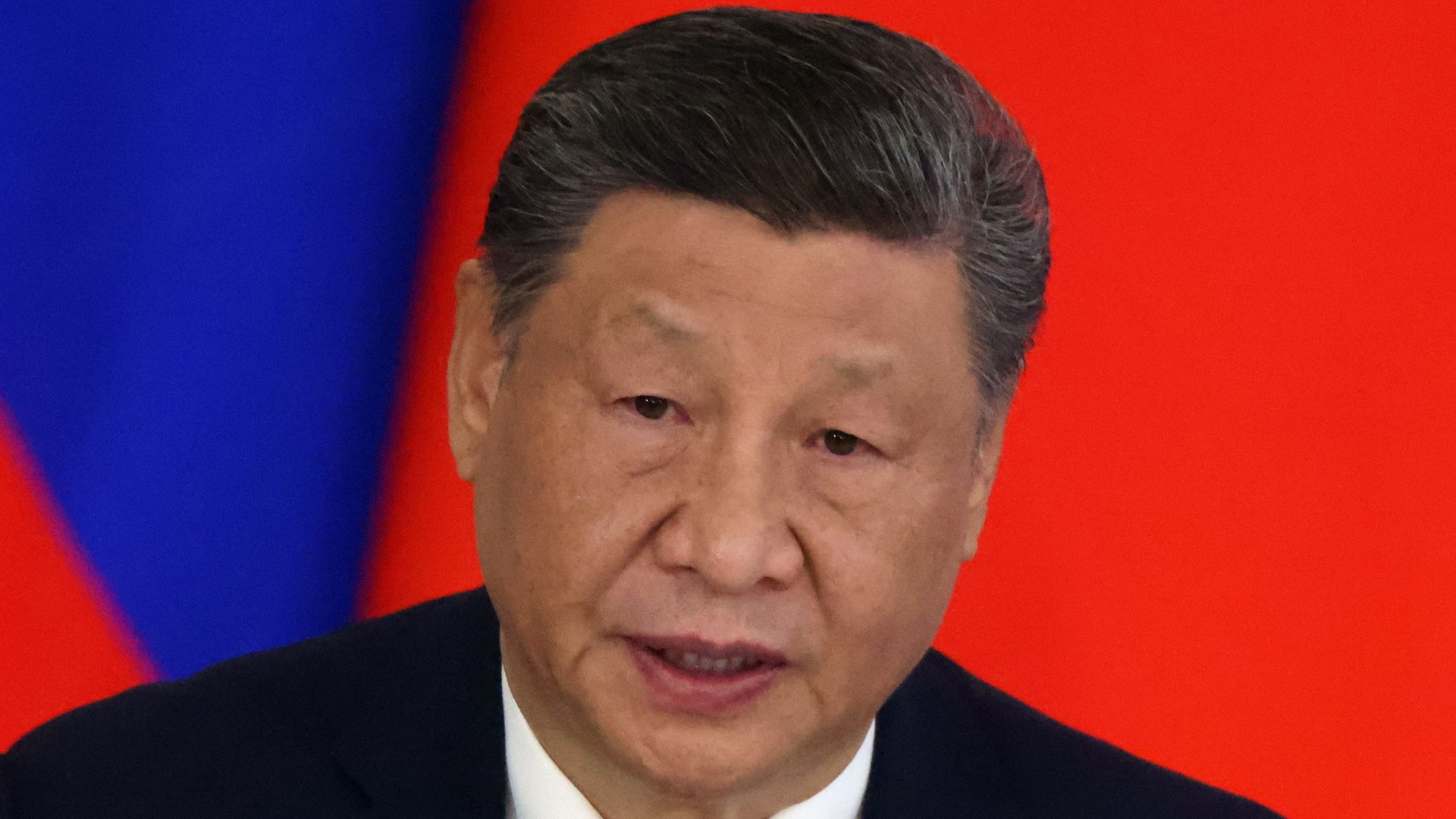
China accused the U.S. violating the trade deal that the world's two largest economies signed last month and vowed to take "resolute and forceful measures," per a briefing on Monday morning local time.
Why it matters: It's the latest sign of deteriorating relations between the two nations since their Switzerland meeting last month led to a deal to lower tariffs on each other for 90 days while they negotiated on trade.
Americans are cooking at home more often and targeting budget-friendly foods, according to The Campbell's Company.
Why it matters: The trend reported Monday by Campbell's — whose brands include its eponymous soup, Prego sauce and Snyder's pretzels — comes as restaurant chains like McDonald's have already flagged softness in spending from low- and middle-income consumers.
Chicken strips have been a red-hot menu item lately.
Little surprise today then that Dave's Hot Chicken just landed a nearly $1 billion valuation from a private equity firm.
Driving the news: Roark Capital inked a deal to buy a majority stake in the fast-growing chain founded eight years ago in an East Hollywood parking lot. The valuation was confirmed by Dave's CEO Bill Phelps on CNBC.
Dave's generated more than $600 million in sales in the U.S. last year, a 57% jump from the year before, CNBC reported, citing data from Technomic.
🌶️ The intrigue: Dave's focuses on selling oversized chicken tenders, and it also brings the heat — which appeals to younger customers.
Its hottest flavor, called "Reaper," requires a waiver to eat and has sent at least one customer to the hospital, CNBC noted.
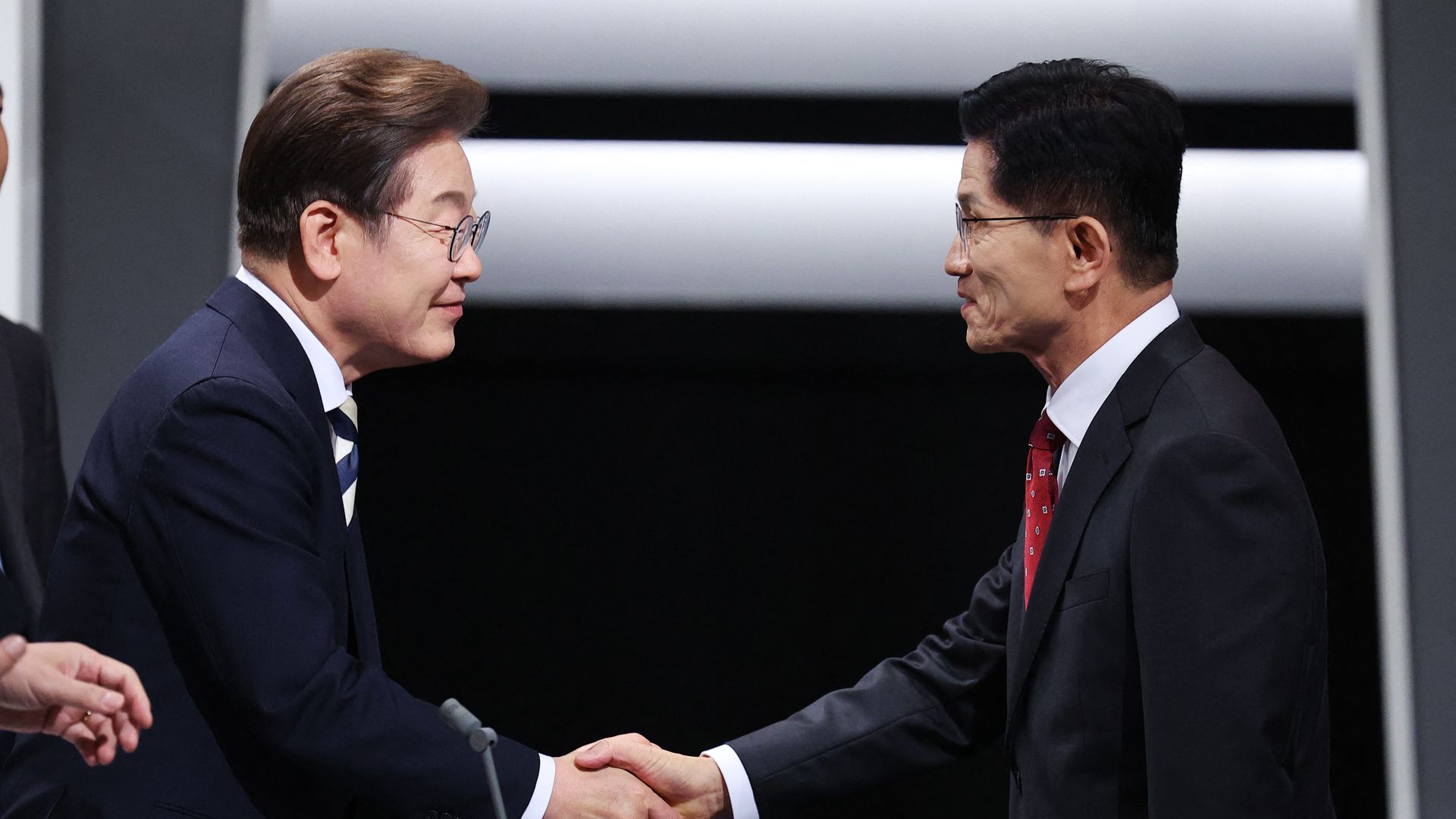
Some six months after South Korea was cast into a constitutional crisis by a stunning declaration of martial law, the nation will head to the polls Tuesday.
The big picture: The election in many ways will be a referendum on impeached President Yoon Suk Yeol and his party, as whoever wins will be tasked with mending a divided South Korea after months of turbulence.
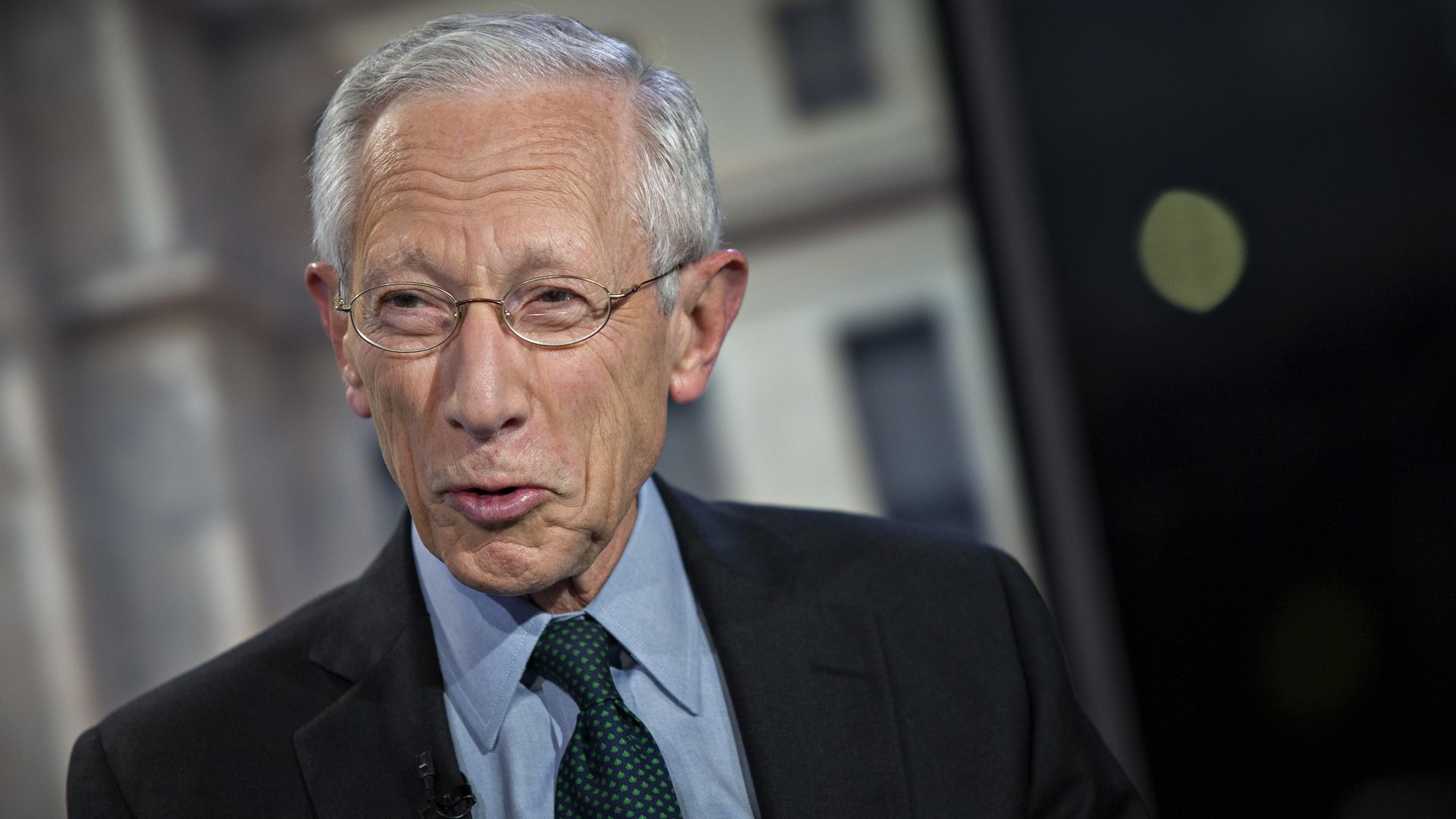
Stanley Fischer's resume as a top policymaker was remarkable. But it was his intellectual leadership and mentorship that made him a unique force in the last four decades of global economic policy.
The big picture: Fischer, a titan of economics and central banking who died this weekend at age 81, mentored generations of top economists and policymakers in his decades at the Massachusetts Institute of Technology.
Hundreds of times a year, the U.S. Treasury auctions off debt securities — bills, bonds, and notes. This is how Uncle Sam borrows the billions needed to finance the government's deficits.
The big picture: Top financial and business leaders, including some who served at high levels in President Trump's first term, are increasingly worried that something could go awry.
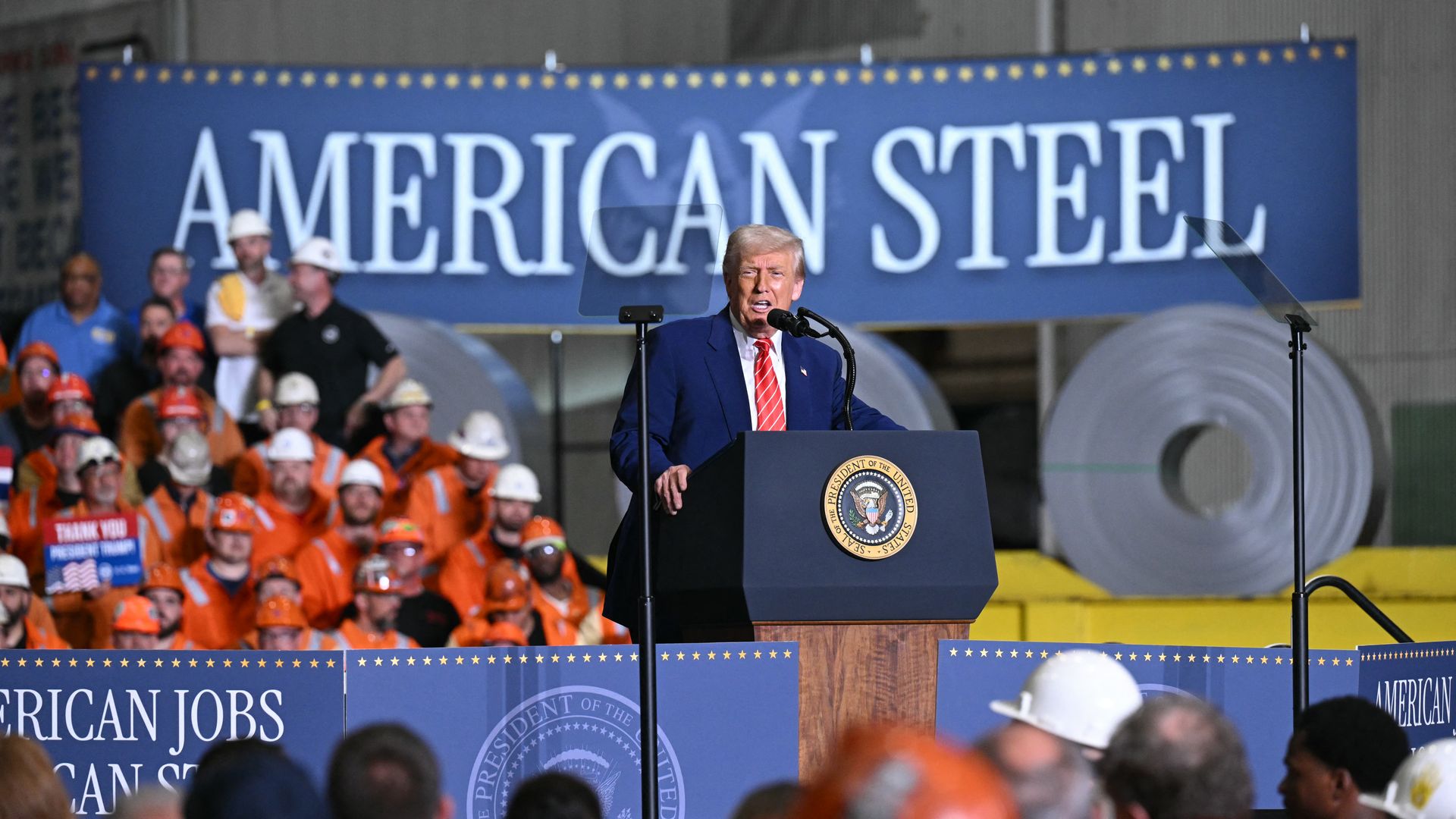
President Trump on Friday spoke for nearly an hour to workers at a U.S. Steel plant near Pittsburgh, crediting himself with saving their jobs by negotiating a "partnership" between their employer and Japan's Nippon Steel.
Later that evening in Washington, D.C., he told reporters that he's neither seen nor approved a final deal.
Why it matters: Trump's decision to put the cart before the horse may have given Nippon some last-minute leverage.
Sanofi agreed to acquire Blueprint Medicines, a Cambridge, Mass.-based biotech focused on rare immunology diseases, for $9.1 billion in cash and up to $400 million in earnouts.
Why it matters: This is Sanofi's third big buy in 2025, following Dren Bo and Vigil Neuroscience, as it tries to build up a portfolio that's become too reliant on its Dupixent anti-inflammatory drug.
New White House hiring guidelines sent out to federal agencies last week include what looks like a presidential loyalty test, say current and former federal employees and Trump administration critics.
Why it matters: Meant to serve as guidelines to focus hiring on merit, the memo is the latest move from the Trump administration to politicize the civil service, eroding, more than a century of law and tradition meant to insulate career employees from politics, critics say.
U.S. trade policy is making China great again — at the United States' expense, per an analysis from Morning Consult that looks at global favorability ratings, and finds China's rising while America's falls.
Why it matters: The drop in America's reputation is already costing the country economically — through a fall in foreign visitors turned off by White House policies, and even the decline of the dollar.
The big picture: There's potential for more damage:
"As views of the United States worsen, trade and investment opportunities for American firms doing business overseas may also diminish as consumers shun the products and job opportunities they provide," writes Jason McMann, head of political intelligence at Morning Consult.
There's also concern about a specific provision buried in the Republican tax bill that could reduce demand for U.S. assets, plus worries over losses from banning foreign students studying in the country.
The latest: America's favorability started edging up a smidge after the president agreed to slash tariffs on China earlier in May (see the chart above).
But on Friday, Trump said China "totally violated the deal," all but blowing up the fragile detente.
By the numbers: As of the end of May, China had an 8.8 net favorability rating, compared to -1.5 for the U.S., according to favorability data for last month provided exclusively to Axios by Morning Consult.
In January 2024, the U.S. rating was above 20 and China was in negative territory.
How it works: The data tracks net favorability ratings, or the share of respondents with a positive view of a country minus those with a negative view.
Morning Consult surveyed adults in 41 countries including Canada, France, Japan, Russia and the U.K.
Zoom out: The U.S. had a largely positive reputation last year — but it dropped sharply after President Trump took office.
"Since January 2025, the overwhelming majority of countries simultaneously exhibit worsening views of the United States and improving views of China," McMann writes.
"Only in Russia have views of America meaningfully improved."
Meanwhile, China's rating has been negative going back to October 2020, when Morning Consult first began tracking; it started trending into positive terrain after election day last year.
But most of the country's improvements have come since March — including a sharp tick up after Trump's "Liberation Day" tariff announcements.
"The reputational damage done by the "Liberation Day" tariff announcements has now sealed the deal," per the report.


/2025/06/02/1748899102489.gif?w=3840)