Stanley Fischer, economic and central banking titan, dies at 81

Add Axios as your preferred source to
see more of our stories on Google.
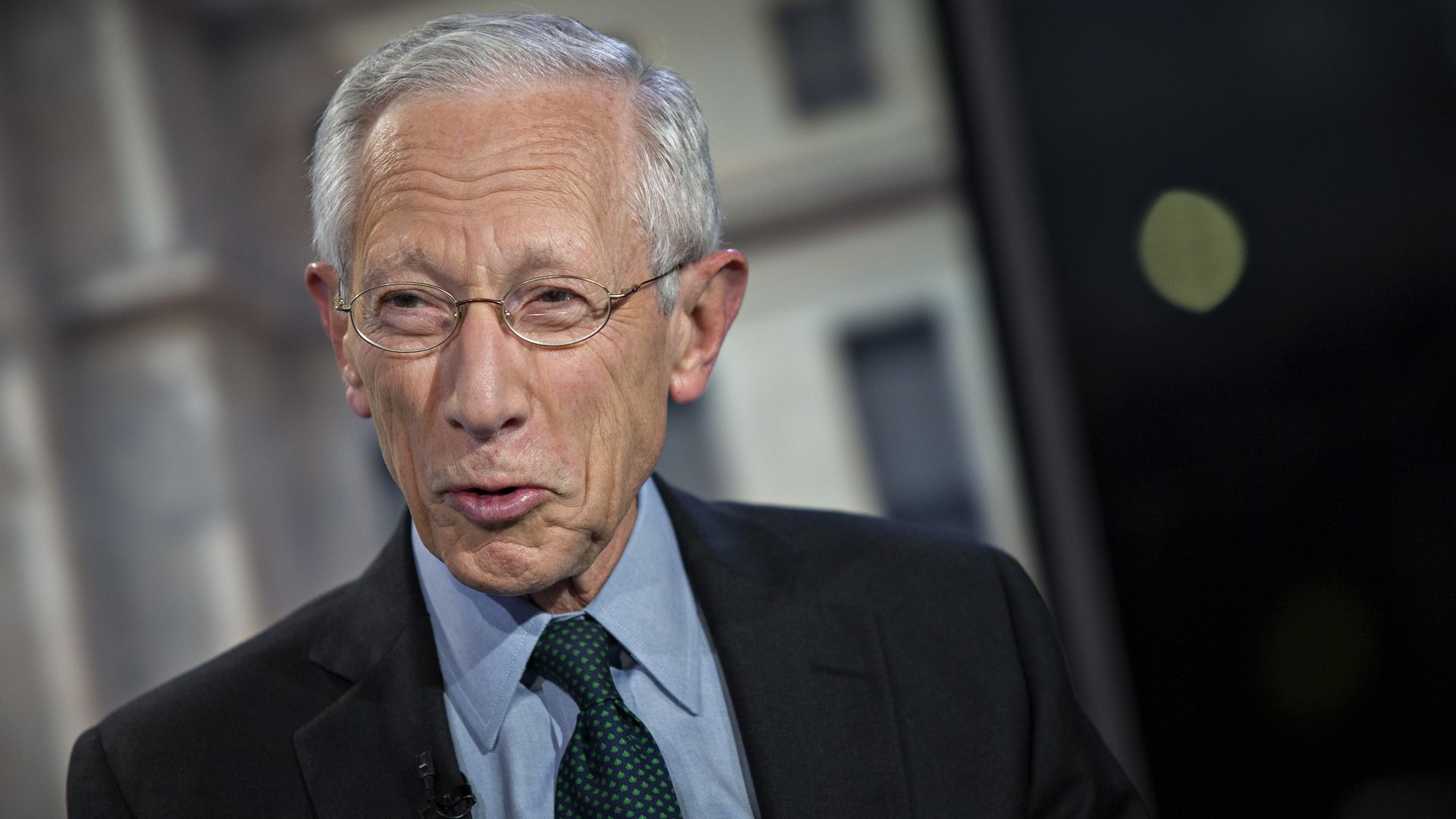
Stanley Fischer in 2017. Photo: Andrew Harrer/Bloomberg via Getty Images
Stanley Fischer's resume as a top policymaker was remarkable. But it was his intellectual leadership and mentorship that made him a unique force in the last four decades of global economic policy.
The big picture: Fischer, a titan of economics and central banking who died this weekend at age 81, mentored generations of top economists and policymakers in his decades at the Massachusetts Institute of Technology.
- He trained them on a school of economic thought that was intellectually rigorous — but hardly confined to abstract theory. Fischer's approach offered practical answers for policymakers navigating a recession or crisis.
- His mentees included eventual Federal Reserve chair Ben Bernanke, former European Central Bank chief Mario Draghi, current Bank of Japan governor Kazuo Ueda — just the start of a who's who list of modern economic policy.
- Fischer served in major leadership roles himself. He was the No. 2 official at the International Monetary Fund (1994-2001) and the Federal Reserve (2014-2017), as well as governor of the Bank of Israel (2005-2013).
Flashback: Fischer guided the IMF through the East Asian crises of the late 1990s, seeking to balance rescues of indebted nations with demands that they reform their domestic economies as a condition of aid.
- While those reforms' results were painful at the time, affected countries — including Thailand, Indonesia, Malaysia and South Korea — boomed in the ensuing decade.
- As head of Israel's central bank, he guided the nation through the Global Financial Crisis, which it weathered better than most countries.
The bottom line: With his wry smile, gentle humor, and professorial charm, Fischer made a lasting mark on the world economy and the people who continue to guide it.
