Driving the news: The consumer price index jumped a higher-than-expected 3.5% in March over last year, government data showed today. That was hotter than Wall Street expected and well above what Fed policymakers would like to see.
Those are the "four most divisive words on a flight," the Wall Street Journal says.
The big picture: With airlines charging for preferred seats these days, some folks aren't reacting very kindly to the age-old request from fellow passengers.
"99% of the time I'm going to say no," 35-year-old digital marketing director James Randolph tells WSJ. "I picked this seat. I want to have it. I paid extra for it."
💭 Nathan's thought bubble: We can feud with each other — or we can direct our discontent at the airlines for forcing us to pay to sit with our traveling mates.
J.M Smucker's $5.6 billion acquisition of Hostess closed in November, setting up the peanut-butter-and-jelly food giant to diversify its business into the snacking category.
Why it matters:Hostess — which makes Twinkies, Ho Hos, Ding Dongs, Zingers and other treats — operates in a space where Jif maker Smucker has historically not had much of a presence.
Federal Reserve officials thought inflation was still receding, though that process was expected to be "somewhat uneven," according to minutes released on Wednesday from the Fed's policy meeting last month.
Why it matters: That characterization came before new data that showed yet another month of hotter-than-expected inflation — a sign that faster price increases in key parts of the economy will take longer than anticipated.
Driving the news: The consumer price index (CPI) index jumped by a faster-than-expected 3.5% last month, data showed on Wednesday. That was faster than Wall Street expected, and well above what Federal Reserve policymakers would like to see.
However, food prices rose marginally, with the "at home" (ie groceries) category flat from the previous month, the Bureau of Labor Statistics reported.
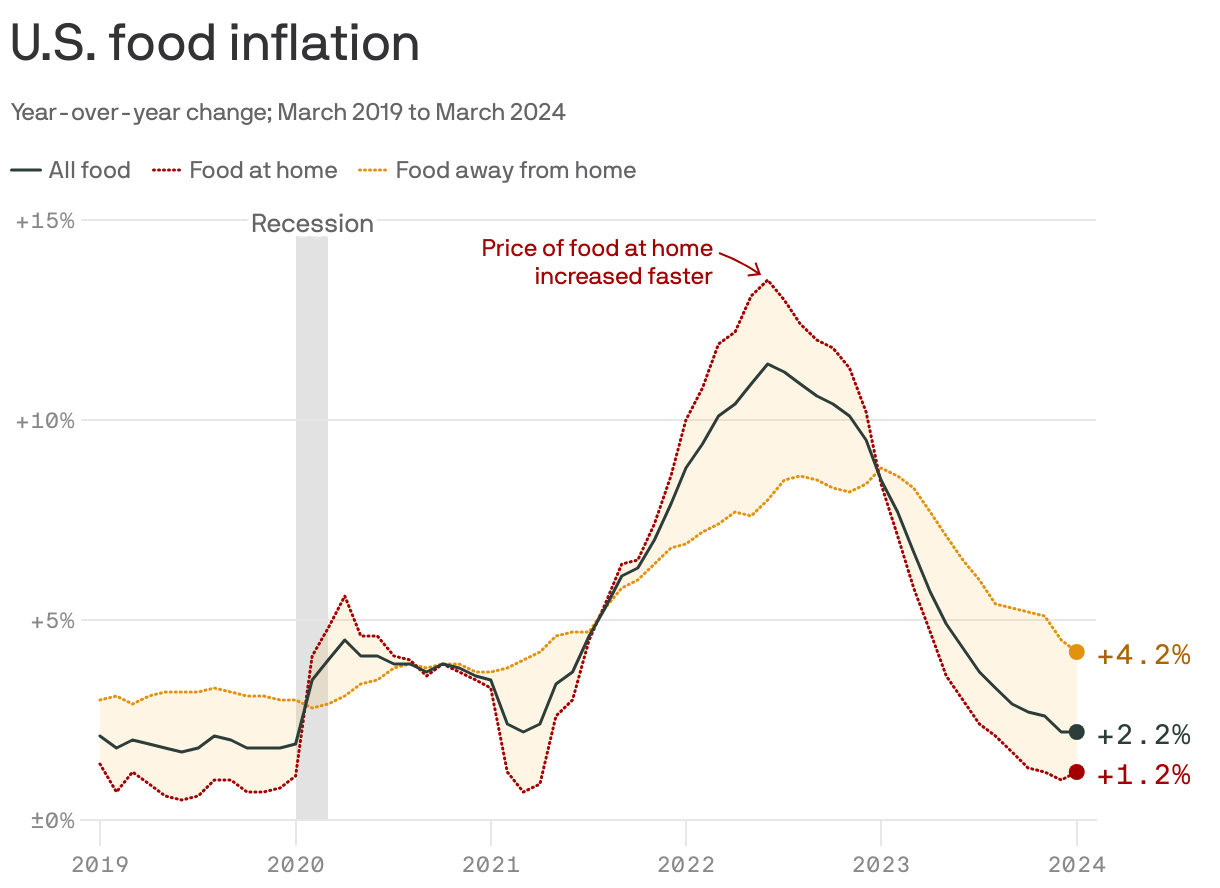
Overall, prices were up 2.2% year over year, which may bring some comfort to inflation-weary consumers as the price pressures of key food staples moderate.
Yes but: Although food at home prices rose by 1.2% in March, the dining out (or food away from home) category soared a whopping 4.2% year over year, down only slightly from 4.5% from February.
Index for meats, poultry, fish, and eggs collectively rose by 0.9% in March, boosted by a 4.6% surge in the egg component.
Meanwhile, a steep 5% drop in butter prices helped cool other food at home prices, which fell by 0.5% during the month.
Cereals and bakery products index experienced the largest monthly drop, tumbling 0.9% last month.
Nonalcoholic beverages rose by 0.3%, while fruits and vegetables increased by 0.1%.
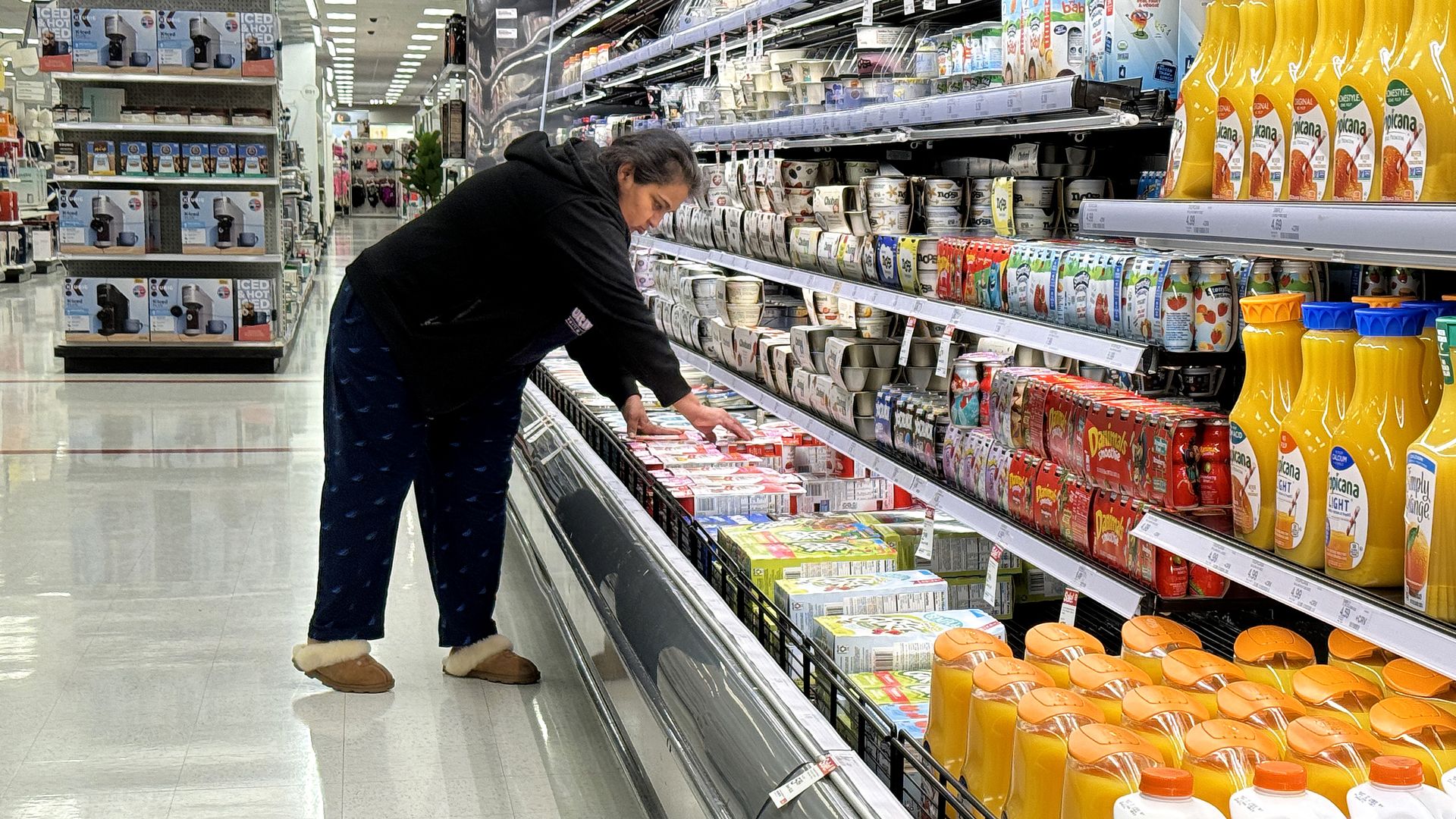
What they're saying: ""What you will find is, if you go deeper into those numbers, the opportunities at grocery stores are improving significantly, but it is restaurants where we are still seeing a bit of high inflation," Agriculture Secretary Tom Vilsack told in his recent interview to Bloomberg.
What we're watching:Egg prices after a bird flu outbreak at the largest U.S. producer.
At the end of last year, inflation seemed to be falling decisively. A quarter of the way through 2024, that outlook is in doubt.
Why it matters:Inflation hasn't returned to the ultra-high state of 2021 and 2022. But it does appear stuck at a much higher level than palatable — both for the Federal Reserve and American consumers — likely putting plans to lower interest rates into limbo.
The Consumer Price Index rose 0.4% in March, while a closely-watched measure that strips out food and energy costs rose by just as much—matching the same pace as the prior two months, the government said Tuesday.
Why it matters: The latest data, which also show a pick-up in the annual CPI figure, extends a streak of hotter inflation releases than policymakers would like — a key sign that returning inflation back to 2% might take longer than anticipated.
For proof that markets are inefficient, you don't need to look much further than closed-end funds, and other vehicles that behave like them.
Why it matters: When markets are frothy, you'll sometimes see investors paying dollars for dimes. Markets seem to be frothy right now — as evinced particularly in the share price of a new fund called Destiny.
Crypto investor Avraham Eisenberg put $13 million on the line in his Mango Markets trade, his defense counsel argued today, and his $110 million take was never a sure thing.
Why it matters: To get a conviction in its criminal fraud case, the government will have to show that Eisenberg both had knowledge that he was acting illicitly and that the laws he has been charged under actually apply to decentralized finance (DeFi).
Crypto's obsession with investment wrappers was on display in the most recent head fake around an ether ETF decision.
Why it matters: The Securities and Exchange Commission last week started soliciting public comment on proposals for exchange traded funds from Bitwise, Fidelity and Grayscale, leading to another round of speculation on the odds of a regulatory approval in May.
Data: KPMG and the Association for Supply Chain Management; Chart: Axios Visuals
Data: KPMG and the Association for Supply Chain Management; Chart: Axios Visuals
Just-in-time manufacturing is back — and not a moment too soon.
The pandemic wrecked supply chains, undermining the once-seemingly foolproof strategy of scheduling production as soon as components arrived on site.
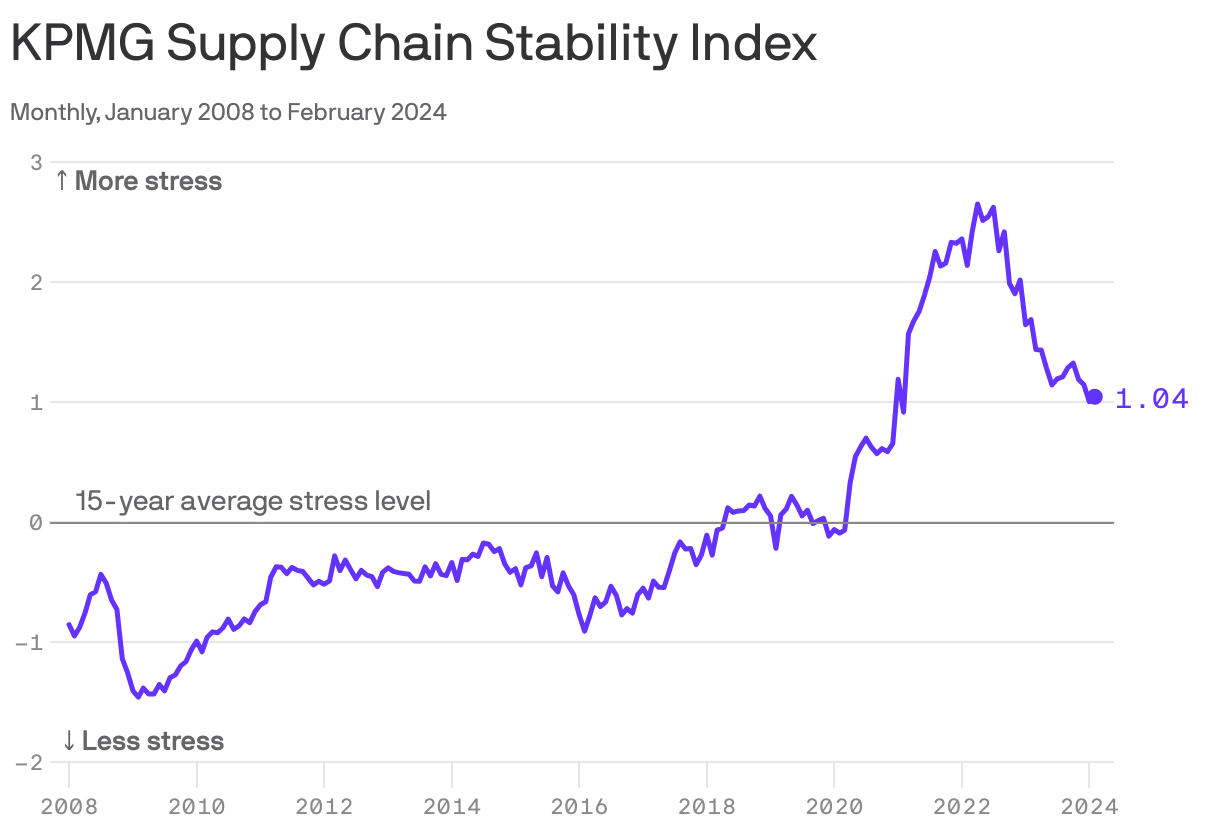
The big picture: Consultancy KPMG's monthly Supply Chain Stability Index — made with the Association for Supply Chain Management — shows a decline in the initial months of 2024 to the lowest point since February 2021.
Structural problems within Boeing's 787 Dreamliner and 777 jets could cause the aircraft to suddenly fail, the attorneys of a former Boeing engineer alleged on Tuesday.
Why it matters: The allegations, which were first published by the New York Times, heighten the widespread safety crisis at Boeing set off by a mid-flight blowout with one of its 737 MAX 9 jets earlier this year.
Data: Federal Reserve Bank of St. Louis; Chart: Tory Lysik/Axios Visuals
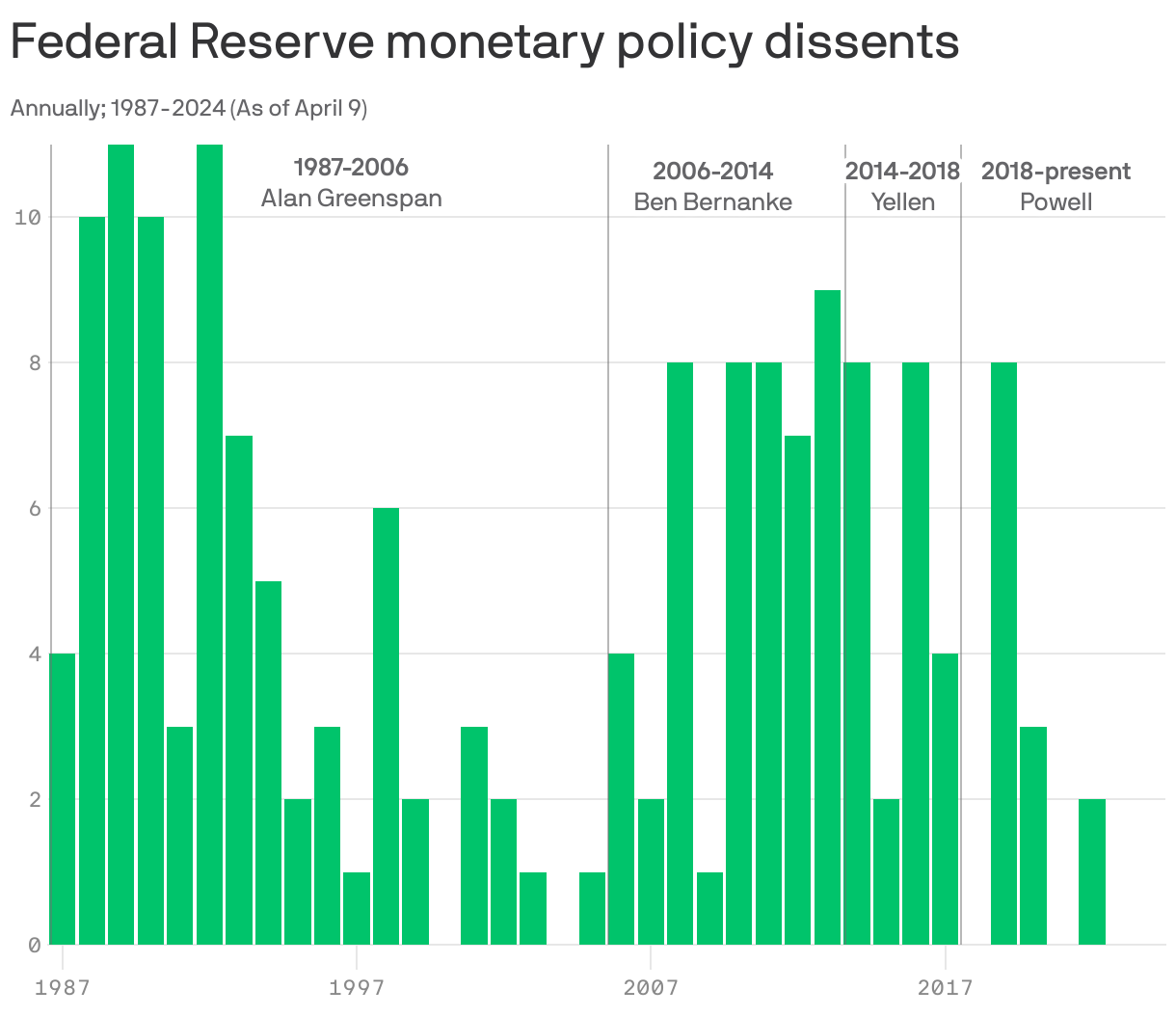
This has been a period of uncommon unanimity among Fed policymakers, with no formal dissents at a monetary policy meeting in nearly two years. But that could soon change.
Why it matters: An increasingly vocal bloc of monetary hawks is expressing wariness of plans to cut interest rates in the near term. That may complicate plans to shift toward easier policy.
A trial kicked off Monday in federal court for a crypto trader and a strategy he employed that prosecutors allege was a $110 million theft.
Why it matters: The defense team for Avraham Eisenberg is being touchy about how the suggestion of market manipulation might come up in his trial, and shows every sign of arguing that, on blockchains — what's allowed by the software that runs a marketplace is, in fact, allowed.
Rail operator Norfolk Southern said Tuesday that it had reached a $600 million class-action settlement over the East Palestine, Ohio, train derailment in February 2023.
The International Monetary Fund has quietly been assessing enormous surcharges on its largest borrowers for years, to build up its capital base. Now that its funds are set to reach their target level, a group of U.S. lawmakers is introducing a bill seeking to effectively abolish the surcharges altogether, Axios has learned.
Why it matters: The IMF, as a so-called super-senior creditor, always gets repaid — and therefore takes much less credit risk than other lenders. All the same, it now charges its largest borrowers — Argentina, Ukraine, and some 20 other countries — as much as 8.6% in their first year, declining only a little to 8.1% in year four.
For the first time since the pandemic, more workers prefer hybrid work arrangements than fully remote setups, according to a new report.
Why it matters: Hybrid work is emerging as the clear winner in the post-pandemic work world, a surprise from a few years ago when it seemed like a fully at-home revolution was underway.