Why it matters: When chains like Kroger — which has some 2,700 stores all over the U.S. and sells sushi at two-thirds of them — turn foods from other countries, like sushi, into big business, they become dining table staples and change the national palate.
Why it matters: Students would need to earn about $72,000 a year to afford rent in America's most expensive college towns, per a new report from InMyArea.
"We've realized that just because you have a following, doesn't mean you have a customer," Marc D'Amelio, CEO of D'Amelio Brands and dad to TikTok stars Charli and Dixie, told me this week in an interview about new funding and getting into food.
Why it matters: All social media stars have to figure out the shape and limits of their popularity, and resulting financial success, as they expand their businesses.
Like much of the investing world, the boom in catalog sales — and ballooning prices across the board — during the height of the pandemic was caused by a flood of both new capital and top-tier sellers.
Why it matters: While elite music artists will continue to command top dollars, the market has since moderated.
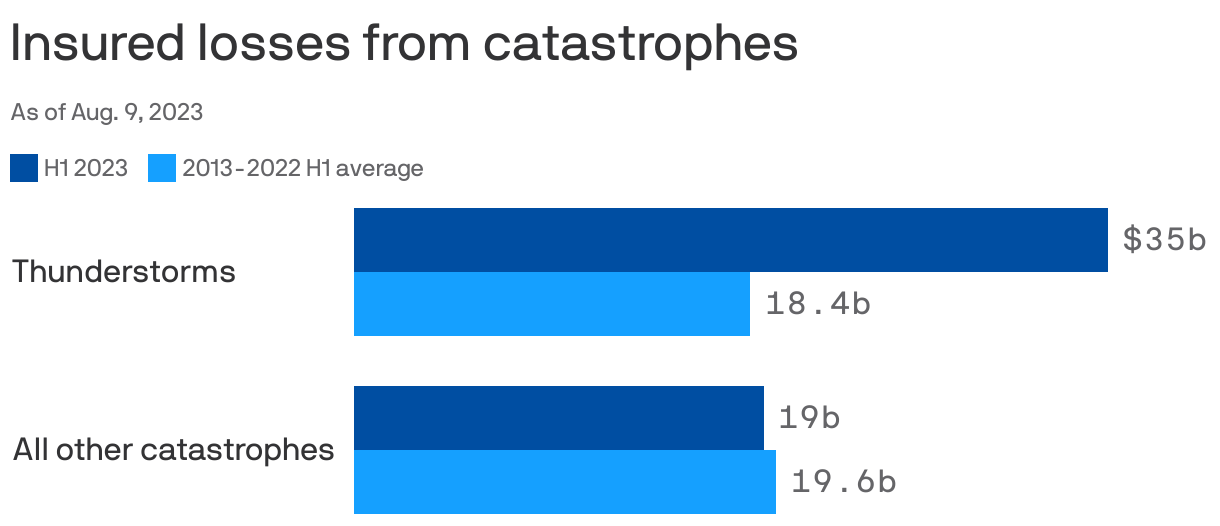
The single costliest type of natural catastrophe for insurers in 2023 isn't hurricanes or earthquakes or volcanic eruptions — it's thunderstorms.
Why it matters: Population growth, expanding cities in storm-prone regions, and climate change-driven trends in severe weather are all helping to vault insurance costs ever higher.
How can the U.S. avoid a replay of the regional banking crisis we saw earlier this year? One top regulator thinks he has the answer to that question.
Why it matters: The Federal Deposit Insurance Corporation, or FDIC, bore the brunt of the losses from the failures of Silicon Valley Bank and First Republic — some $20 billion and $13 billion, respectively.