Space cargo delivery startup Momentus has agreed to go public via a reverse merger that would value the company at just over $1.5 billion, Axios has learned from a source familiar with the situation.
Details: The company would become listed on the Nasdaq under ticker symbol MNTS, and would secure a simultaneous $175 million investment from Capital Group, D.E. Shaw, Lerner Enterprises, Tribe Capital, and Axon Capital.
We're starting to see evidence of the coronavirus' erosion of women's workplace gains: 865,000 American women left the labor force in September, compared with 216,000 men.
Why it matters: Many of the women dropping out hold senior-level positions at companies, and their exit from the workforce means the already-abysmal representation of women in leadership at U.S. firms will get even worse.
Most Americans want the telework trend to continue after the pandemic, but there's a lingering problem that companies haven't been able to solve: working at home is isolating.
Why it matters: A sense of belonging at work is becoming increasingly important to workers — and employers who figure out how to build that into the hybrid work culture of the future will have a critical advantage when recruiting and retaining talent.
Americans all over the country are going back to their offices, but New Yorkers aren't.
Why it matters: Office workers are super-drivers of New York City's economy and essential to its post-pandemic recovery. Scores of businesses in the city are suffocating as they delay their return to work or, worse, decide to work from home forever.
Last month, one of America's largest hospital chains was hit by a type of cybercrime known as a ransomware attack. Then, just days later, the same thing happened to a Philadelphia company called eResearch Technology, whose software is used in COVID-19 vaccine trials.
Axios Re:Cap digs into the growing threat with Nicole Perlroth, a New York Times cybersecurity reporter who broke the ERT news.
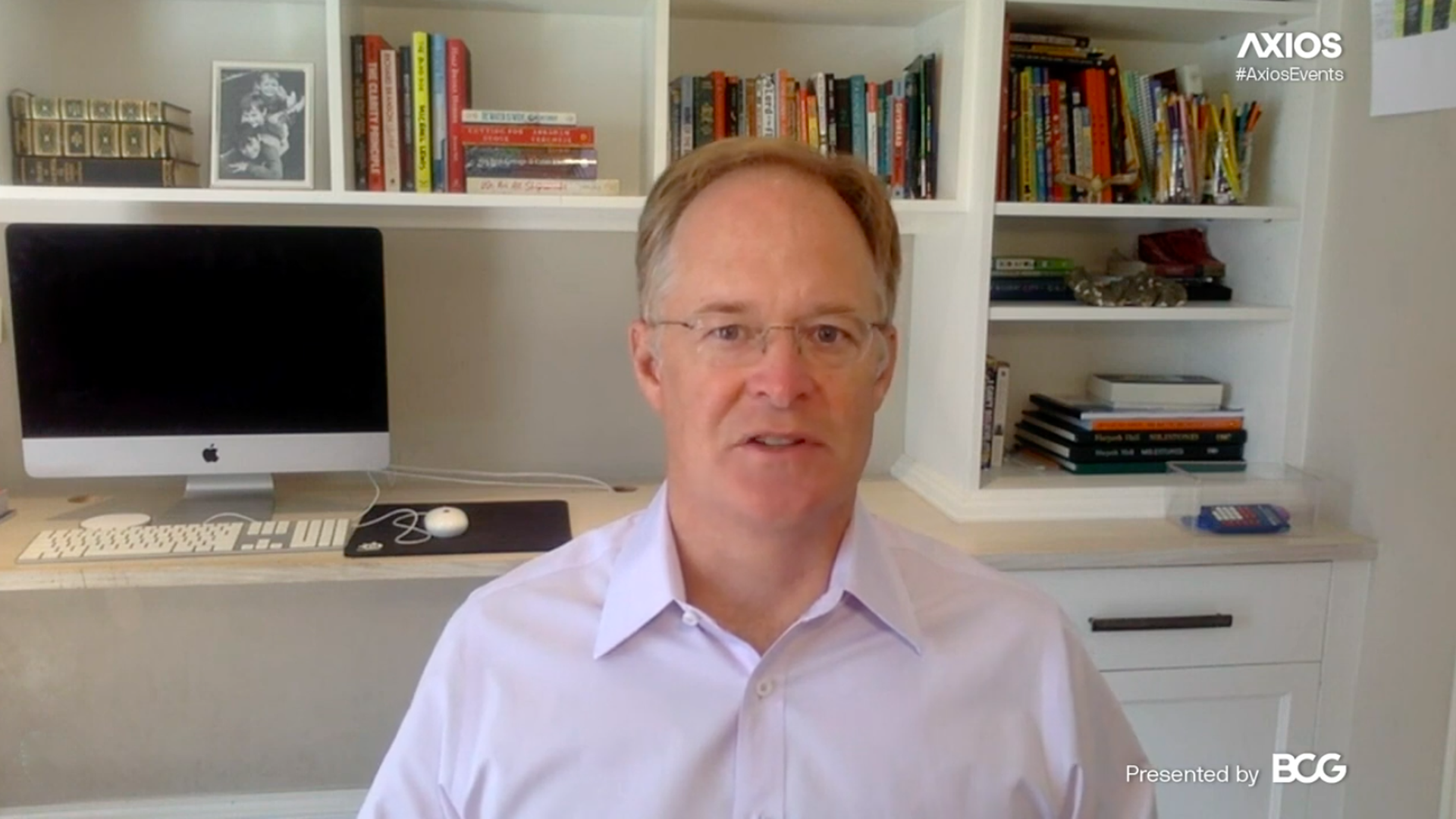
The coronavirus pandemic has created unprecedented opportunities for growth in the telehealth industry, including treating mental health and chronic conditions like diabetes, Hill Ferguson, the CEO of Doctor on Demand, told Axios at a virtual event on Tuesday.
What's changed: "Everything from reimbursements, paying providers for telemedicine in places where that wasn't possible, lowering interstate licensing laws that was prohibiting physicians from treating patients over interstate boundaries has been relaxed, patients are now aware of telemedicine at much higher rates than they were before," he said.
Remote work makes collaboration among colleagues harder and "is just not the same," especially for younger employees and interns who never connect with their colleagues in-person, Roger Crandall, CEO of the insurance company MassMutual, told Axios at a virtual event on Tuesday.
What he's saying: "I'm worried about what it means for culture over time, particularly for younger workers," Crandall said. "If you have people who are deep into their career, who have worked together for years, working remotely is not as hard."
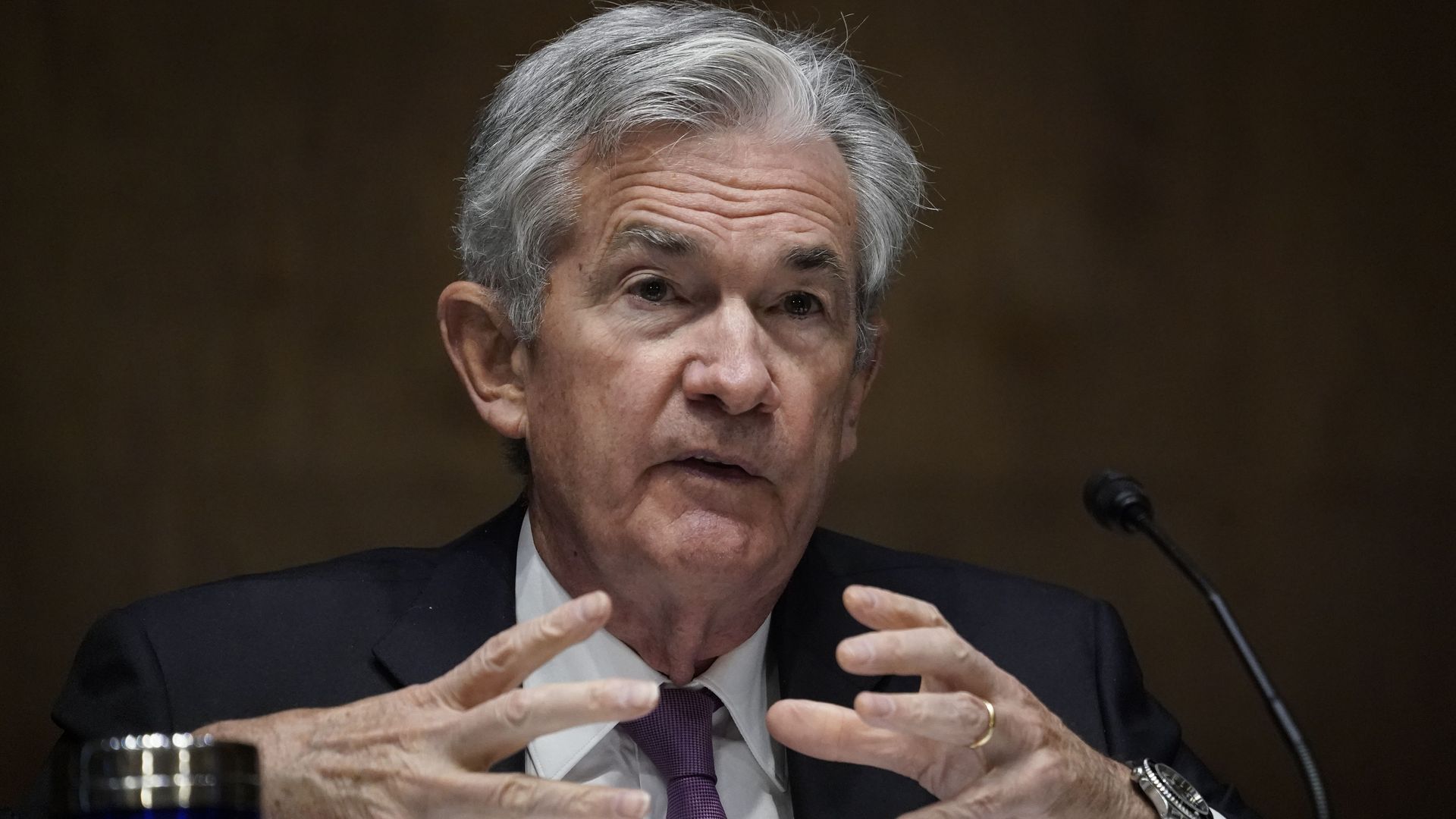
There's a risk the U.S. economy is in for a "longer than expected slog back to full recovery," Fed chairman Jerome Powell said at the National Association for Business Economics' virtual conference on Tuesday.
Why it matters: There was a sharp rebound when the economy reopened from the pandemic shutdown, but there are signs the bounce back is petering out. Powell said there's little risk of "overdoing" economic support, a nod to Congress — which it is at a stalemate over additional stimulus.
Boeing expects demand for commercial airplanes over the next decade to be 11 percent lower than what it was forecasting just a little over a year ago — a direct result of the economic shock from the coronavirus pandemic.
Yes, but: Long-term growth rates should return after 2030, the company said Tuesday.
Why it matters: The pandemic upended what had been a long, steady ascent for the global aviation industry, with U.S. domestic passenger traffic down 70 percent and by as much as 90 percent internationally.
Conventional investor wisdom is to steer clear of next month's election, due to its inherent uncertainty and consequential volatility. But, this morning, Chamath Palihapitiya bet big on a company whose fortunes may be significantly impacted by the presidential victor.
Driving the news: Clover Health, a tech-enabled provider of Medicare Advantage plans, agreed to go public via a reverse merger with a Palihapitiya-led SPAC called Social Capital Hedosophia Holdings III (NYSE: IPOC).
ICON, a Utah-based connected fitness company whose brands include NordicTrack, raised $200 million in growth equity funding at a valuation north of $7 billion. L Catterton led, and was joined by Pamplona Capital Management.
Why it matters: L Catterton previously backed rival Peloton, holding a 5.4% stake at the time of IPO (it since appears to have divested).
Hydrogen-powered heavy trucking is becoming more and more of a thing, even as it's unclear whether fuel cells or battery electrics will ultimately win the long race to decarbonize road freight.
Why it matters: Heavy diesel trucks and industrial vehicles are a huge source of carbon emissions worldwide, and a number of legacy automakers and startups are moving ahead with electric and hydrogen models.
One of the biggest news publishing companies in the world has slowly backed away from its harsh public criticism of Big Tech platforms, as companies like Google and Facebook have begun to open up their wallets to news companies.
Why it matters: News Corp. has for years been the driving force behind much of the regulatory scrutiny of Big Tech and its impact on the publishing industry. Now it's becoming a beneficiary of the massive pockets of several of the largest tech companies.
President Trump's use of two prominent treatments for COVID-19 has sparked interest in the two companies behind the drugs remdesivir and REGN-COV2.
The state of play: Shares of Regeneron Pharmaceuticals, which makes REGN-COV2, and Gilead Sciences, maker of remdesivir, each rallied on Monday, but they have delivered very different returns for investors so far this year.
Sports betting stocks have been some of the best performers on the market this year, with DraftKings shares up 466% and Barstool Sports-backed Penn National up 176%.
The state of play: A new survey from CivicScience, provided first to Axios, shows sports betting likely has a great deal of growth potential. But much of that may be baked into already-lofty shares prices.
The U.S. economy was resilient in the third quarter, with sales and growth powering higher despite the persistent coronavirus pandemic, increased uncertainty about the future and Congress' inability to pass another spending package to help struggling small businesses and unemployed workers.
Driving the news: Bank of America on Monday revised its third quarter growth forecast to 33%, up from 27%, and just below Goldman Sachs’ recently revised forecast for a 35% jump, up from 30%.
Purchasing managers indexes have been buoyant in recent months and in August the employment component on the Institute for Supply Management's non-manufacturing survey turned positive after five straight months of readings below 50.
What it means: PMI surveys ask businesses whether conditions are improving or worsening and then produce an index that measures the sentiment of the sector.
Any hope that blockbuster hits would return to the big screen this year have been shattered in the past week.
Driving the news: Cineworld, the parent company of Regal Cinemas, on Monday said it would be temporarily closing all of its 663 theaters in the U.S. and the U.K. In doing so, it cited that movie studios weren't sending enough of its biggest movies to theaters to lure consumers. More movie delays announced Monday showcase their point.
White House reporters are increasingly anxious and angry about the Trump administration's handling of COVID-19 cases within its own building.
State of play: Several White House reporters have tested positive and many are trying to figure out whether they and their families need to quarantine.
To try to revive the online frenzy of 2014's Ice Bucket Challenge, Joe Biden's campaign today launches the #ImVotingFor social media campaign, led by high-profile surrogates who have a combined 150 million followers.
How it works: The partners — elected leaders, digital creators and celebrities — will tag three people with #ImVotingFor, and ask them to do the same.