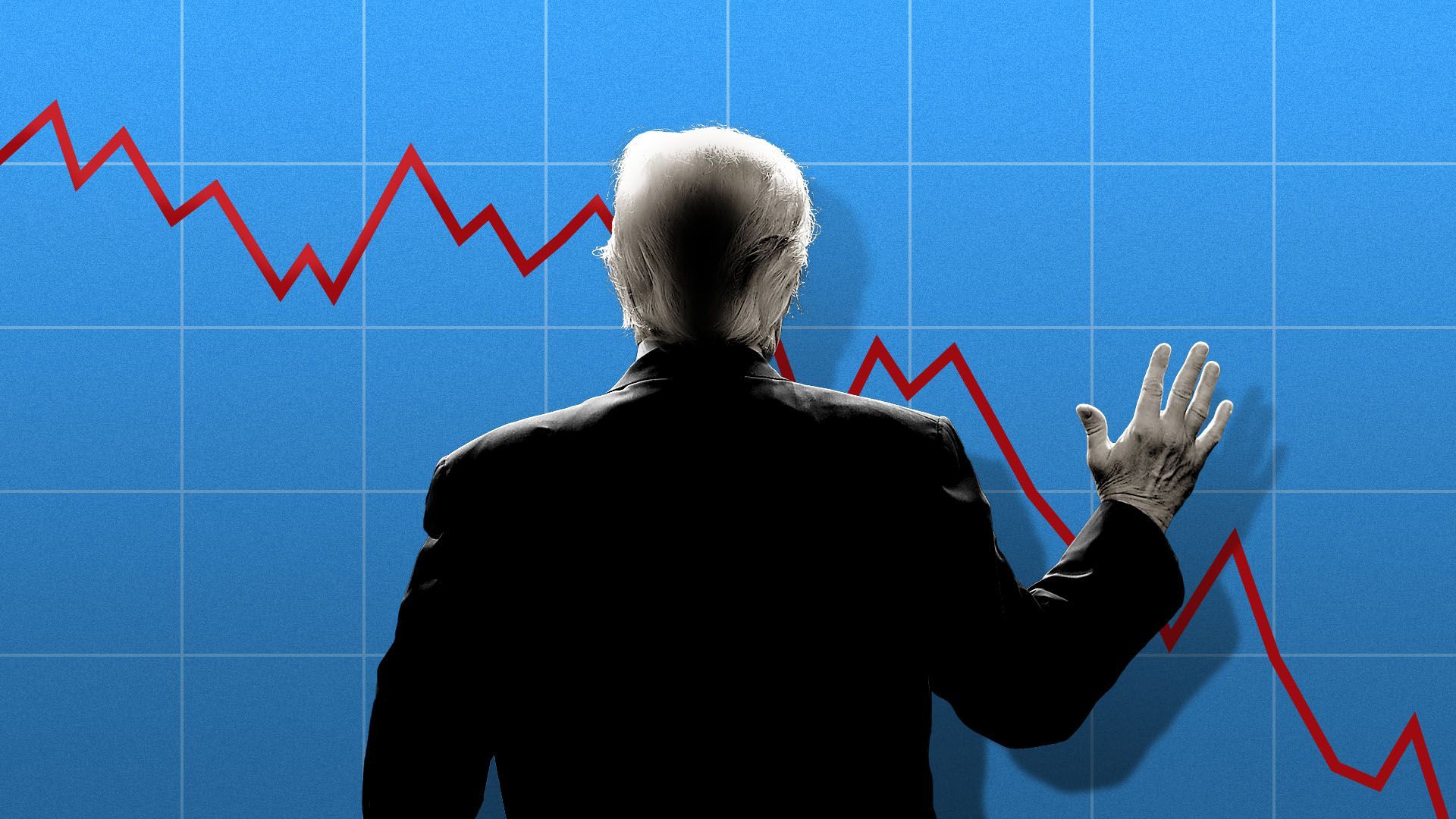
Confidence in the U.S. economy remains below its early 2020 levels, though signs of a market bounce-back have improved Americans' views on current economic conditions this past month, according to a Gallup survey out Thursday.
Why it matters: Americans' satisfaction with the state of the union is holding close to historic lows, even as sentiments surrounding the U.S. economy slightly improve based on bright spots in employment numbers and stock market rallies. That, combined with President Trump's job approval rating — which rests below 50% — is "problematic" for his re-election ambitions.
Amazon on Thursday announced the first companies to receive money from a $2 billion venture capital fund it formed to help combat climate change.
Axios Re:Cap digs into how Amazon hopes the fund will help achieve its goal of being carbon neutral by 2040, and whether the plan is more substance than spin, with Matt Peterson, Amazon's director of new initiatives and corporate development.
The air quality in Portland has become the worst in the world — with Seattle, Los Angeles and Denver also ranking up there with notoriously polluted places like Delhi and Shanghai.
Why it matters: Big-city residents often consider themselves smugly immune to the physical wreckage of calamities like wildfires, floods and hurricanes. The pernicious smoke now blanketing the splendid cities of our nation's Western spine is a reminder that no one is exempt from climate change.
All significant merger-and-acquisition transactions require regulatory approval — and a new regulator just got to town.
Why it matters: We're in a tit-for-tat trade war, which means that any action the U.S. takes against China is going to be reciprocated by a similar action taken by China against America. That includes regulatory actions.
America's cities are facing a historic shortage of two vital resources: money and immigrants.
Why it matters: Cities drive American economic growth, and immigrants drive cities. The coronavirus pandemic has effectively stanched the main source of talent that municipal economies have long relied upon.
New data suggests that Netflix is facing high levels of churn, or consumers canceling their subscriptions, in response to backlash around a French film called "Cuties," which director Maïmouna Doucouré says denounces the hyper-sexualization of young girls.
Why it matters: The backlash, which comes as critics allege the film in fact over-sexualizes young girls, isn't expected to have a lasting impact on the streamer, but it represents how much momentum the campaign against Netflix is picking up over this film especially as high-profile politicians have called for a boycott.
Snowflake on Wednesday went public in the largest software IPO of all time, and then kept running like the Energizer Bunny on speed. By the time it was over, the company was worth over $80 billion.
Background: Snowflake was founded in 2012 to build data warehousing and analytics services for other businesses — audaciously seeking to both compete with Amazon while also building on top of it.
Snowflake shares more than doubled on Wednesday, after having the biggest software IPO in history, while JFrog also posted strong first-day gains.
Why it matters: The moves show that Wall Street's appetite for new tech stocks remains significant, with concerns about both the pandemic and high valuations taking a back seat.
Ford is offering more info about the design and strategy around its long-awaited entry into the electric truck market, the battery-powered F-150 pickup arriving in mid-2022.
Why it matters: There's new capital coming into the increasingly competitive electric pickup race, with Tesla, Rivian and others bringing new models to market over the next couple of years.
Snapchat is launching a new original series called “The Solution Committee,” starring Jaden Smith. The unscripted show features young activists and celebrities discussing racial and social justice issues, like criminal justice reform and voting access.
Why it matters: The show is part of Snapchat's effort to educate its user base about important election issues. All episodes will include a swipe-up function at the end, encouraging users to register to vote.
When whispers of sports' fanless return first began, a cottage industry emerged to fill a need few knew existed: cardboard cutout fans.
Why it matters: Cardboard proxies have been a bright spot in an otherwise dark year, providing a better TV viewing experience, an opportunity for remote fan engagement and even financial relief for companies impacted by the pandemic.
Foreign holdings of U.S. Treasuries grew for a third straight month in July, rising to $7.087 trillion, data from the U.S. Treasury department showed on Wednesday.
Why it matters: Continued foreign buying shows that even as yields have been stuck at historic lows and Treasury issuance has skyrocketed with massive U.S. deficits to deal with the coronavirus pandemic, foreigners continue to up their buys. The strong buying trend has held even as China has cut back on its pace of bond buys from previous years and ceded its place as the top foreign holder of U.S. debt to Japan.
One of the few economic readings sporting a V-shaped recovery is U.S. retail sales, which showed the highest monthly gains in history in May (18.3%) and June (8.4%), and grew in August by 0.6%.
On one hand: While the reading showed a significant slowdown, total retail sales in August were higher than they were before the coronavirus pandemic hit the U.S., even when excluding food services.
The Fed policy meeting Wednesday that was designed to further clarify its new stance on "average inflation targeting" — a topic addressed by multiple policymakers on its rate-setting committee in the month since it was announced — left the market with more questions than answers.
What's happening: The Fed announced that not only was it keeping U.S. interest rates at essentially zero for now but it plans to keep them there until at least 2023, extending its forecast an additional year.
Facebook on Thursday launched a new app named Facebook Business Suite that lets small businesses manage their pages and profiles across Facebook, Instagram and Facebook Messenger from a single interface.
Why it matters: The app is the first product Facebook has launched that combines the backend infrastructure for three of its messaging apps. The company has teased this move for over a year.
New York City is suffering its worst year in decades. The years to come, partly as a result, could be some of its very best.
The big picture: New York, like San Francisco, entered 2020 with one overarching problem: It was far too expensive, as a place to live and work. The pandemic has fixed that problem, with both commercial and residential rents finally coming back into the realm of (relative)affordability.
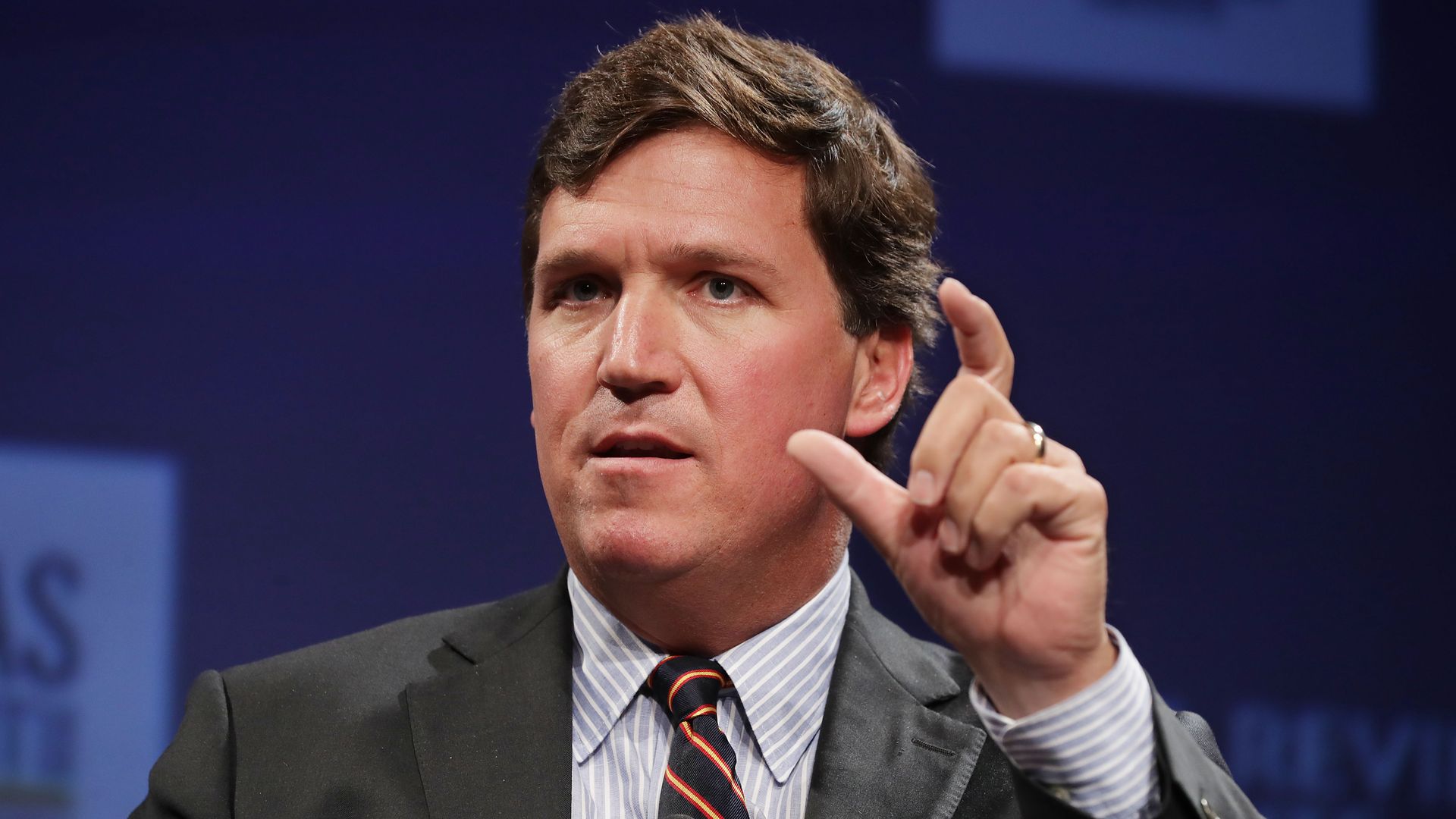
Facebook and Instagram have placed a ”False Information” label on a post from the Fox News show "Tucker Carlson Tonight" in which Carlson interviews Li-Meng Yan, a Chinese virologist, who has previously claimed the coronavirus "is not from nature," on Wednesday.
Why it matters:Facebook has made headlines in recent months for taking increasing action on posts from politicians and political groups containing misinformation. It's added fewer labels to high-profile media companies, which is what makes this label noteworthy.
Oscar, the health insurance company co-founded in 2012 by Joshua Kushner and Mario Schlosser, has hired banks to help the firm go public in 2021, Axios has learned from multiple sources.
Background: Oscar was launched to provide health insurance to individuals under the Affordable Care Act, but has since diversified into other health insurance markets.


















/2020/09/10/1599748090145.gif?w=3840)