Dozens of celebrities, including Kim Kardashian West, aren't posting to their Facebook or Instagram feeds Wednesday, as part of the "Stop Hate for Profit" campaign.
Axios Re:Cap digs into whether this temporary boycott matters, and how the broader advertising market has morphed in 2020.
Enterprise tech company Snowflake went public Wednesday morning, opening its trading at an eye-popping $245 a share.
Yes, but: Long before its blockbuster IPO and prior to catching Warren Buffett’s eye (and dollars), it was a quietly ambitious startup whose founders hailed from old-school companies like Oracle, and wanted to take on Amazon Web Services.
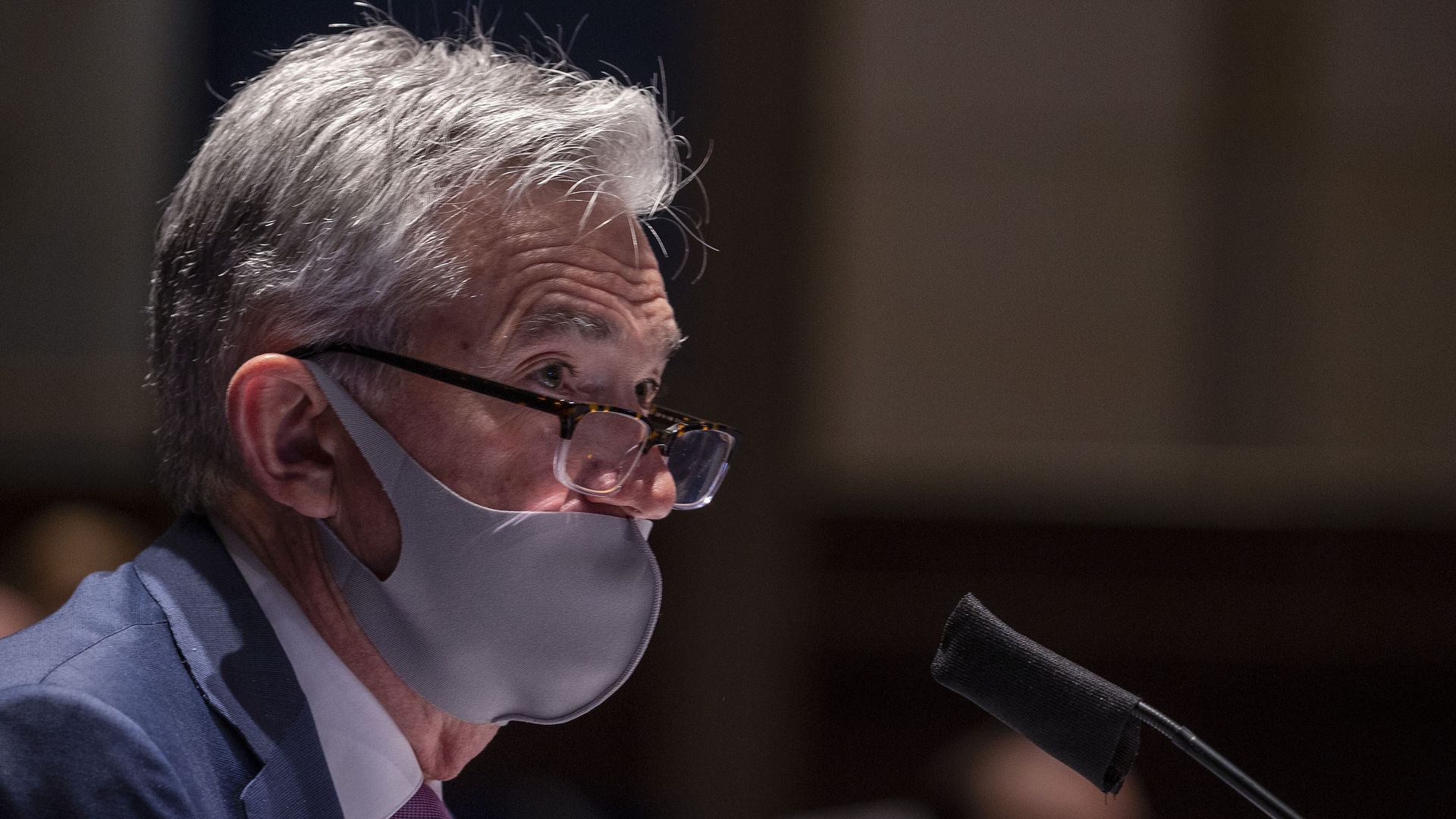
The Federal Reserve said Wednesday that the economy will shrink by 3.7% this year — a rosier outlook than the 6.5% contraction initially projected in June.
Why it matters: The economy is still wrecked by the coronavirus pandemic, but has rebounded faster than some anticipated. Signs still suggest the recovery could stall out. The August unemployment rate is already lower than where the Fed, in June, said it would be by year-end.
The New York Times and Facebook have struck a multi-year partnership to co-develop augmented reality (AR) filters and effects on Instagram that help users access and contextualize New York Times journalism, executives tell Axios.
Why it matters: It's the first time that The Times has experimented with augmented reality technology at scale and off of its own website and apps. The partnership also represents an evolution in the relationship between publishers and tech companies.
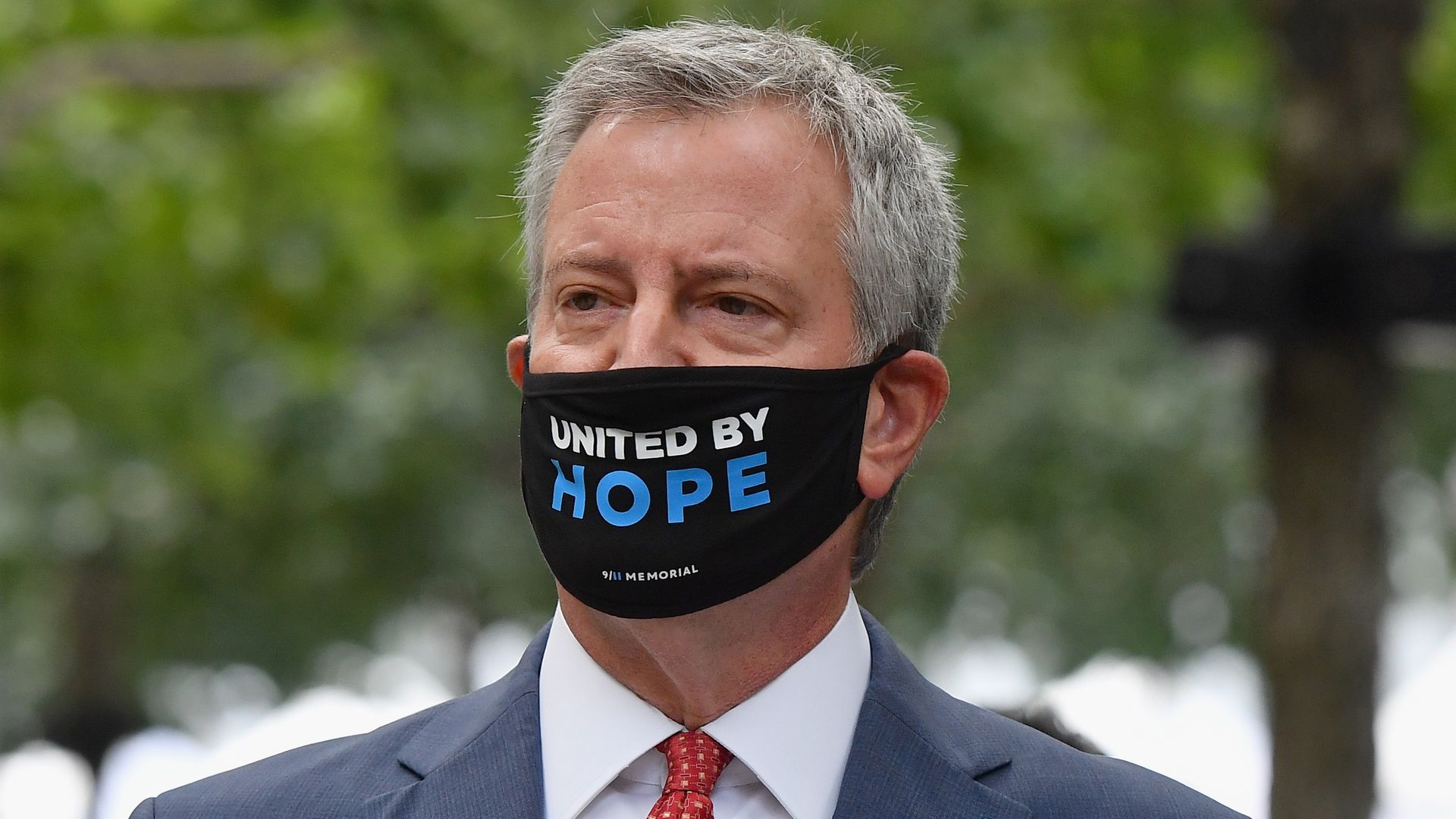
New York City Mayor Bill de Blasio announced on Wednesday that all employees in his office, including himself, will be subject to a one-week furlough sometime between October and March.
The big picture: The pandemic is on pace to hit cities' finances even harder than the Great Recession. Many face no choice but to cut services, layoff or furlough workers and freeze capital projects.
Snowflake, a Silicon Valley cloud data warehousing company, on Tuesday night raised $3.4 billion in what is the largest software IPO ever.
Between the lines: Snowflake loses money, but got a big boost of confidence when Warren Buffett's Berkshire Hathaway agreed to invest $500 million concurrent to the IPO.
President Trump hasn't yet blessed ByteDance's proposed savior plan for TikTok, featuring Oracle as a "trusted technology partner."
The state of play: This deal is not fait accompli, despite some media reports yesterday that there would be an announcement before nightfall. But the odds remain in its favor.
Zwift, a Long Beach, Calif.-based indoor cycling and running platform, raised $450 million led by KKRat a valuation north of $1 billion.
Why it matters: This round puts a punctuation mark on what has been a huge week for the connected fitness space. First, Peloton reported blowout numbers and new hardware. Then, Apple announced its own fitness content subscription product tied to watches, followed by in-person spin class company Flywheel filing for bankruptcy protection.
ManiMe, a startup that sells stick-on gel nails, tells Axios that it has raised $6 million in venture capital funding led by Canaan Partners and Trinity Ventures.
Why it matters: Since the pandemic forced many beauty salons to close, manicure lovers have resorted to do-it-yourself and at-home alternatives.
The electric and fuel cell truck startup Nikola is increasingly under the microscope following a short-seller's allegations that it made false statements about its tech and planned products.
Driving the news: The Financial Times reported Tuesday that the Justice Department is "making inquiries" following last week's claims by Hindenburg Research.
The September reading of the eurozone’s ZEW survey of economic growth expectations rose 10 points from August to 73.9, the highest level in 16 years.
By the numbers: The September reading of Germany’s ZEW survey also rose, hitting 77.4, which is up six points and about eight points higher than the estimate.
The latest real-time Fed estimates of U.S. GDP from the New York and Atlanta Fed "nowcasting" models both show the economy’s momentum has slowed over the summer, but diverge widely.
By the numbers: The Atlanta Fed's model has jumped thanks largely to better-than-expected readings on Institute for Supply Management (ISM) manufacturing and services sector and government GDP and employment data.
The stock market has shown limited reaction to changes in polling on the presidential election and PwC's latest survey of top executives show most have largely similar plans for the future regardless of who wins in November.
Watch this space: The PwC survey also showed that execs are almost uniformly in support of additional stimulus measures, with 95% saying some type of fiscal policy is needed and 78% saying their own business needs further fiscal policy support.
Businesses are positioning themselves for an increasingly competitive landscape by doing everything they can to ramp up productivity and cast off excess costs.
Why it matters: Much of that cost savings will likely come from cutting jobs and adding new ones more slowly, as companies look to invest in new technology and what Carlyle Group's head of global research Jason Thomas calls intangibles.
The NFL is America's most valuable TV property, and it's even more important to networks and advertisers this year with entertainment production largely shut down due to COVID-19.
Driving the news: Last week's top six prime-time shows were all NFL, but despite outperforming all other forms of prime-time programming, Week 1 ratings for the league were down roughly 4% compared to the 2019 season, according to Nielsen ratings cited by CNBC.
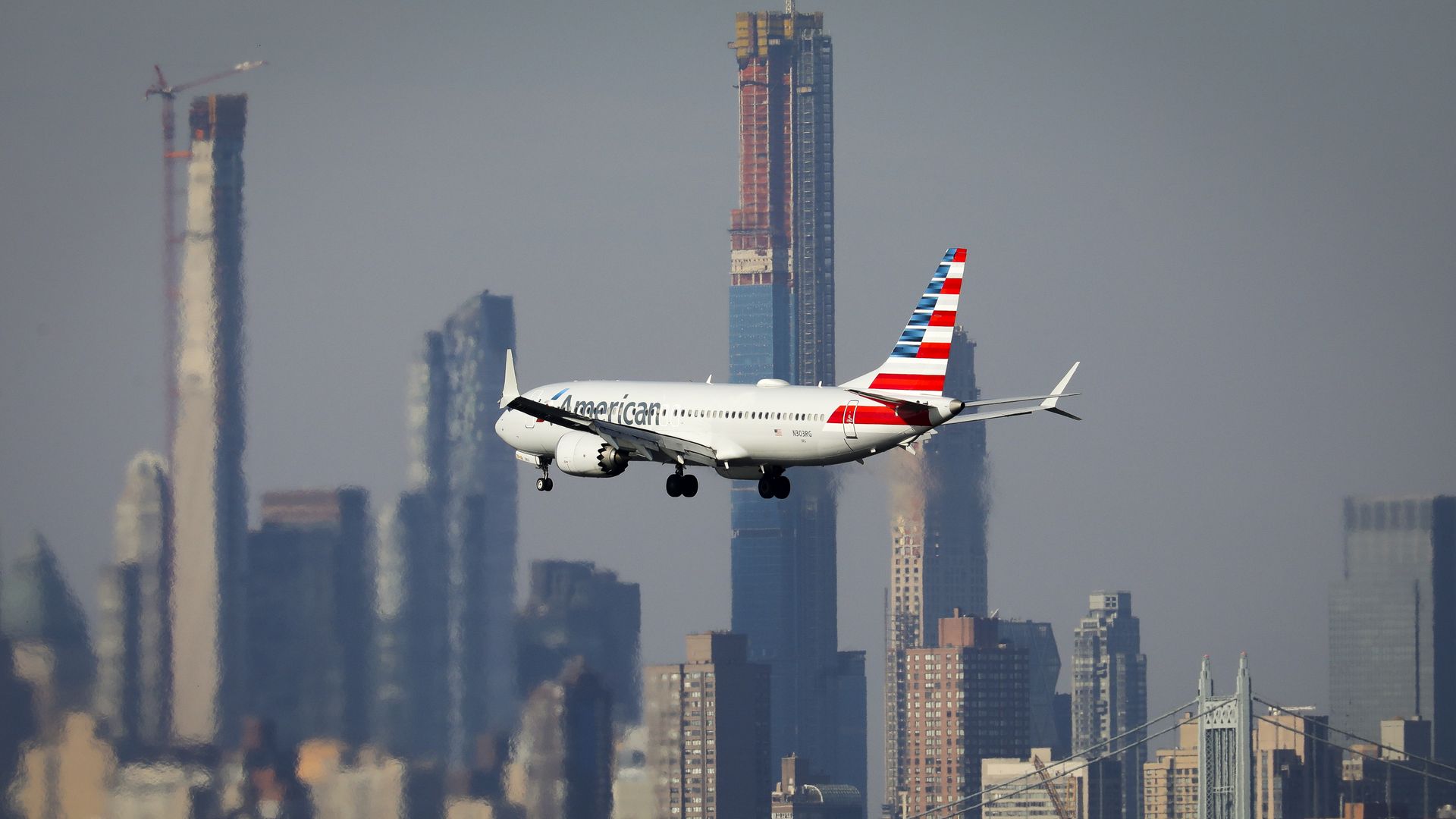
The House Transportation Committee on Wednesday released a scathing report, highlighting "repeated and serious failures" by Boeing and the Federal Aviation Administration that preceded two deadly 737 MAX jet crashes in 2018 and 2019.
The big picture: The 239-page report says the crashes, which killed 346 people, were the result of a "horrific culmination" of poor technical assumptions by Boeing’s engineers, a lack of transparency by Boeing’s management and insufficient oversight by the FAA.
The vandalism and looting following the death of George Floyd at the hands of the Minneapolis police will cost the insurance industry more than any other violent demonstrations in recent history, Axios has learned.
Why it matters: The protests that took place in 140 U.S. cities this spring were mostly peaceful, but the arson, vandalism and looting that did occur will result in at least $1 billion to $2 billion of paid insurance claims — eclipsing the record set in Los Angeles in 1992 after the acquittal of the police officers who brutalized Rodney King.









/2020/09/16/1600265742057.gif?w=3840)