President Trump doubled the tariffs on Turkish steel and aluminum on Friday, causing the Turkish lira to plunge by 16%. The higher tariffs come amid tensions over American pastor Andrew Brunson, who is detained in Turkey, and Turkish cleric Fethullah Gülen, whom the U.S. has refused to extradite from Pennsylvania despite Turkey's allegations of his ties to the failed July 2016 coup.
The big picture: While President Trump himself benefits politically from a trade war with allies, it is actually Russia that stands most to gain from a weakened Turkey. Despite the amicable diplomatic and military coordination between President Erdogan and President Putin in Syria, Russia views Turkey as a geopolitical threat in Eurasia. Russia has attempted to use the Astana peace process to keep its Turkish adversary close, and a widening rift between Washington and Ankara will ultimately redound to Putin's benefit.
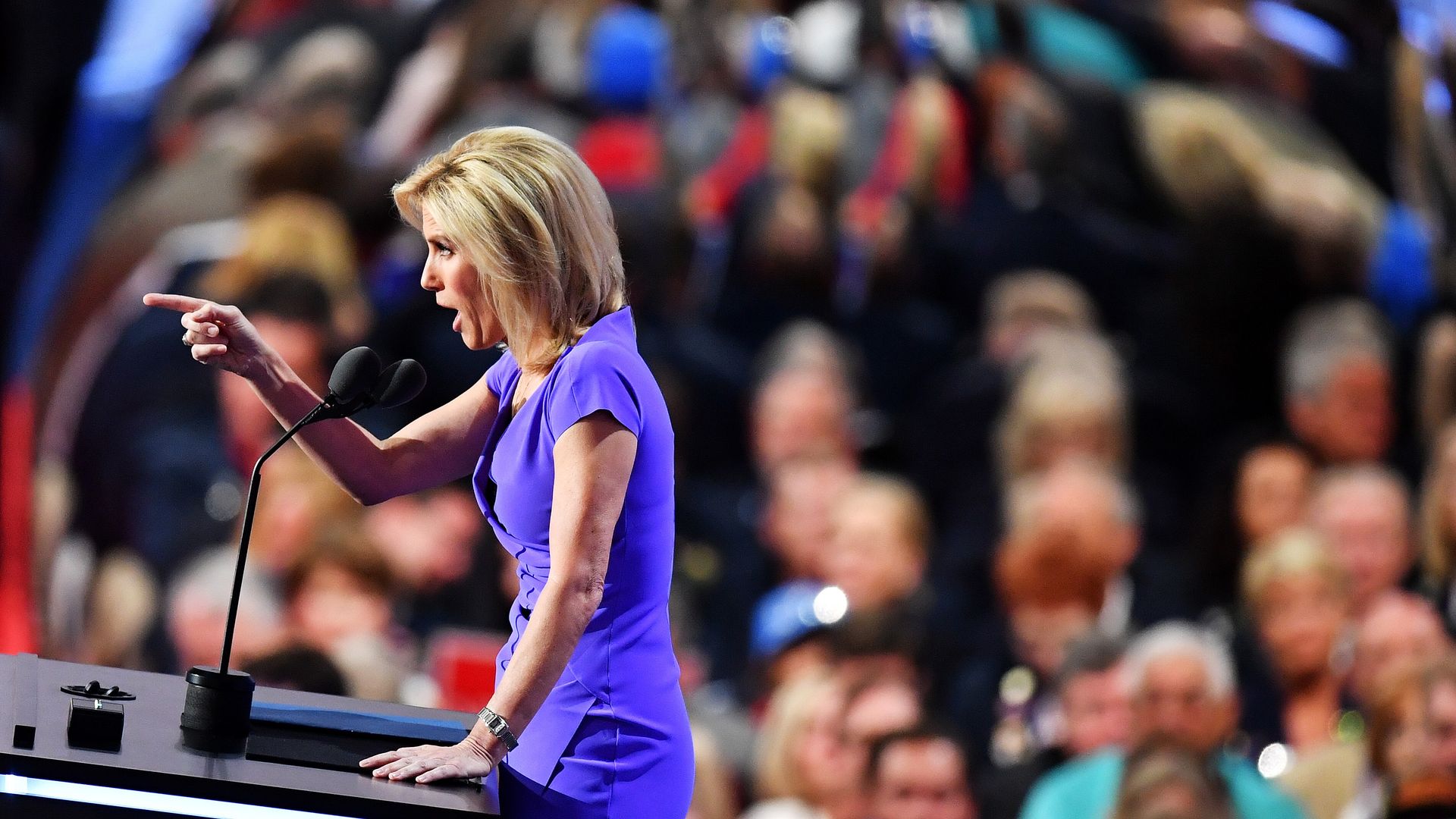
Fox News host Laura Ingraham defended her comments about the "massive demographic changes" in America on Thursday, saying her remarks "had nothing to do with race or ethnicity."
Why it matters: Ingraham's show, along with other prime-time Fox News programs, is popular with President Trump's base. These comments echo some concerns of that voting cohort, the white working class; a 2017 survey from the Atlantic and PRRI found that 48% of the white working-class say they "feel like a stranger in [their] own country," and 68% said the American way of life should be protected from foreign influence.
The lira dropped to an all-time low Friday as geopolitical tensions between NATO allies Turkey and the United States continued to escalate.
The big picture: President Trump announced via tweet that the U.S. would be raising tariffs on Turkey to 50% on steel and 20% on aluminum. Per CNBC, the tweet and the subsequent currency sell-off came after a Turkish delegation returned from the U.S. having made no progress in talks about pastor Andrew Brunson, whose detention prompted the White House to slap sanctions on high-ranking Turkish officials last week.
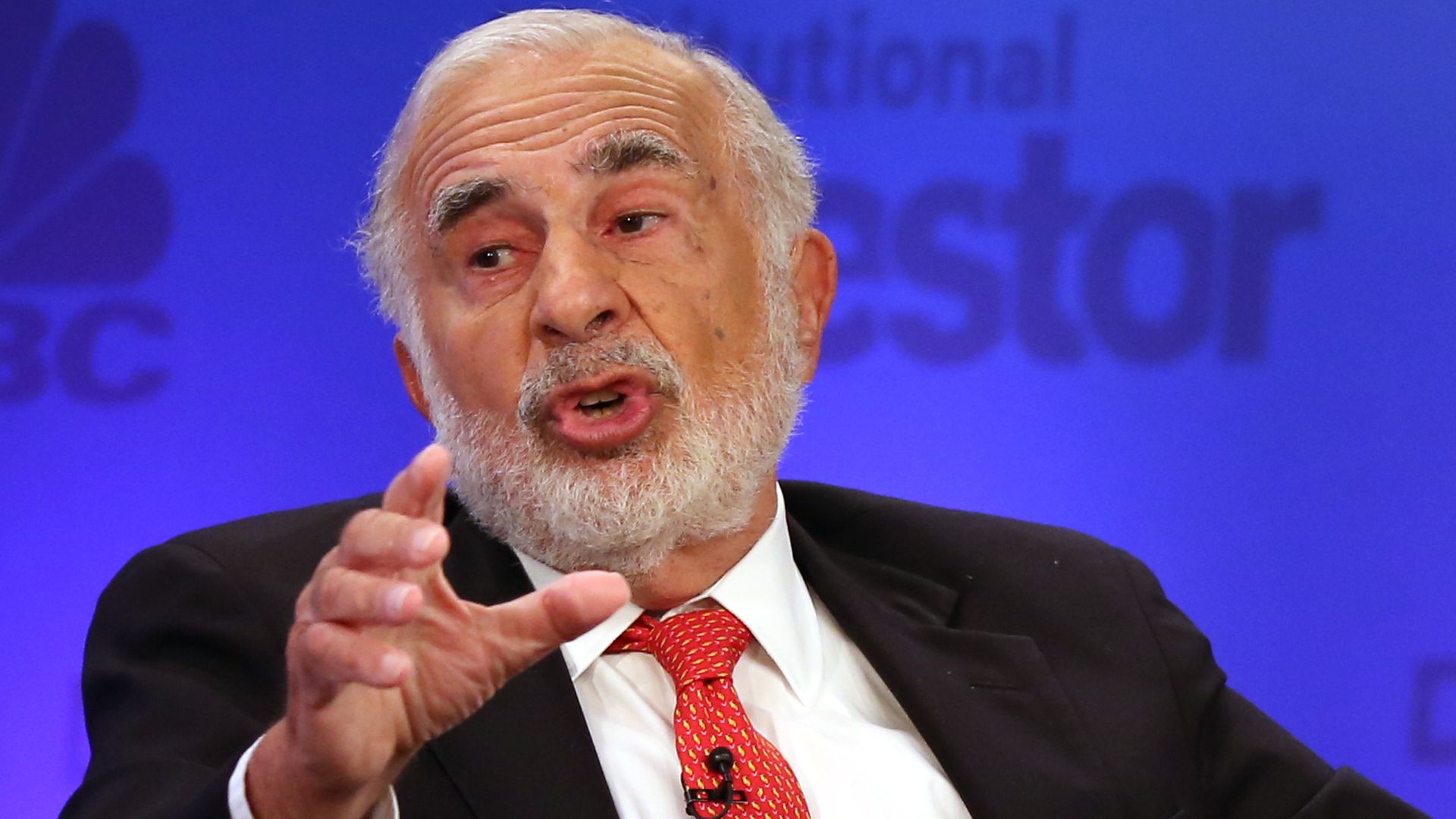
The drama between Carl Icahn and the Cigna-Express Scripts camp is far from over.
The bottom line: This is an entertaining fight among wealthy investors and health care conglomerates with a lot of money on the line. But we still don’t have any reasonably good idea of how much Cigna and Express Scripts customers would save on drug costs or premiums as a result of the deal.
Changes in decades-old broadcasting rules, combined with new types of competition in news and entertainment, are creating a drama-filled free-for-all as local U.S. broadcasters consolidate.
Why it matters: Consolidation will inevitably mean that fewer voices reach more people, but some in the industry argue it's the only way local broadcasting will be able to compete with big tech.
Walmart and Chinese e-commerce giant JD.com are investing $500 million in Dada-JD Daojia, a Chinese online grocery delivery company, reports CNBC.
The big picture: American companies have had varied success in the Chinese market, which favors its domestic champions, but some U.S. firms are increasing their presence there by teaming up with established Chinese companies. Google has invested $550 million in JD — and now Walmart is expanding its partnership with the company as well.
Why it matters: The major U.S. publishers that have yet to comply, including Tronc, Lee Enterprises and GateHouse Media, argue that the investment to comply with GDPR rules is simply too much, though they risk losing European subscribers and Americans abroad in the process. As newspaper advertising revenue continues to decline, web traffic and news consumption are what's driving success — and revenue — for many news organizations
Tribune Media announced Thursday that it has terminated its $3.9 billion merger agreement with Sinclair Broadcasting and that it has filed a lawsuit for breach of contract.
Why it matters: The merger would’ve created the largest local broadcaster in America. Now, Tribune will likely sell its stations to another local broadcaster, and conservative-leaning Sinclair will likely pursue other deals to acquire more local stations, as its CEO Christopher Ripley suggested during an earnings call Wednesday.
Technology companies are trying to disrupt the decades-old movie theater business, but unlike with other industries, they haven't entirely been able to crack the code.
Why it matters: Movie theater admissions have been relatively stable for the past three decades, despite the explosion of options technology has afforded consumers in entertainment. And those tech firms that are trying to break through the ticketing supply chain aren't having much luck.