As I learned in China last week, U.S. and European companies are being seriously out-smarted while China's Big Tech rivals compete to pull traditional retail businesses into their exclusive, online corporate universes.
Why it matters: Retail is the largest single source of American jobs — and, in the U.S. and most other countries, one of the biggest parts of the overall economy. That Chinese companies are aggressively exploring how to save Main Street and middle-class jobs is terrific; that the U.S. and Europe seem all but flat-footed is not.
Fuel cell maker Bloom Energy recently filed to go public, but the beneficiaries may include two men who defrauded Bloom investors nearly a decade ago, according to a note in its IPO filing.
Bottom line: The Silicon Valley-based company won't explain why it will issue new shares to the co-founder of a now-defunct "placement agent" that was fined by the federal regulators over its Bloom-related activities.
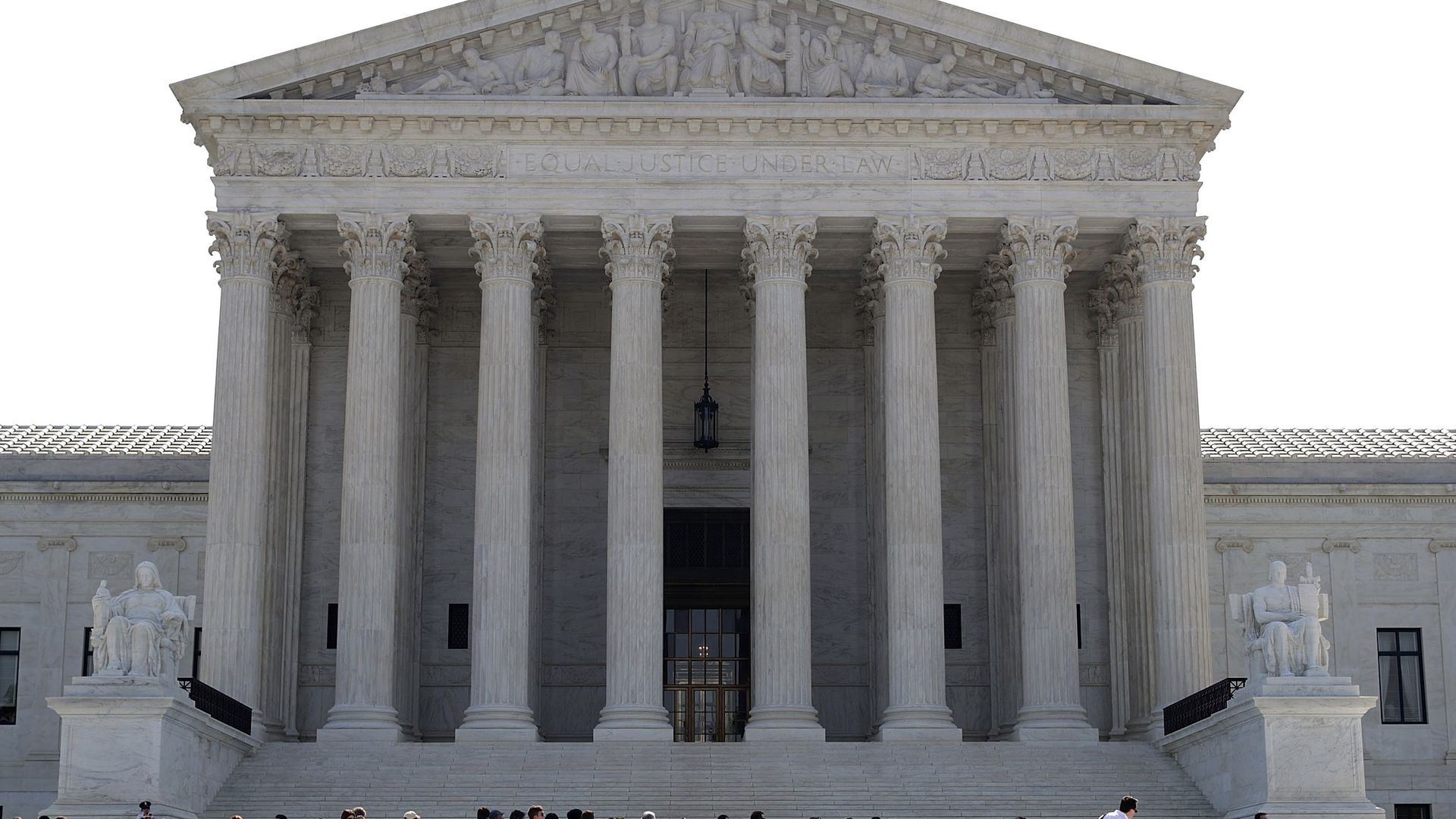
The Supreme Court ruled 5-4 Thursday to allow states to collect sales tax from online and out-of-state retailers.
Why it matters: As the U.S. tries to catch up with digital companies that operate without a physical presence, the ruling allowing states to tax e-commerce providers outside their state borders has created an extra hurdle for companies handling online transactions. The ruling may prompt Congress to introduce new legislation for an overhaul on unifying e-commerce for all 50 states.
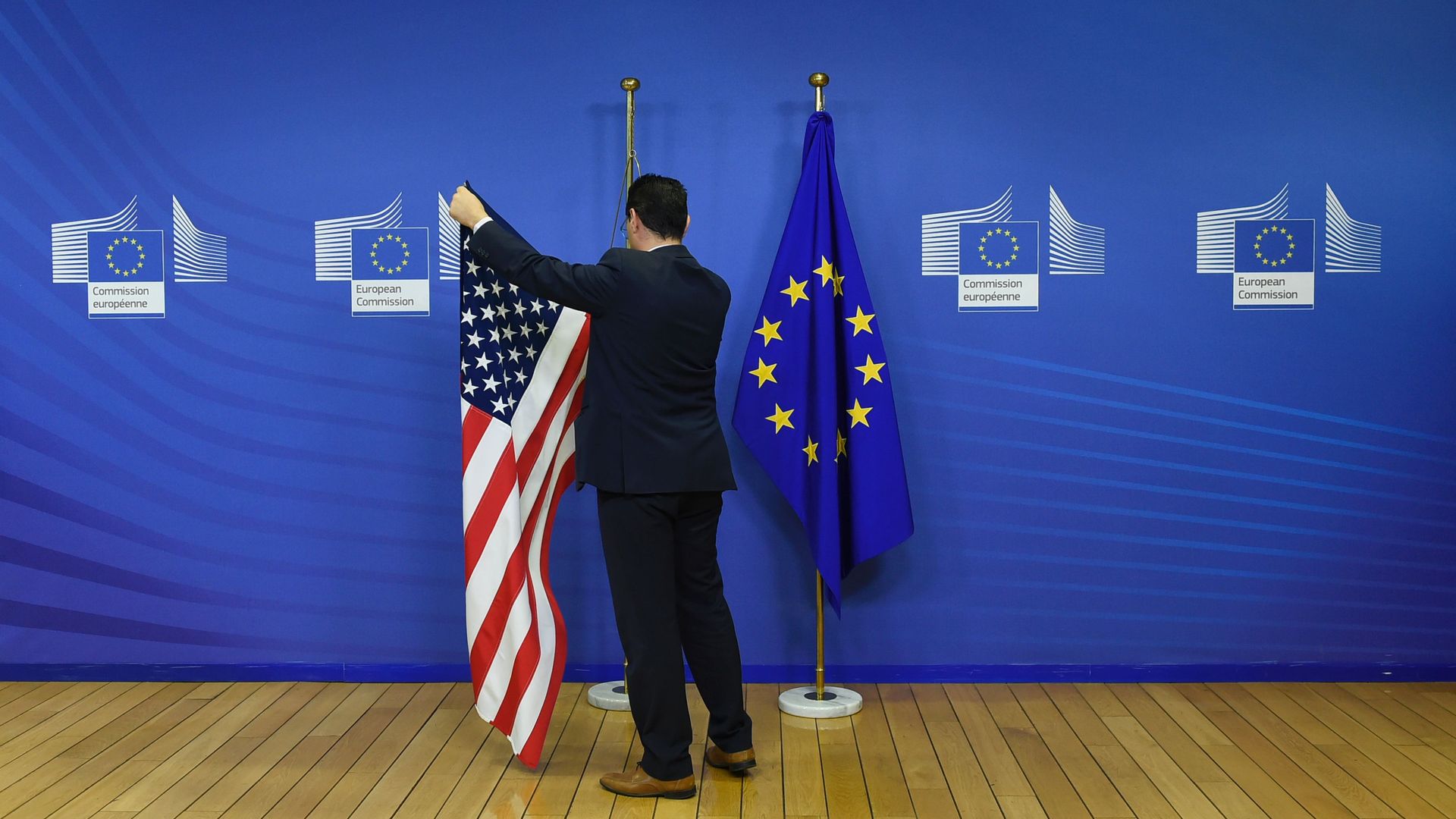
The European Union slapped $3.2 billion worth of tariffs on U.S. goods on Thursday, the New York Times reports.
The big picture: The move escalates the international trade war that was spurred by the Trump administration's steel and aluminum tariffs. The EU's tariffs will hit products out of areas that largely support president Trump, like peanut butter, Harley Davidson motorcycles, tobacco, and cranberries, the BBC reports, as well as bourbon and orange juice, according to the NYT.
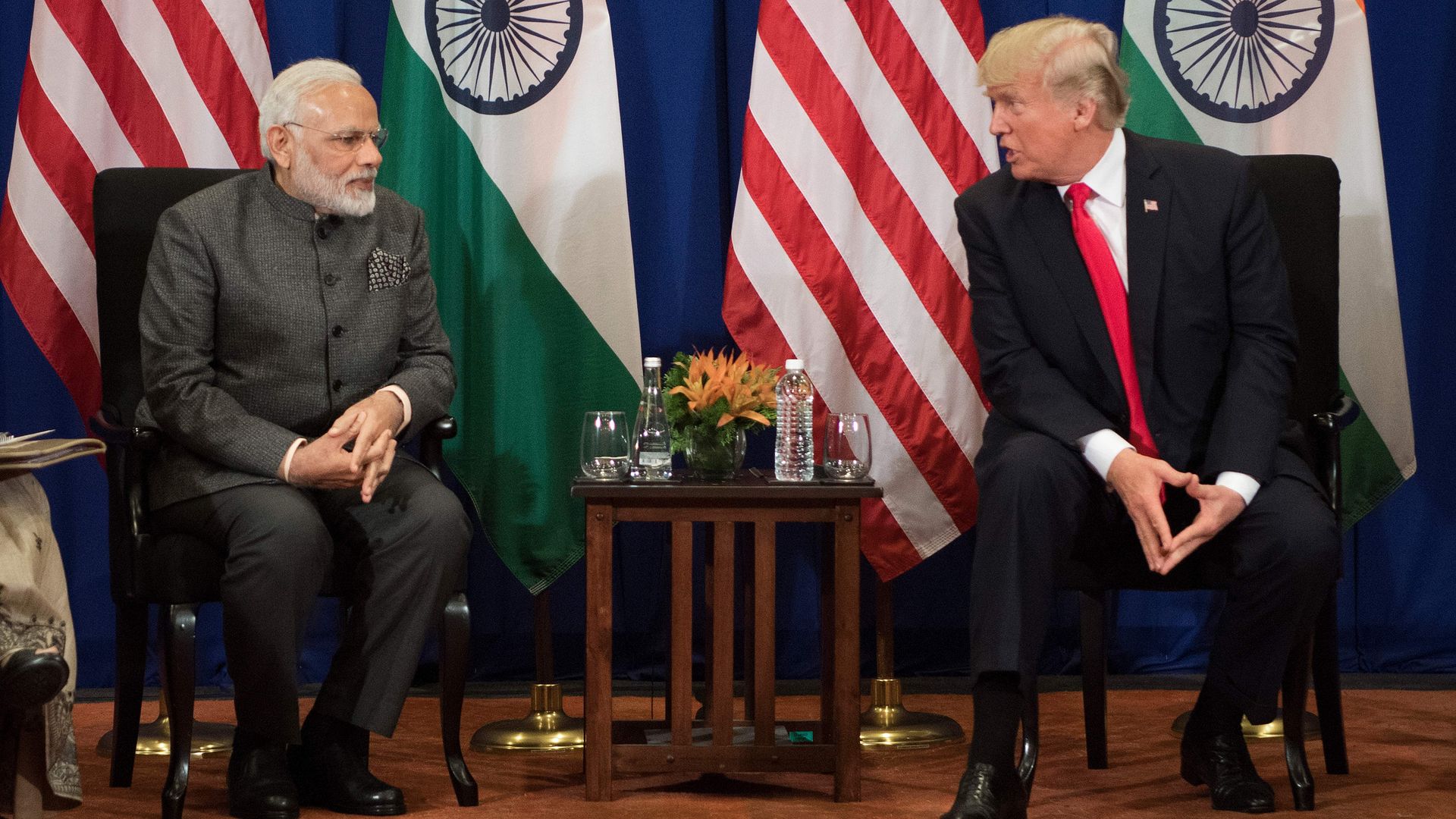
India has announced tariff hikestotaling $235 million on 29 U.S. goods — including agricultural products, steel and aluminum — in direct retaliation to U.S. tariffs.
The big picture: Despite decades of economic frictions, the strategic partnership between the world’s two largest democracies has continued to strengthen. Recently, however, President Trump’s trade policies have inflamed frictions with India, to the potential detriment of security cooperation across the Indo-Pacific region.
Days after finalizing its deal to acquire Time Warner, one of the largest content companies in the country, AT&T has unveiled is newest video package called WatchTV, which includes 31 channels for $15 — significantly cheaper than its offering with DirectTV Now.
Why it matters: The company has wasted no time integrating Time Warner's assets into its new package, which will include channels like HLN, CNN, Cartoon Network, TNT and more. In fact, roughly 20% of the channels offered in the new bundle currently come from Turner, the cable subsidiary of Time Warner.
The Supreme Court today paved the way for states to begin collecting sales taxes from online vendors. In a 5-4 decision, the court threw out a precedent that had blocked online sales taxes.
Why it matters: Online retailers likely will have to pay billions more in taxes each year. Although some large online retailers like Amazon already collect sales taxes, smaller vendors don't.
Tilray, a Canadian cannabis cultivation and distribution company owned by Privateer Holdings, filed for a $100 million IPO.
Why it's a big deal: The filing came just one day after Canada's Senate voted to legalize recreational cannabis sales. Tilray currently focuses on medicinal marijuana, but says it will move into the "adult-use" space once legalization is implemented this October.