Friday's economy stories

Gaming hardware maker Razer prices IPO

Razer announced Friday it has priced its IPO at roughly 50 cents per share, valuing the consumer tech company at $4.4 billion.Trading in shares on the Hong Kong Stock Exchange will begin Monday.
Why it matters: While tech hardware remains a tough business, Razer has carved a niche for itself focusing largely on computers and peripherals for gamers. It recently released its first phone, using technology and personnel it got by acquiring the assets of NextBit. Having a phone gives it something new and shiny, but the smartphone business is even more brutally competitive than PCs.

YouTube says it will improve filtering of kids videos
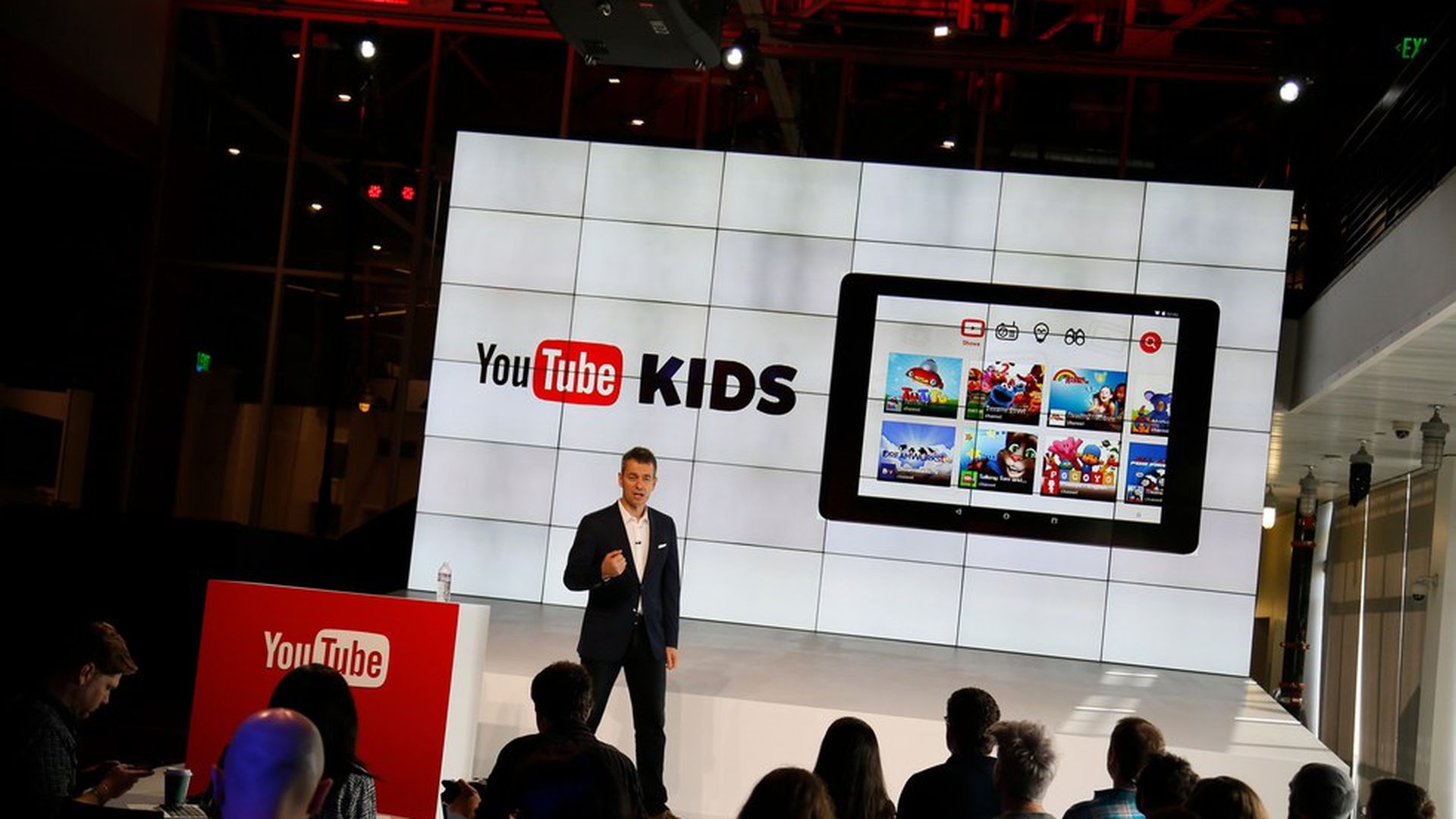
YouTube already doesn't allow video creators to make money by the inappropriate use of family-friendly characters. Now the video platform says it will also implement a new policy to age-restrict inappropriate content so it is automatically blocked from showing up in the YouTube Kids app, The Verge reports.
Why it matters: The kids YouTube video genre got a lot of attention this week with a well-read Medium post and a New York Times story about the bizarre and sometimes disturbing videos that turn up in YouTube search results, and the video factories that have learned how to game the algorithms to slip jarring content disguised as children-friendly videos through the YouTube filters.
YouTube says the problem is relatively small, and that most inappropriate content not caught by algorithms is flagged by users or human employees. The Verge reports that YouTube is also exempting age-restricted content from advertising, so it's willing to forgo ad revenue from the strange kids videos.

Ebay's Yankovich: The future of retail is virtual reality
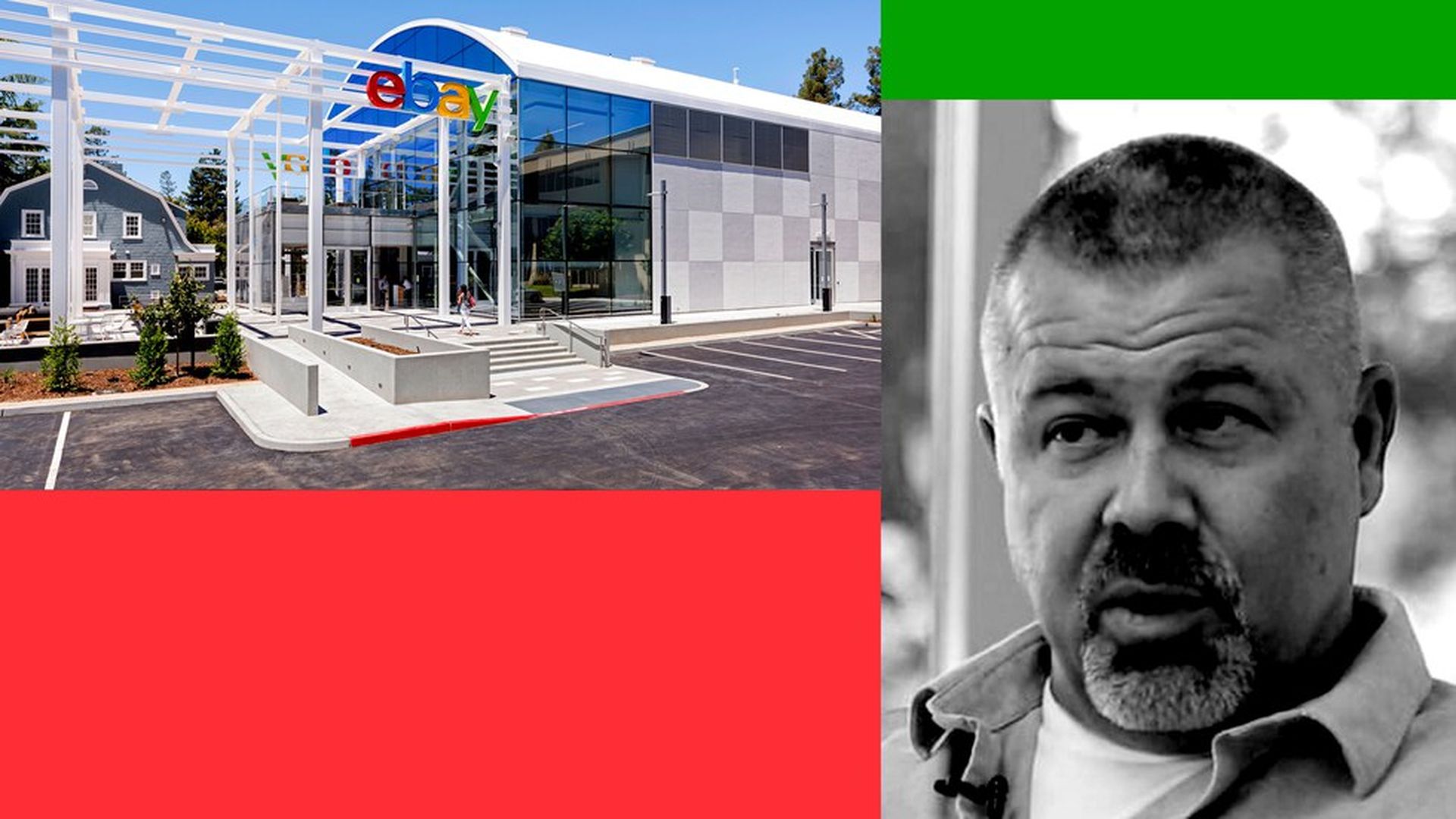
Ebay, the company that dominated the early internet economy with its popular auction model connecting buyers and sellers of oddball products, is trying to fill a niche that its rivals are missing by focusing on expanding the universe of products consumers will consider buying over the web — using virtual and augmented reality.
E-commerce's next frontier: Ebay's fortunes started to decline in the mid 2000s as growth in the online auction industry slowed and as Amazon tightened its grip on non-auction sales. In recent years, Ebay has tried to become relevant again by shifting away from the auction model and luring sellers of unique products not found on Amazon, with more favorable terms. Virtual reality and augmented reality is a key component in that shift, says eBay's Chief Product Architect, Steve Yankovich.

U.K. tribunal says Uber drivers aren't independent contractors

A U.K. appeals tribunal ruled on Friday that Uber can't classify its drivers as independent contractors, but rather as workers which means providing them with certain benefits like minimum wage. The ruling affirms a similar court decision last year and is the second blow to Uber in recent months in the U.K. after London's transport authority decided not to renew the ride-hailing company's operating license (Uber is appealing).
Why it matters: This will be a big problem for Uber, whose business model is fundamentally built on its drivers being contractors — both because it saves the company the expense of providing benefits and allows for flexible supply of drivers. "One of the core elements of our service is that you get to be your own boss... the drivers like it—they don't want to be employees," new CEO Dara Khosrowshahi said on Thursday at the NYT's DealBook conference in New York.
Macy's, Nordstrom extend their losing streaks
Macy's and Nordstrom reported Thursday that sales at individuals stores fell year-over-year in the third quarter, while sales at Kohl's stores rose just 0.1%. Shares at all three firms rose over the past 24 hours, as the results weren't as bad as investors had expected. Nevertheless, shares in each have fallen more than 20% over the past year.
Sound smart: Even the canniest department-store executives will struggle to grow their business in the face of online competition. Analysts praised Nordstrom's expansion of services like curbside pickup, and Macy's investments in its discount "backstage" brand, but selling less stuff this year than last is not a sustainable strategy.

How news can drive our conversations

News stories have a measurable impact on Americans taking to Twitter to talk about policy issues, according to a study published today in Science. Researchers found people — regardless of their gender or political affiliation — discussed race, immigration and other topics more often after stories were published than if news outlets weren't covering the issues.
The bottom line: If a few small outlets can have an effect on the national conversation as the study suggests, study author Gary King says bad actors may also be able to have a big impact. "And so we all have this responsibility to make some kinds of decisions about the entire ecosystem since it seems to be highly influential," according to King, who's a social scientist at Harvard University.
Be smart: This isn't about the power of fake news but of how media can be used for propaganda. "Most people are missing the fact that propagandists have long followed the rule that they should always tell the truth. The reason is that if they say something false and get found out they lose credibility. A much more effective propaganda strategy is to tell the truth but to amplify the arguments you like," King tells Axios.
Senate Dem wants tech firms to notify users exposed to Russian propaganda
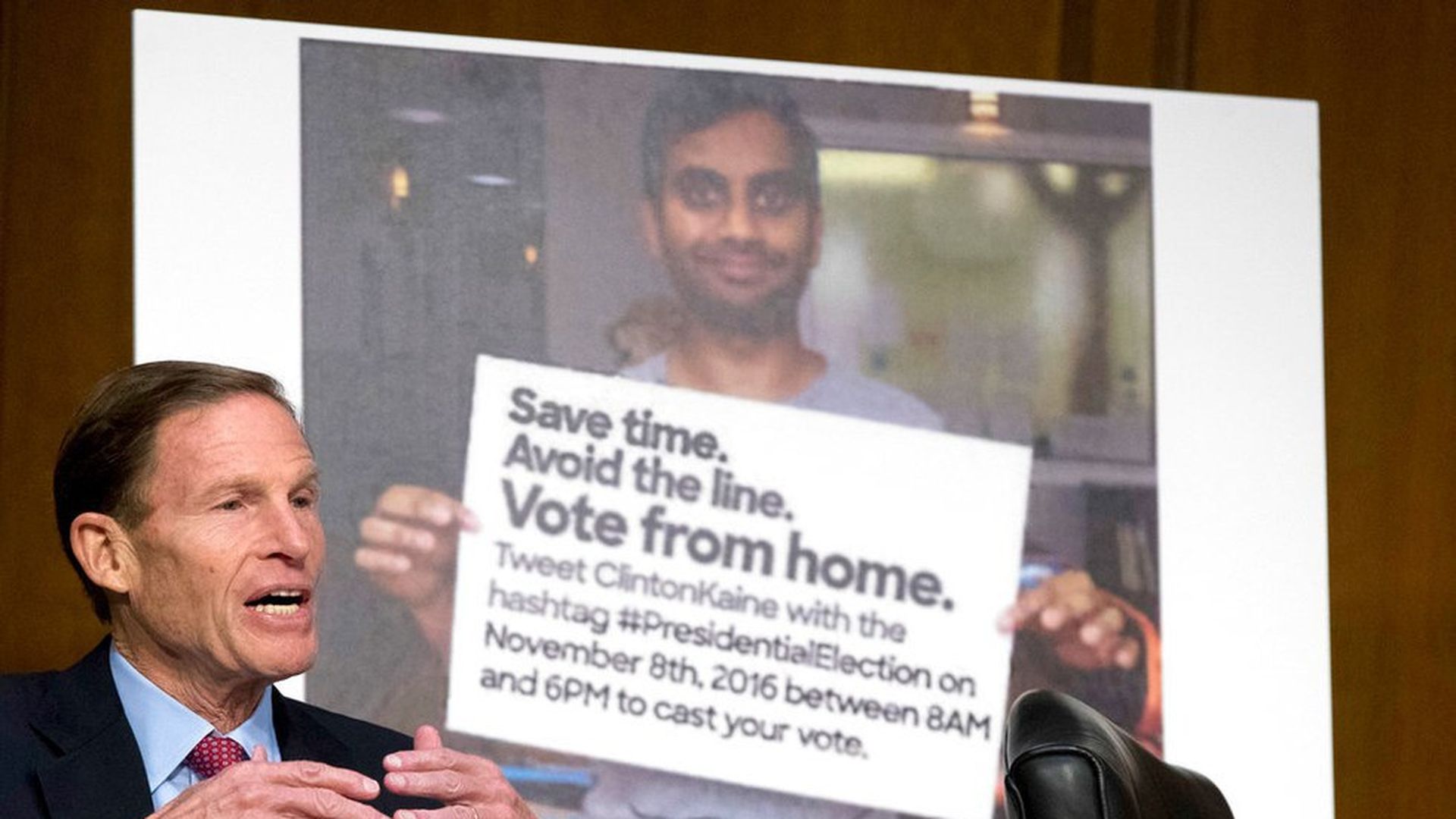
Democratic Sen. Richard Blumenthal today asked Twitter, Google and Facebook to inform all of their users who were exposed to ads and content purchased or placed by Russian actors during the 2016 election.
"You owe your users full information regarding when, where, and how they may have been unwitting participants in Russia's campaign to sow division and spread disinformation in the United States," Blumenthal wrote in letters to the companies' CEOs.
Twitter and Facebook to weigh in on new ad disclosures
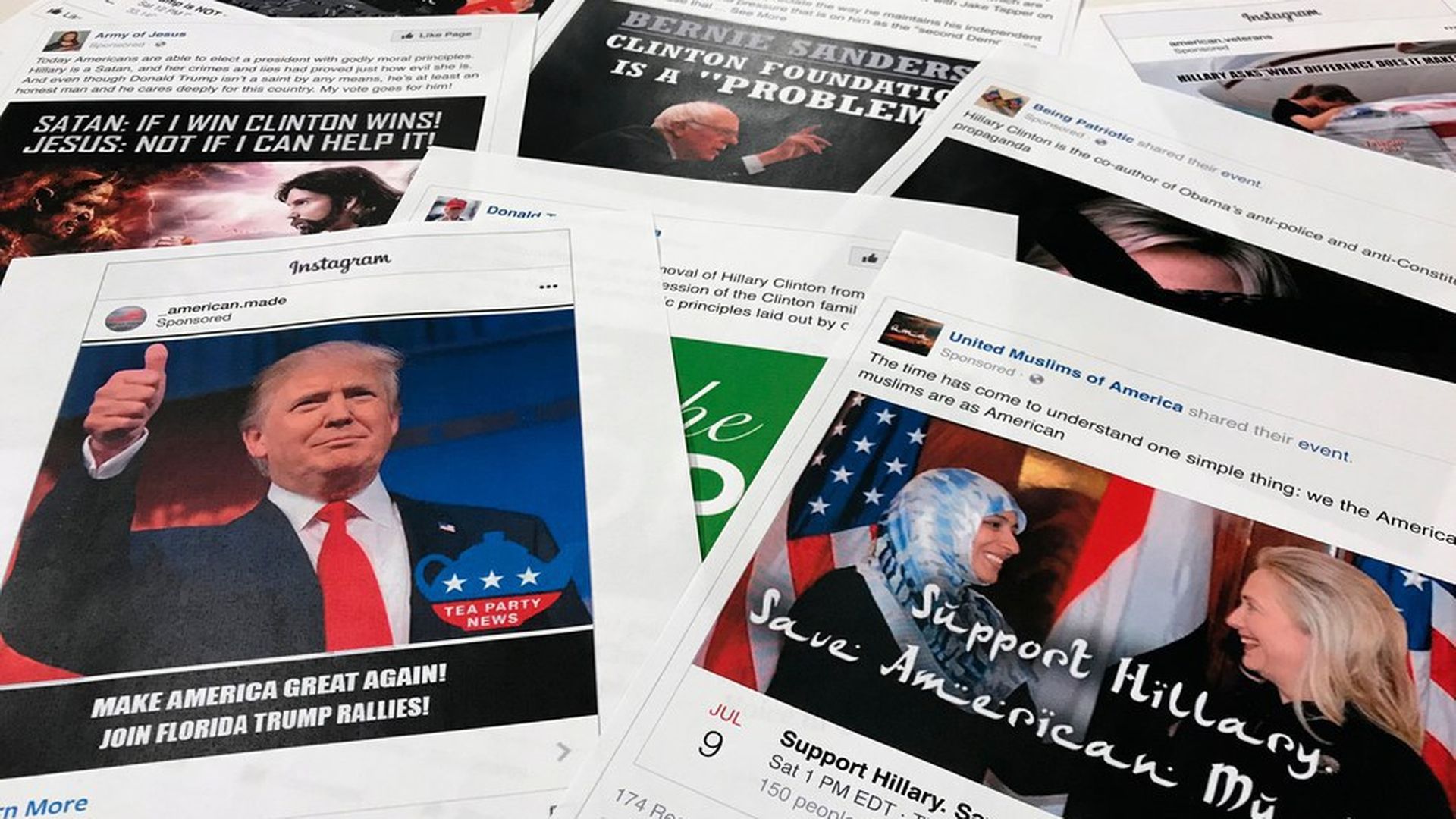
Twitter and Facebook tell us they plan to submit written comments on political ad disclosures to the Federal Elections Commission to inform a formal proposal on internet disclaimers. The open comment period ends today, and the FEC will make the comments public shortly thereafter. Google declined to say whether it would submit comments.
Why it matters: During testimony on Russian election meddling on Capitol Hill last week, Google, Twitter and Facebook all committed to working with regulators on crafting new online political ad disclosure rules. Proposed legislation would require all political ads running online to disclose who is paying for the ads, similar to the requirements for political ads running on TV and radio.
Public pressure: FEC Commissioner Ellen Weintraub sent letters to the CEOs of the companies this week asking for their feedback on practical solutions. "Given the prominence of Google in the public discourse of this nation, it is important that the Federal Election Commission hear from you," she wrote in the letter to Larry Page.
Instacart CEO on life after Amazon-Whole Foods "nuclear bomb"
Instacart CEO Apoorva Mehta was overwhelmed with condolences after Amazon announced in June that it was buying Whole Foods for $13.7 billion—conventional wisdom was that his grocery-delivery business had more to lose than anyone from the merger.
- But he tells Forbes that he felt nothing but vindication, as he had been telling grocers for years that "they should prepare for an all-out assault from Amazon."
- "Every major grocery retailer in the country was calling us," to discuss how they could partner to meet this threat, he says.
Why it matters: Teaming up with Instacart is a means for Amazon competitors to offer grocery delivery at prices comparable to what Amazon offers.
- Since, June Costco, Kroger, and Aldi all announced new partnerships, with Costco leveraging the partnership to offering same-day delivery in some markets.
Why Instacart matters: Few businesses have the deep pockets of Amazon, but Instacart is not without resources of its own. Forbes estimates that Instacart brings in $2 billion in revenue annually, and that the firm serves half a million customers.Instacart is backed by powerful venture capital players, raising $675 million from Khosla Ventures and Sequoia Capital, among others, while it has half a billion dollars in the bank.A wrinkle in the plot: Whole Foods was, prior to the merger, one of Instacart's most important partners. It's an Instacart investor and accounted for 10% of the firm's revenue.The Amazon deal, however, doesn't void an exclusive 5-year deal signed in 2016 making Instacart the exclusive deliverer of perishables, Recode reports. That the deal is only in year two buys Instacart some time to replace the revenue it will presumably lose as a result of the Amazon takeover.

62% say trust in traditional media has decreased due to fake news
In an online flash poll on fake news for the 2018 Edelman Trust Barometer, Republicans were notably more likely to blame news organizations than Democrats were.

Sebastian Gorka to join Fox News as national security analyst
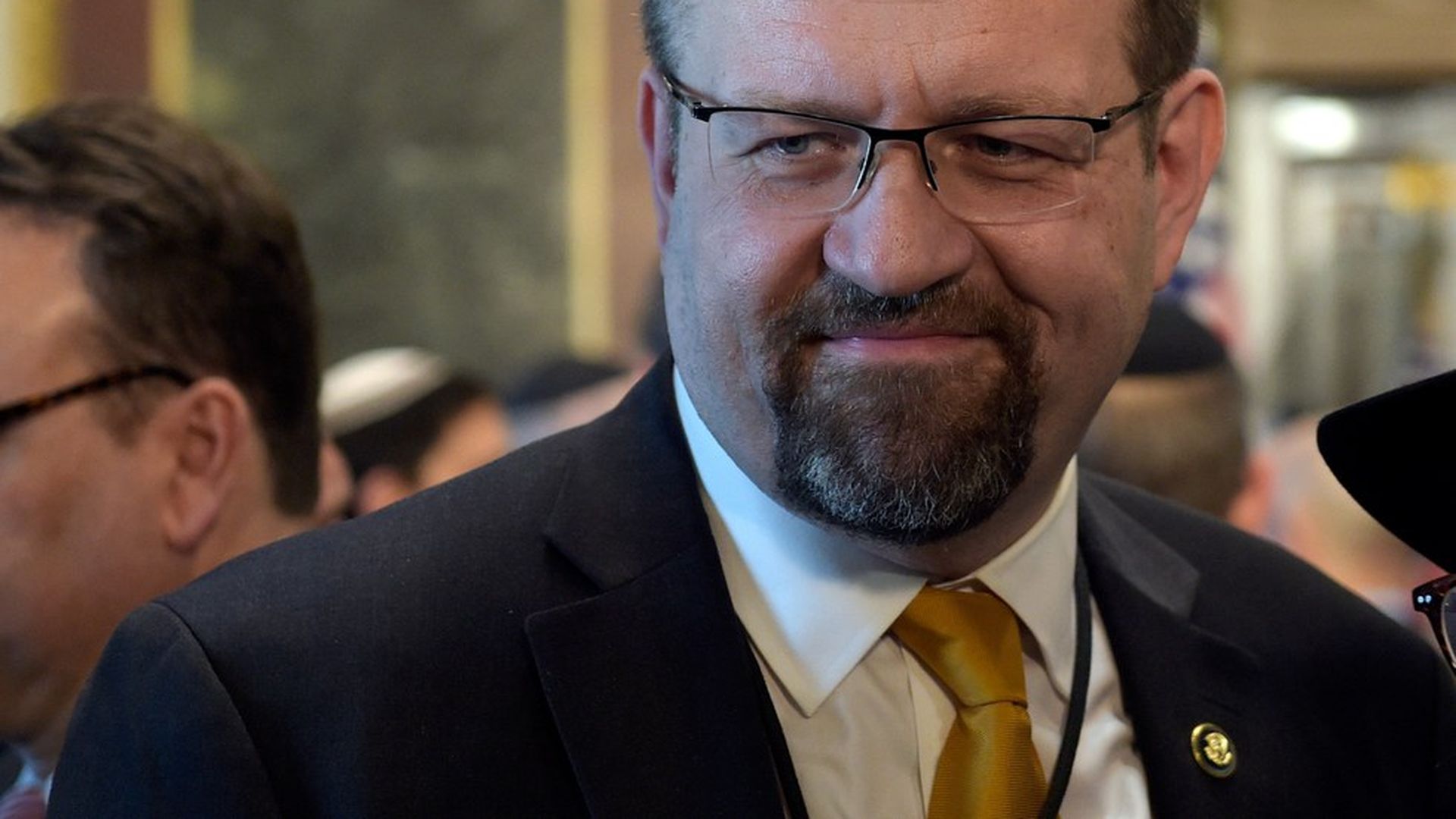
Sebastian Gorka, the former Breitbart commentator and deputy assistant to President Trump, has been hired as a National Security Analyst for Fox News. Sean Hannity first announced the move on his radio show, and Fox News later confirmed it to several media outlets.
Gorka, who generated a great deal of controversy but also became one of Trump's favorite TV defenders during his time in the administration, told The Hill he won't miss appearing on other networks: "Fox doesn't generate propaganda. Those outlets do. I went on ... to push back on the literal propaganda they were pumping."