News stories have a measurable impact on Americans taking to Twitter to talk about policy issues, according to a study published today in Science. Researchers found people — regardless of their gender or political affiliation — discussed race, immigration and other topics more often after stories were published than if news outlets weren't covering the issues.
The bottom line: If a few small outlets can have an effect on the national conversation as the study suggests, study author Gary King says bad actors may also be able to have a big impact. "And so we all have this responsibility to make some kinds of decisions about the entire ecosystem since it seems to be highly influential," according to King, who's a social scientist at Harvard University.
Be smart: This isn't about the power of fake news but of how media can be used for propaganda. "Most people are missing the fact that propagandists have long followed the rule that they should always tell the truth. The reason is that if they say something false and get found out they lose credibility. A much more effective propaganda strategy is to tell the truth but to amplify the arguments you like," King tells Axios.
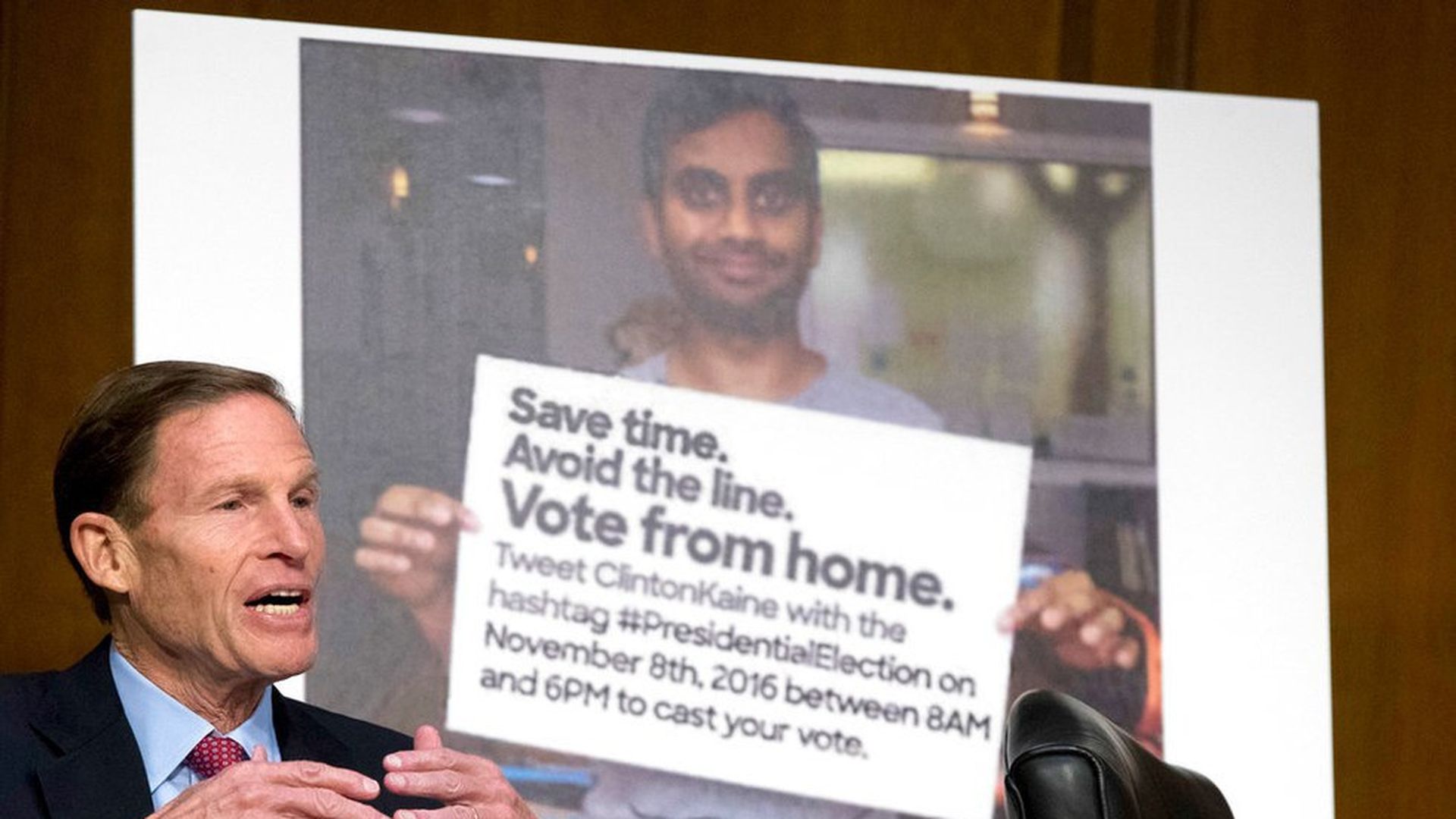
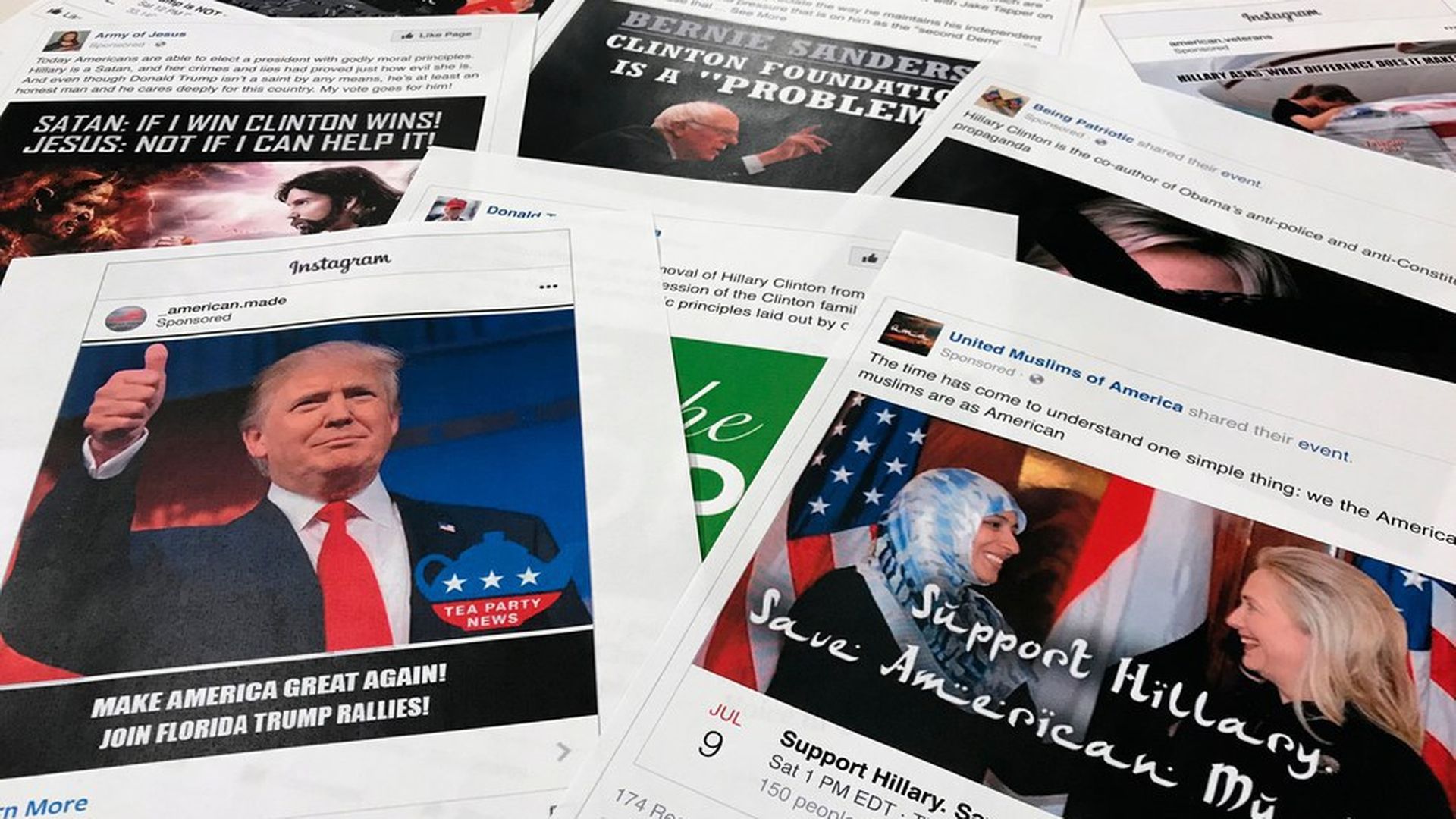
Democratic Sen. Richard Blumenthal today asked Twitter, Google and Facebook to inform all of their users who were exposed to ads and content purchased or placed by Russian actors during the 2016 election.
"You owe your users full information regarding when, where, and how they may have been unwitting participants in Russia's campaign to sow division and spread disinformation in the United States," Blumenthal wrote in letters to the companies' CEOs.
Twitter and Facebook tell us they plan to submit written comments on political ad disclosures to the Federal Elections Commission to inform a formal proposal on internet disclaimers. The open comment period ends today, and the FEC will make the comments public shortly thereafter. Google declined to say whether it would submit comments.
Why it matters: During testimony on Russian election meddling on Capitol Hill last week, Google, Twitter and Facebook all committed to working with regulators on crafting new online political ad disclosure rules. Proposed legislation would require all political ads running online to disclose who is paying for the ads, similar to the requirements for political ads running on TV and radio.
Public pressure: FEC Commissioner Ellen Weintraub sent letters to the CEOs of the companies this week asking for their feedback on practical solutions. "Given the prominence of Google in the public discourse of this nation, it is important that the Federal Election Commission hear from you," she wrote in the letter to Larry Page.
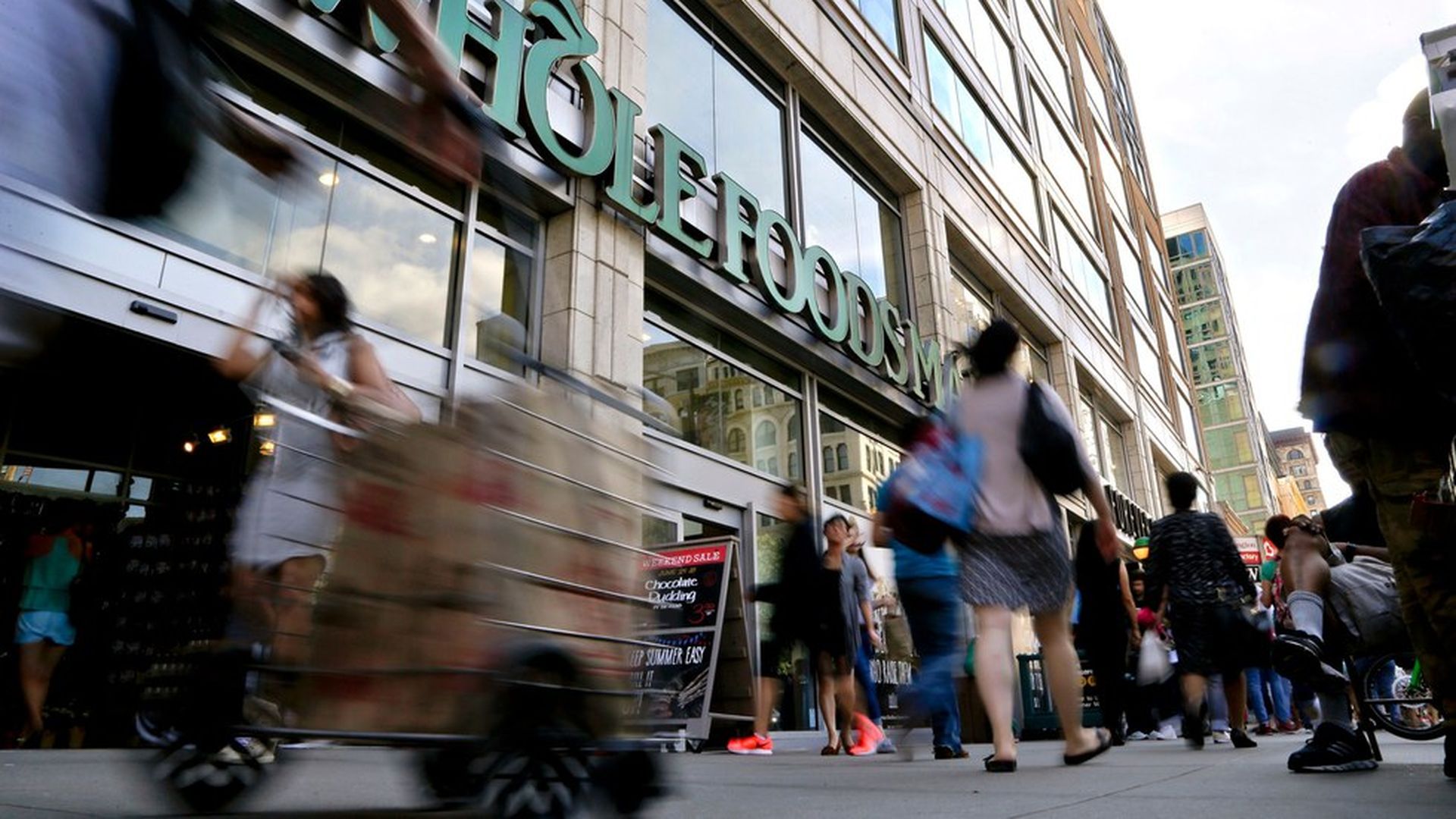
Instacart CEO Apoorva Mehta was overwhelmed with condolences after Amazon announced in June that it was buying Whole Foods for $13.7 billion—conventional wisdom was that his grocery-delivery business had more to lose than anyone from the merger.
But he tells Forbes that he felt nothing but vindication, as he had been telling grocers for years that "they should prepare for an all-out assault from Amazon."
"Every major grocery retailer in the country was calling us," to discuss how they could partner to meet this threat, he says.
Why it matters: Teaming up with Instacart is a means for Amazon competitors to offer grocery delivery at prices comparable to what Amazon offers.
Since, June Costco, Kroger, and Aldi all announced new partnerships, with Costco leveraging the partnership to offering same-day delivery in some markets.
Why Instacart matters: Few businesses have the deep pockets of Amazon, but Instacart is not without resources of its own. Forbes estimates that Instacart brings in $2 billion in revenue annually, and that the firm serves half a million customers.Instacart is backed by powerful venture capital players, raising $675 million from Khosla Ventures and Sequoia Capital, among others, while it has half a billion dollars in the bank.A wrinkle in the plot: Whole Foods was, prior to the merger, one of Instacart's most important partners. It's an Instacart investor and accounted for 10% of the firm's revenue.The Amazon deal, however, doesn't void an exclusive 5-year deal signed in 2016 making Instacart the exclusive deliverer of perishables, Recode reports. That the deal is only in year two buys Instacart some time to replace the revenue it will presumably lose as a result of the Amazon takeover.
In an online flash poll on fake news for the 2018 Edelman Trust Barometer, Republicans were notably more likely to blame news organizations than Democrats were.
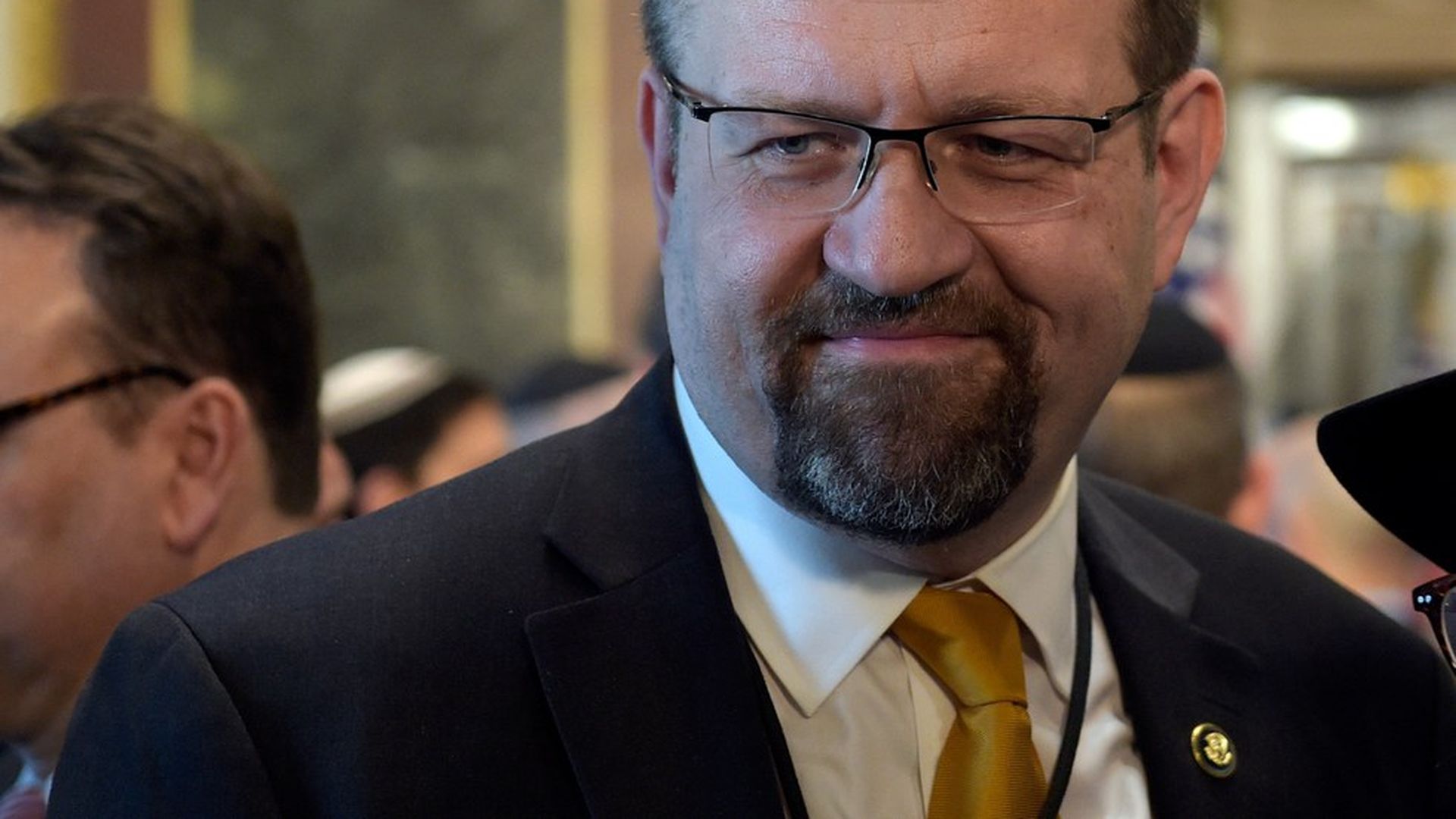
Sebastian Gorka, the former Breitbart commentator and deputy assistant to President Trump, has been hired as a National Security Analyst for Fox News. Sean Hannity first announced the move on his radio show, and Fox News later confirmed it to several media outlets.
Gorka, who generated a great deal of controversy but also became one of Trump's favorite TV defenders during his time in the administration, told The Hill he won't miss appearing on other networks: "Fox doesn't generate propaganda. Those outlets do. I went on ... to push back on the literal propaganda they were pumping."
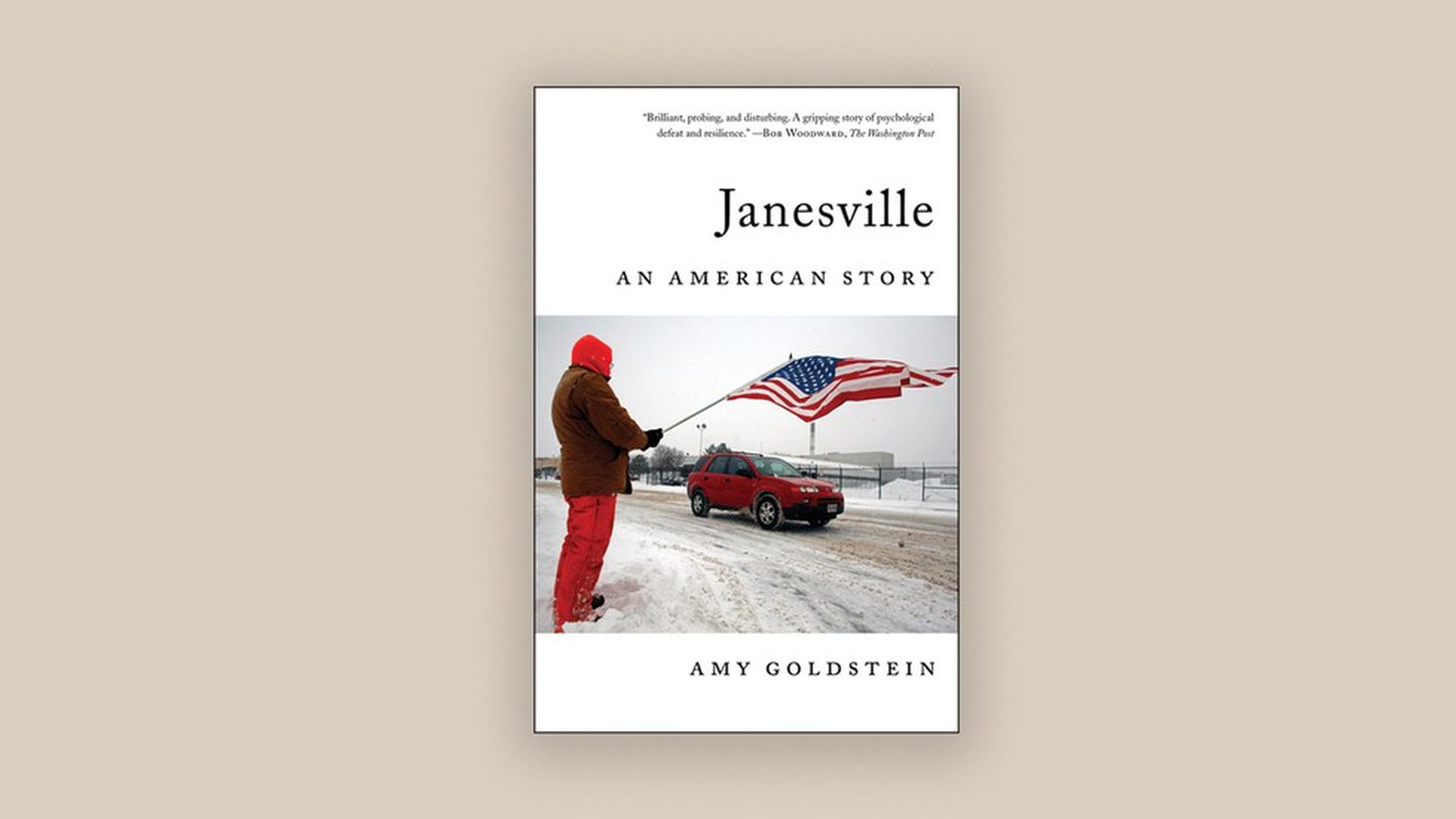
By next week, a St. Louis property developer called Commercial Development Company must decide whether it will buy a shuttered, 94-year-old GM assembly plant in Janesville, Wisconsin. Whatever happens, the plant's prominence — and that of Janesville itself — in U.S. industrial history is past, vanquished by the same forces that have unraveled the fabric of so many storied manufacturing towns in and outside the U.S., and with it shaken up politics fundamentally.
On Tuesday evening, the Washington Post's Amy Goldstein won the FT/McKinsey Business Book of 2017 for Janesville: An American Story, her incredibly well-timed account — the result of six years of immersive research — of what happened when one company town went south. Janesville is and isn't the story of Donald Trump's ascendance: its middle class has been rent by the loss of well-paying manufacturing jobs, and their replacement by lesser employment in a distribution center that the town paid millions of dollars in incentives to attract. Yet, though Democrats stayed away in droves, the town voted for Hillary Clinton last year.
When we chatted yesterday, I asked Amy for her main takeaways after months of speaking about the book.
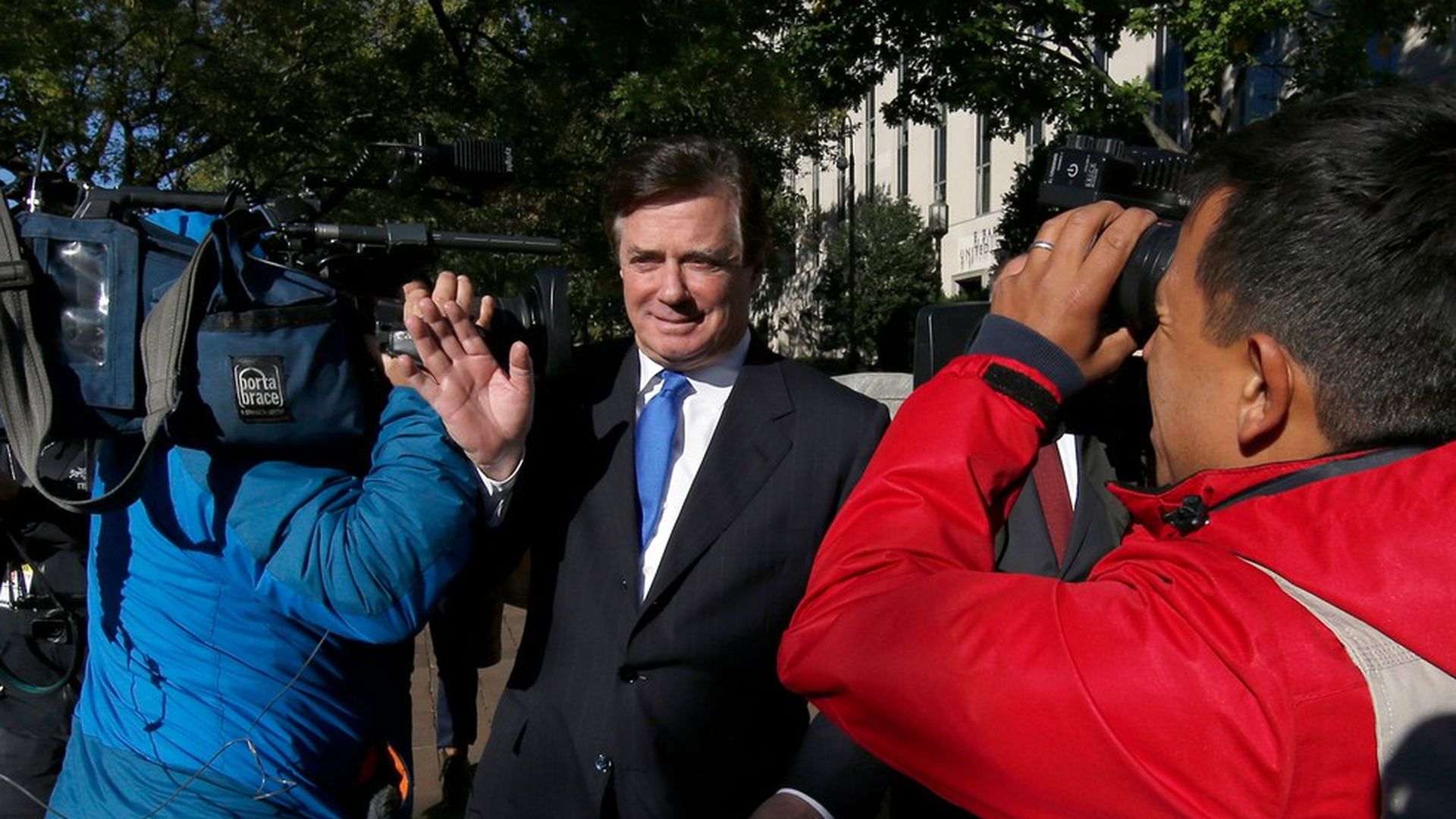
U.S. District Court Judge Amy Berman Jackson issued a gag order Wednesday to discourage lawyers, defendants, and witnesses from making statements to the media in the case against Trump's former campaign chairman Paul Manafort and his business pal Rick Gates, Politico reports. The gag order doesn't outright ban statements to the media, just those that may bring "prejudice" to the case.
Why it matters: This is a sign the judge is trying to keep the eventual trial from becoming "a public relations campaign," as she put it in a hearing last week. But the impact of the gag order may be limited. As former Justice Department prosecutor Peter Zeidenberg told Politico: "It doesn't apply to the president and he's the one who's going to be shooting off his mouth on this more than anyone else."