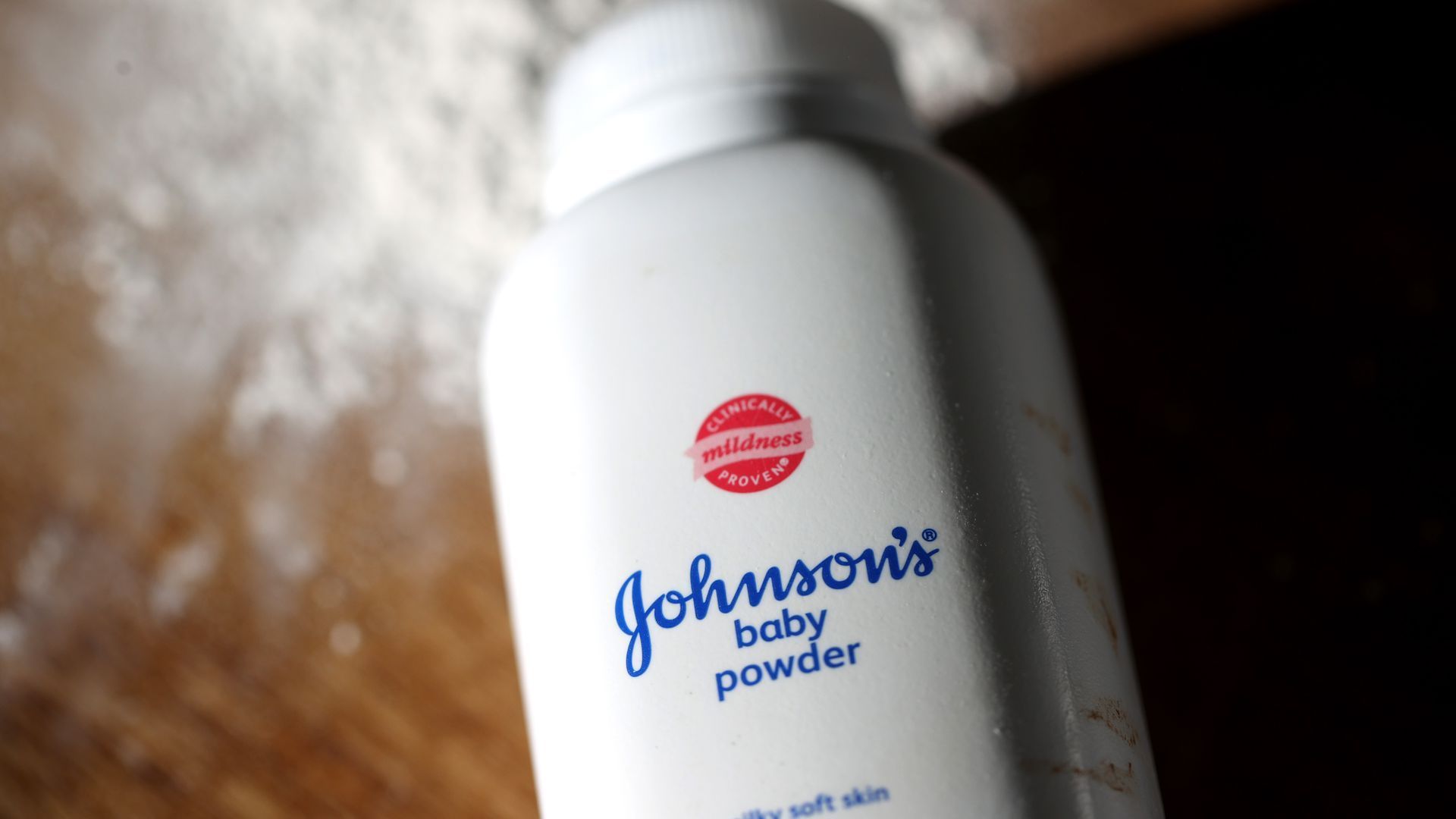
Johnson & Johnson said Tuesday it's offering up to $8.9 billion to resolve lawsuits accusing the company of selling baby powder that caused cancer — an allegation that J&J has repeatedly denied.
Why it matters: J&J faces tens of thousands of lawsuits from people and their survivors related to the company's talc-based powder.
In normal times, surveys on banking conditions are released with little fanfare. Now, there is an increased appetite for data on how banks across the rest of the country are faring.
Why it matters: After the string of recent bank failures, analysts are wondering whether a pullback in lending activity is rippling through the economy.
Every month, we turn to the Labor Department's Job Openings and Labor Turnover survey to dive into the guts of what's really happening among businesses and their workers.
Why it matters: The answer in February was a weird one. There are signs the labor market is finally cooling, alongside evidence that conditions remain as tight — perhaps even overheated — as ever.
Federal prosecutors and the U.S. Securities and Exchange Commission on Tuesday filed criminal and civil fraud charges against the founder of Frank after the defunct student financial-aid assistance company was accused of deceiving JPMorgan Chase into a $175 million acquisition.
Why it matters: Once heralded as a star millennial entrepreneur, Charlie Javice stands accused of using an elaborate scheme to inflate Frank's customer base, thus landing a multimillion deal with the biggest name on Wall Street.
Driving the news: Javice faces three criminal fraud charges — including conspiracy to commit bank and wire fraud — and civil fraud charges for allegedly tricking JPM "into believing that Frank had access to valuable data on 4.25 million students who used Frank’s service," the SEC said in a statement.
The actual number was fewer than 300,000, according to the U.S. Attorney for the Southern District of New York and the SEC.
The big picture: In January,JPMorgan Chase sued Frank, saying Javice had lied about the company's size.
The SEC's Division of Enforcement director, Gurbir S. Grewal, on Tuesday called it "an old school fraud," saying Javice "lied about Frank’s success in helping millions of students navigate the college financial aid process by making up data to support her claims, and then used that fake information to induce JPMC to enter into a $175 million transaction."
What they found: The SEC alleged in its complaint that Javice "paid a university professor to create fake data appearing to represent 4.25 million customers" and then gave that list to "a third-party validator, who in turn reported it to" Chase.
Then, Javice and "another high-ranking Frank executive" launched a plan to "create a list of real names that they could pass off as Frank’s customers," paying $105,000 to a third-party "data compiler for its in-college student data" and $75,000 to "a different data compiler" to augment the list with emails and phone numbers, the SEC said.
Chase discovered that the customer list was bogus when a marketing campaign targeting the borrowers "reached few of the intended recipients," the SEC said.
The other side: "Charlie denies the allegations," spokesperson Josh Ginsburg tells Axios in an email.
In a countersuit filed against Chase in February, her attorneys accused the bank of "a massive 'CYA' effort'" designed to "shift the blame for a failed and now-regretted acquisition to someone they view as an easy target: its young female founder."
Chase did not immediately respond to a request seeking comment Tuesday.
Of note: Of the four criminal fraud charges filed against Javice, three carry sentences of up to 30 years in prison.
Meanwhile, the SEC wants Javice to be barred from leading a public company, and to be forced to pay back ill-gotten gains.
Editor's note: This story has been corrected to reflect that Josh Ginsburg is a spokesperson for Charlie Javice, not her attorney.
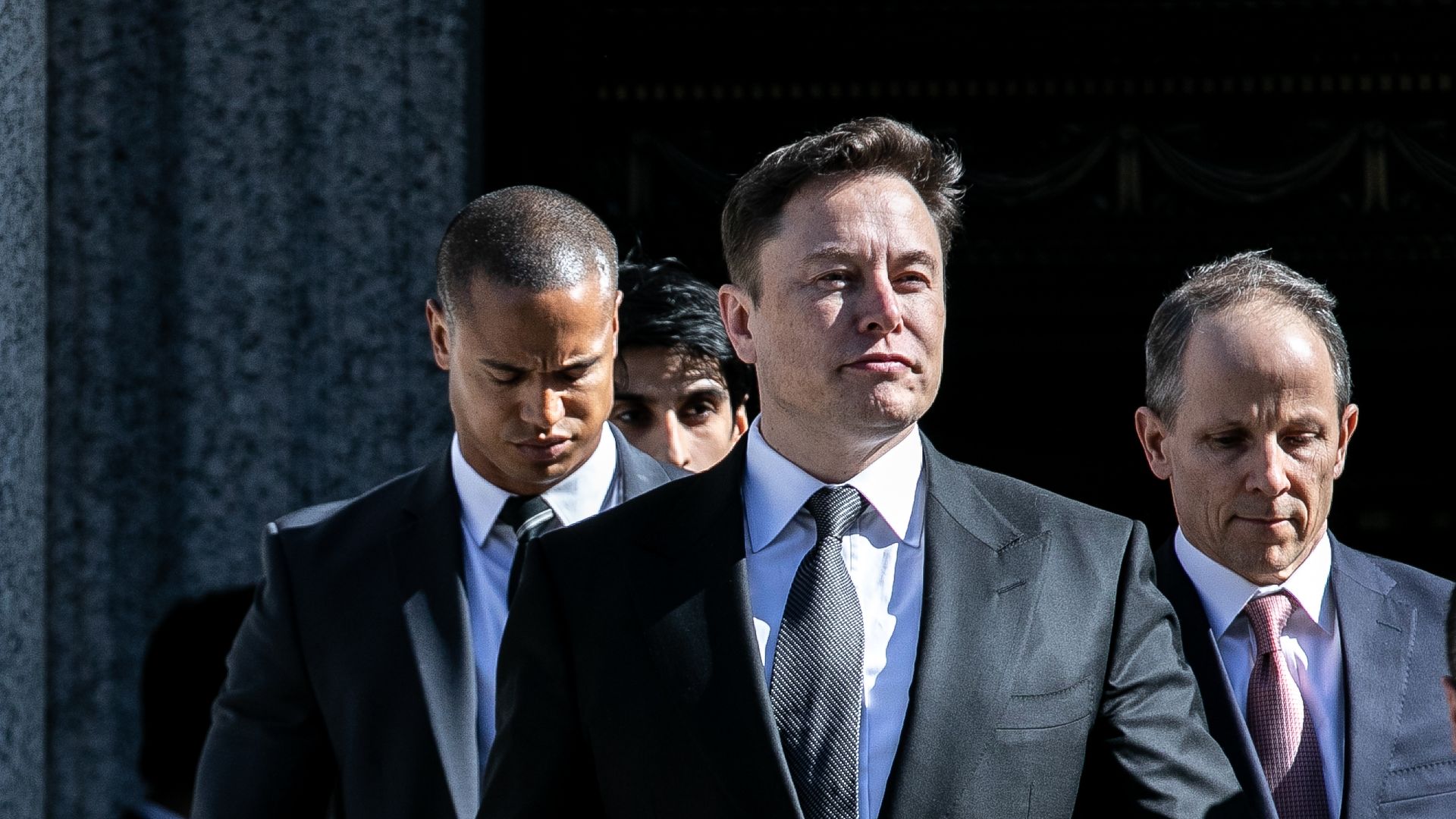
Twitter accounts ranging from the White House to the New York Times are refusing to pay $1,000 a month to retain the platform's verification checkmark as Elon Musk rolls out a rash of impulsive policy changes.
Why it matters: Twitter's checkmark had served as a form of verification to confirm the identities of accounts including news outlets, politicians and celebrities. It's unclear what the landscape will look like under Twitter's new checkmark system, which will not as easily differentiate between credible and fake users.
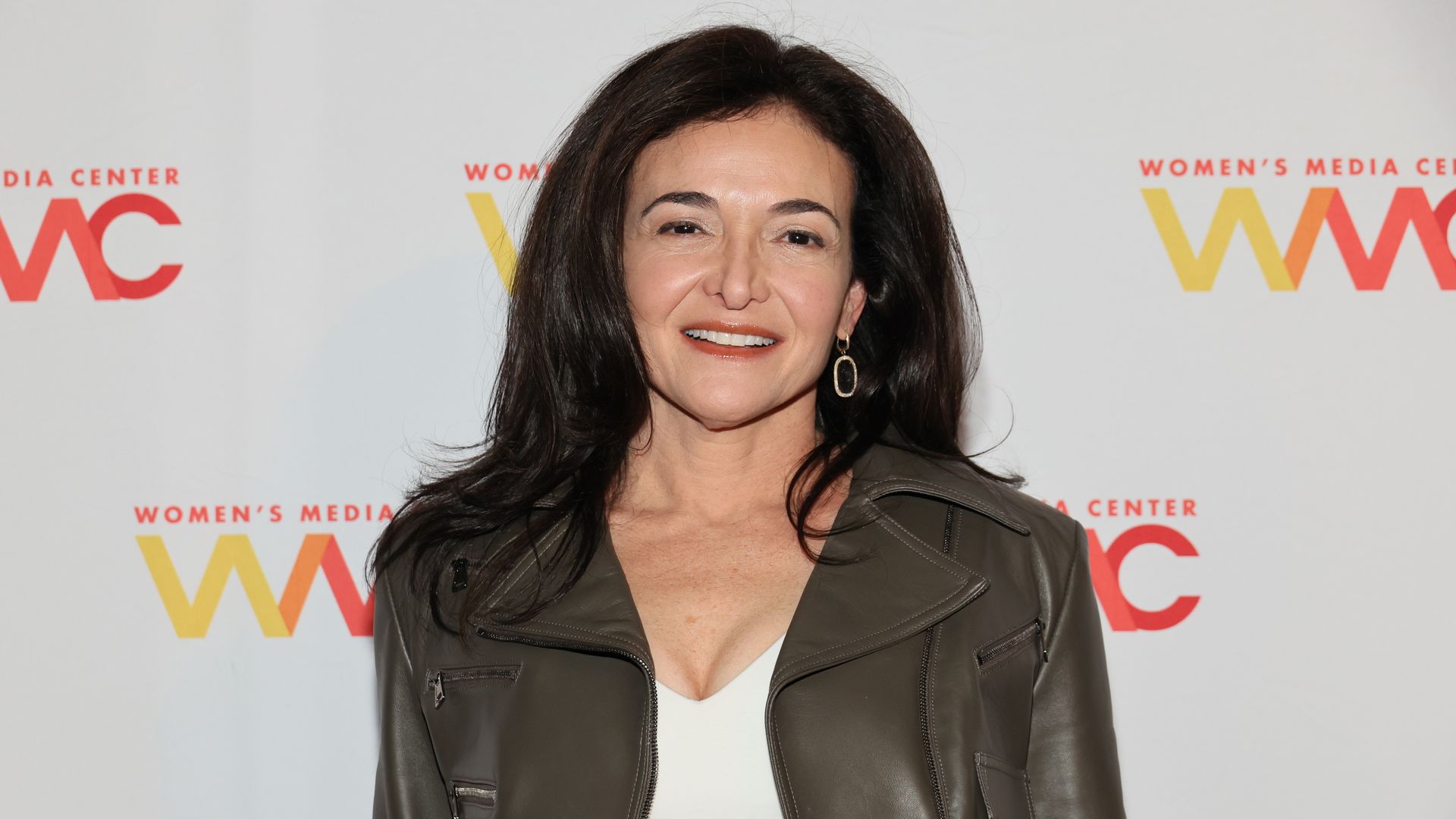
Former Meta executive Sheryl Sandberg is part of an investor group that on Tuesday was awarded a Bay Area expansion franchise in the National Women's Soccer League.
Why it matters: The $53 million expansion fee is the most ever paid for a team in NWSL, whose next media rights deal is up for grabs.
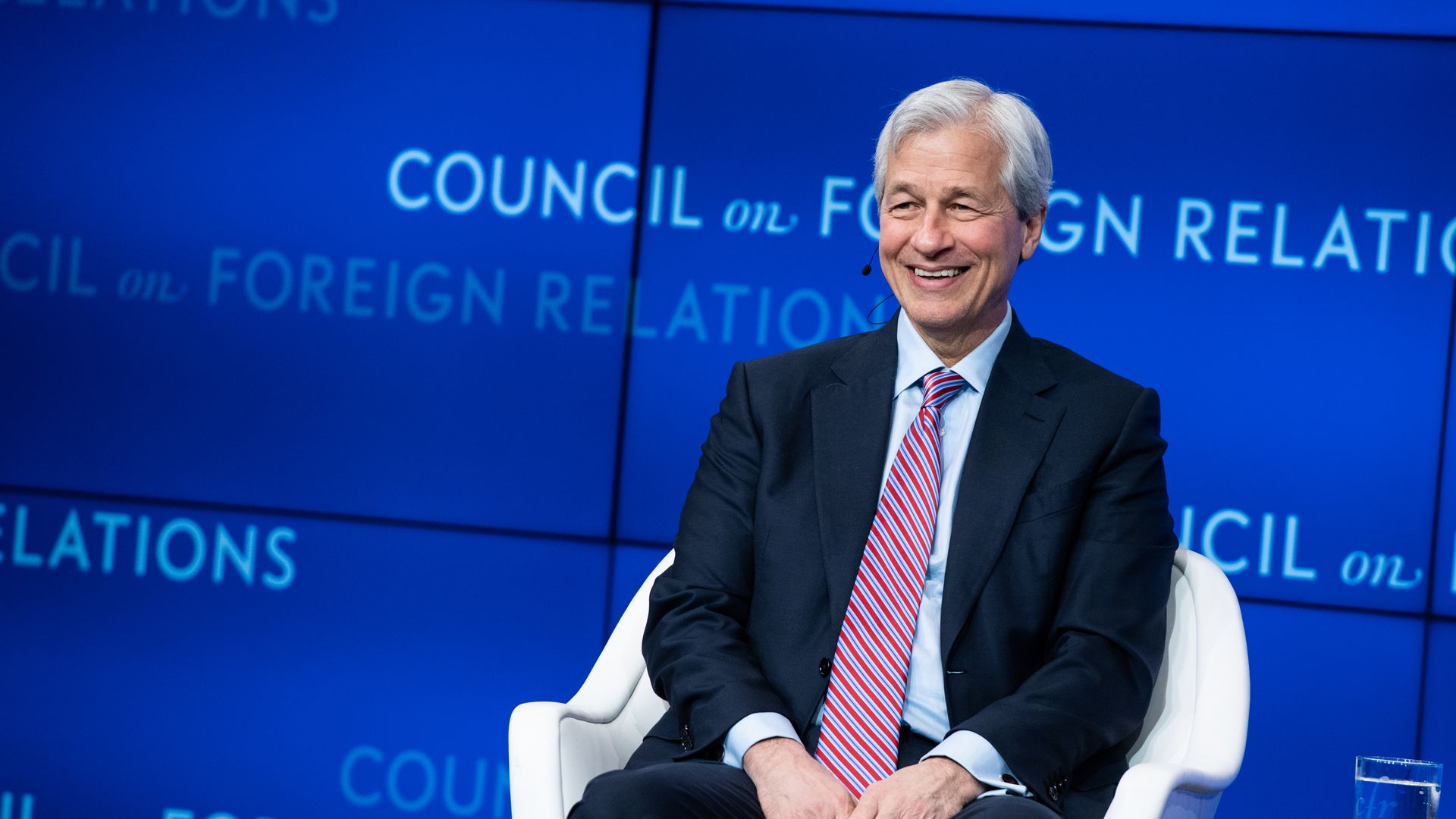
The U.S. economy is healthy — and is going to remain healthy for decades to come. So says JPMorgan Chase CEO Jamie Dimon in his annual shareholder letter, released Tuesday morning.
Why it matters: Dimon's sunny outlook stands in stark contrast to his dark warnings 10 months ago, when he forecast an impending "hurricane."
Amazon Web Services is debuting a new 10-week accelerator program focused on generative AI startups that includes AWS credits and other Amazon resources.
Why it matters: The current AI boom is a boon to cloud computing providers, as their services are essential for the development and operation of this buzzy tech.
Tech layoffs are way up — and so are tech stocks. Two charts tell this story.
The big picture: The tech industry's layoffs began last year and have kept up a relentless stream of bleak announcements — in some companies' cases, like Meta's, coming in multiple waves.
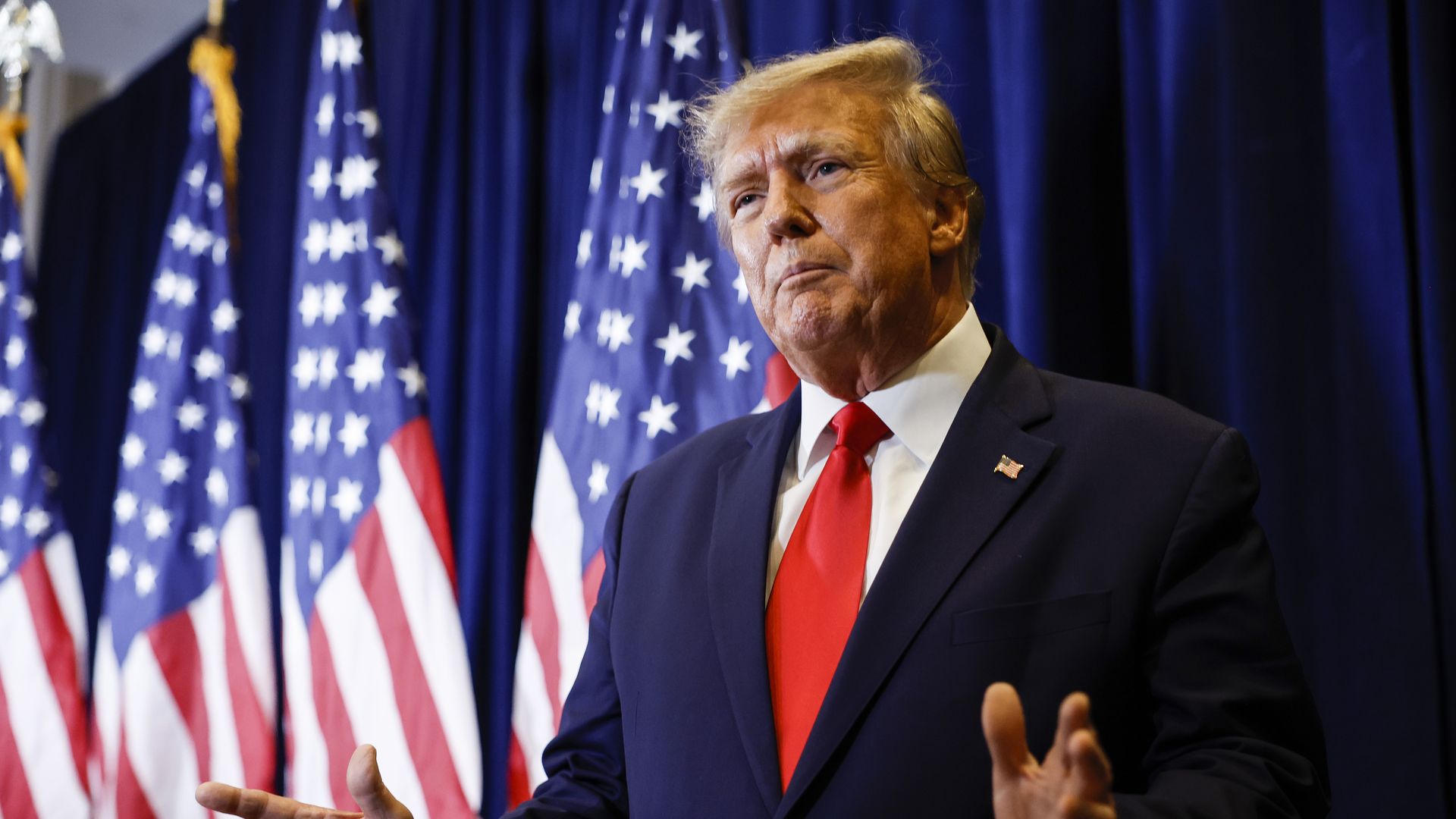
The judge overseeing former President Trump's criminal case has banned video cameras from the courtroom, but permitted pool photographers to take still photos before Tuesday's proceedings begin.
Driving the news: Acting New York Supreme Court Justice Juan Merchan noted in his Monday night ruling declining a request by a coalition of news outlets to broadcast live during Trump's first court appearance that "this indictment involves a matter of monumental significance."
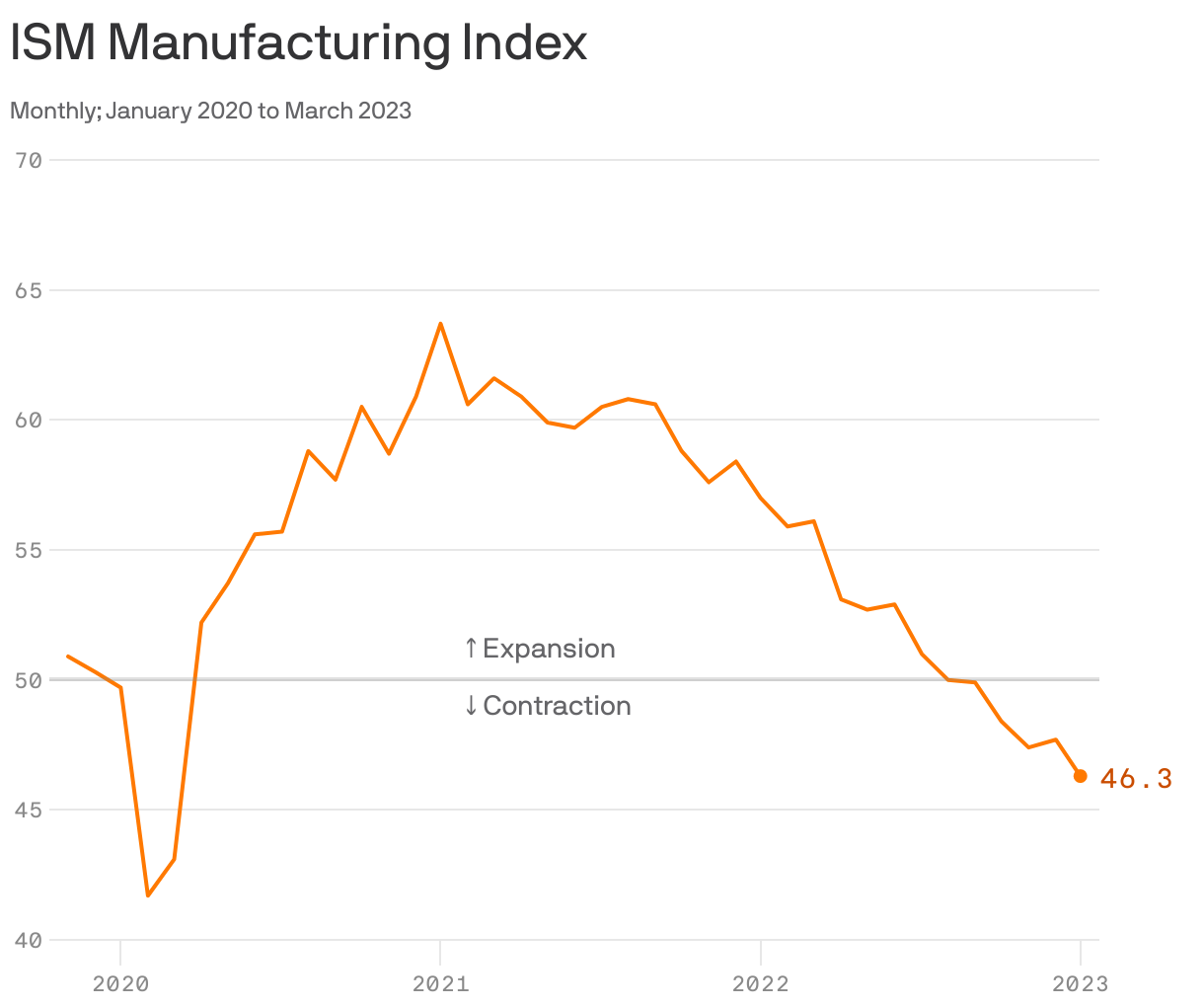
So far in 2023, the flow of economic data has been a story of ups and downs: first, with several weeks of signs that the economy was slowing and inflation fading, then several weeks of data suggesting boom times were still here.
The Saudi Arabia sovereign wealth fund's venture arm revealed on its website its portfolio of venture capital and private equity funds, which includes the likes of Andreessen Horowitz, Coatue, and Techstars.
Why it matters: The 2018 killing of Saudi dissident journalist Jamal Khashoggi raised a lot of questions about who in Silicon Valley had taken money from the Saudis — and what they'd do about it going forward.