Thursday's economy & business stories


Starbucks announces new CEO amid growing unionization efforts
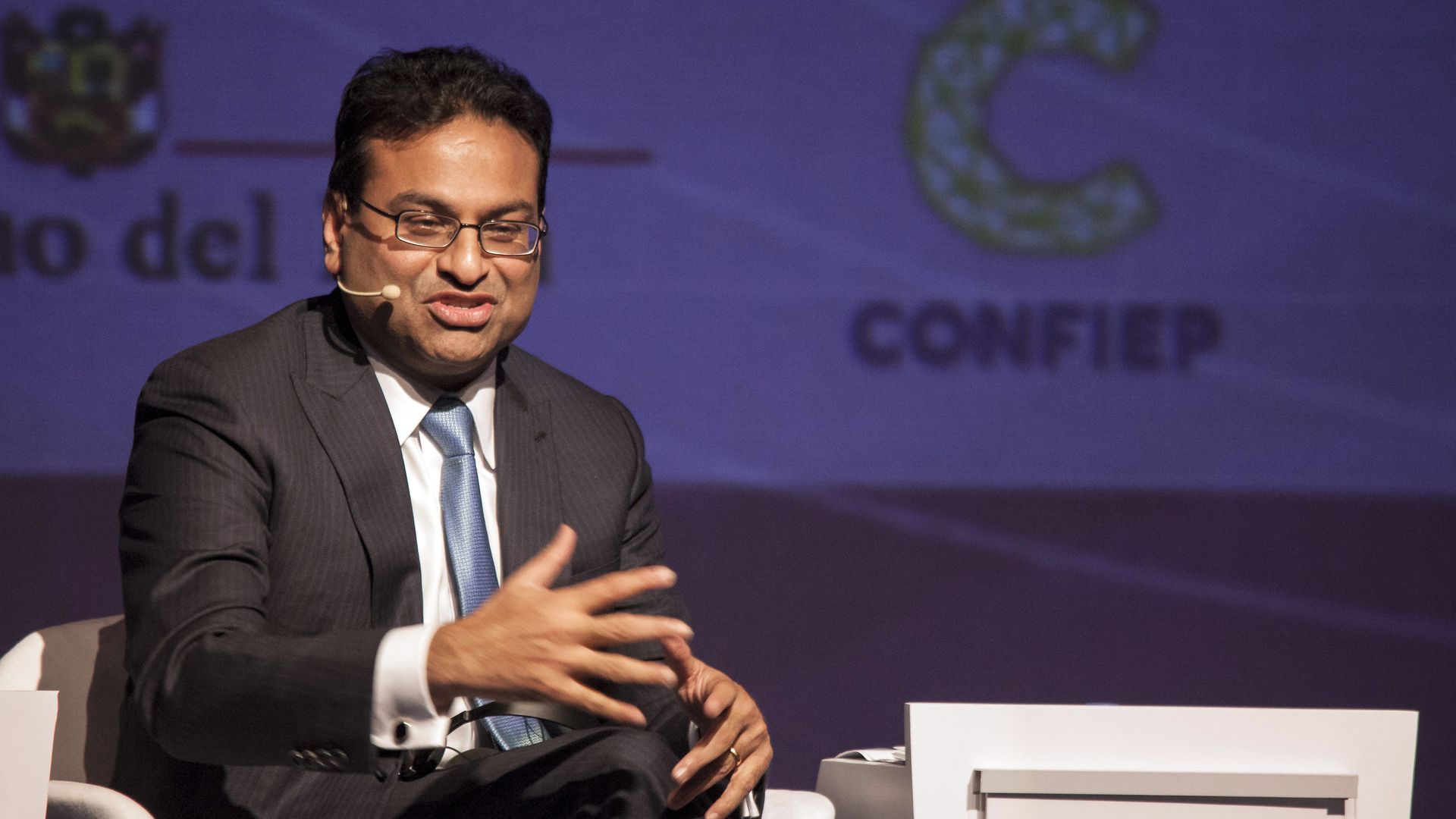
Laxman Narasimhan will become Starbucks' new chief executive officer, the company announced Thursday.
The big picture: Narasimhan, who will fully replace interim CEO Howard Schultz, will join Starbucks as the company deals with a growing number of unions amid a massive labor movement.
Why pilots are picketing at airports before Labor Day weekend

Pilots are picketing at more than a dozen airports across the country Thursday ahead of the upcoming Labor Day weekend.
Why it matters: Pilots are calling for better work conditions and benefits amid a summer of "revenge travel" that has left airlines scrambling to cancel, delay and rebook flights.

Ex-Theranos VP on managing a crisis
Brooke Buchanan accepted the role as vice president of communications at Theranos just days after The Wall Street Journal published its first expose.
Why it matters: Crisis communicators are often given the impossible task of saving a house that is already on fire. Buchanan's time at Theranos was no different.
Communicators Spotlight: Brooke Buchanan, Edelman EVP of crisis and risk

Brooke Buchanan has been described as a "corporate ghostbuster" known for handling communications for Sen. John McCain, Walmart, Whole Foods and Theranos.
Why it matters: This is the first installment of the Communicators Spotlight series, in which we'll focus on one pro's relevant career highlights, best practices and interests. Today, we examine the high-stakes career of Buchanan, who currently serves as executive vice president of crisis and risk at Edelman.

California eyes crypto regulation in bid to protect consumers

Digital asset regulation is coming to California — that is, if Gov. Gavin Newsom signs into law a bill approved by state legislators this week in the next 30 days.
- Among other things, the Digital Financial Assets Law would require major exchanges to get licensed by the state. It would also bar certain stablecoin operators from the state, forcing licensed exchanges to delist coins not approved by California.
- It is intended to "boost transparency" and "enhance consumer protections," Tepring Piquado, senior director of state and local government relations for the western U.S at the Chamber of Progress, tells Axios.
Why it matters: Think of the industry and regulators as two baseballs thrown from opposites sides of the room, with one trying to maintain momentum in the name of innovation. The other is trying to slow it down as a precaution.
- This is the moment right before impact: If they collide, one will change the other's trajectory. (See: New York and the BitLicense.)
The big picture: In its current form, the bill would force crypto exchanges and platforms to apply for a license, regularly report financial metrics as traditional firms do, and subject them to civil penalties in the event they violate rules.
The intrigue: It also bars certain stablecoin issuers from operating in the state until 2028.
What's happening: The bill was approved Monday by the state Senate and by the Assembly on Tuesday.
- What's next: Newsom has until Sept. 30 to make a decision on the bill.
What they're saying: Assembly member Timothy Grayson, AB 2269's sponsor, called it "smart, balanced policy" in a statement after Tuesday's vote.
The pushback: The Blockchain Association opposes Grayson's bill, sayingit would "push many out of the state" and undermines Newsom's commitment to "fostering this next wave of innovators."
- Flashback: Newsom put out an executive order in May to create a regulatory framework that would "grow jobs and protect consumers."
The other side: Similarly, New York instituted the BitLicense in 2015, one that continues to be broadly criticized by the industry. The Empire State is often fingered as one of the most onerous jurisdictions for crypto firms.

New platforms raise questions about NFT artist royalties

Non-fungible token (NFT) creators have been getting paid on secondary market sales of their creations, but new entrepreneurs entering the space are foregoing those payments in order to pass savings on to collectors.
Why it matters: A part of the NFT economy's public pitch has always been that they offer a better deal for artists. They offered a way for creators to benefit from secondary sales of their artwork, or so the argument went.
- This has knock on benefits. It can incentivize teams not to just make one-off works, and foster community around creations that build more value.
- A creator might not stop at a one-off. They could put on events or shows, or create products around their art, all of which increase its mind space and drive up value.
One problem: Well, assumptions about NFT royalty payments just aren't universally true.
- NFTs allow an artist to post a royalty for secondary sales in the NFT itself, which is logged forever on the blockchain. But that royalty is only effective insofar as marketplaces honor it.
Context: The NFT market is down but definitely not out. According to NonFungible.com, there was about $855 million in NFT sales in August — far below past highs, but more than enough to keep a bunch of startups going.
The intrigue: Still, a couple of newer, notable marketplaces just aren't honoring royalties, and collectors seem to like it.
- Sudoswap is a decentralized exchange that allows buying and selling to go on autopilot, managed by code.
- And x2y2 is basically a marketplace like LooksRare or OpenSea, except it's more decentralized than the latter (the marketplace leader).
Sudoswap has really increased its volume over the last month, but it is x2y2 that's dominating the market (though it has a token, so that could be a lot of wash trading).
- Regardless, it's a lot sales, which only makes it more disconcerting for artists that it has suggested making paying royalties optional.
What they're saying: "Artist Royalties are as fundamental as rain: They keep the creative cycle alive," the artist Hackatao (who has been making NFTs since long before they were cool) told Axios via Twitter.
- NFTs aren't like paintings. They don't stop evolving when they get sold. Each collection is a project.
- "Many NFT projects manage to finance their team with royalties from the secondary market, If we remove this resource, the projects would no longer be sustainable," Hackatao added.
- In a statement from the NFT project Axolittles (which actually switched leadership from the originally creators) they noted that the assets and their marketplaces are symbiotic. "Platforms should be allowed to innovate however they want. ... The problem they're going to face here is that there is 0 incentive for a team to support their platform."
What we're watching: Royalties might become less bespoke, more standardized, and something that becomes more consensus than enshrined law.
- "I don’t think royalties could be 100% *technically* enforceable," Jake Brukhman, CEO of CoinFund, told Axios via email, "but they can certainly be made socially enforceable."
- "The better solution would be for all parties to adopt on-chain royalty standards that operate regardless of transaction venue," he said.


Paramount+ adds Showtime as more streamers offer bundle deals
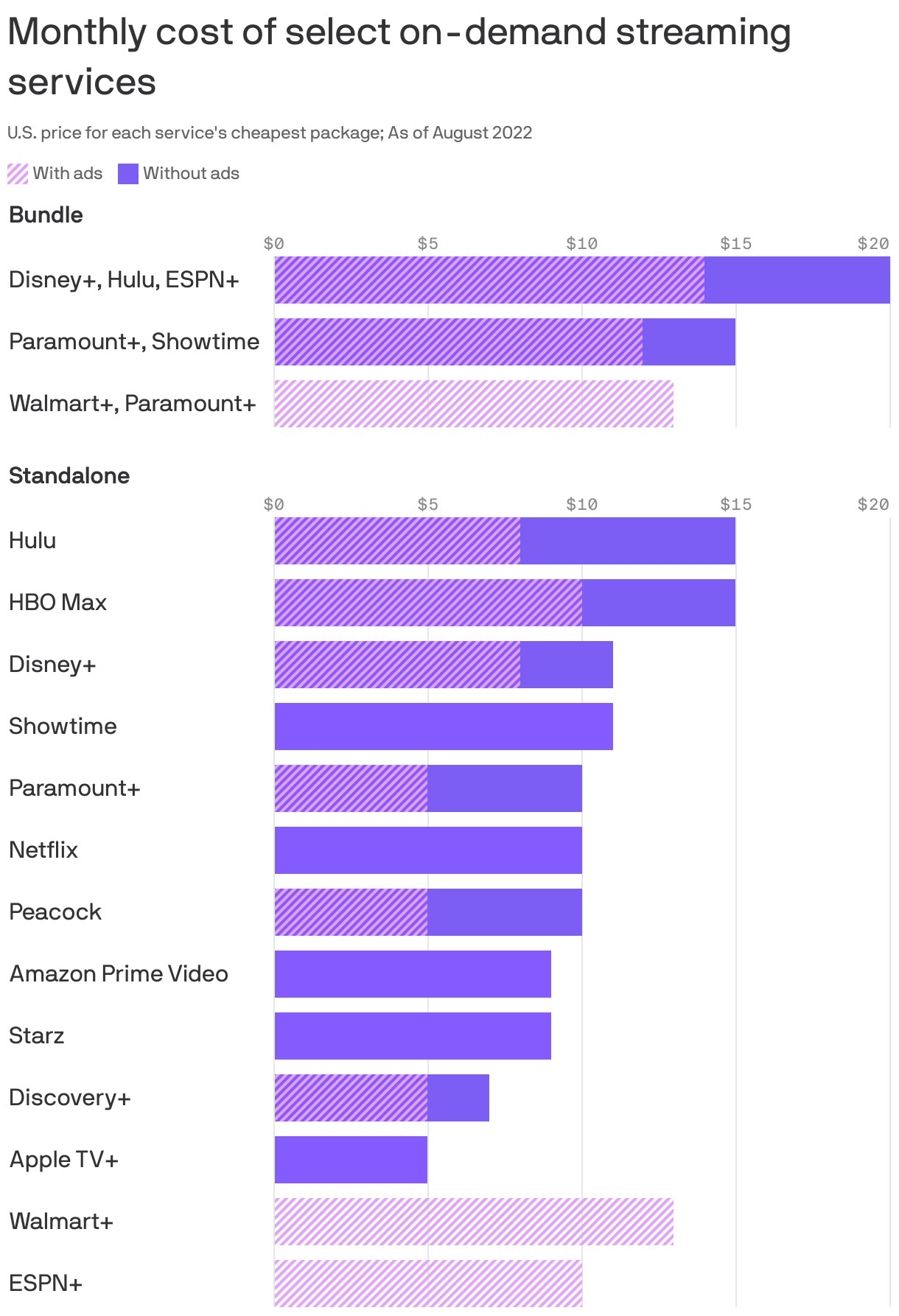
Paramount Global will finally offer a bundled package of its two streaming services — Paramount+ and Showtime — for a discounted rate, the company said Wednesday.
Why it matters: Bundles give consumers cheaper alternatives to rising streaming costs. These deals also make it easier for entertainment giants to accrue more customers.

SeatGeek charts IPO course after failed SPAC merger

Sometimes the best SPAC mergers are the ones that don’t happen. Or at least that’s the attitude of online ticket marketplace SeatGeek, which recently boarded the SPAC termination train.
Driving the news: SeatGeek on Wednesday announced $238 million in Series E funding at a $1 billion pre-money valuation, led by existing backer Accel.

A tale of two employment datasets
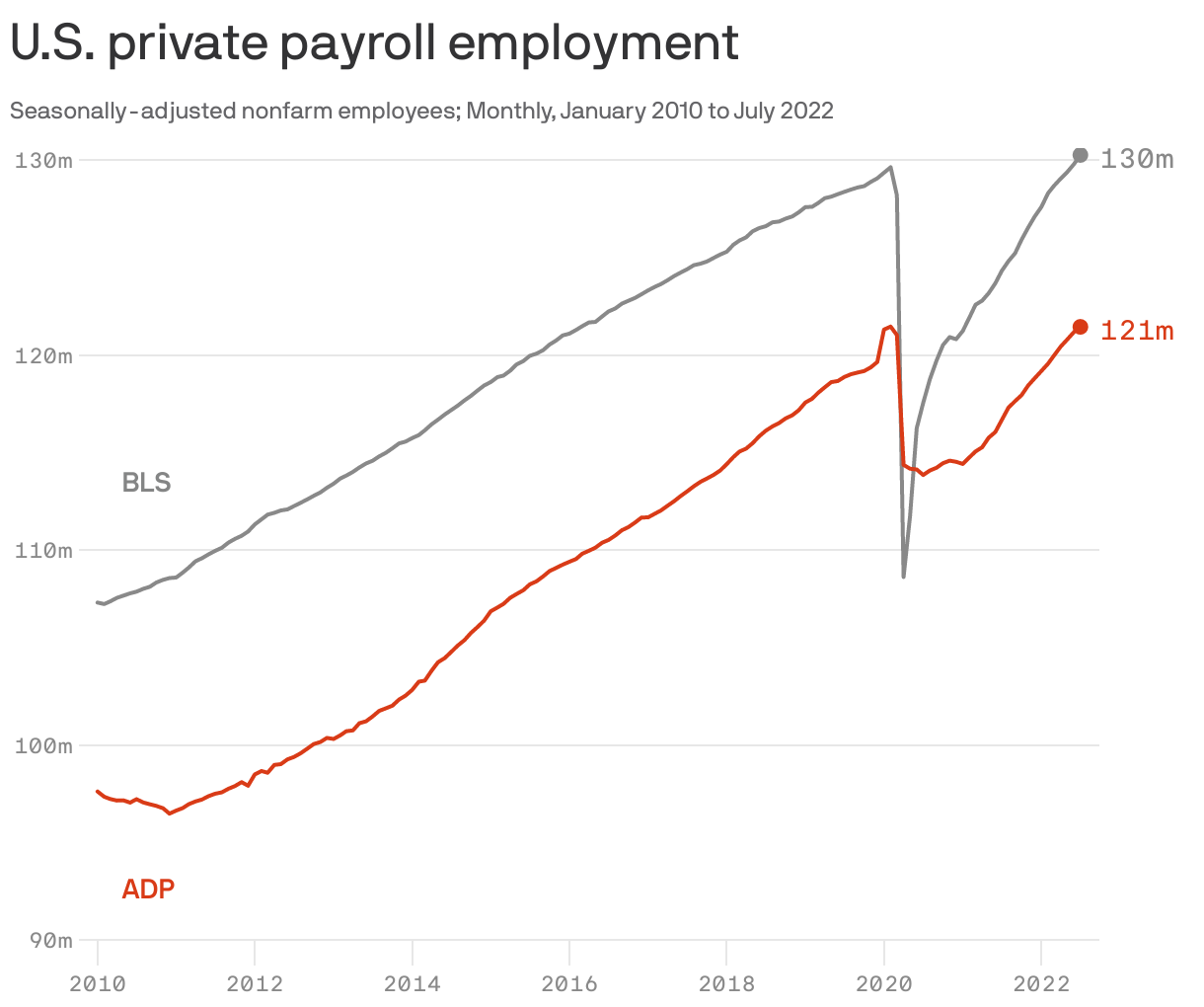
Maybe the 2020 recession wasn't as bad as we thought. That's the message being sent by the keenly awaited new ADP National Employment Report.
Why it matters: The monthly employment report from the Bureau of Labor Statistics is the gold standard measure used to understand the job market — alone in hitting the sweet spot between timeliness and accuracy. Now, payroll services provider ADP hopes its new monthly report will rival the BLS release on both fronts.

Tech's newest giant is also an outcast

The phenomenal and speedy rise of TikTok has made the short-video-sharing platform the latest and most-likely-to-succeed front-runner in the race to join tech's inner corporate circle.
Why it matters: TikTok's vast pool of users, fine-tuned content algorithm and accelerating cash machine have made it the upstart that most spooks Facebook, which started copycatting TikTok's format in 2020.

First look: Yellen kicks off month-long economic victory tour
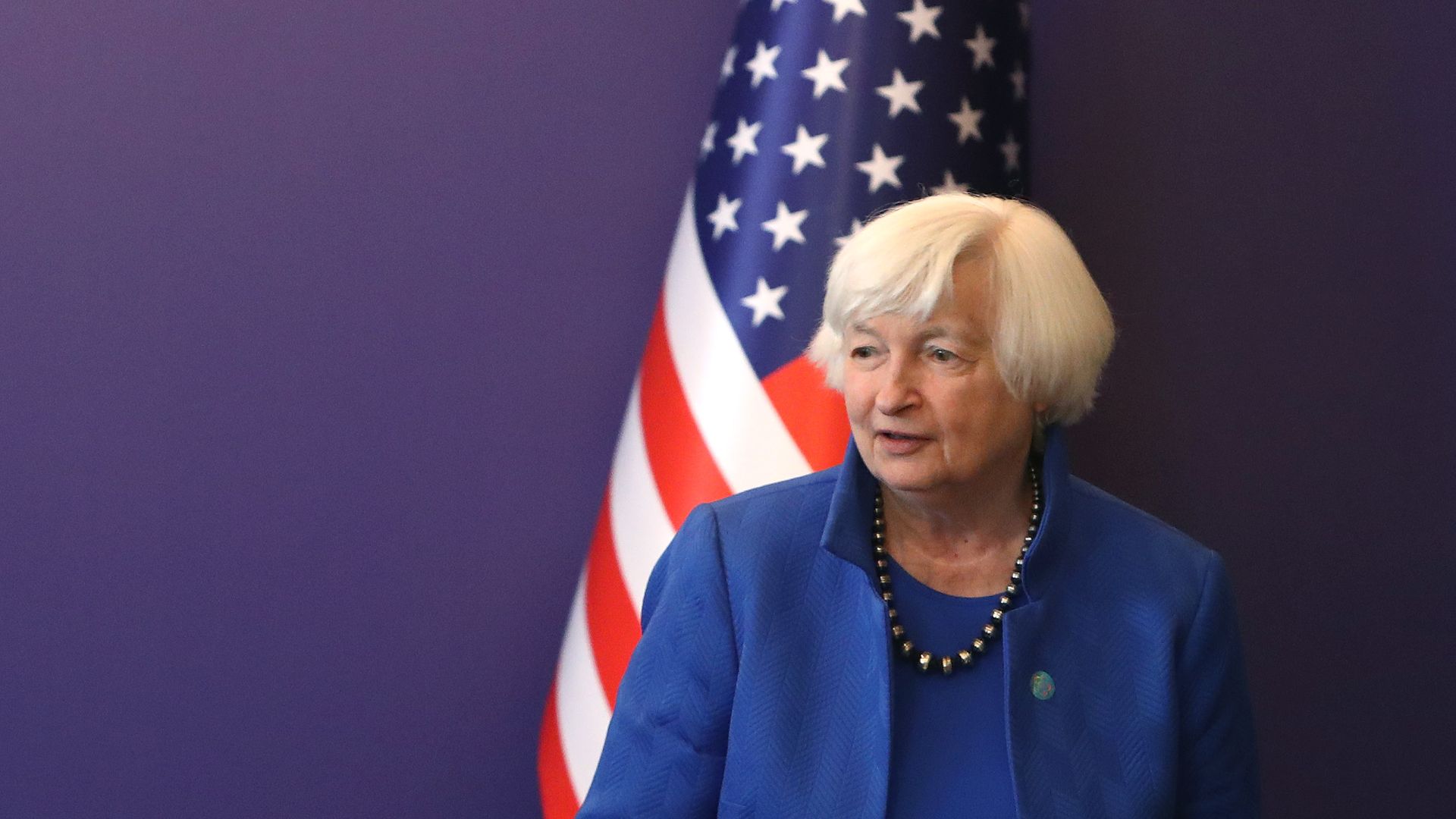
Treasury Secretary Janet Yellen will deliver a major economic speech in Detroit next week as part of a month-long push to sell President Biden's signature legislative achievements before the midterms, Axios has learned.
Why it matters: Deploying Yellen, an economist who has been reluctant to lend her name to arguments she doesn’t buy, is the administration's attempt to seize on a spate of positive headlines and make a broader intellectual argument for Biden's efforts to re-engineer large sections of the economy.

California fast-food bill marks pivotal moment for low-wage workers
The California Senate this week passed a bill that could raise wages for fast food workers to as high as $22 per hour — and has the potential to revitalize the U.S. labor movement. Business groups are mounting fierce opposition.
Why it matters: The Fast Food Accountability and Standards Recovery Act signals a re-emergence of "sectoral bargaining," a once-popular and powerful union tactic in which workers from different companies in the same industry negotiate for pay together.

U.S. restricts chip sales to China

Graphics-chip maker Nvidia announced in a Securities and Exchange Commission filing Wednesday that the U.S. government is restricting sales to China, "effective immediately."
Driving the news: The U.S. government has imposed a new license requirement "for any future export to China (including Hong Kong) and Russia" in order to "address the risk that the covered products may be used in, or diverted to, a 'military end use,'" per the filing.