Wednesday's economy & business stories

Rising suburban rent closes gap on urban rent
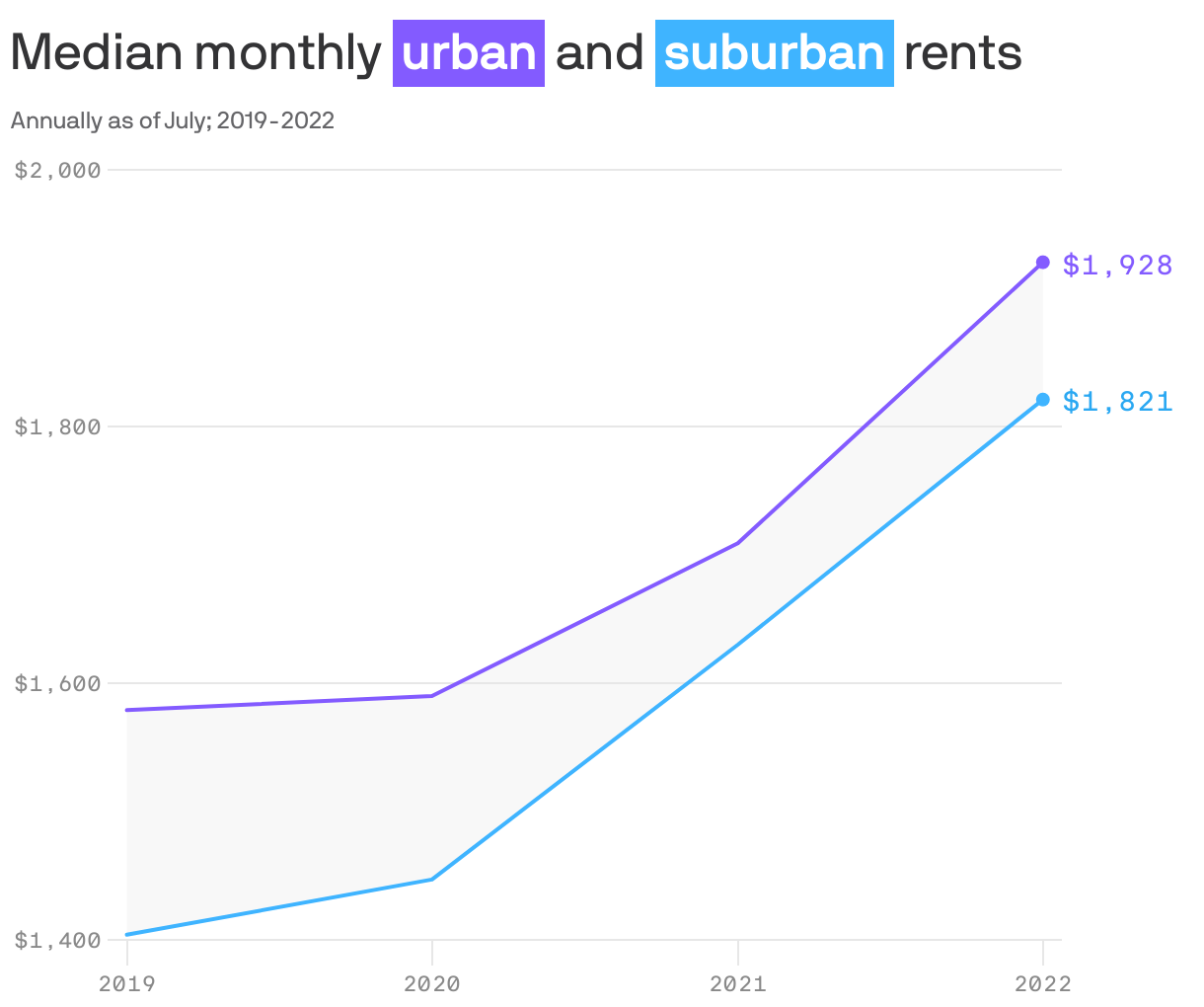
The affordability gap between urban and suburban life is shrinking.
Driving the news: The median urban rent in 2019 was $175 per month more than the median suburban rent, Realtor.com reported Wednesday. Now, the gap is only $107.
California to ban new gas vehicles by 2035 in push for EVs

California is poised to ban the sale of gas-powered vehicles starting in 2035 in a massive push toward EV adoption being heralded as a major win in the fight against climate change.
Why it matters: The plan would effectively start the clock on what would be a huge challenge for an industry already facing production shortfalls, stressed supply chains and unforeseen cost challenges for electric vehicles.

Subway sells out of Footlong Pass subscriptions
The days of Subway’s nationwide $5 footlong deal are long gone, but the chain is launching its first sandwich subscription that will cut prices in half for September.
Why it matters: Fast-food chains, including McDonald's, Taco Bell and Burger King, have said consumers are hungry for deals and rewards as inflation has taken a bigger bite out of their budgets with recent food price increases.

USDA to allocate $550 million to support poor and marginalized farmers
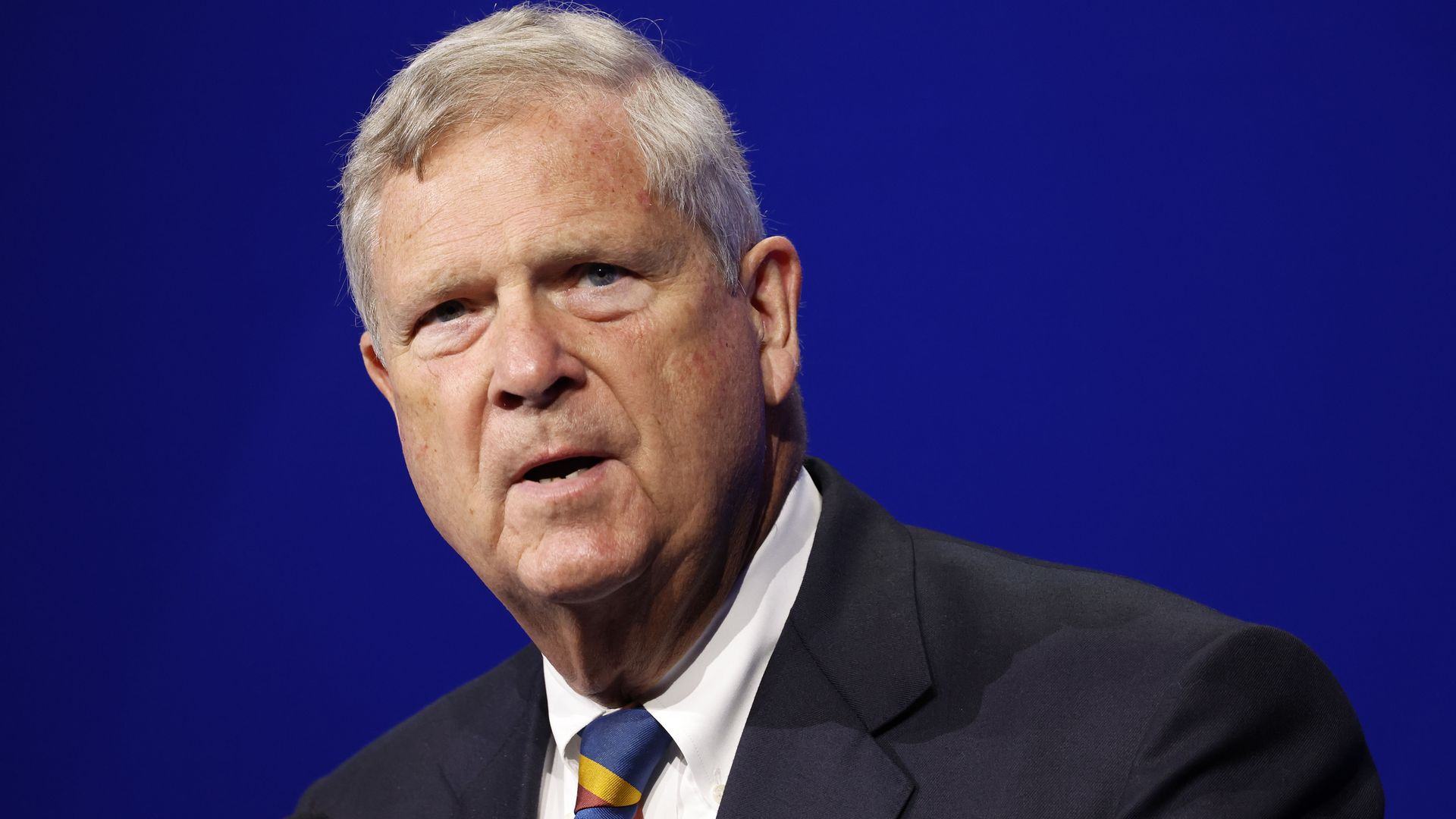
The Department of Agriculture announced Wednesday it will allocate $550 million to support poor and marginalized farmers access land, capital, markets and education and to increase diversity within the agriculture sector.
Why it matters: The money will be provided through two provisions within the $740 billion Inflation Reduction Act that President Biden signed into law last week.

Crypto lender Celsius files lawsuits in attempt to recover funds
Crypto lender Celsius Network appears to be emerging from its defensive crouch amid bankruptcy proceedings started last month, filing a pair of lawsuits in an attempt to claw back funds.
Why it matters: Even an award of tens of millions of dollars worth of coins from favorable rulings would hardly make a dent in Celsius' liabilities, currently measured in billions. But the details introduced in the suits will likely come up again.

Los Angeles Angels owner seeks to sell team
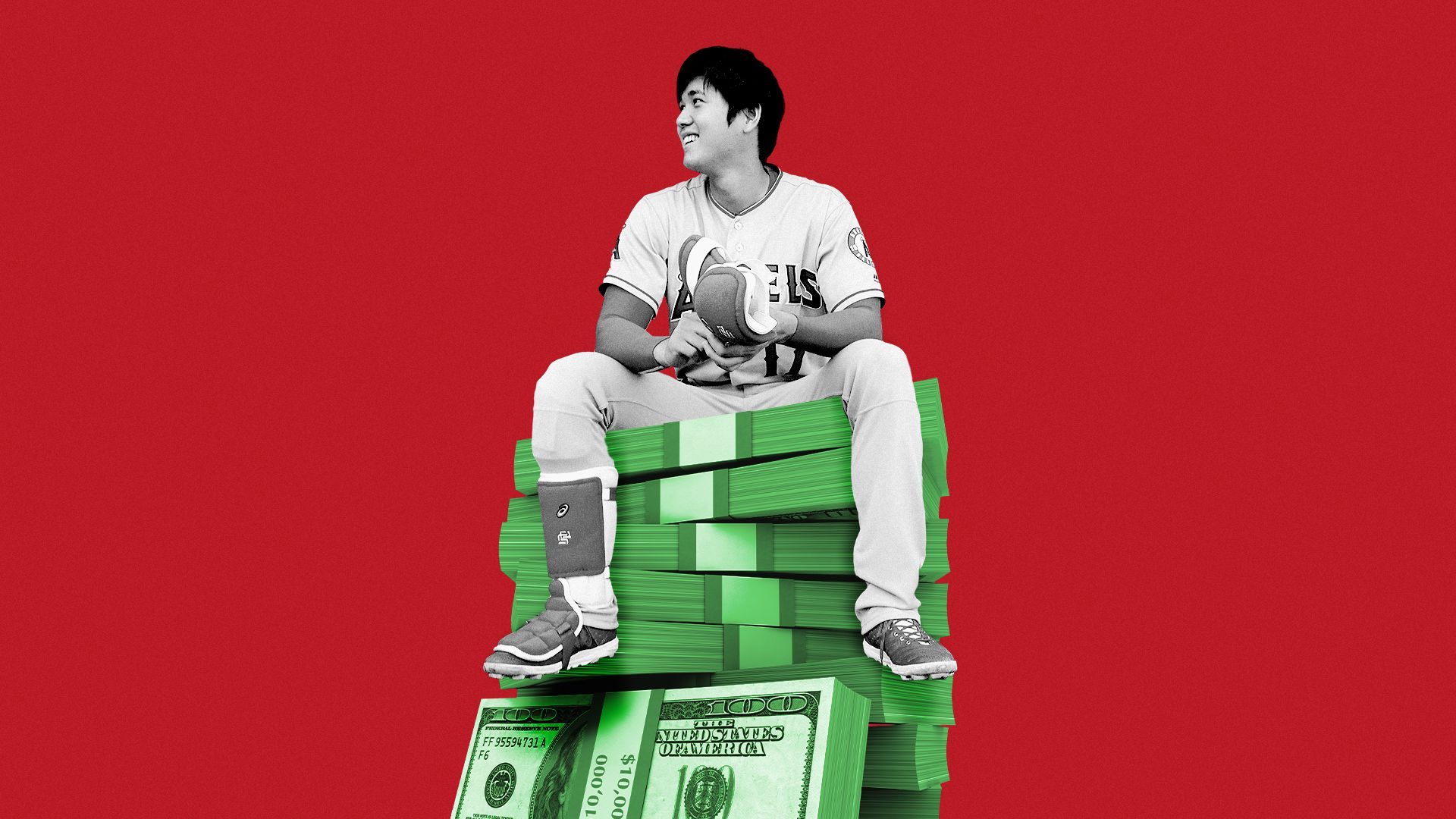
Los Angeles Angels owner Arte Moreno is seeking to sell the underperforming Major League Baseball franchise he bought in 2003 from The Walt Disney Co.
Why it matters: This means there are two MLB clubs on the block at the same time, with the Angels joining the Washington Nationals. That could cut down on price premiums, given that pro sports team bounties are inflated by scarcity, although that could be offset by geographic distance (i.e., West Coast billionaires like Joe Lacob and East Coast billionaires like Ted Leonsis would only have interest in their backyards).

A brand-new jobs report
Next Wednesday, August 31, is a huge day in the statistics world: It will see the release of a new dataset that is likely to add a lot of richness and subtlety to how economists — including Federal Reserve board members — understand the labor market.
Why it matters: For years, the monthly employment report from the Bureau of Labor Statistics has been alone in hitting the sweet spot between timeliness and accuracy. Now, payrolls services provider ADP has put together a new monthly report that it hopes will rival the BLS release on both fronts.
How it works: The ADP report will be based on the payroll transactions of more than 25 million U.S. workers, including detailed pay data for about 10 million individual workers who have held the same job for more than a year.
- It will give week-by-week employment data rather than the monthly data in the BLS report, as well as pay growth data by industry, business establishment size, U.S. region, gender, and age.
The big picture: Historically, the ADP report was aimed at traders, rather than economists. It was a black box, designed to mimic the BLS numbers as closely as possible. The new report, designed with input from Stanford researchers, is designed to be a whole parallel data trove.
The bottom line: While the report will be keenly anticipated every month, next week's release is the really big one, because it will come with 12 years of week-by-week historical data.
- That could end up changing our understanding of U.S. labor market trends in profound and important ways.
Go deeper: Felix talked to Stanford's Erik Brynjolfsson about the new report last month.

Europe's energy crisis is forcing up the price of U.S. natural gas

Europe's natural gas crisis is spilling into American markets.
Driving the news: U.S. natural gas prices briefly hurdled $10 per million British thermal units (BTUs) on Tuesday, the highest since 2008. They are up more than 150% this year.
💵 Charted: King buck


The dollar is the strongest it's been in 20 years.
Driving the news: The U.S. dollar index, which measures the greenback against a basket of currencies, hit its highest level in 20 years this week, as Europe's energy crisis battered the single currency.
- Much of this dollar strength is the flip side of weakness in the euro — which is heavily weighted in the index. Europe's energy crisis is creating deep uncertainty for the growth outlook, and stoking recession fears.
Why it matters: The the trajectory of the currency creates winners and losers in the U.S. and world economy.
- When the dollar is strong, it helps push down inflation by making imports cheaper for American buyers.
- But it will also make exports of American agricultural and manufactured goods more expensive to foreign buyers, potentially hurting factory towns and the farm belt.
- Traditionally, a strong dollar has also created havoc in emerging markets.
What we're watching: Global industrial conditions, which our colleagues over at Axios Macro recently pointed out, have been showing signs of strain under the mighty buck.

U.S. consumer mood breaks "bummer summer" funk
Lower gas prices are making everyone feel a little better.
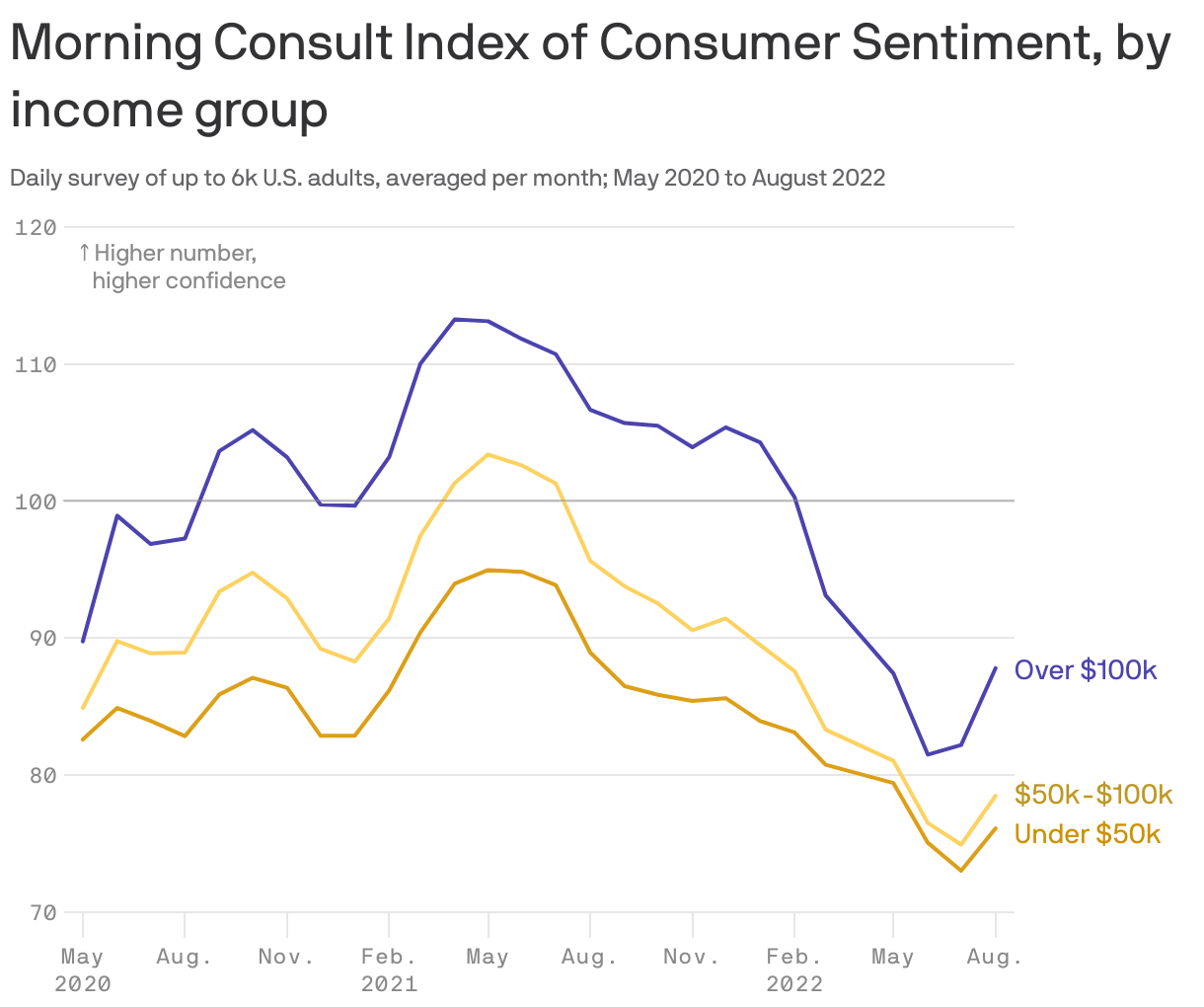
Americans — especially wealthier ones — cheered up a bit this month, according to a measure of consumer sentiment released today as part of the Morning Consult/Axios Inequality Index. The results were attributed to falling gas prices, and a stock market rebound.
What's happening: In August, consumer sentiment among adults in households earning more than $100,000 improved by 6.8%, Morning Consult found. For those in households earning less than $50,000, sentiment gained by 4.2%, according to the data.
Zoom out: The streak that culminated with this year's "bummer summer" is broken. Consumer sentiment had fallen month over month since last year, when the Delta variant crushed hopes for a "hot vax summer," and inflation kept surging.
- We're still feeling badly though. "American consumer are still very negative about the economy," said Jesse Wheeler, an economic analyst at Morning Consult.
- The big story here is that sentiment did not decline any further, he said.
What to watch: Was this a blip? The stock market is in limbo at the moment, with investors uncertain about the future of Federal Reserve rate hikes. And gas prices are notoriously volatile. Stay tuned.

Smart cars' biggest safety risk? They're boring to drive

People driving cars that mostly operate themselves can drift into a dangerous state of fatigue, but one leading autonomous vehicle (AV) company has suggestions to keep drivers alert.
Why it matters: Autonomous test vehicles and increasingly automated personal cars are already all over the road, meaning we're all part of a big public beta test with potentially fatal consequences.

Ukraine to investors: We're open for business

Ukraine has enlisted a stable of American and European PR firms to lure business back to the war-torn nation, even as Russian forces continue to occupy swathes of territory in the east and south.
Why it matters: Russia's invasion — which began exactly six months ago Tuesday — has decimated the Ukrainian economy, causing over $110 billion in direct damage and billions more in dried-up foreign investment, according to the Kyiv School of Economics.

Finish Line: Gen X's message to the youth

Part 2 of a 3-part "Generations" series... There's a generational divide in workplaces across America, and we're exploring different perspectives to better understand one another.
The big picture: Think of this as a mind meld with the generation that came of age before social media — Gen X. It’s one perspective on life and work, to help other generations understand us.
- You can join the conversation by filling out this form or emailing your thoughts to [email protected].
- Sign up here for Axios Finish Line, our nightly newsletter with tips and tricks on work, life and wellness, where we'll feature reader responses in future editions.
At Axios, we’ve been intentional since Day 1 about including other perspectives in our decision-making, including an Emerging Leaders program that puts sharp, skeptical young minds around our executive table. In that spirit, my 5 points breaking down Gen X:
1. Remember that a job is, among other things ... a job. I write and talk a lot about the importance of purpose and mission in a modern, successful company. But in addition to being a great colleague, I'm paid to do a particular job well. That's my Job 1.
2. Promotions aren't perennials. My generation was lucky to get big pay raises or true promotions a few times in our young careers. That's changed, and we've changed. But if you want a better title, think about what new responsibility — and accountability — you'll take on.
3. Ask yourself: Do I really need to tweet or TikTok every thought? Will this make the world a better or smarter place? My generation aged and grew with the internet. But our instincts aren't to go public with every agitation or desire. The more you say, the harder it is for others to hear you when it truly matters.
4. My personal views aren’t universally held. It's a big, wide world full of conflicting, complicated viewpoints. My views and your views are real and awesome — just not always shared by everyone. Sometimes people are silent because it’s too exhausting to argue about hot topics. Or they’re busy working.
5. One disagreement does not a bad employer make. We judge an employer on the totality of the culture, mission, pay, benefits, decision-making, opportunities — not on one thing you wish they did, said or had. Hell, until the last decade, we didn’t even know what culture and mission meant 😀.
Go deeper: Catch up on Part 1 of our series: Millennial unplugged.