The central bank of Jamaica is one step closer to issuing digital currency backed by the state to be used as local legal tender.
Why it matters: Governments are pressing forward on so-called central-bank digital currencies, eager to provide faster more efficient payment options while preserving monetary and financial stability.
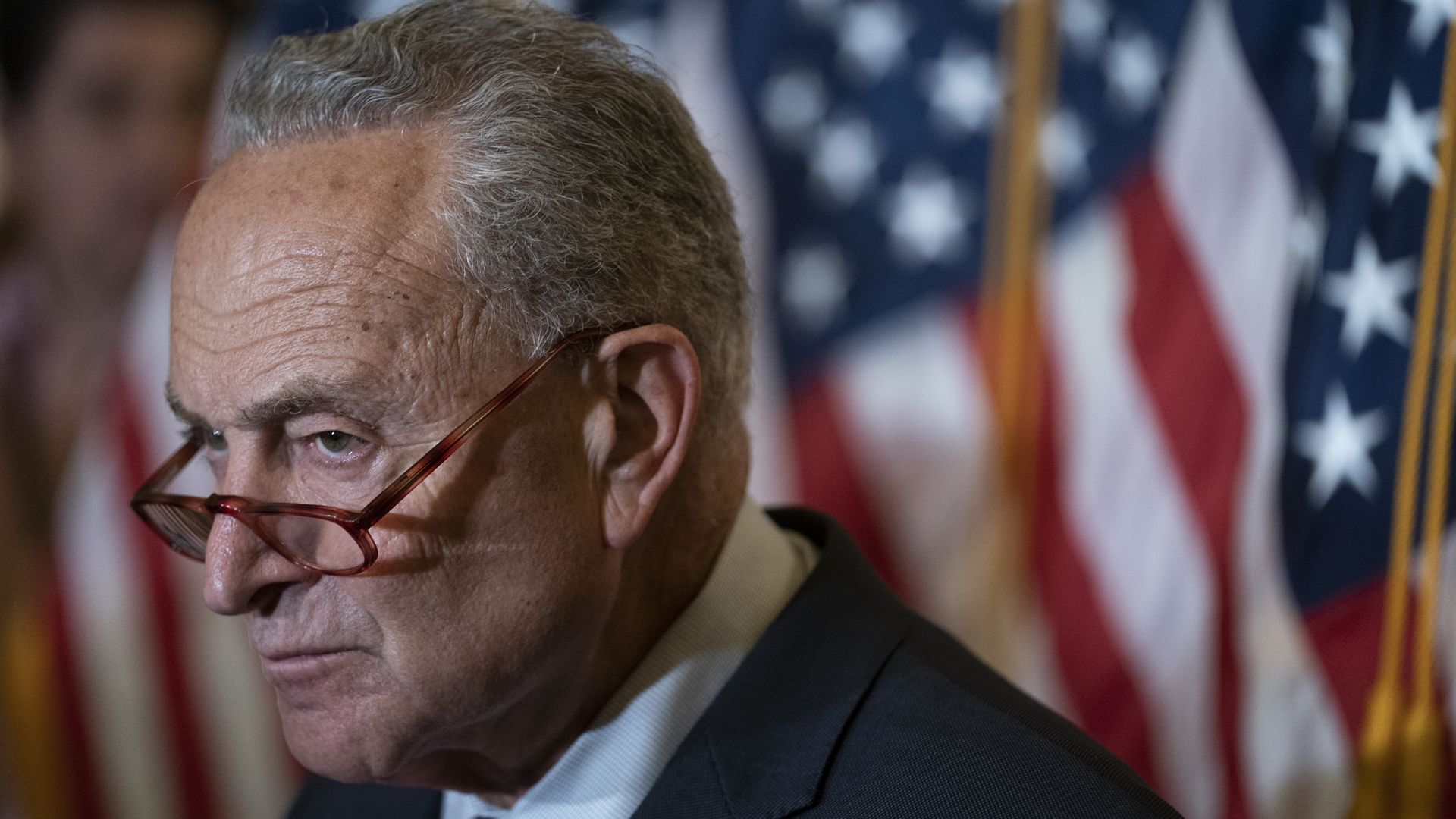
Senate Majority Leader Chuck Schumer said Tuesday that Fox News made a "cowardly decision" to not air the upcoming Jan. 6 hearing Thursday night.
Driving the news: Fox News anchors Bret Baier and Martha MacCallum will cover the Jan. 6 hearings over on Fox Business Network, while Fox News will air regularly scheduled prime-time programming.
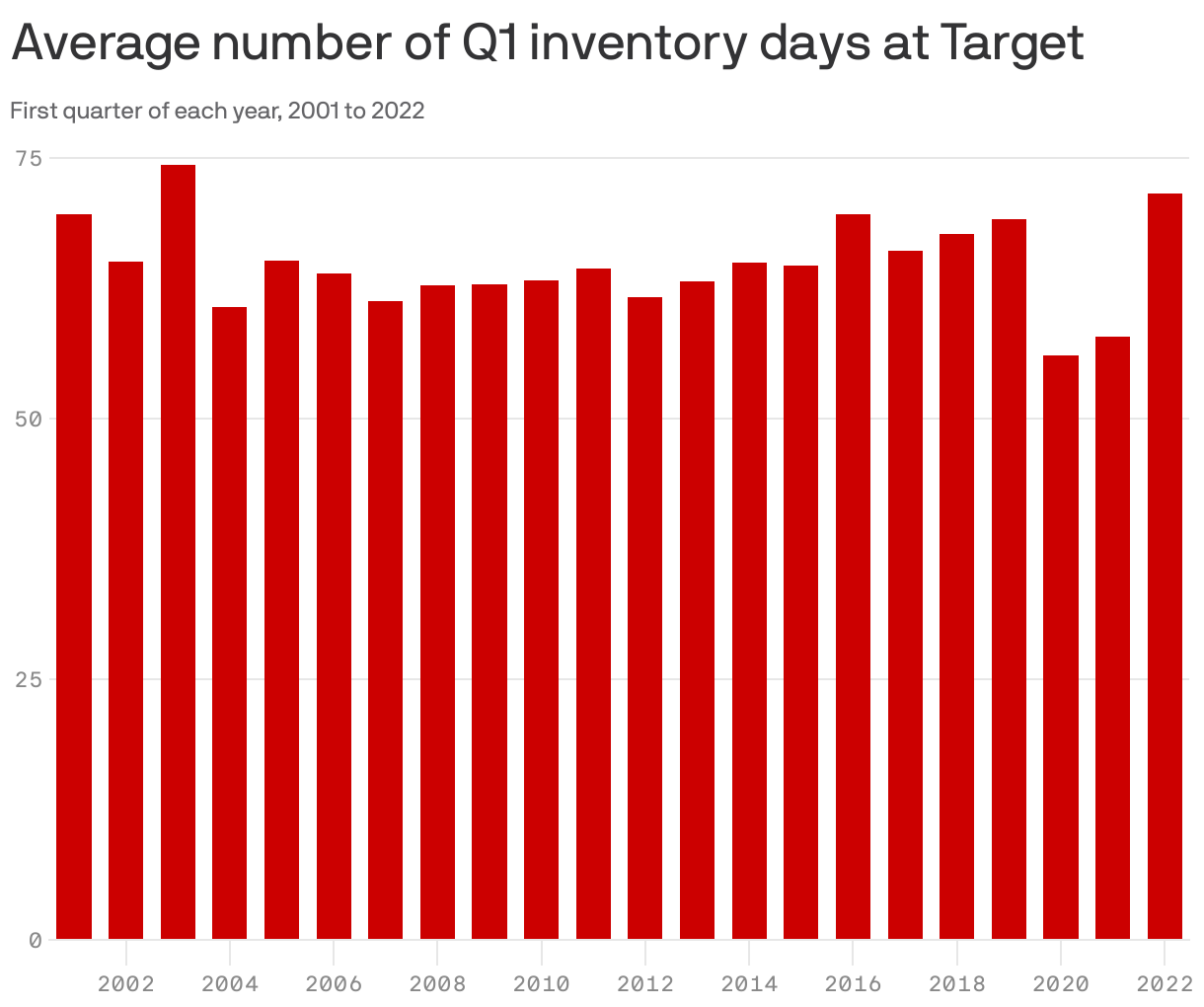
The average number of days a company's inventory lasts before it is sold; Data: Sentieo; Chart: Axios Visuals
Stockpiling products over the past year has led to a glut of stuff that retailers are desperate to get rid of.
Why it matters: Retailers have limited physical space to store and to sell products. When they misjudge what people want to buy or when goods will arrive, they have to pay more to accommodate that excess.
J.M. Smucker reported Tuesday that its sweeping Jif peanut butter recall would cost about $175 million, but the company said its business is still humming largely due to price increases.
Driving the news: Smucker’s stock on Tuesday regained some ground it had lost since the mid-May recall, closing up 5.8% at $130.31, as investors cheered the better than expected results, despite the Jif recall price tag.
The family foundation created by Starbucks founder Howard Schultz and his wife plans to invest $100 million in a fund targeted toward “diverse businesses as vehicles for fostering a more inclusive economy,” the organization announced early Tuesday.
The Entrepreneurs Equity Fund (EEF) will provide money to business creators from marginalized communities, making direct investments in diverse businesses and boosting access to capital.
Why it matters: Traditionally, business startups led by Black and Latino entrepreneurs have had a difficult time raising funds. While the problem has improved in recent years, founders of color obtain a slim fraction of the estimated hundreds of billions in available equity financing.
On Tuesday, Cosmetics giant Ulta Beauty also announced an accelerator initiative for brands founded by people of color.
Given that diverse businesses have “the potential to be a powerful way to increase economic and social outcomes for historically disadvantaged communities,” the EEF also plans to dole out grants to boost mentorship, training and research for the founders it funds.
What they’re saying: “America’s future rests on our entrepreneurial fire. But in recent years, the spark within many entrepreneurs has struggled to find the oxygen to burn bright,” Schultz said in a statement.
“The causes are many: predatory practices, lack of access to capital and social networks, the need for learning and community, and the systemic failures that lead some to not even try,” he added.
Thought bubble: Schultz, who returned to the helm of Starbucks in April after the sudden retirement of Kevin Johnson, is planning to relinquish the top job sooner rather than later.
He briefly flirted with an independent White House bid in 2019 before ultimately dropping out. With the coffee giant on the hunt for Schultz's full-time successor, the EEF could presage a rekindled interest in public life, or another run for office.
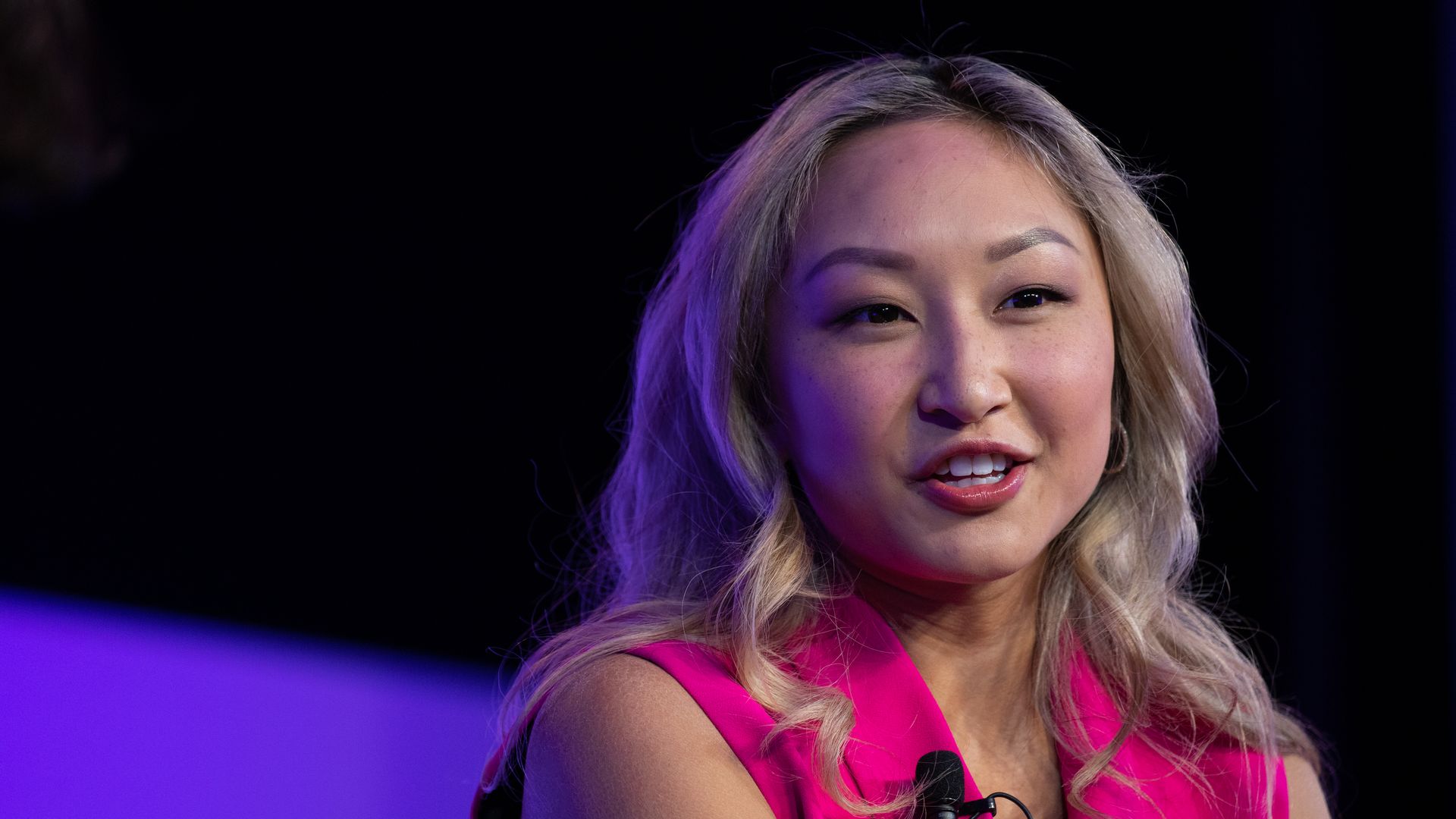
Sarah Guo is stepping down as a general partner at venture capital firm Greylock to start her own fund, Axios has learned from multiple sources.
Why it matters: Guo is among a small number of general partners at major VC firms who are women, and she's just the second ever in Greylock's five-decade history.
Bicycle Health, a start up focused on virtual treatment for opioid addiction, raised a $50 million Series B round, founder and CEO Ankit Gupta tells Axios exclusively, bringing the company's total funding to $83 million.
Why it matters: New data suggest a 15% rise in opioid overdose deaths during the pandemic, and research shows the drugs meant to treat it aren't reaching those most in need. Enter Boston-based Bicycle Health, whose purely virtual offering affords patients a key benefit that in-person options can't: Anonymity.
"Over and over what comes up [among patients] is the shame — people don't want to talk to their primary care provider, they don't want to talk to their partner," says Gupta.
Context: The vast majority of people with an opioid use disorder are not receiving medication-assisted treatment, which significantly curbs overdose risk.
Details: InterAlpen Partners led the round, and insiders Questa Capital, Frist Cressey Ventures and City Light Capital also participated.
How it works: Bicycle enters into value-based contracts with health plans and offers a $199 per month direct-to-consumer option.
After a free consultation, Bicycle members are matched with a provider who builds a personalized treatment plan and, if appropriate, prescribes medication.
Bicycle also offers online group support and measures patients' progress with assessments including standard depression and anxiety questionnaires.
What they're saying: Because it's entirely digital, Bicycle may help people avoid the stigma linked with getting treated for opioid use disorder, academics and investors tell Axios.
"Virtual treatment affords patients anonymity and can lower cost of treatment," says Shivan Bhavnani, founder of the Global Institute of Mental and Brain Health Investment.
"Telehealth facilitates care for many patients who have difficulty attending in-person appointments due to logistical and psychological barriers," write researchers in a 2021 study in the Harm Reduction Journal.
The other side: There are challenges linked with treating addiction virtually, from reaching people in areas without stable internet to ensuring people are receiving full wraparound care.
"There is skepticism among traditional addiction specialists regarding the long-term efficacy of the fully virtual model," says Bhavnani.
The bottom line: While it remains unclear whether a hybrid or fully-virtual model is best for addiction treatment, one thing is clear: More options are sorely needed.
"We’re building a network effect, a movement," says Gupta.
There's a major new way for regular people to move between normal money and cryptocurrency, and it's via an app that many have likely been using for years: PayPal.
Why it matters: In a long-awaited announcement, PayPal, which claims over 400 million users, is giving them the option to take full control of crypto that they buy on the app. Now that withdrawals are enabled, the company becomes a piece of the infrastructure of the crypto economy.
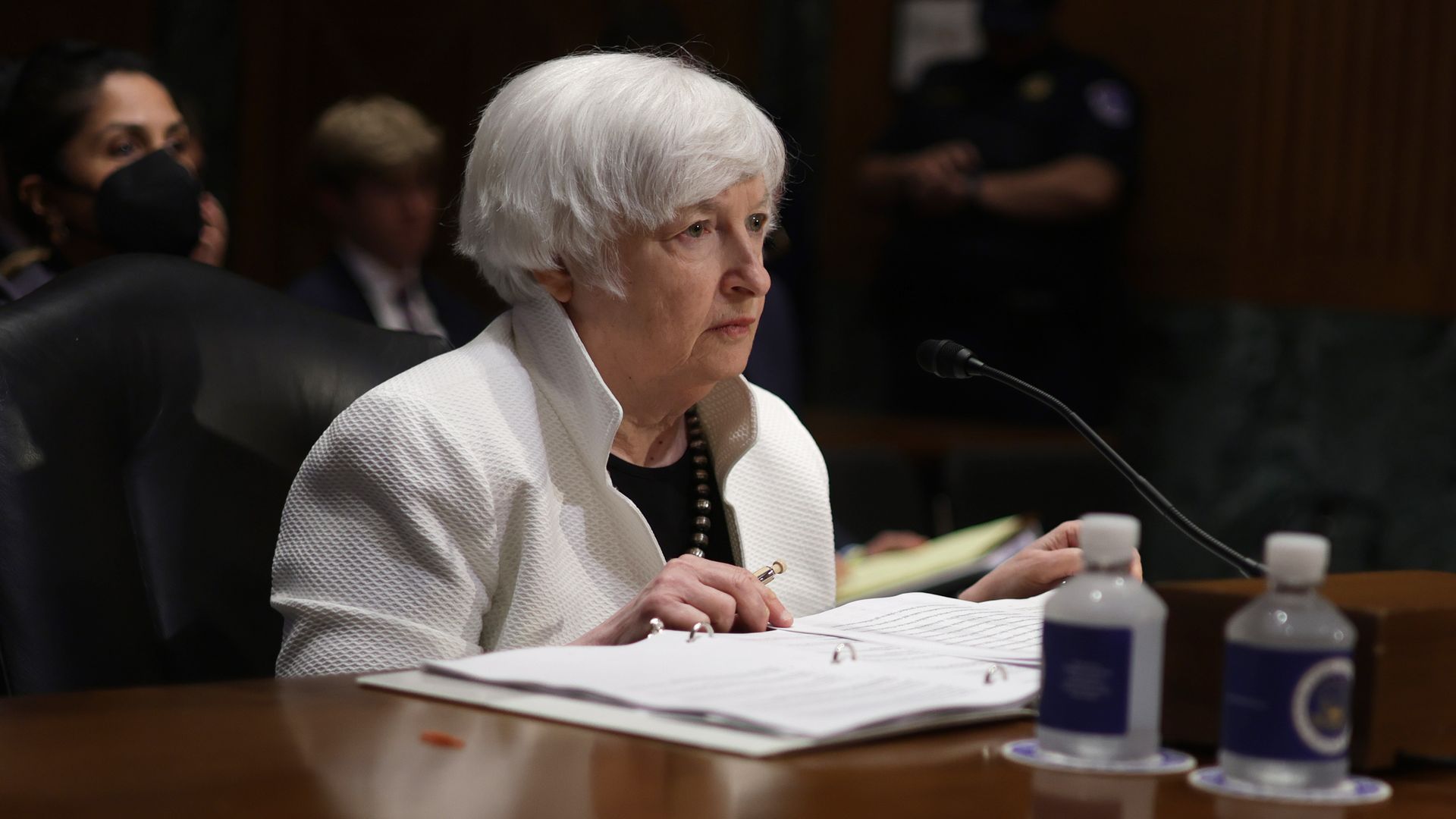
The U.S. is currently facing "unacceptable levels of inflation," Treasury Secretary Janet Yellen told a hearing of the Senate Finance Committee on Tuesday.
Why it matters: Yellen made waves last week by admitting that she had been "wrong about the path inflation would take" when she predicted last year that inflation posed a short-term problem to the U.S. economy.
Crowds in London waved at a hologram of Queen Elizabeth II in a golden carriage Sunday — not to Britain's actual queen. To Matthew Ball, leading expert of that theoretical parallel Internet world (or worlds), the gesture appeared to affirm the potential of what is not real.
Driving the news: "The Monarchy is in the Metaverse? Monarchyverse," Ball quipped via tweet. And the latest way to invest in its development comes from a partnership between Ball, investment firm Multicoin Capital and crypto index specialist Bitwise Asset Management.
Amazon is the latest of the tech behemoths to split its stock, giving its share price a knee-jerk bump on Monday.
Why it matters: Well, the thing is ... it doesn't. Not really. Amazon's split means one of its shares now becomes 20, and the price of one share is lower. It does nothing to improve the underlying fundamentals or profitability of the online retailing and web services giant.
Euler, a money market, has sold $32 million of its governance token at a $375 million valuation to a group of investors led by Haun Ventures, providing the project's treasury with stablecoins to build a reliable pool of resources as the crypto market becomes more sedate.
Why it matters: Decentralized finance promises to lower financial friction for everyone, and Euler's focused on making it easy for people to borrow all kinds of tokens.
Rheaply, a Chicago-based startup that helps companies quantify and manage their purchased goods and resources in order to cut carbon emissions, has raised $20 million in new funding, the company told Axios.
Why it matters: Rheaply is going after low-hanging fruit in carbon emissions that, if tackled at scale, could yield significant benefits in avoided or reduced emissions, says founder and CEO Garry Cooper Jr.
CNN's new boss, Chris Licht, is evaluating whether personalities and programming that grew polarizing during the Trump era can adapt to the network's new priority to be less partisan.
Why it matters: If talent cannot adjust to a less partisan tone and strategy, they could be ousted, three sources familiar with the matter tell Axios.
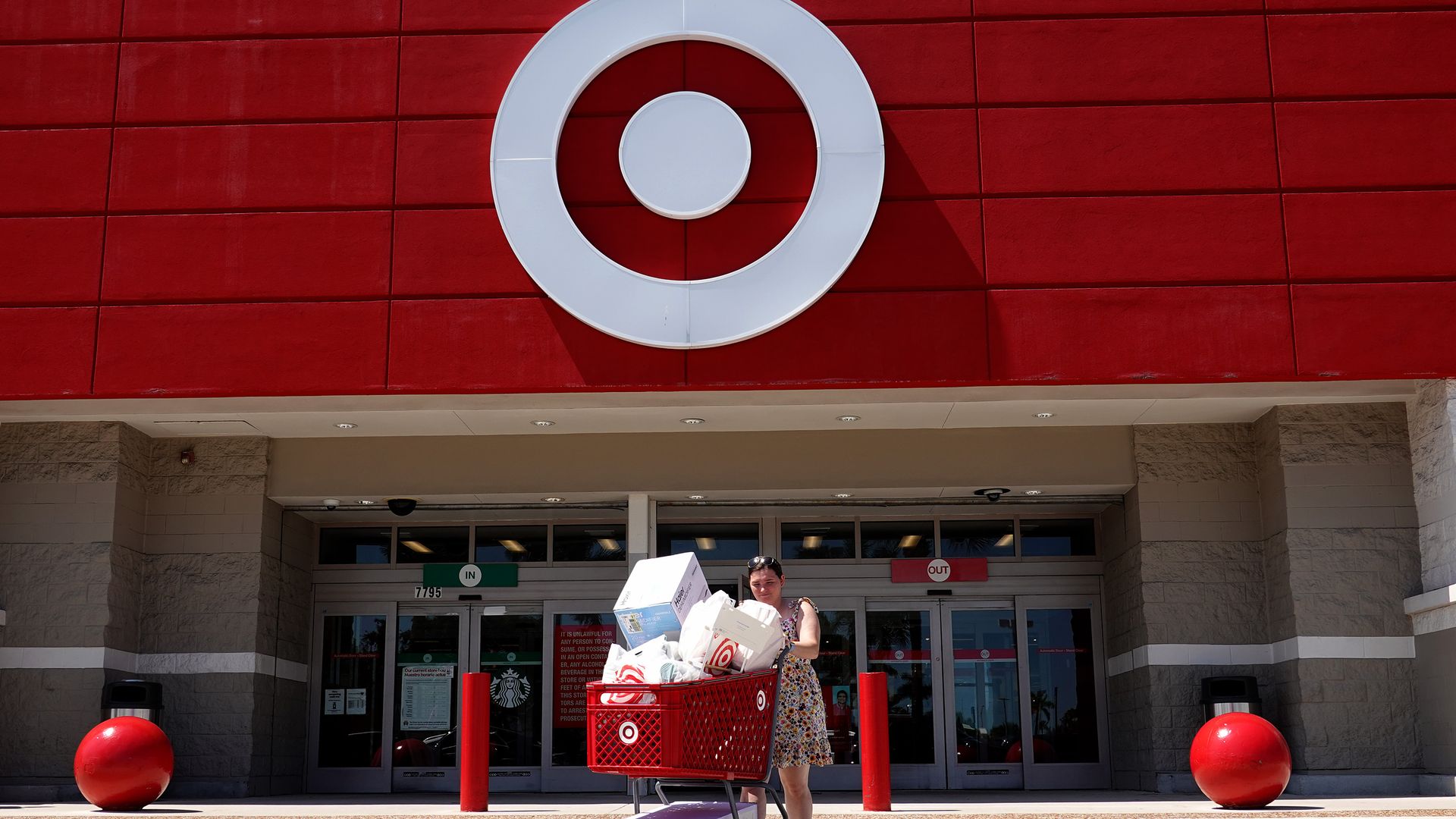
Walmart is the latest retailer to stop selling Chaokoh coconut milk, following retail giants Costco, Target, Kroger and others who have pulled the product from shelves amid monkey labor allegations.
Why it matters: The nation’s largest retailer has discontinued stocking products from a Thai supplier who has been accused of using monkeys for forced labor, officials with the People for the Ethical Treatment of Animals (PETA) exclusively told Axios.
President Biden is facing public pressure from America's leading unions on an issue that has divided his top advisers: extending former President Trump's China tariffs on approximately $300 billion worth of Chinese goods.
Why it matters: The Biden administration is engaged in an intense internal debate on whether to waive some of the so-called Section 301 tariffs to help ease inflation — the top issue roiling Biden's presidency.