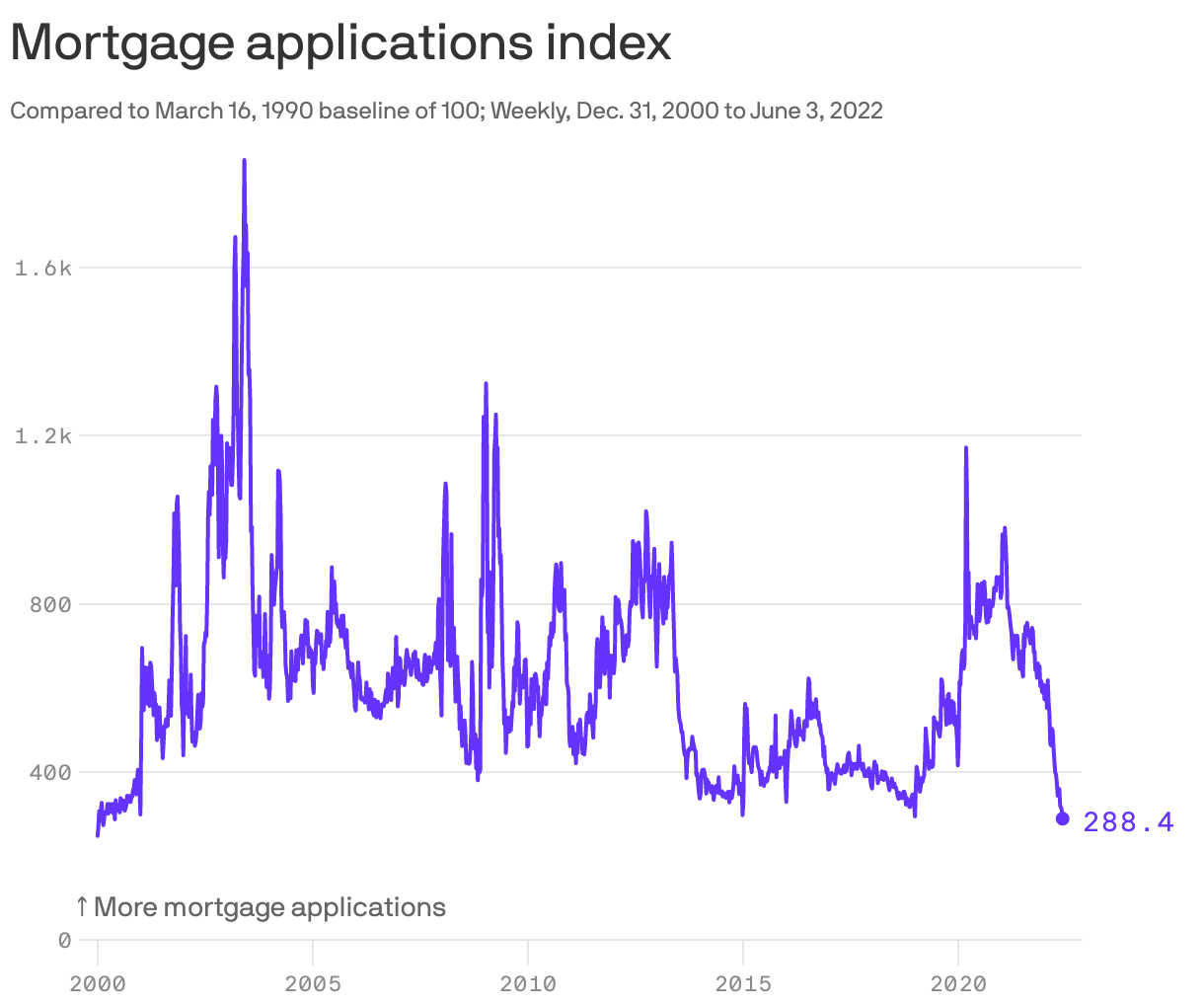
Americans are continuing to slam the brakes on home borrowing.
Driving the news: Mortgage applications tumbled to a 22-year low, the Mortgage Bankers Association reported Wednesday based on its weekly Market Composite Index.
The bottom half of American households— ranked by total net worth —have more than doubled their cash savings during the pandemic, though inflation threatens to claw back some of their financial gains.
Why it matters: The wealth gap and income inequality have been worsening in recent decades, undermining the working class.
Huy Fong Foods is warning of a chili pepper shortage that could make it harder to spice up your meals.
The big picture: The California-based company, known for its sriracha sauces with a rooster on the bottle, confirmed to Axios via email that it is "experiencing a shortage which is affecting our production supply."
Twitter has agreed to provide a set of user data to Elon Musk, who claims he can bail on his $44 billion takeover of the social media company if it misrepresented how many of its accounts are bots, The Washington Post first reported and Axios confirmed.
Yes, but: This isn't the data Musk needs to prove or disprove his hunch.
Spotify CEO Daniel Ek on Wednesday laid out plans to reach $100 billion in revenue in the next decade and to push into audiobooks to take on rival Amazon.
Why it matters: Ek told Axios in an interview that the company's continued forays into audio businesses outside of music, like podcasts and audiobooks, will boost its long-term profits.
The pressure households feel from decades-high inflation is tainting their view of a strong economy — and heightening recession angst.
Why it matters: This is the challenge for the Biden administration, which has gone to great lengths to tout the otherwise steady economy. But for consumers (and voters), stubborn inflation may trump all.
Harvey Pitt, who led the Securities & Exchange Commission between 2001 and 2003, believes that the American economy is "at the beginning stages of a recession already."
Be smart: Pitt, a Republican critical of President Biden's policies, reflects the inflation-scarred view of a majority of his party. But not most economists, as many key indicators remain strong.
Pitt made the comment during an Axios event on Wednesday afternoon.
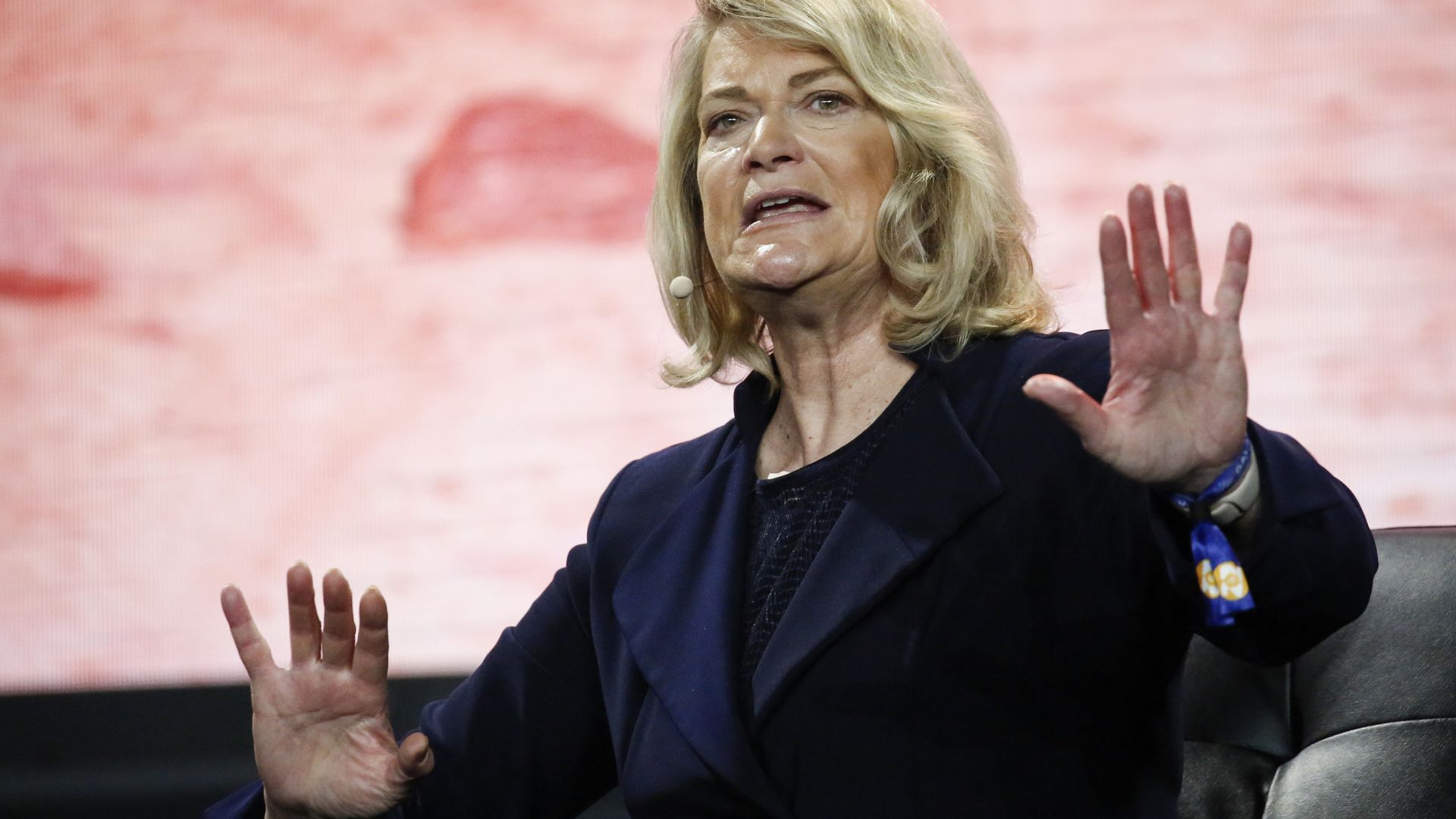
Two U.S. senators introduced their first stabs at legislation to catch U.S. law up to a blockchain world on Tuesday. The first thing to keep in mind about legislation is this: the first draft is always just a starting point (if it's even that).
Driving the news: Senators Cynthia Lummis (R-Wyo.) and Kirsten Gillibrand (D-N.Y.) co-sponsored the legislation, though Lummis is widely understood as having been the driving force to get something moved.
With a heat wave baking Texas, residents have turned up their air conditioning in recent weeks — helping send natural gas prices to their highest level in 14 years.
Driving the news: U.S. natural gas futures soared Tuesday, with benchmark futures prices — known as "Henry Hub" — rising 10% over the last week to close Tuesday at $9.29.
It became clearer Tuesday how Washington is likely to regulate crypto — even though the equally important question of when that's going to happen remains unanswered.
Why it matters: The one thing that crypto companies and crypto skeptics can agree on is that more regulation is needed, especially in the U.S. A new bill shows broadly what that regulation may look like. But don't hold your breath waiting for it to become law.
Workplace office visits are up more than 300% since the pandemic sparked a worldwide office exodus, per new data from workplace platform company Envoy, shared with Axios.
Envoy's data is based on employee and visitor sign-ins from 14,000 worldwide locations across a range of companies.