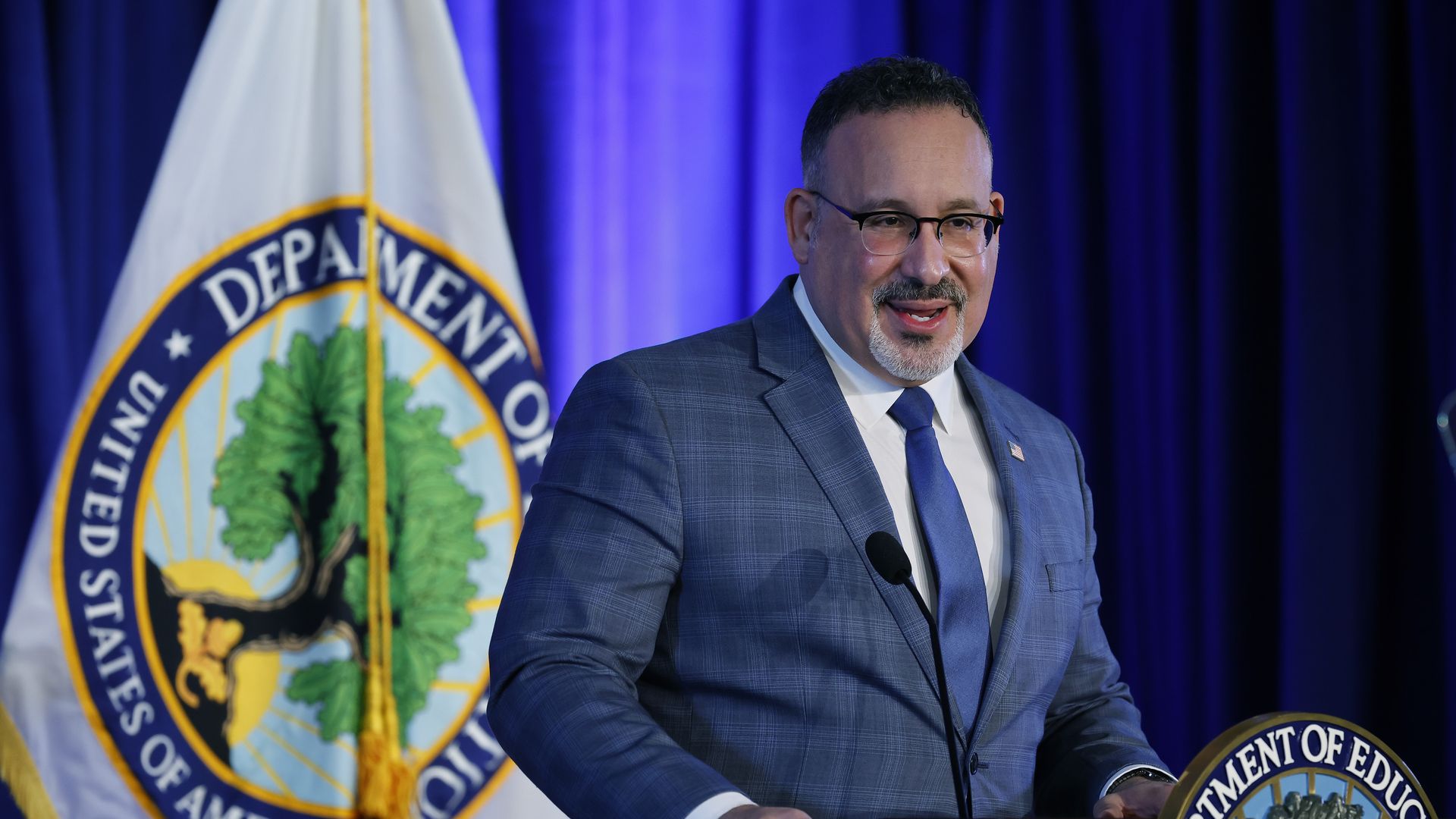
The Department of Education announced Wednesday that it will discharge all remaining federal student loans borrowed to attend campuses owned or operated by Corinthian Colleges.
Why it matters: Corinthian Colleges closed in April 2015 after facing multiple investigations and lawsuits for defrauding students. Wednesday's move, which the department called the largest single loan discharge in its history, will provide relief to 560,000 borrowers and amounts to $5.8 billion in full loan discharges.
Office time is paramount for Elon Musk, who has reportedly issued a return to work ultimatum for Tesla staffers.
Why it matters: Workers and employers (and politicians) are split about the future of remote work. Musk’s hardline amplifies the threat level for workers — staying employed.
The FBI arrested a former OpenSea employee on Wednesday for insider trading of NFTs, according to a Justice Department announcement.
Why it matters: The case signals that laws around profiting on non-public information apply just as much on the blockchain as they do in more traditional markets.
In certain parts of the world, getting paid in crypto can save employees real money, and that's why an international payroll platform is getting more and more into crypto.
Driving the news:Deel specializes in solving the challenge of international workers. It has legal entities all over the world, so its clients' global workers are technically employed by Deel. It's now opening its services to crypto-native businesses known as DAOs (decentralized autonomous organizations).
Peer-to-peer car sharing service Turo will be available in all 50 states by the end of this month when it launches in New York, becoming the first business of its kind to reach this milestone.
Why it matters: Summer travel is back and car rental shortages over the past year helped push consumers toward businesses like Turo, Getaround and Avail.
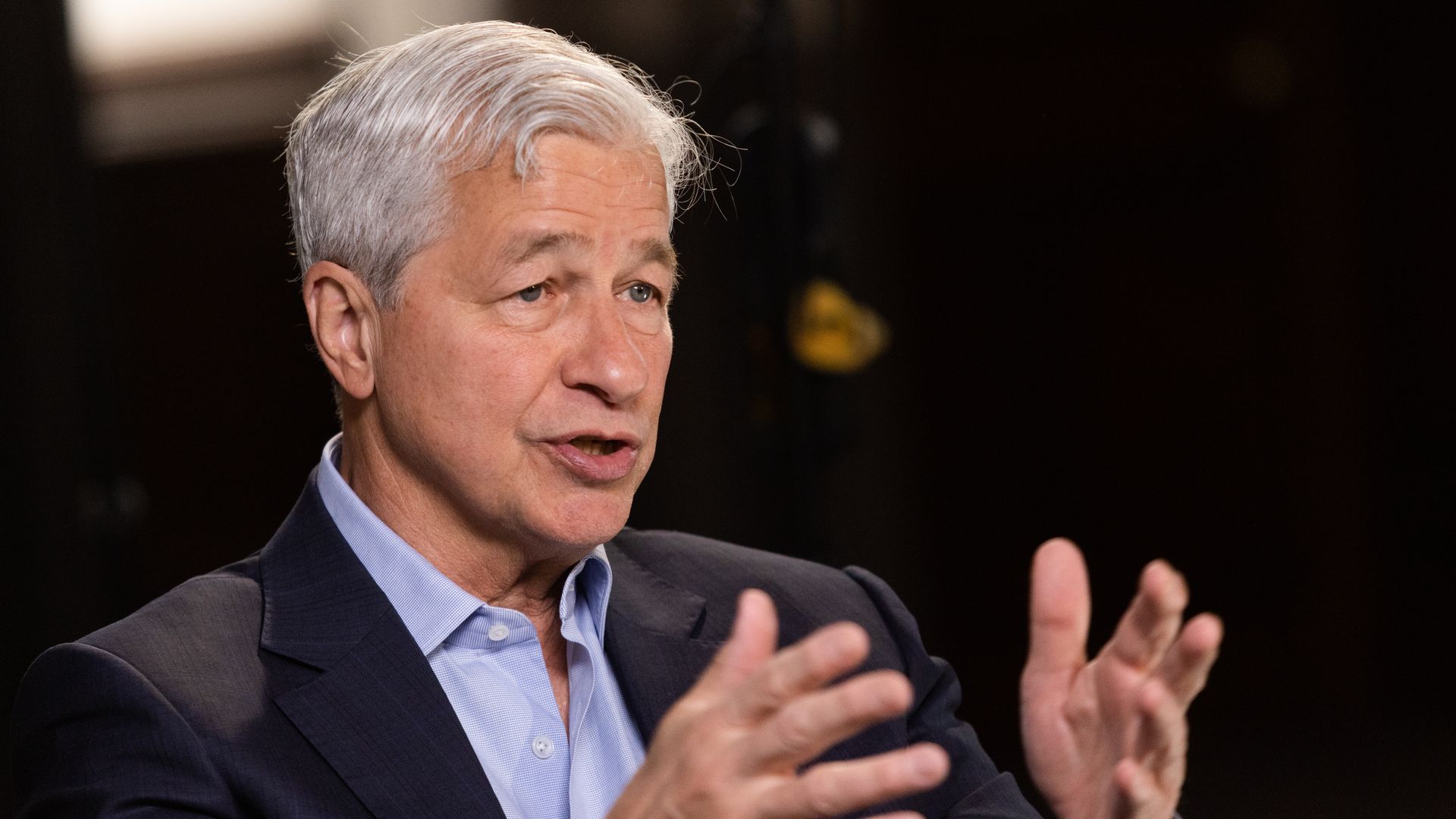
JPMorgan Chase chairman and CEO Jamie Dimon told investors Wednesday to brace for an economic "hurricane," pointing to the Fed and Russia's invasion of Ukraine.
Driving the news: "You know, I said there's storm clouds, but I'm going to change it ... it's a hurricane," Dimon said at a financial conference.
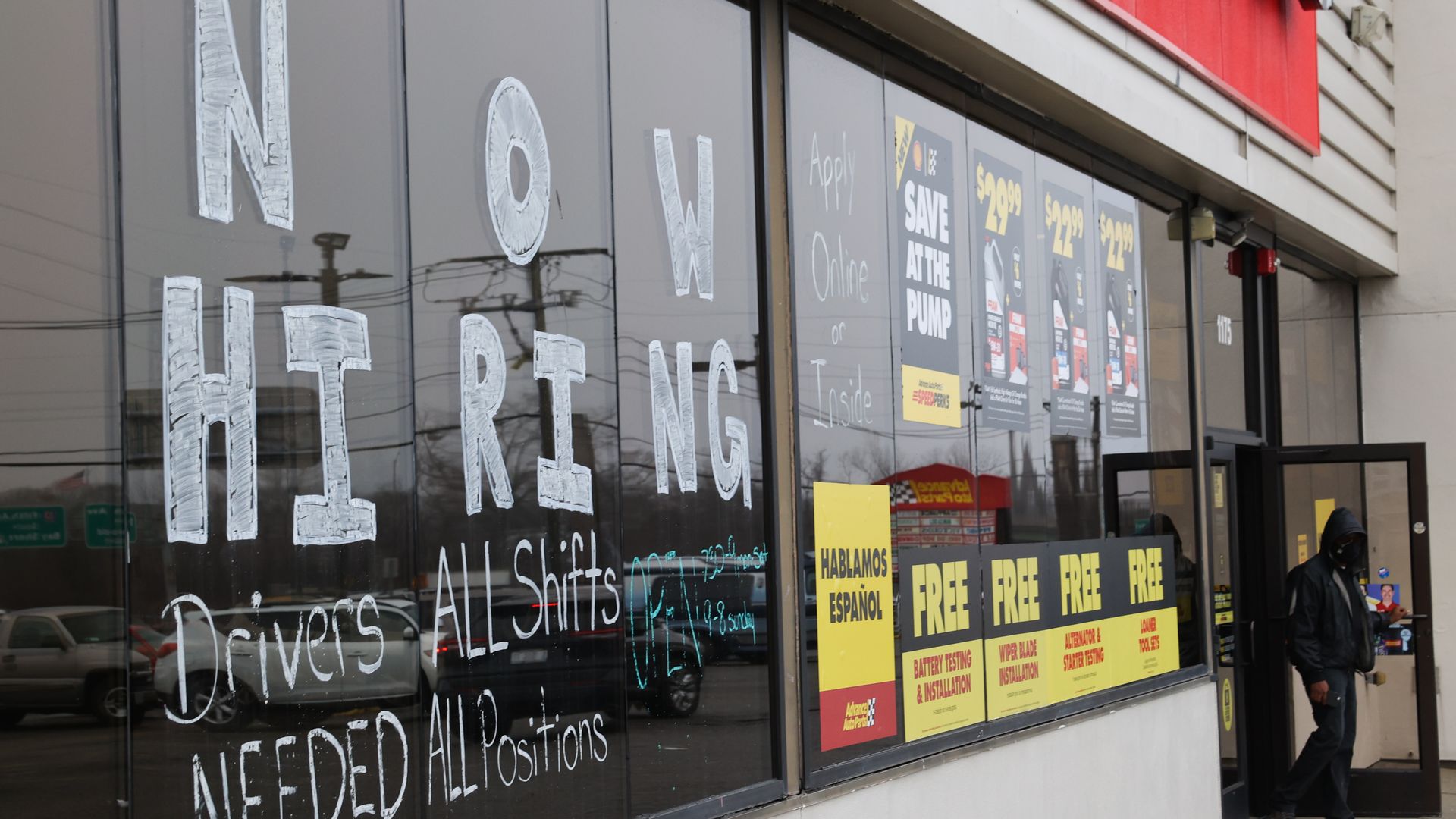
America's demand for workers is still hot: The number of job openings were near all-time highs and managers laid off the fewest employees on record in April, the Labor Department said on Wednesday.
Why it matters: The labor market remains tight as employers's appetite for labor outruns the pool of available workers. It's a boon for the American workforce, but a challenge for the Federal Reserve that wants to cool off the labor market to help tame soaring inflation.
There appears to be one route to public markets that will slow down crypto: merging with SPACs or special purpose acquisition companies.
Why it matters: The extra time being seen in regulatory reviews for crypto SPAC deals coincides with heightened regulatory scrutiny for those go-public vehicles, as well as for the crypto sector at large.
Sen. Elizabeth Warren (D-Mass.) on Tuesday said she'll soon introduce a bill to regulate SPACs and also released a 26-page presentation on how SPACs "tilt the playing field and enrich Wall Street insiders."
Why it matters: Warren's bill, the text of which hasn't been released, would codify the SEC's recently proposed rules and then go several steps further.
Ultima Genomics,a Newark Calif.-based gene sequencing startup, exited stealth with around $600 million in venture capital funding.
Why it matters: Ultima claims it can sequence an entire genome for just $100, which is an affordability advancement that could significantly accelerate genomic research. It's also seeking to challenge Illumina, an incumbent valued at more than $37 billion.
From one perspectivecrypto startups operate on a new and innovative business model. From another, it just re-invented stocks. Time will tell which one is right.
Why it matters: Crypto'smelding of innovative decentralized principles with longstanding characteristics of equity securities is certain to occupy regulators for years to come. In the meantime, how startups operate is continuing to evolve.
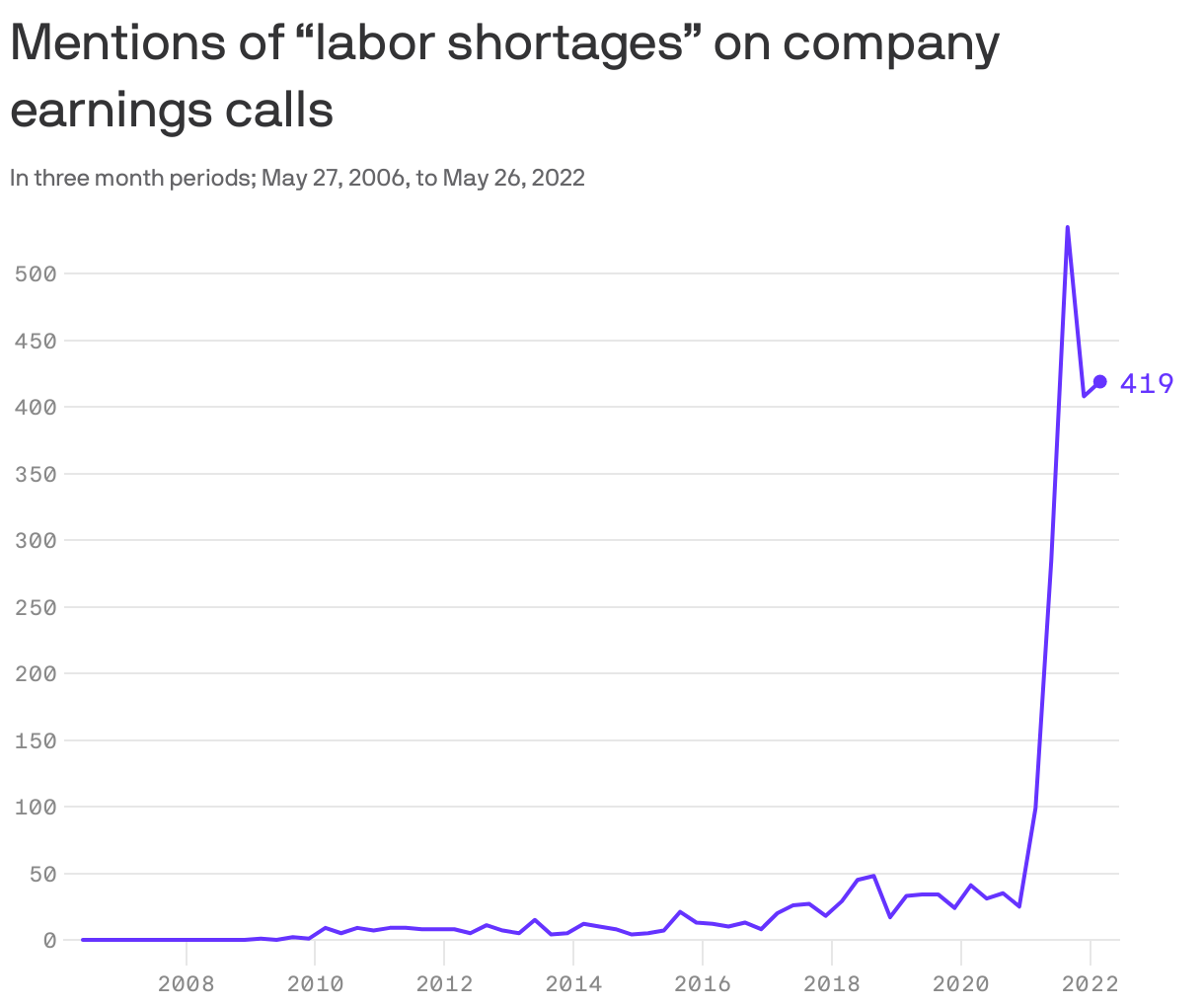
In the first quarter,companies were less apt to mention labor shortages on earnings calls, according to Sentieo, which tracks English-language transcripts from more than 9,000 global companies.
Why it matters: This could point to a slight cooling in the labor market — an early sign that companies are a little less frantic about the dearth of available employees to hire, even as the unemployment rate is quite low.
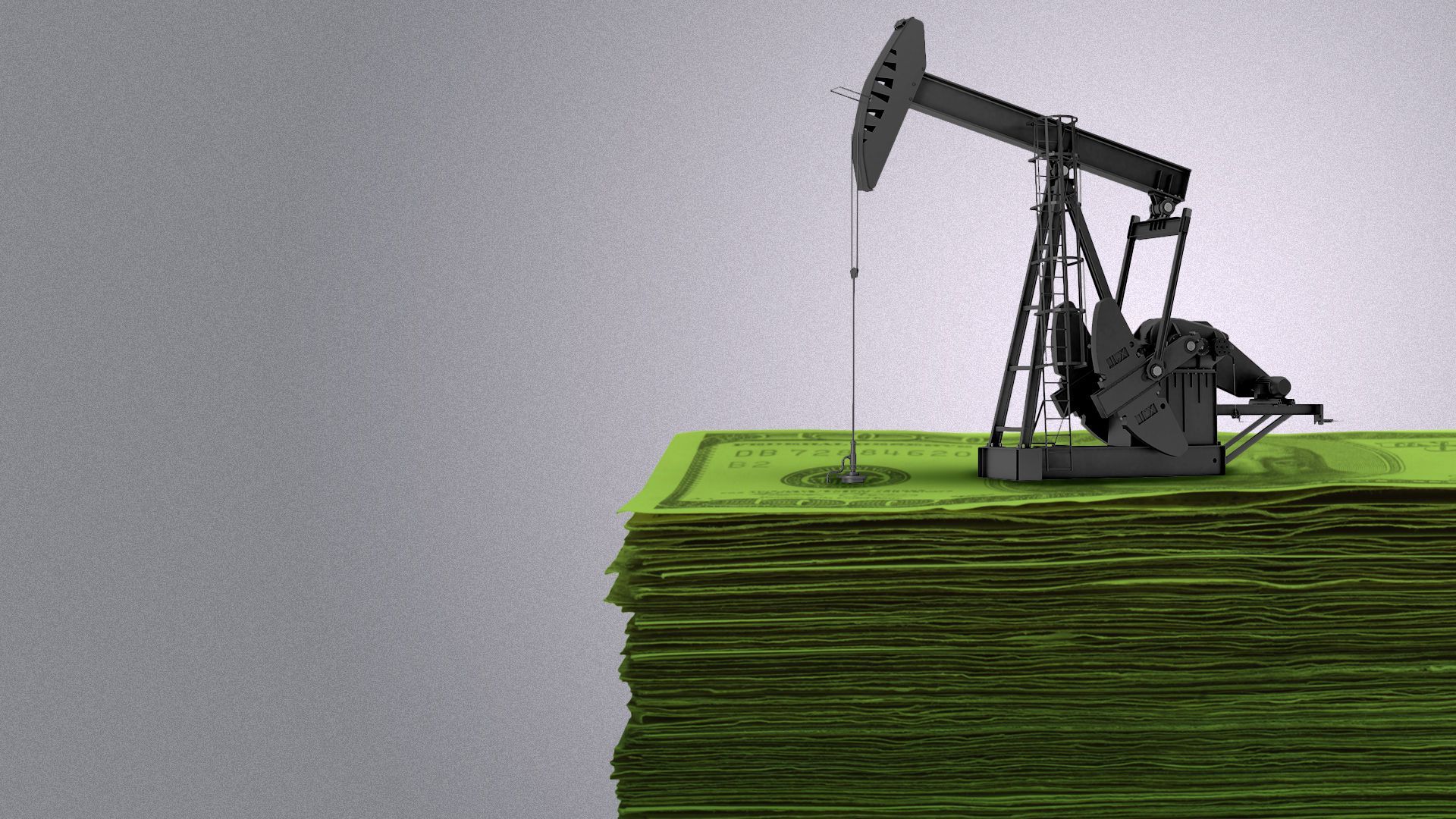
With oil prices soaring and American companies slow-walking production increases, some energy analysts have begun suggesting that politically noxious government incentives — like subsidies for oil companies — could be needed to bring supply back in line with demand.
Why it matters: The Russian energy shock, amid broad inflation, leaves political leaders — at least those hoping to stay in power in democracies — with a series of ugly to nightmarish policy options.
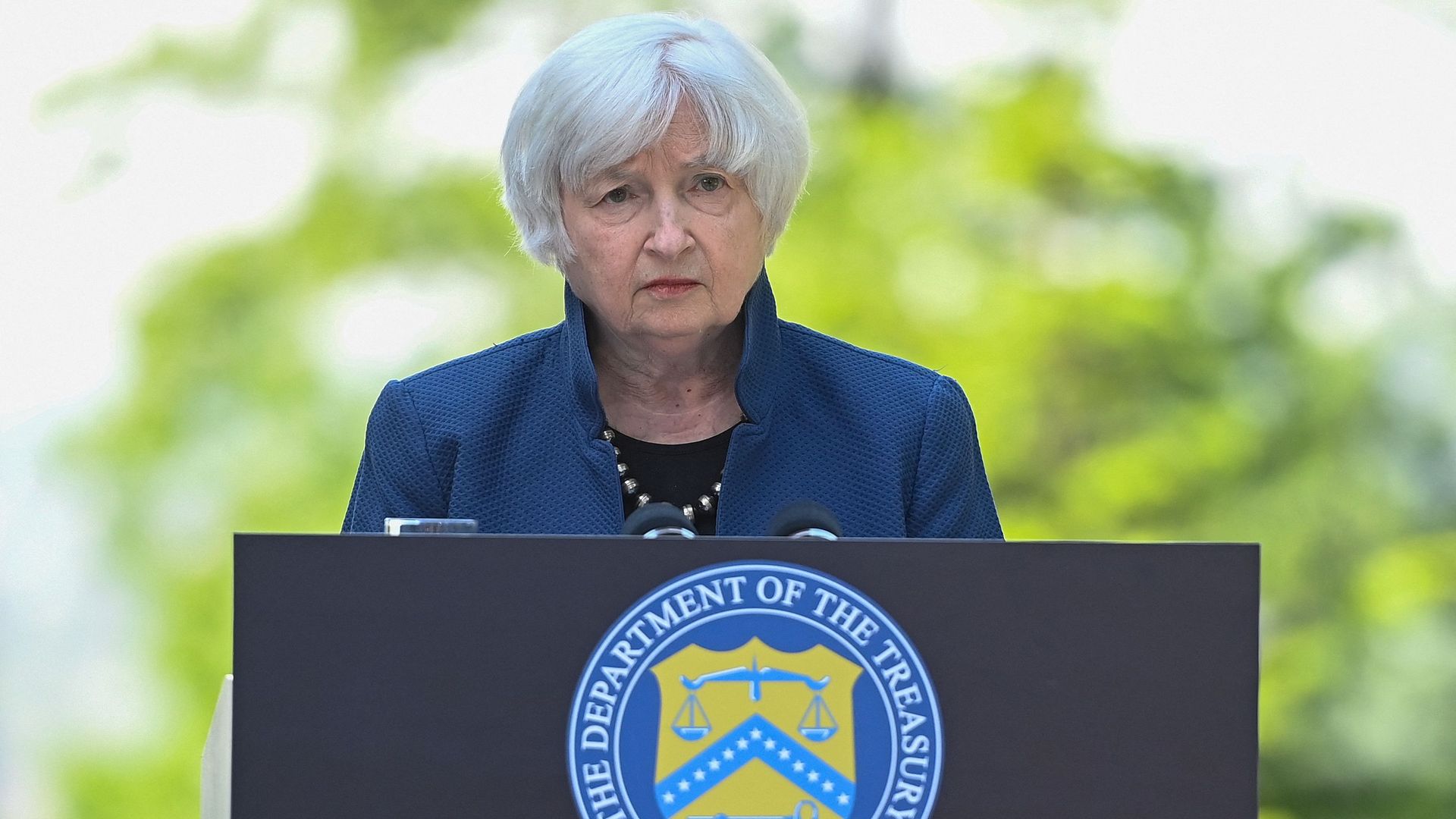
U.S. Treasury Secretary Janet Yellen said in an interview with CNN that aired Tuesday evening that her assessment last year that inflation posed a short-term threat during the pandemic was "wrong."
What she's saying: "I was wrong about the path inflation would take," Yellen told CNN's Wolf Blitzer on "The Situation Room."
Forbes is calling off its plans to go public via a merger with a blank check company, according to two people familiar with the matter. A formal announcement is expected in the near future.
Why it matters: The SPAC (special purpose acquisition company) market has cooled off significantly since Forbes first announce its SPAC IPO plans last August. Private buyers have since expressed interest in the company.