Disney employees on Tuesday staged a daylong walkout to boycott the company's tepid response to a Florida measure that has been dubbed the "Don't Say Gay" bill, which would restrict discussion of LGBTQ issues in classrooms statewide.
Why it matters: Disney's initial decision to not weigh in on the bill drew outrage from employees, who argued that management's silence threatened their safety and wellbeing.
Tens of millions of Americans haven’t had to make payments on their student loans the last two years — and a new study suggests many could struggle when bills come due again.
Why it matters: Payments are scheduled to resume May 1 on federal direct student loans. President Biden is weighing whether to extend the moratorium on payments again, while lawmakers debate the possibility of cancelling some student debts altogether.
Tesla CEO Elon Musk was in Germany on Tuesday to mark the opening of the company's new factory near Berlin, its first in Europe.
Why it matters: The plant is Tesla's third major plant — after plants in California and Shanghai — and is expected to eventually build 500,000 electric vehicles a year, per the New York Times.
Katie Haun has raised $1.5 billion for a pair of crypto-focused VC funds, just months after leaving Andreessen Horowitz to form her own firm.
Why it matters: This appears to be the largest fund ever raised by a solo venture capitalist, let alone by a solo female VC, and reflects surging investor interest in web3.
Prologis (NYSE: PLD) made a €21 billion, nonbinding offer to acquire Mileway, a group of European warehouses owned by The Blackstone Group, per the FT.
Why it matters: This would be the largest private equity real estate deal of all-time, and reflects how e-commerce growth has increased logistics property values.
For U.S. restaurant brands, breaking up with Russia is just a matter of will and cash, according to Yale School of Management's Jeffrey Sonnenfeld, who argues that companies should seek to buy out master franchisees that decline to suspend operations.
What to know: Big U.S. chains often sell long-term, master franchise rights in foreign countries. The franchisee pays for the privilege, including a percentage of profit, in exchange for the brand and a variety of support services (e.g., marketing, training, etc.).
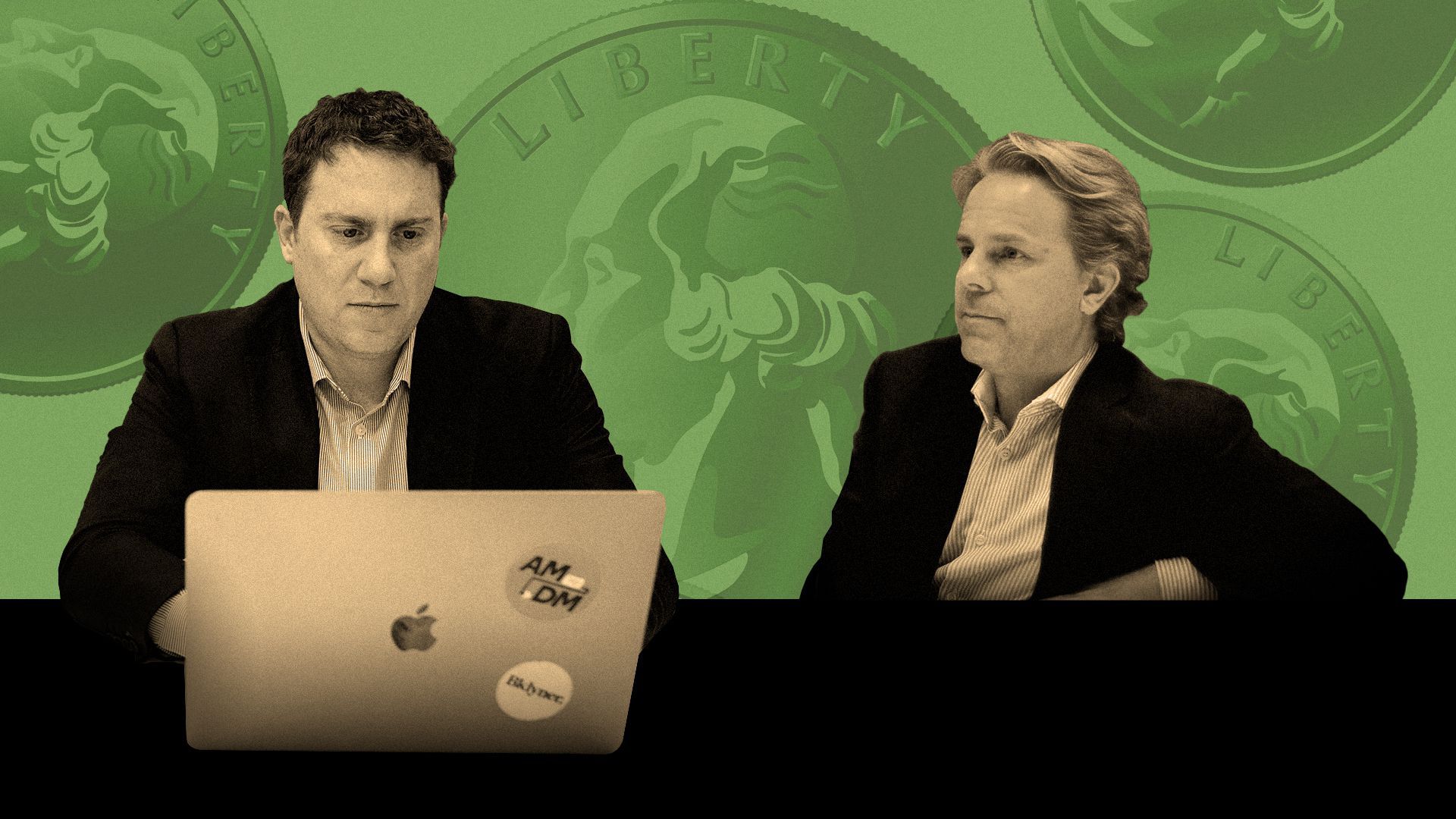
Ben and Justin Smith plan to name their new company “Semafor,” a word used to describe a method of communication via two visual signals, the pair confirmed to Axios.
Why it matters: The word, which is roughly the same across dozens of languages, is meant to represent the duo's global ambitions.
Recurrent Ventures, a venture equity-backed digital media company, has acquired Business of Home, a digital and print publication dedicated to home and interior design enthusiasts, Axios has learned.
Why it matters: It's the first B2B brand that Recurrent has acquired as it looks to build a small digital publishing empire.
FaZe Clan, one of the biggest global esports companies, has added a slew of media and gaming heavyweights to its board as it prepares to soon go public.
The big picture: FaZe Clan is currently targeting $1 billion valuation after it merges with a blank check company called B.Riley Principal 150, which will take it public in the first half of the year.
BuzzFeed's stock was flat on Tuesday following news of strong annual revenue growth and cuts to its news division to make it more profitable.
Why it matters: Several changes — including news buyouts, leadership changes and reinvestments — were announced on the call, signaling BuzzFeed's push to course correct following a volatile public debut.
Yes, but: BuzzFeed's revenue may have been up higher year over the year, but it's still much lower than what it had initially promised to investors when it was preparing to go public. BuzzFeed initially said it planned to make $521 million in 2021 in revenue and $57 million in profit.
Cityblock Health, a hybrid primary care company focused on Medicaid patients, has named Toyin Ajayi its new chief executive officer, Ajayi tells Axios exclusively.
Why it matters: Valued at $5.7 billion, New York-based Cityblock has planted a firm stake in ground that most health tech startups have long skirted. Rather than courting the reasonably healthy and wealthy, Cityblock takes on financial risk to serve people most in need.
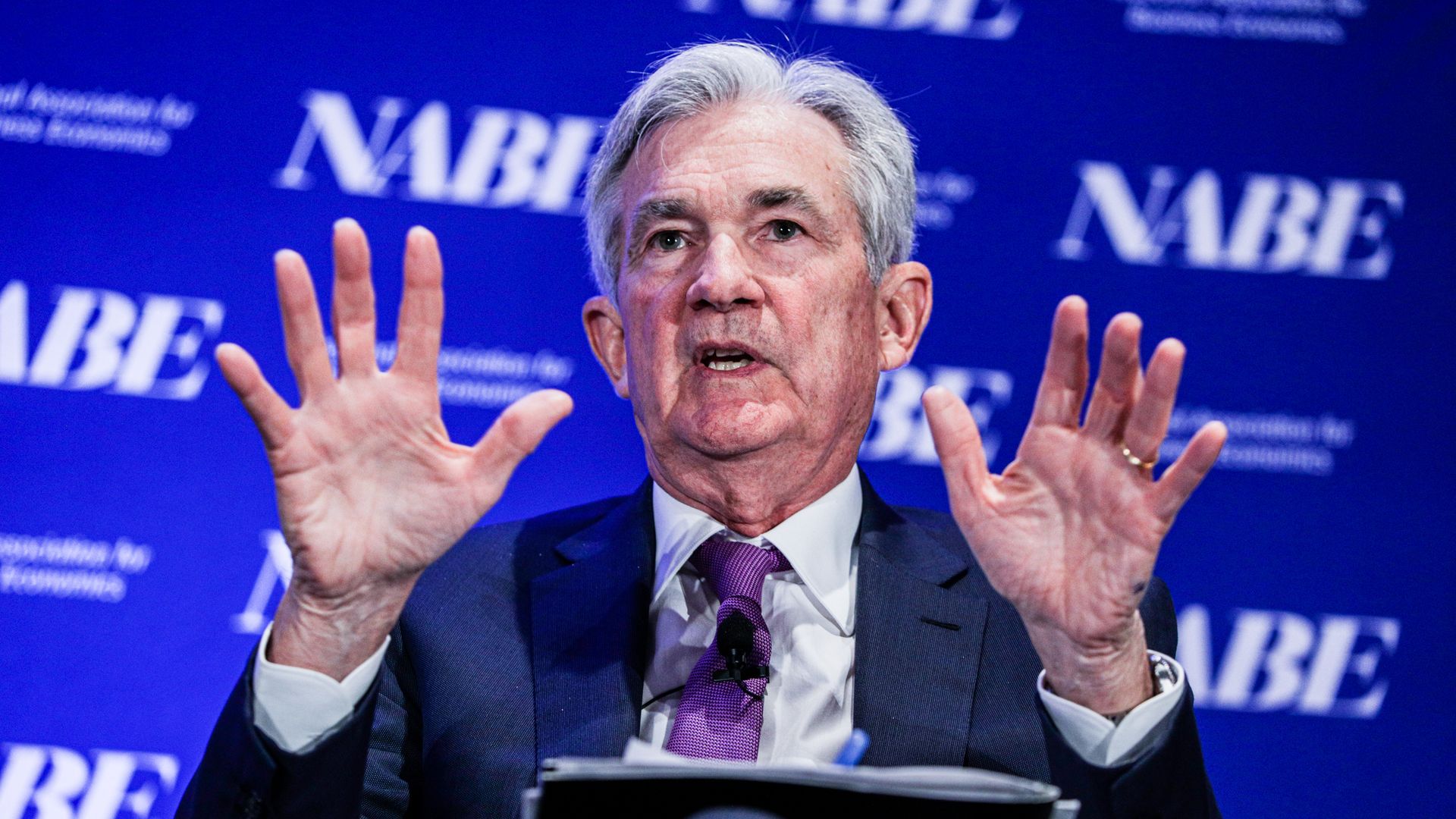
One way or another, the Federal Reserve is determined to bring the demand side of the economy into line with supply. That was the underlying message of a speech chair Jerome Powell gave Monday.
Why it matters: For the last two years, the Fed has made policy on the assumption that supply-side problems caused by the pandemic were temporary, and so policy should look through them. No more.
Either the supply constraints that are holding back economic activity ease, or the Fed will keep tightening monetary policy to crush demand to get it into line with that limited supply.
Between the lines: The optics of Powell's speech were intriguing. He struck a tone notably more hawkish than he did just five days earlier when the Fed raised its interest rates. Nothing much had changed in terms of markets or economic data between Wednesday and Monday.
This is an example of what we've called the Powell Ratchet — his strategy of steadily pushing toward tighter policy, taking just enough time in between each action to assess the reaction and allow markets to adjust.
The details: Powell still hopes that the supply side of the economy will complete a long-awaited bounce-back in the coming months, with workers rejoining the labor force and supply snarls un-snarling.
Yes, but: "In the meantime, as we set policy, we will be looking to actual progress on these issues and not assuming significant near-term supply-side relief," he said.
And while normally an upward shock to commodity prices like the one caused by the war in Ukraine, would be the kind of thing the Fed would look past, Powell said Monday that "the risk is rising that an extended period of high inflation could push longer-term expectations uncomfortably higher," underscoring the need to move "expeditiously."
By the numbers: Markets got the message. Futures markets priced in a 63% chance the federal funds rate will be 2.25% or higher at the end of the year Monday, up from 30% Friday.
The bottom line: The Fed has moved slowly to this point in its fight against inflation. Powell's speech was a notice that things have changed.
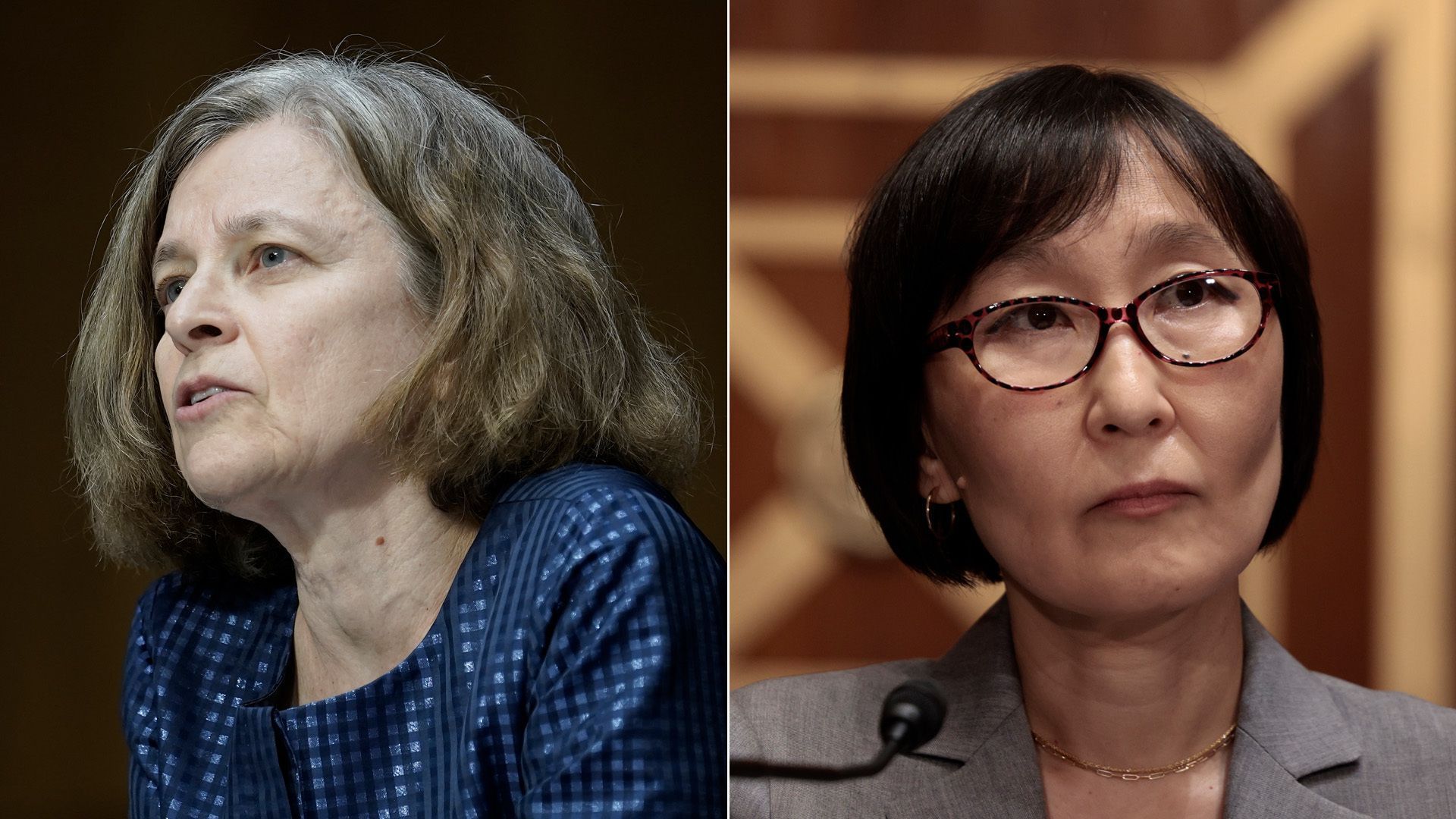
When Sarah Bloom Raskin's nomination to the Federal Reserve cratered last week, the situation looked familiar to one observer — Saule Omarova, who tells Axios the whole situation was "a shame."
Driving the news: Raskin withdrew her nomination for the agency's top regulator post last week, explaining in a letter to the president that her views on climate change drew "relentless attacks" from members of the Senate Banking Committee.
The SEC’s issuance of proposed climate disclosure rules comes amid a torrent of climate disasters, from floods to heat waves and wildfires.
Why it matters: Each of these events has affected companies' bottom lines. Exhibit A is PG&E, a large public utility that declared bankruptcy in 2019 due to crushing wildfire liabilities. Your investments could be Exhibit B, such as coastal real estate wiped out from sea level rise and more powerful storms.
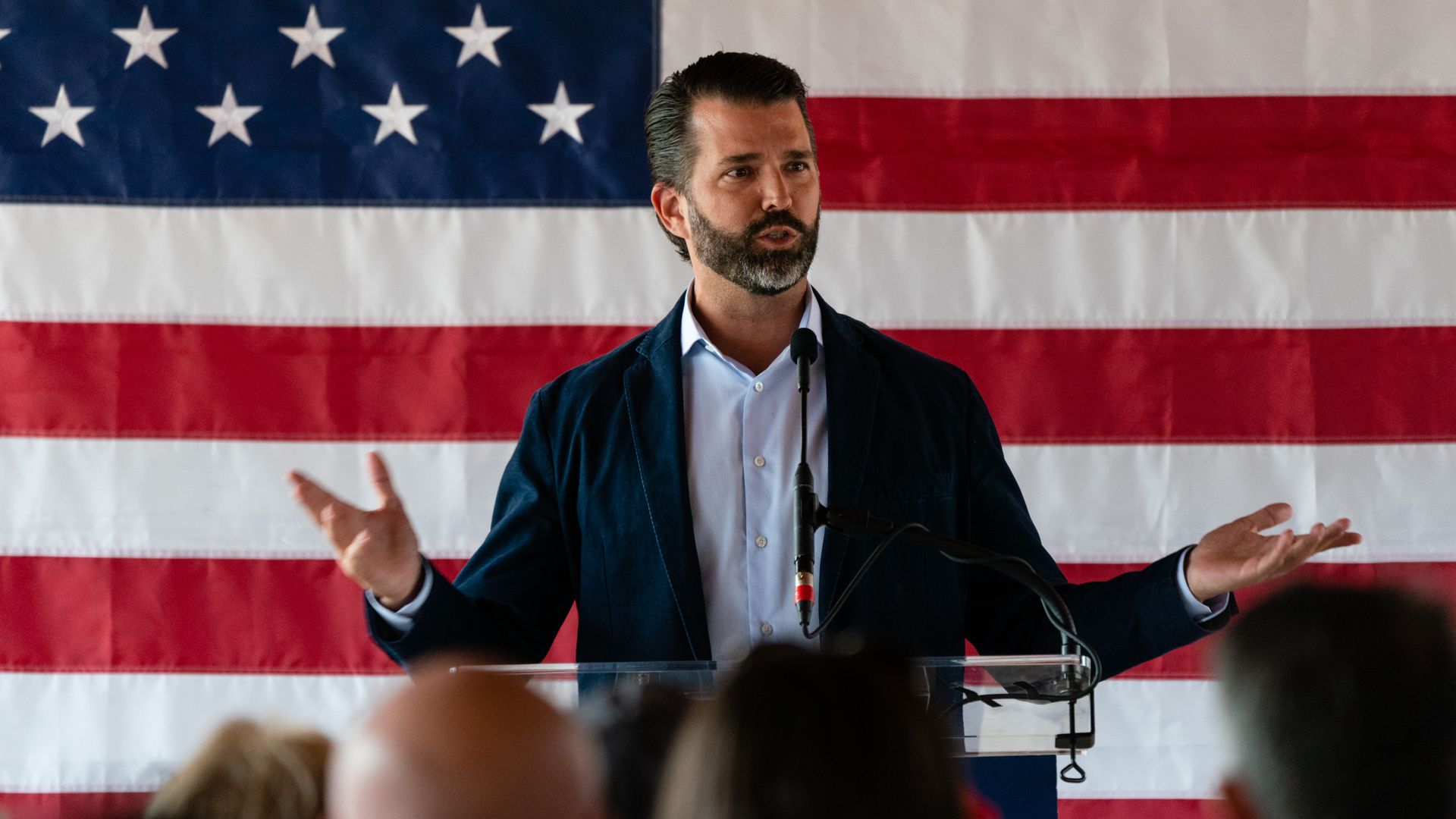
Former Trump staffers, including Donald Trump Jr., are launching a news aggregation app called "MxM News" that they hope will compete with the likes of Apple News and Google News.
Why it matters: The group sees an opportunity to fill a void left by the Drudge Report’s waning influence, especially on mobile.
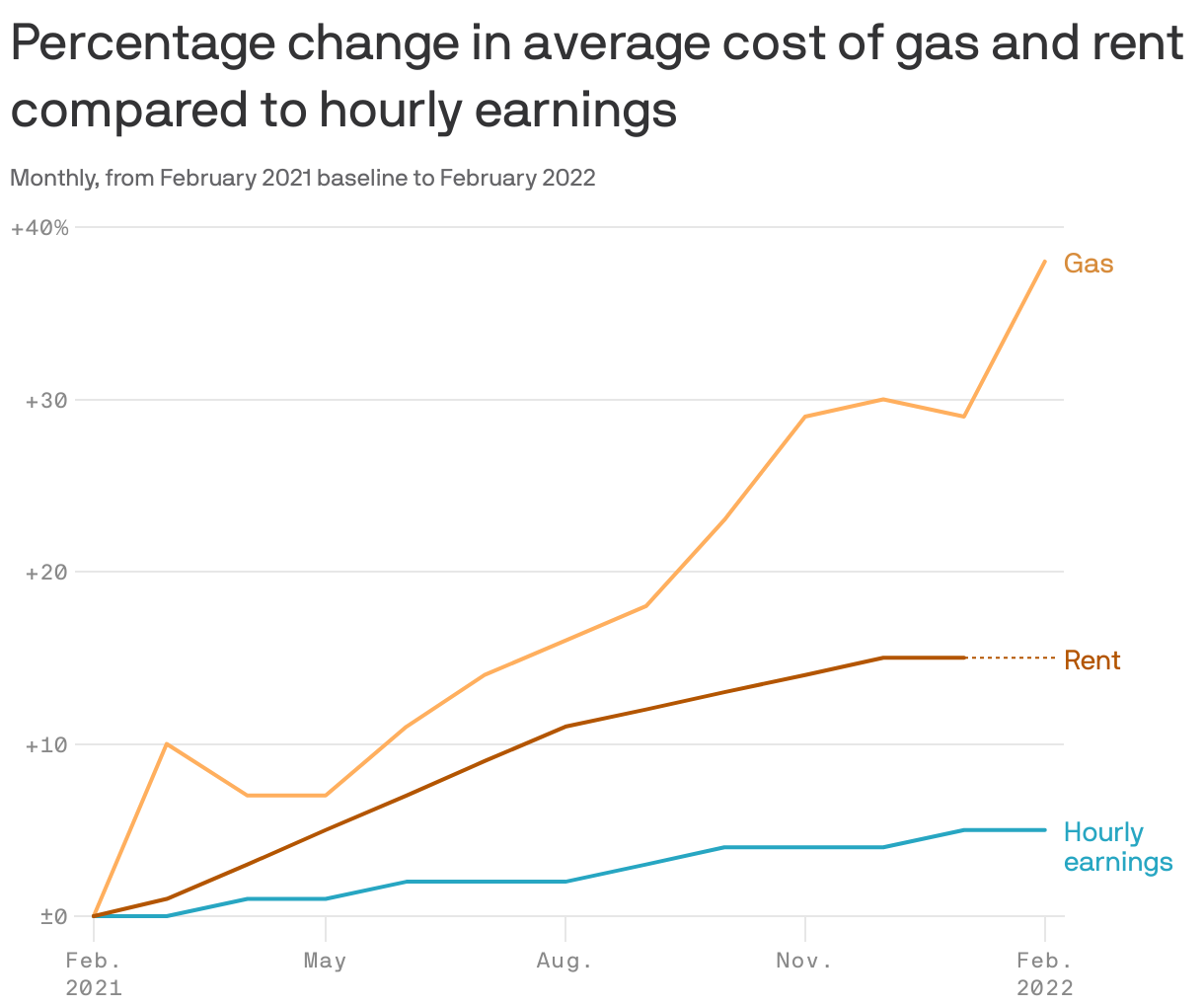
Reproduced from the Urban Institute; Note: Gas and hourly earnings are seasonally adjusted; Chart: Axios Visuals
U.S. wages are increasing, but not nearly enough to keep up with the soaring cost of gasoline and rent, according to a new analysis by the Urban Institute.
Why it matters: Low-income households — disproportionately people of color — are likely to feel the squeeze the most, writes senior research associate Yonah Freemark in the organization's Urban Wire blog post.
U.S. oil prices rose 70% over the last year. Meanwhile, U.S. oil production rose by just 6%.
Why it matters: Domestic oil producers aren't rushing to respond to soaring prices. In other words, don't expect a flood of American crude to drive energy prices back down any time soon.
The job of an airplane pilot may one day involve “flying” multiple aircraft at once without ever leaving the ground, according to the Aerospace Industries Association.
Why it matters: Aviation is about to undergo a huge transformation. Over the next decade or two, autonomous aircraft will become ubiquitous, taking on industrial jobs that are too difficult for humans and shuttling cargo among logistics hubs.
Depending on public acceptance, these "roboplanes" could also be ferrying passengers across cities.
Never has the world seen a social media app spread more wildly — or an algorithm that anticipates your desires more precisely — than TikTok.
Why it matters: It's hard to find a kid who's not mindlessly scrolling this never-ending stream of short videos. Two-thirds of U.S. teenagers (63%) are on TikTok, according to the market research firm Forrester.