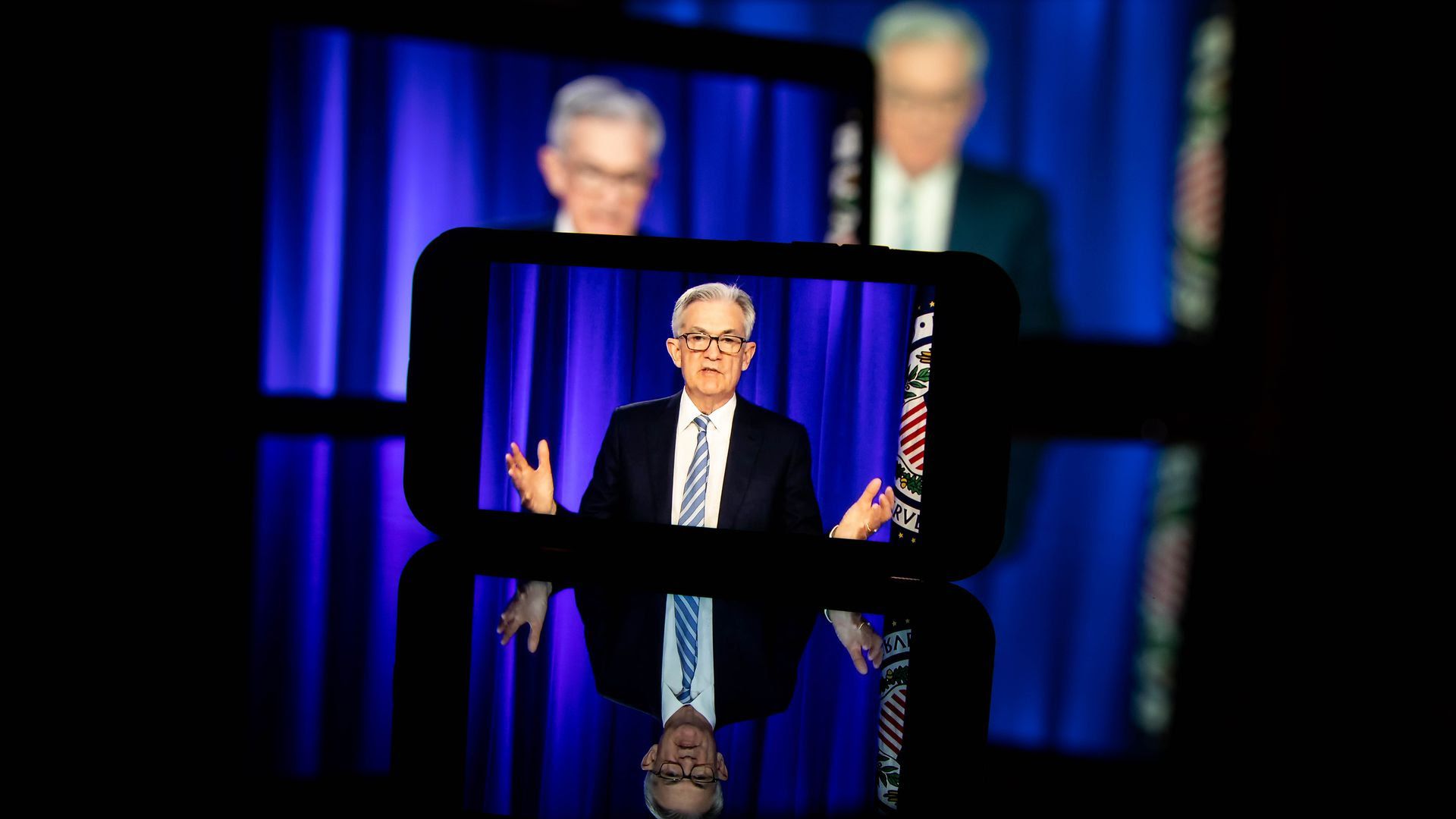
The nation's top economic policymaker all but said it Wednesday: America is on the cusp of full employment.
The big picture: "The labor market by many measures is hotter than it ever was" before the pandemic, Federal Reserve chair Jerome Powell told reporters.
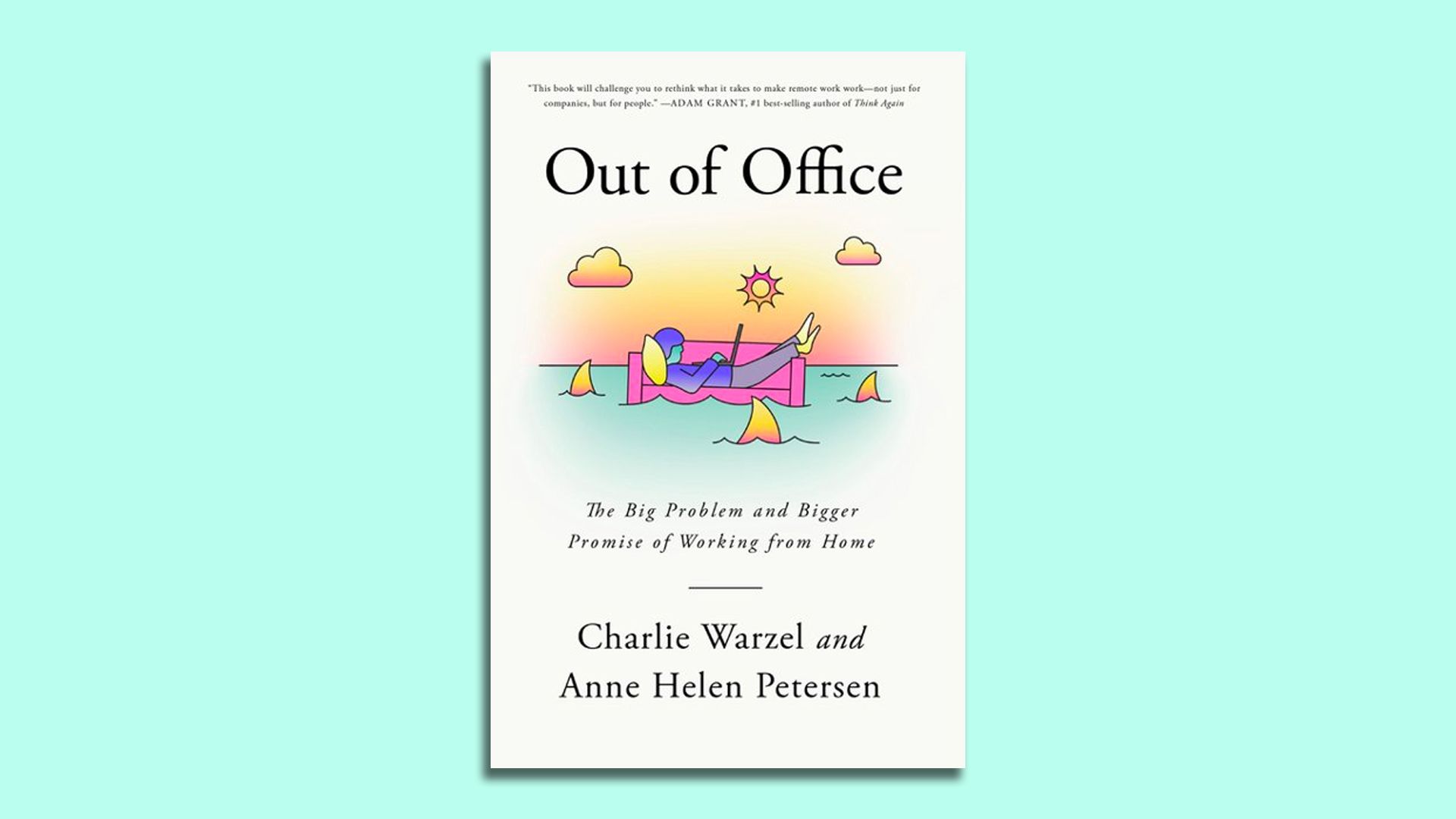
The authors of a new book argue the shift to remote workholds the potential to change work life for the better.
Why it matters: As the Omicron variant puts the final nail in the coffin of a quick return to the office, it's long past time to figure out better work habits for a remote and hybrid era that will be with us for the long haul.
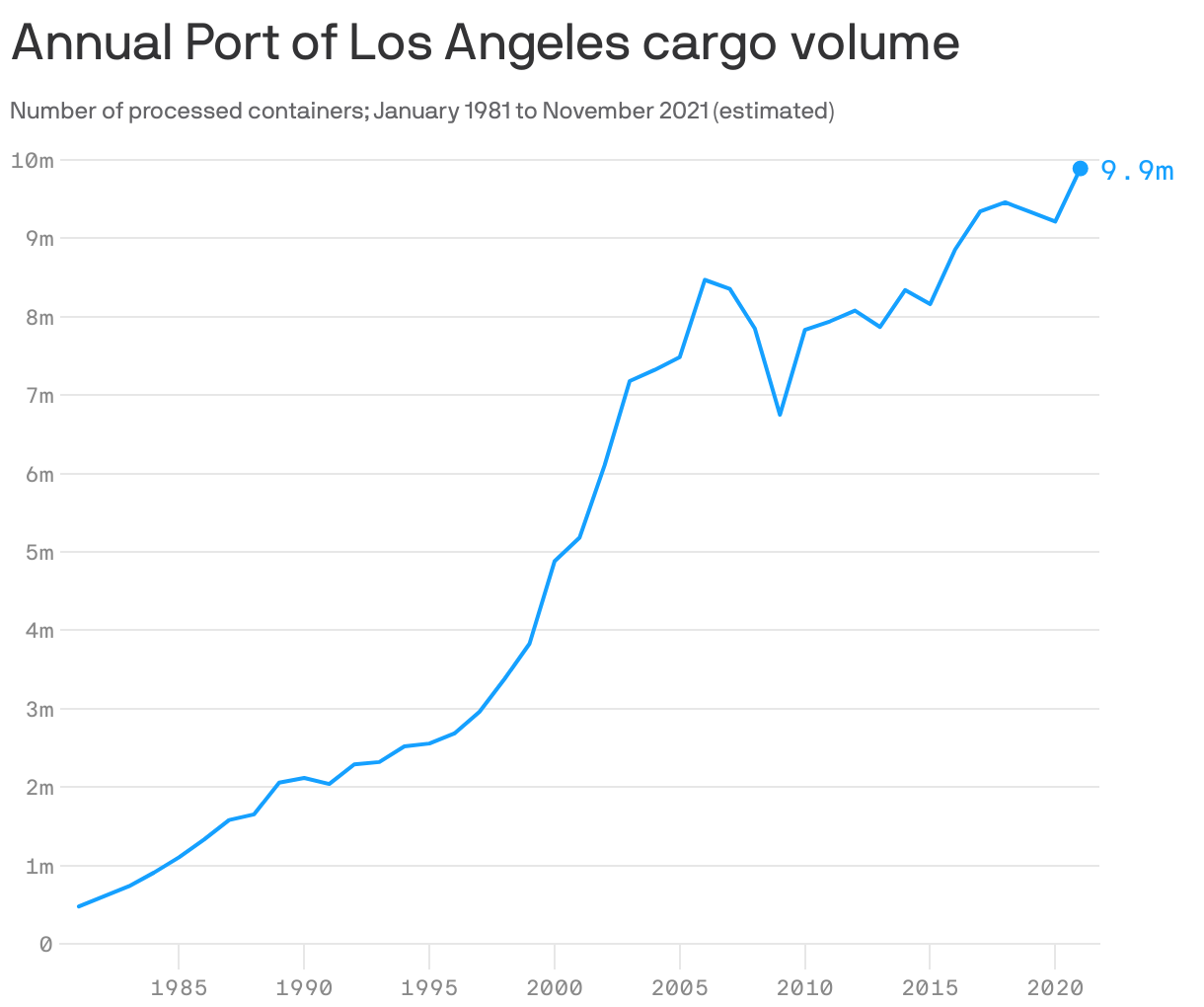
Data: Port of Los Angeles; Chart: Jacque Schrag/Axios
Consumer demand continues to push U.S. ports to new limits.
Why it matters: The Port of Los Angeles is on track to process a record number of containers this year, based on estimates of about 812,000 units handled in November.
Alden Global Capital, a hedge fund known for consolidating local news companies for profit, is suing local newspaper company Lee Enterprises, days after Lee's board unanimously voted to reject Alden's hostile takeover bid.
Why it matters: It's the latest escalation of the already bitter battle between the two entities over Alden's bid for Lee.
Plots of virtual land for veteran developer Peter Molyneux’s upcoming NFT-based game Legacy have sold for more than $15 million, based on a check of items marked “sold out” in the online marketplace for the forthcoming game.
Why it matters: A lot of the money in NFT gaming now is based on speculation.
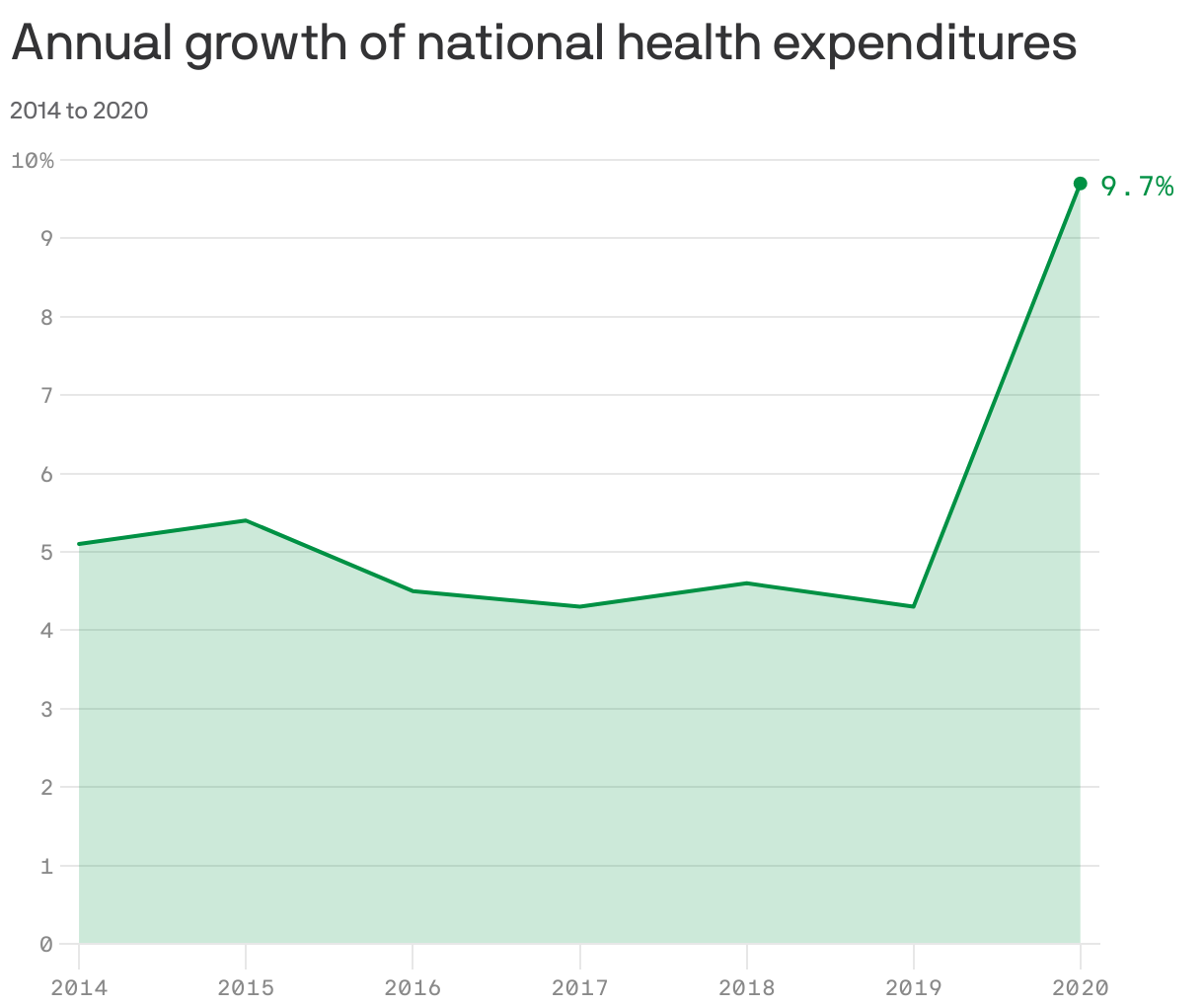
Data: Office of the Actuary, Centers for Medicare & Medicaid Services; Chart: Baidi Wang/Axios
Americans spent more than $4.1 trillion on health care in 2020, almost 10% higher than what was spent in 2019, according to new independent federal data. That's the fastest annual growth rate since 2002.
The big picture: The spike in spending was due almost entirely to the influx of federal funding that went toward stabilizing the health care system during the coronavirus pandemic.
The Federal Reserve announced Wednesday a plan to shorten the amount of time it's going to take to bring its emergency bond market purchases to an end — the so-called "taper."
The big picture: These purchases helped stabilize the Treasury bond market at the beginning of the COVID-19 pandemic, shoring up investor confidence and ultimately allowing stocks to begin their sharp rise.
Katie Haun, one of the world's most influential crypto venture capitalists, is leaving Andreessen Horowitz to form her own firm.
Why it matters: Haun has helped turn Andreessen Horowitz into the VC world's largest crypto investor, including a $2.2 billion fund raised earlier this year that's already been deployed.
In a hearing Wednesday, the Senate's judiciary committee will attempt to examine the impact of large and dominant companies on "American innovation" — that is, startups — and their ability to acquire smaller ones.
Why it matters: Whether Big Tech is preventing startups from realizing their full potential remains a key debate within the tech industry.
Anchorage Digital, a San Francisco-based company providing digital assets custody and management for institutions, raised $350 million in Series D funding at a $3 billion valuation led by KKR.
Why it matters: As institutions continue to get more and more invested into crypto, companies like Anchorage are becoming critical.
Recurrent Ventures, a venture equity-backed digital media company, is relaunching Popular Photography, a digital website that's dedicated to photography enthusiasts.
Why it matters: It's the third brand Recurrent has relaunched in the past few years, as it looks to grow its digital media footprint.
Bessemer Venture Partners is launching a growth buyouts practice to complement its early-stage and growth equity efforts, Axios has learned. It will be led by Rob Arditi, who previously was a general partner with Norwest Venture Partners.
Why it matters: The venture capital market has gotten very crowded, but relatively few firms have moved upstream into actual buyout transactions.
A carbon capture and storage (CCS) startup billing itself as the industry's first "vertically integrated super developer" has raised $30 million in Series A funding.
Driving the news: Carbon America this morning announced the funding from investors including Canada Pension Plan Investment Board, ArcTern Ventures, Energy Impact Partners and others.
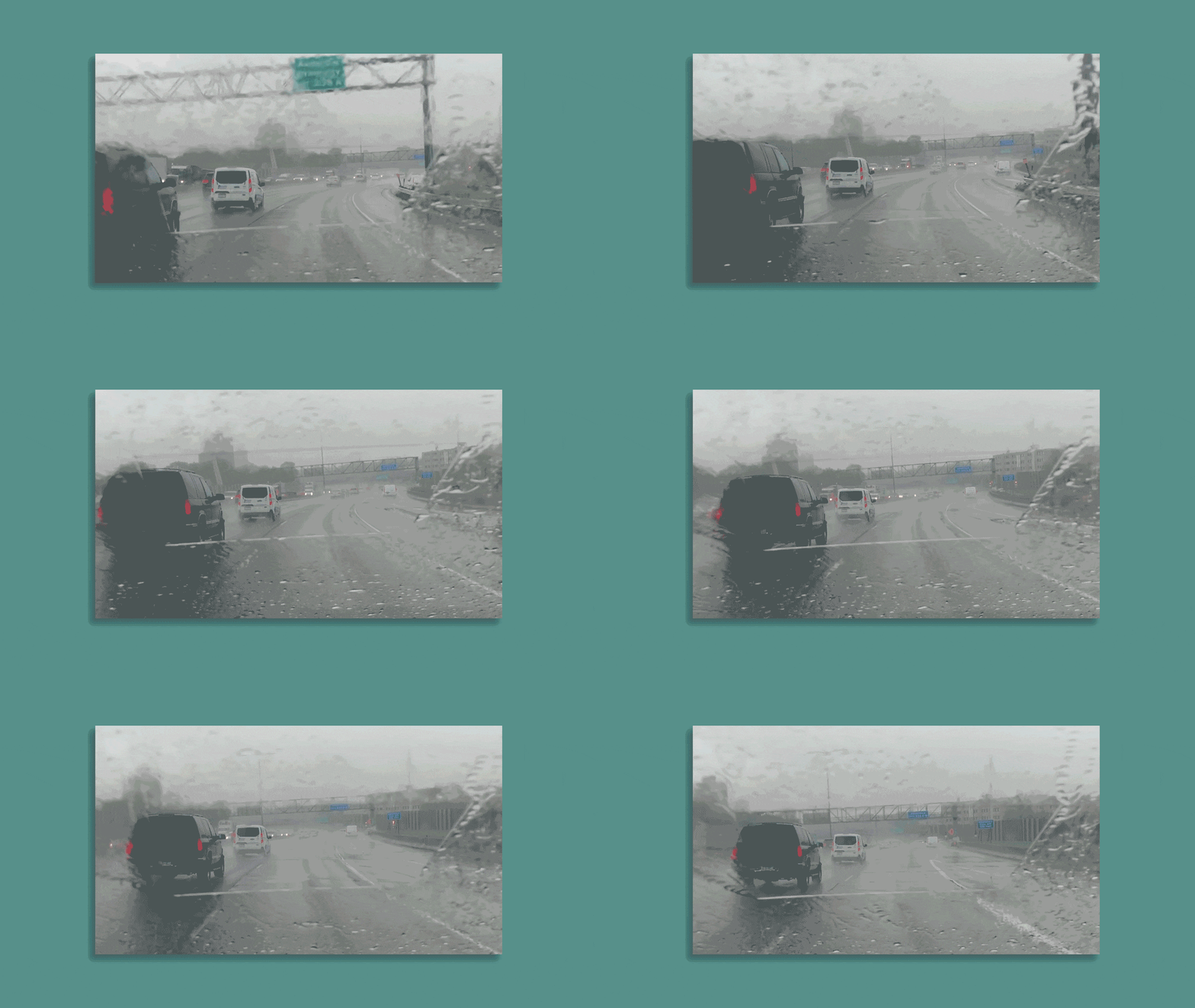
Autonomous vehicle developers are deliberately blinding their cars to perfect various sensor-cleaning strategies.
Why it matters: Like humans, self-driving cars must be able to actually see the world around them to make decisions. But rain, dirt, debris and even insects can obscure their vision, requiring systems that can automatically clean the sensors.
Companies have been testing a variety of cleaning methods, from blowing small puffs of air on cameras and lidar sensors to squirting them with liquids and then wiping them with tiny squeegees.
What's happening: To help with the research, engineers at one company, Argo AI, even jerry-rigged a "mud cannon" to splatter its test cars with a pudding-like substance.
The goal was to simulate mud splashing from a passing car — without damaging the sensors.
During six weeks of trial and error, Argo AI constructed a hood-mounted gizmo from PVC pipe, sprinkler valves and a portable air compressor that could fling a carefully crafted mix of water and scratch-proof dust at the car's sensors.
The end result is like a "simple potato gun, with a sprinkler valve."
What to watch: 3M is developing a replaceable, superhydrophobic film that would act like a waterproof screen protector for lidar systems and other vehicle sensors.
3M scientist Jonah Shaver, who developed the film as a side project, says the company is targeting several industries, including transportation, drones, agriculture and mining.
"We really think of it for use in any place you want a machine to see a little better."
3M's protective film enables visibility even in driving rain. Image: 3M
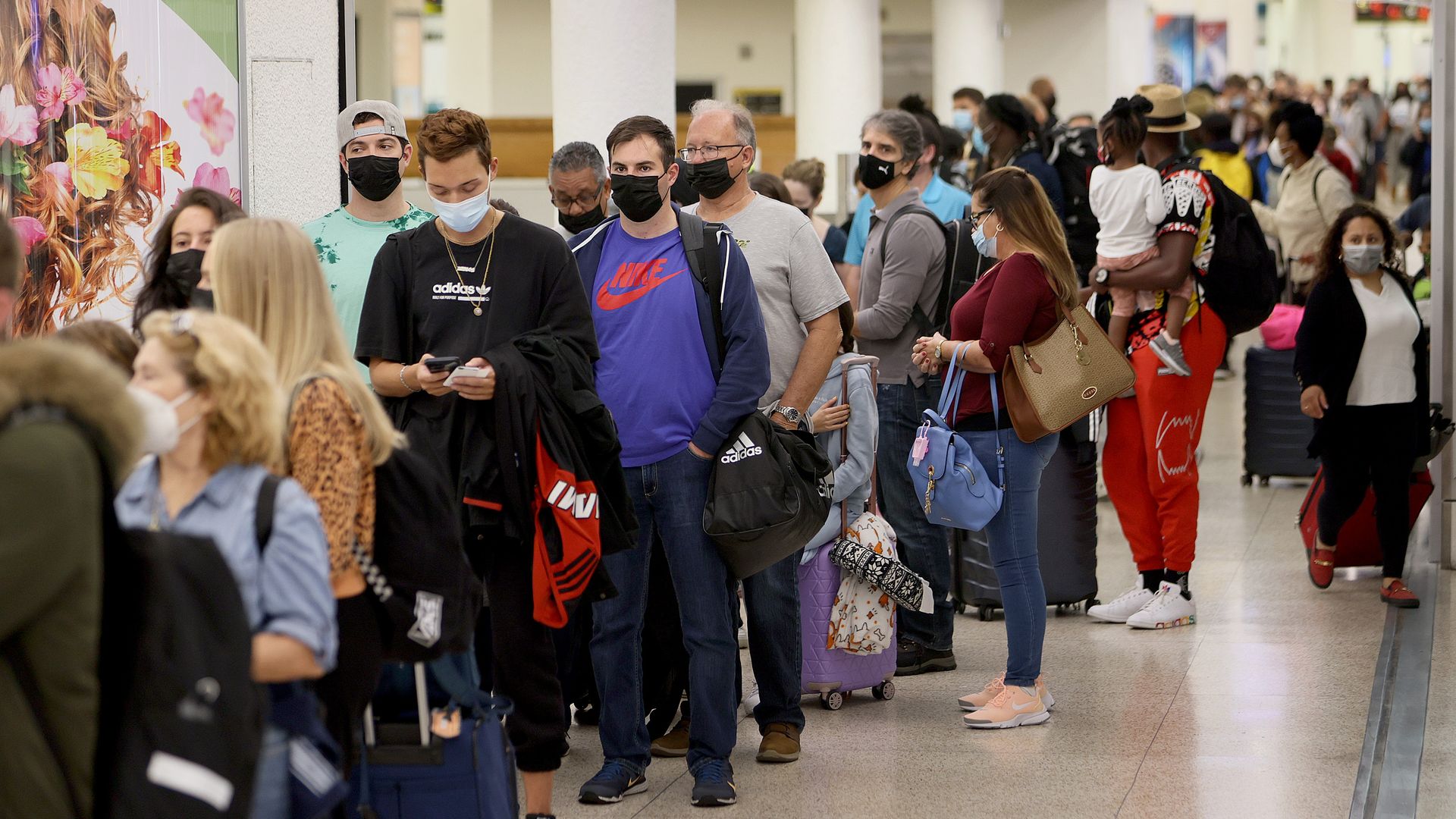
Clear, the ID security company that aims to speed passengers through airport security, will now book you an Uber to make sure you arrive at your gate on time.
Why it matters: Holiday travel is expected to approach pre-pandemic levels this year, which could lead to extra stress for passengers, many of whom haven't traveled in two years.
Driving the news: Clear is partnering with Uber to integrate its ride-hailing platform directly into the Clear app’s "Home to Gate" feature.
Home to Gate analyzes traffic data, security screening wait times, and walking distance in the terminal to advise when you should leave your home or hotel to arrive at your gate on time.
The integration with Uber means you can even reserve an Uber ride ahead of time on Clear's app for no extra charge.
How it works: You don't have to be a Clear Plus member to use the Home to Gate feature, but access to Clear's expedited security lines requires membership.
Open the Clear app and tap "Home to Gate."
Share your location and flight details, and the app will tell you the best time to leave for your flight.
Tap the "Get A Ride With Uber'' button, and the Uber app will reserve your ride, with all your trip details.
What they're saying: "Travel is surging back this holiday season, and together with Uber, we are helping travelers have a more predictable and stress-free travel experience," said Caryn Seidman-Becker, CEO of Clear.
The pharmaceutical industry is sitting on a lot of cash and is ready to make big deals.
The big picture: Drug companies completed smaller deals during the pandemic and instead built up their cash reserves. But the prospect of federal legislation that could allow Medicare to set some drug prices and looming patent expirations will motivate many companies to start spending their pandemic windfalls.
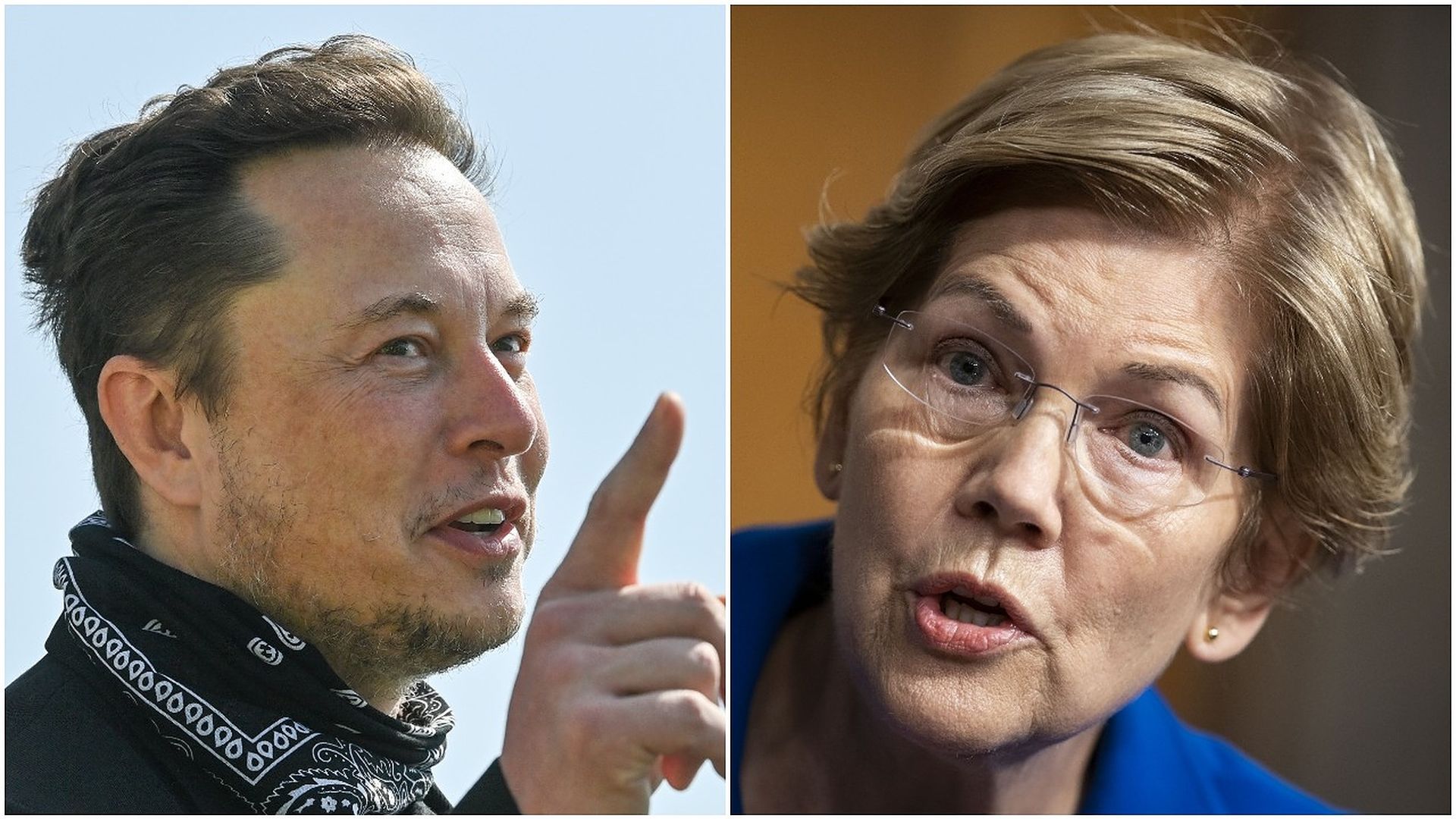
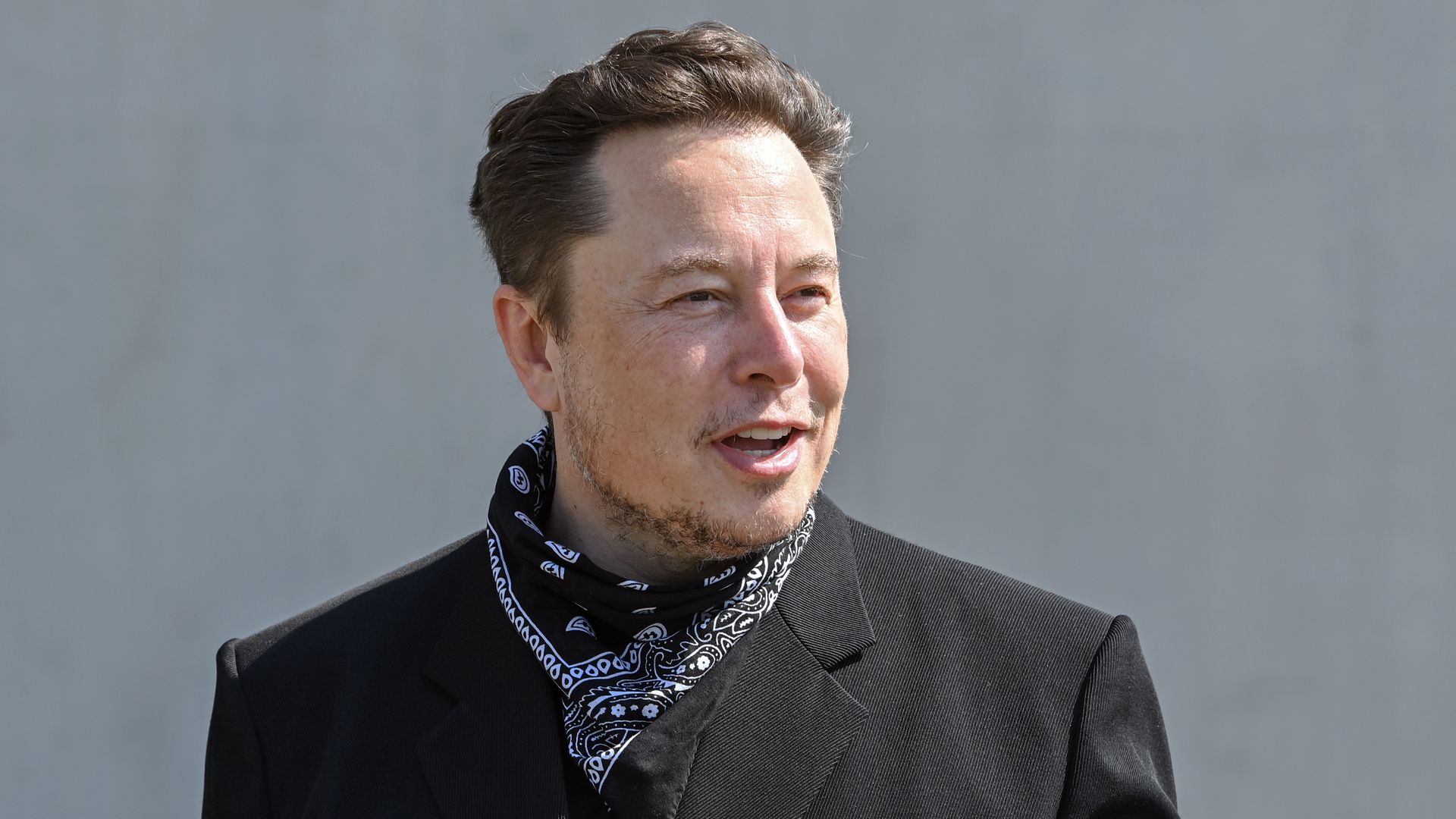
Elon Musk called Sen. Elizabeth Warren "Senator Karen" on Tuesday after the Massachusetts Democrat took aim at Time Magazine naming the billionaire Tesla CEO as its 2021 Person of the Year.
Driving the news: Warren tweeted after Musk was announced by Time on Monday, "Let's change the rigged tax code so The Person of the Year will actually pay taxes and stop freeloading off everyone else." Musk retorted in a tweet to Warren saying, "Stop projecting!"












/2021/12/15/1639571614554.gif?w=3840)




/2021/12/14/1639518506746.gif?w=3840)