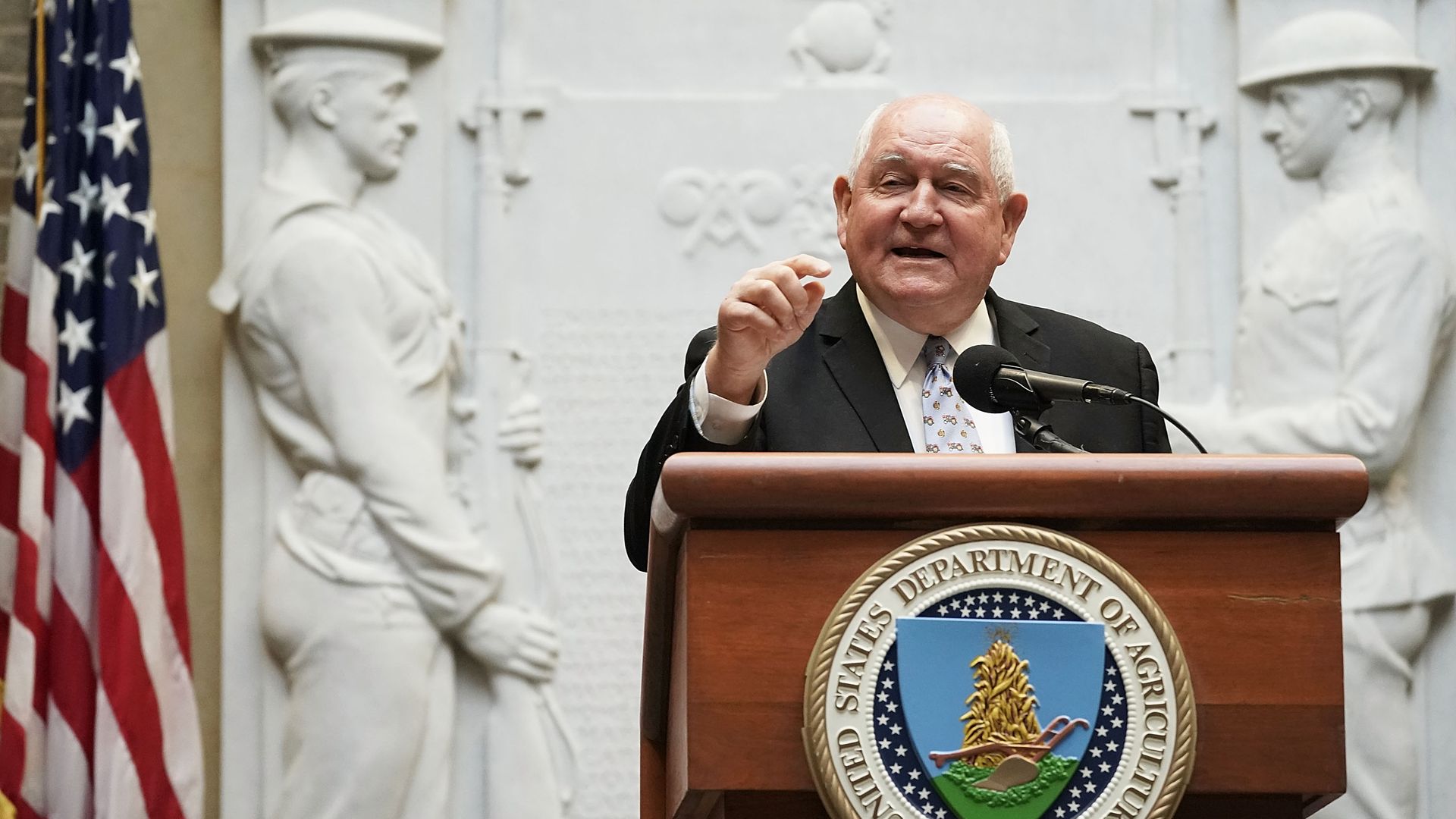
Agriculture Secretary Sonny Perdue said Tuesday the U.S. government would pay a minimum of $15 per acre in aid to farmers impacted by President Trump’s trade war with China, Reuters reports.
Why it matters: The trade war has been crippling for U.S. farmers. Illinois Soybean Association CEO Craig Ratajczyk told Reuters the $15-per-acre minimum would make agricultural lenders more comfortable and "help provide some type of stability for that type of lending institution."
The consumption habits of the modern sports fan is once again a hot topic following Northwestern coach Pat Fitzgerald's mini-rant about college football's declining attendance.
My thought bubble: Is anyone surprised that this is where we ended up? Because this was always where we were headed. For decades, schools and conferences have been making decisions that benefit the TV viewer because that's where the eyeballs are.
DoorDash is gettingrenewedheat over its pay model for delivery workers, whereby customer tips can be included in guaranteed minimum earnings. Critics argue this is consumer deception, although it's fairly similar to the "tipped wages" earned by waiters in certain states.
Why it matters: It's a reputational mess for DoorDash, as the "unicorn" tries to prove that its business model can work beyond billions of dollars in venture capital subsidies.
Patch, the hyperlocal (and profitable) digital news platform, is doubling down on digital transactions as it seeks to pull further away from advertising as a sole revenue source, Patch CEO Warren St. John tells Axios.
Why it matters: Scaling a high-margin revenue stream that's not contingent on page views (the way advertising rates often are calculated) is critical in local news, because truly local news is usually only relevant to small group of people.
The S&P 500's 19% year-to-date return this year is no reason to sell, especially in light of July's expected Fed rate cut, strategists from LPL Financial argue.
What they're saying: “Even though fundamentals may not justify the market going much above our 3,000 forecast on the S&P 500, with the Fed tailwind behind us, we’ll ride the wave for now,” LPL chief investment strategist John Lynch said in a note.
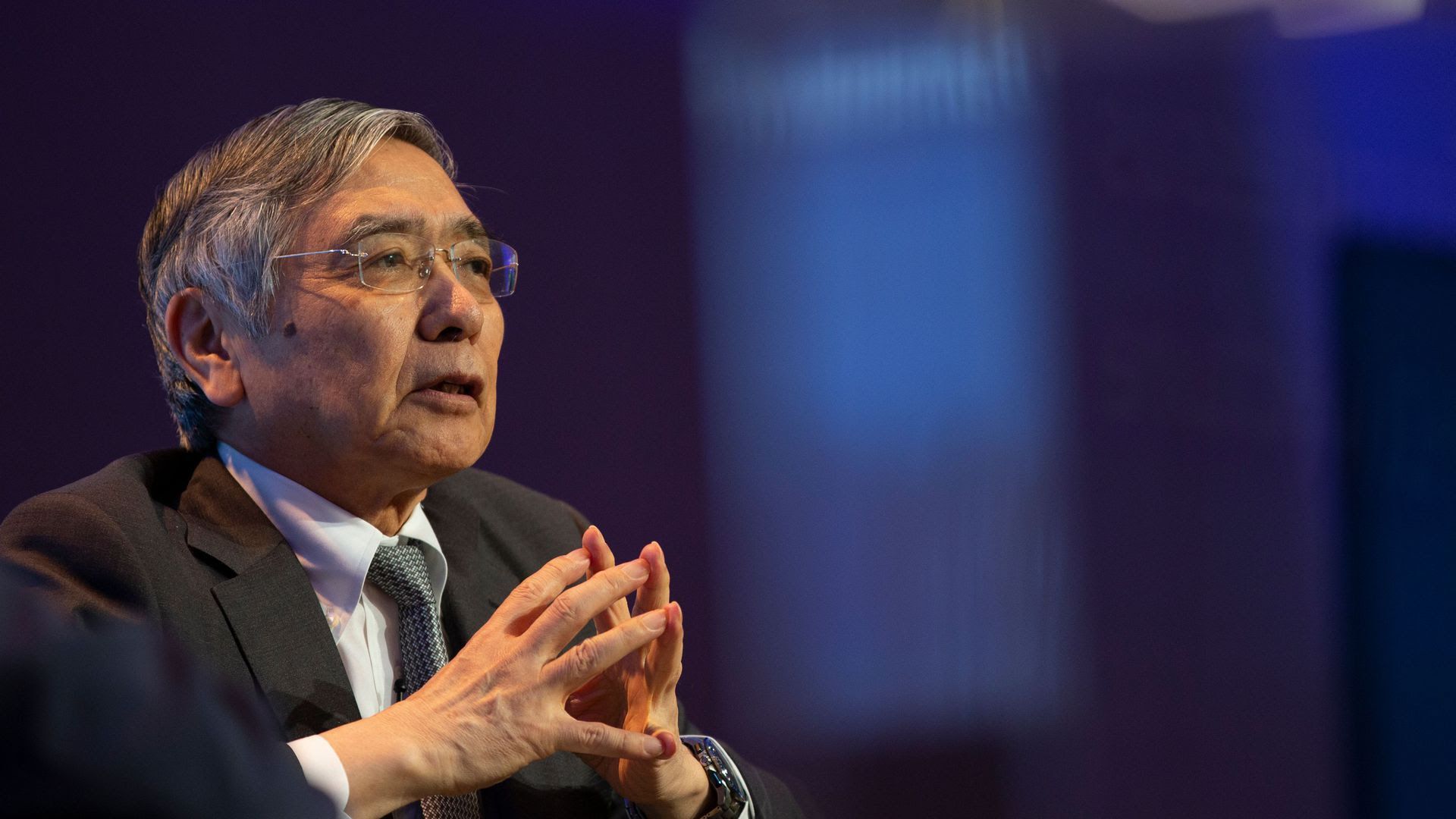
As the Fed approaches a likely rate cut at the end of the month — in the face of 50-year low unemployment, rising wages and strong consumer spending — it could not have been a better time for a visit to Washington from Bank of Japan Governor Haruhiko Kuroda.
What it means: Kuroda has instituted some of the world’s most extreme and unorthodox monetary policies, including directing the central bank to buy Japanese stocks. More analysts are starting to believe such policies will be adopted in other places, including the U.S.
Gannett Co, the largest newspaper owner by circulation in the U.S., and its rival GateHouse Media, the largest newspaper owner by number of papers in the U.S., are currently in talks to merge, The Wall Street Journal reports.
Why it matters: The combination of the two publishing powerhouses means that a single company would own 1 in every 6 newspapers in the United States.
With five months left in the year, 2019 has already set the record for the highest number of television blackouts in history, according to new data from the American Television Alliance (ATVA).
Why it matters: The programming blackouts are happening as a result of an increase in disputes between TV networks and their distributors — mainly cable and satellite companies — over how much networks should charge distributors for the right to air their content.
Iflix, a Malaysia-based streaming video subscription service focused on Southeast Asia and the Middle East, raised over $50 million in what it refers to as pre-IPO funding.
Why it matters: Netflix needs to expand in emerging markets, as its recent subscriber numbers suggest saturation in its core geographies. Iflix, which claims to have nearly doubled active users to 17 million in the past 6 months, presents one of several homegrown hurdles.
Shares of embattled retailer JCPenney fell 17% on Friday after a Reuters report that the company had hired advisers to help restructure its debt in the latest effort to stave off bankruptcy.
Background: The stock fell 18 cents to close at 90 cents a share. It has traded near $1 since 2018.
The way people eat is changing, which means there is a giant market ripe for disruption and money to be made. However, most investors won't profit from the disruption because very few of the companies driving the change are public and that's unlikely to change anytime soon.
Why it matters: The lack of public opportunities to invest in food disruption despite the ravenous demand is the latest example of the broken U.S. capital market structure SEC chair Jay Clayton bemoaned at the annual Investment Company Institute meeting in May, noting that around 98% of American households have no access to private markets.
Although the U.S. government is still struggling to define regulations for the tech industry, it's finding ways to take action over the growing portion of the internet used by kids.
Why it matters: An increase in federal penalties against tech companies for violating kids' privacy rules is shaping new expectations for how the internet will be governed.