Unity Technologies, the privately held San Francisco company best known for its 3D gaming engine, plans to allow employees and some early investors to sell shares in a secondary stock offering.
Why it matters: The move gives employees more liquidity and concentrates ownership of company shares.
When a company goes public, many are quick to celebrate big "pops," or rapid stock price increases. But behind the headlines is big money left on the table, often for the benefit of wealthy Wall Street clients. Dan digs into mispriced markets and solutions with venture capitalist Bill Gurley, whose deals have included Uber, Stitch Fix and Zillow.
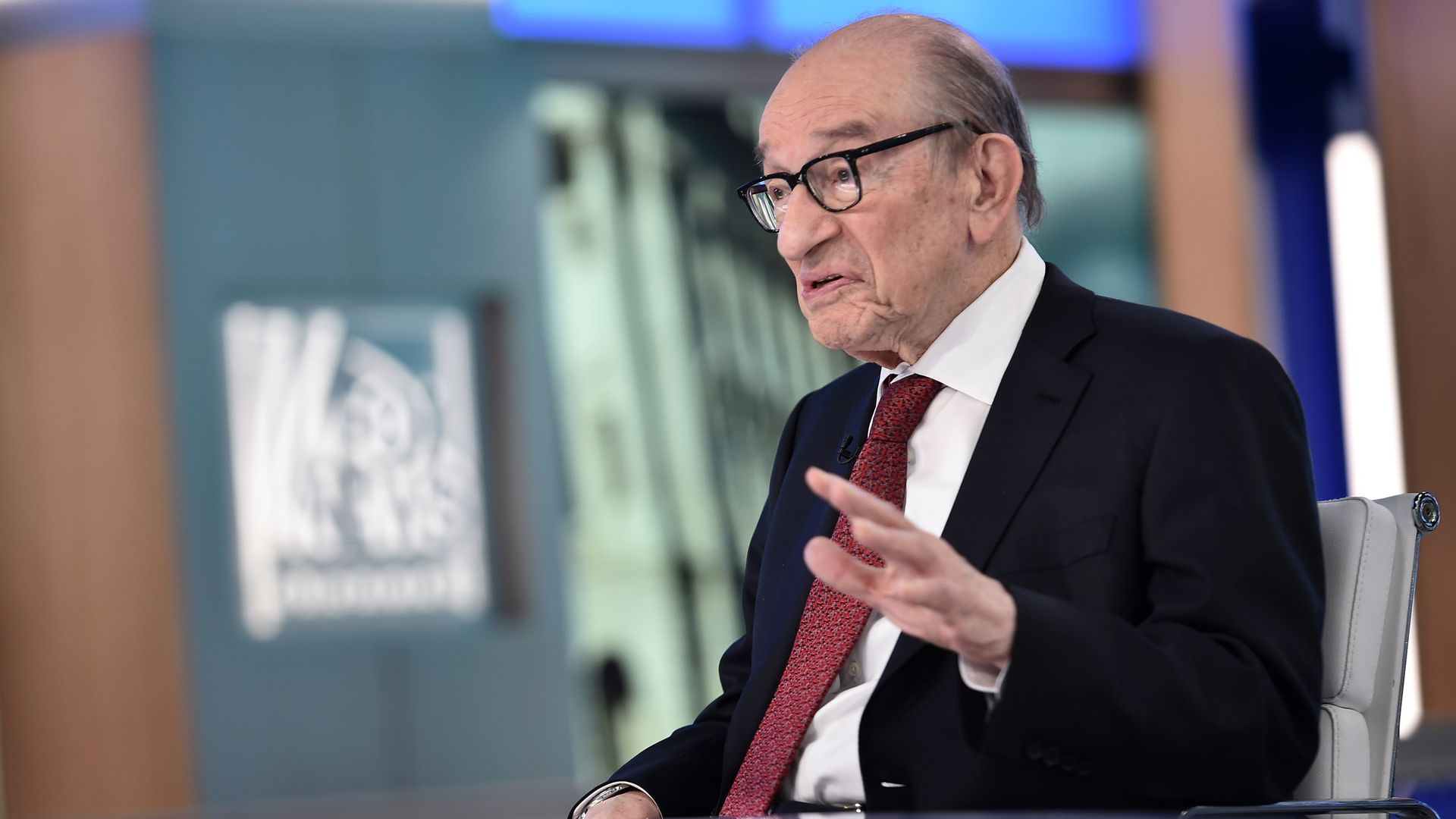
Former Fed Chair Alan Greenspan endorsed the central bank's expected rate cut at this month's FOMC meeting during an interview with Bloomberg TV on Wednesday.
Why it matters: Current Fed Chair Jerome Powell has shown admiration for Greenspan and getting his stamp of approval likely means a rate cut for July is a lock. Powell also could feel emboldened to adopt an even more dovish stance, acquiescing to the market's expectation of 75 basis points of cuts within the next year.
While U.S. companies continue to vigorously seek new workers, growth in openings for some hard-core digitalized jobs — projected to be among the most prominent work in the future economy — have sharply slowed, according to a new report.
Quick take: The reported weakening in hiring may reflect the general U.S. economic slowdown. But, amid a 50-year low in joblessness, it also highlights the extraordinary volatility in the technology industry, the most reliably vibrant part of the U.S. economy.
Anthem posted better-than-expected earnings and raised its profit expectations for the rest of 2019, so Wall Street responded by … selling off the stock, dropping Anthem’s share price by 4.5%.
What's happening: Investors are freaking out because the big health insurance companies — UnitedHealth Group, Centene and now Anthem — have indicated their medical costs are rising faster than projected.
Despite ongoing efforts to reel in the dominance of Big Tech companies, a few major firms still manage to eat up more ad revenue than most other publishers (and publishing industries) combined.
Why it matters: The continued strength of these companies, particularly in the data-based advertising sector, has shifted the focus in Washington over the past three years from holding firms accountable for bad policies or sloppy mistakes to taking action against them as monopolies.
The U.S. Navy sailed a warship through the Taiwan Strait that separates Taiwan from China Wednesday, Reuters reports — hours after China warned it hadn't ruled out using force to reunify the island nation with the mainland.
Why it matters: Taiwan is one of several flashpoints in the U.S.-China relationship, and this incident comes as American and Chinese officials are due to restart trade talks, per Bloomberg. The State Department notified Congress this month that it has approved a $2.2 billion arms sale to the self-ruled Taiwan — which China regards as a breakaway province.
Chipotle's stock has surged by nearly 200% since Brian Niccol was announced as the company's new CEO, more than any other stock in the S&P 500.
Driving the news: Shares got another boost Tuesday after the company beat earnings expectations and rose to their highest price ever. The stock jumped 4% in after-hours trading and is now up more than 70% for the year.
Market participants overwhelmingly expect a 25 basis-point cut from the Fed at this month's policy meeting, but positioning has varied wildly over the last 2 months.
The big picture: Comments from Fed chair Jay Powell during a speech in Paris pushed the likelihood of a 50-point cut as high as 60% in mid-July, despite strong data prints on U.S. retail sales, unemployment and industrial production. Fed fund futures prices now show investors see just a 14% chance the central bank cuts rates by 50 basis points to a range of 1.75%–2.00%, according to data provided by Deutsche Bank Securities.
The first half of the year has been weaker than expected for the global economy, and the main cause is a significant slowdown in manufacturing and trade.
What's happening: The IMF wrote down its global growth expectations for the third time this year, pointing squarely to the U.S.-China trade war that has thrown a wet blanket on cross-border trade and investment, sending manufacturing into a recession in the U.S. and in an increasing number of countries around the globe.
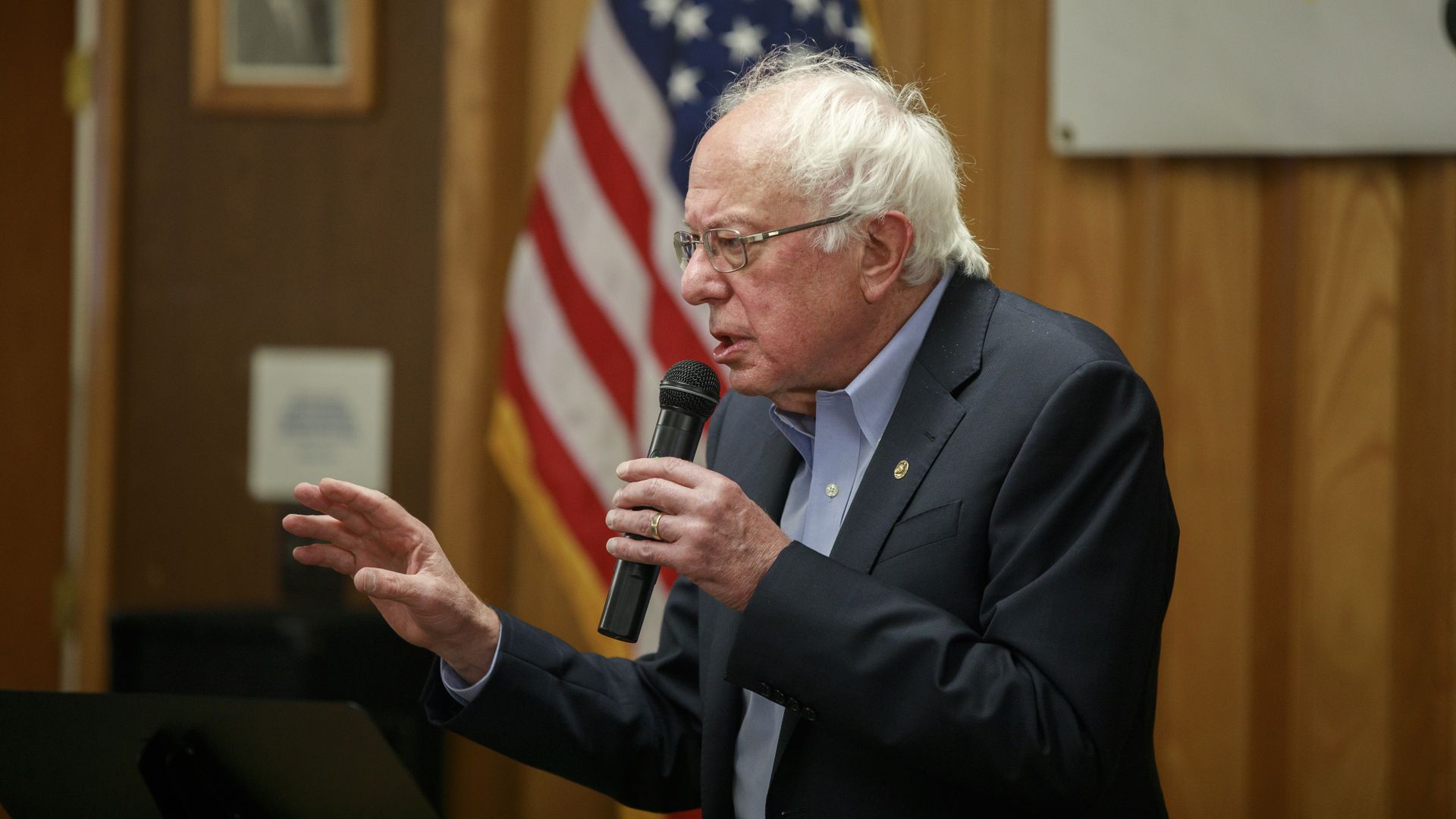
An unnamed individual in Indiana filed an unfair labor practice complaint against Sen. Bernie Sanders' 2020 campaign last week, alleging retaliation against staffers and illegal employee interrogation, Bloomberg reports.
The big picture: Sanders' campaign — which was the first in the 2020 race to unionize — reached a deal with its union on Tuesday to pay field organizers at least $15 an hour. The complaint, which could have been filed by anyone inside or outside the campaign, follows a recent Washington Post report that showed Sanders' field organizers were being paid less than $13 per hour, on average.










/2019/07/24/1563968490679.gif?w=3840)