U.S. store closures are on pace for a record level in 2019 with more than 7,400 already announced this year, and household names like Sears and Victoria’s Secret shutting their doors at malls across the country.
Yes, but: Property broker CBRE says the fire-and-brimstone, death-of-the-mall narratives are exaggerating what's actually happening in the retail and real estate spaces. Certainly, the mall sector is having some problems, but the full picture also includes an overall Q2 gain in demand across all retail formats, and a gradual repositioning of malls as mixed-use projects.
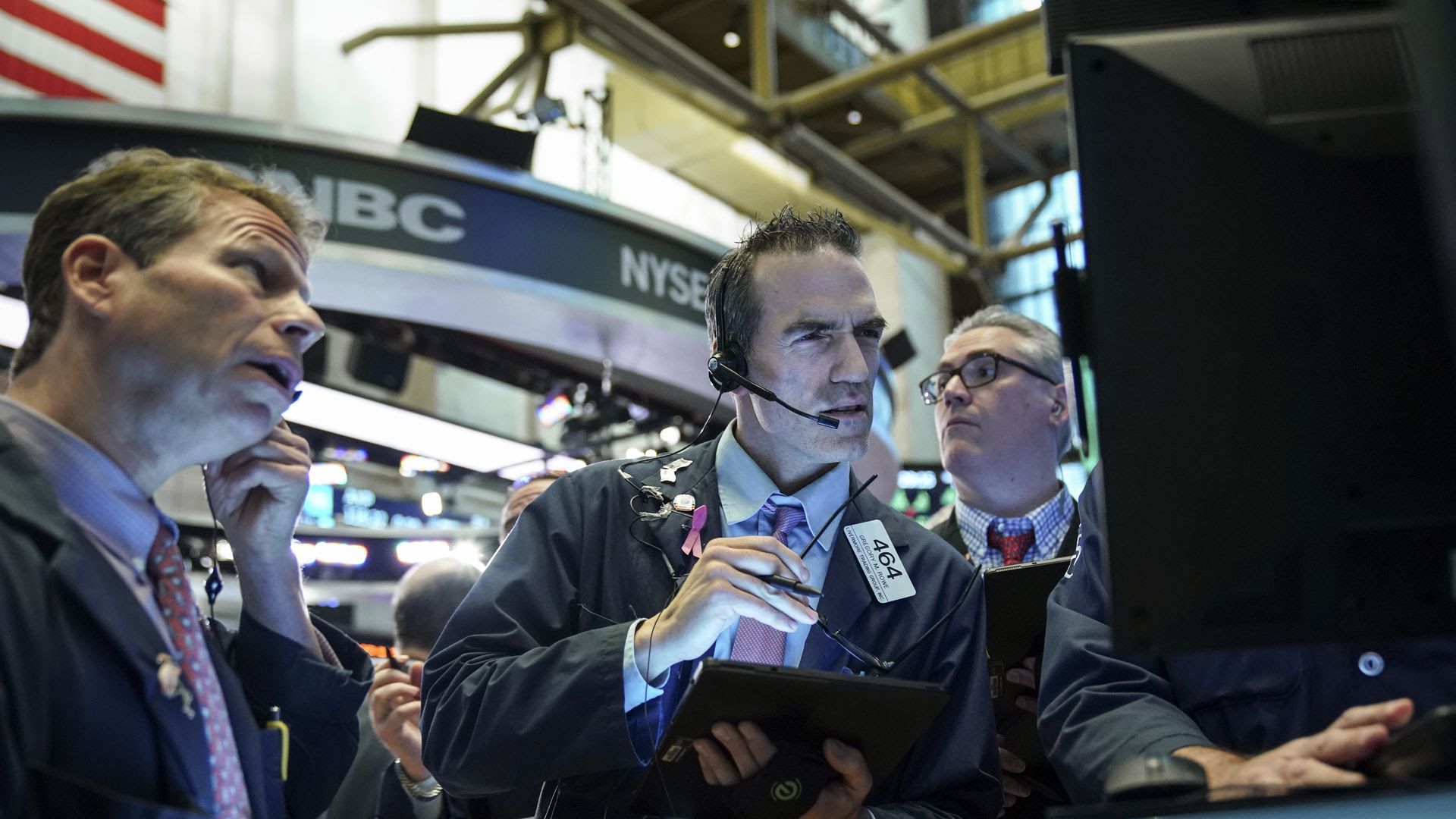
The hope for interest rate cuts and more quantitative easing in September was not enough to placate the market on Thursday as stocks fell in the U.S. and Europe after an announcement from ECB President Mario Draghi that gave the distinct impression the central bank would ease monetary policy at its next meeting.
The state of play: Most analysts said the reaction from the market was due to Draghi sounding more hawkish than expected, but investors may simply be waking up to the idea that central bank easing isn't what it once was, and the ECB's policy tool kit looks exhausted.
Unity Technologies, the privately held San Francisco company best known for its 3D gaming engine, plans to allow employees and some early investors to sell shares in a secondary stock offering.
Why it matters: The move gives employees more liquidity and concentrates ownership of company shares.
When a company goes public, many are quick to celebrate big "pops," or rapid stock price increases. But behind the headlines is big money left on the table, often for the benefit of wealthy Wall Street clients. Dan digs into mispriced markets and solutions with venture capitalist Bill Gurley, whose deals have included Uber, Stitch Fix and Zillow.
Former Fed Chair Alan Greenspan endorsed the central bank's expected rate cut at this month's FOMC meeting during an interview with Bloomberg TV on Wednesday.
Why it matters: Current Fed Chair Jerome Powell has shown admiration for Greenspan and getting his stamp of approval likely means a rate cut for July is a lock. Powell also could feel emboldened to adopt an even more dovish stance, acquiescing to the market's expectation of 75 basis points of cuts within the next year.
While U.S. companies continue to vigorously seek new workers, growth in openings for some hard-core digitalized jobs — projected to be among the most prominent work in the future economy — have sharply slowed, according to a new report.
Quick take: The reported weakening in hiring may reflect the general U.S. economic slowdown. But, amid a 50-year low in joblessness, it also highlights the extraordinary volatility in the technology industry, the most reliably vibrant part of the U.S. economy.
Anthem posted better-than-expected earnings and raised its profit expectations for the rest of 2019, so Wall Street responded by … selling off the stock, dropping Anthem’s share price by 4.5%.
What's happening: Investors are freaking out because the big health insurance companies — UnitedHealth Group, Centene and now Anthem — have indicated their medical costs are rising faster than projected.
Despite ongoing efforts to reel in the dominance of Big Tech companies, a few major firms still manage to eat up more ad revenue than most other publishers (and publishing industries) combined.
Why it matters: The continued strength of these companies, particularly in the data-based advertising sector, has shifted the focus in Washington over the past three years from holding firms accountable for bad policies or sloppy mistakes to taking action against them as monopolies.
The U.S. Navy sailed a warship through the Taiwan Strait that separates Taiwan from China Wednesday, Reuters reports — hours after China warned it hadn't ruled out using force to reunify the island nation with the mainland.
Why it matters: Taiwan is one of several flashpoints in the U.S.-China relationship, and this incident comes as American and Chinese officials are due to restart trade talks, per Bloomberg. The State Department notified Congress this month that it has approved a $2.2 billion arms sale to the self-ruled Taiwan — which China regards as a breakaway province.