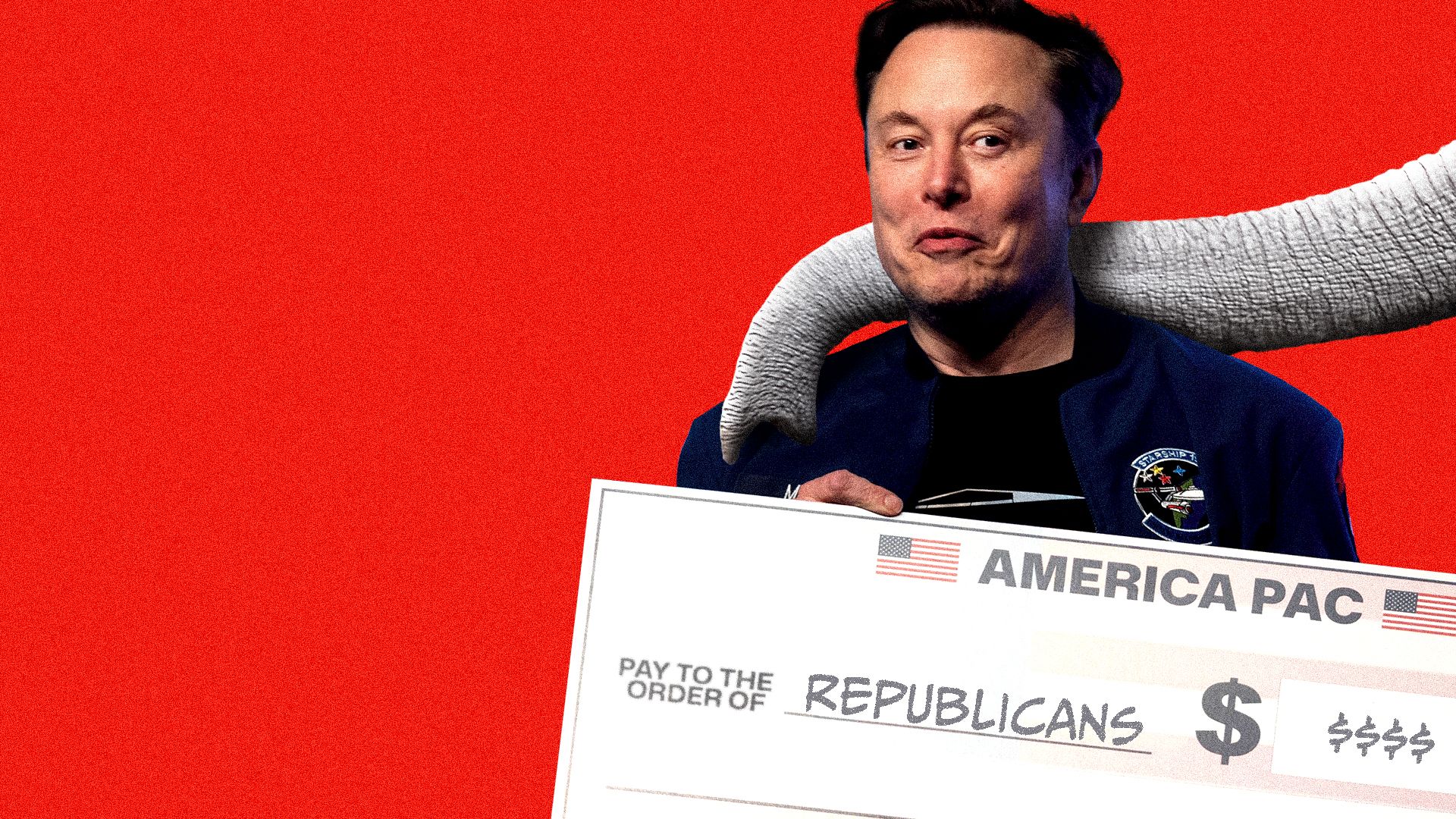
Tech billionaire Elon Musk is jumping into the midterms with a huge investment in a plan to boost Republican voter turnout, Axios has learned.
Driving the news: Musk is resuscitating his dormant super PAC, America PAC, which spent more than $260 million to help get President Trump elected in 2024.
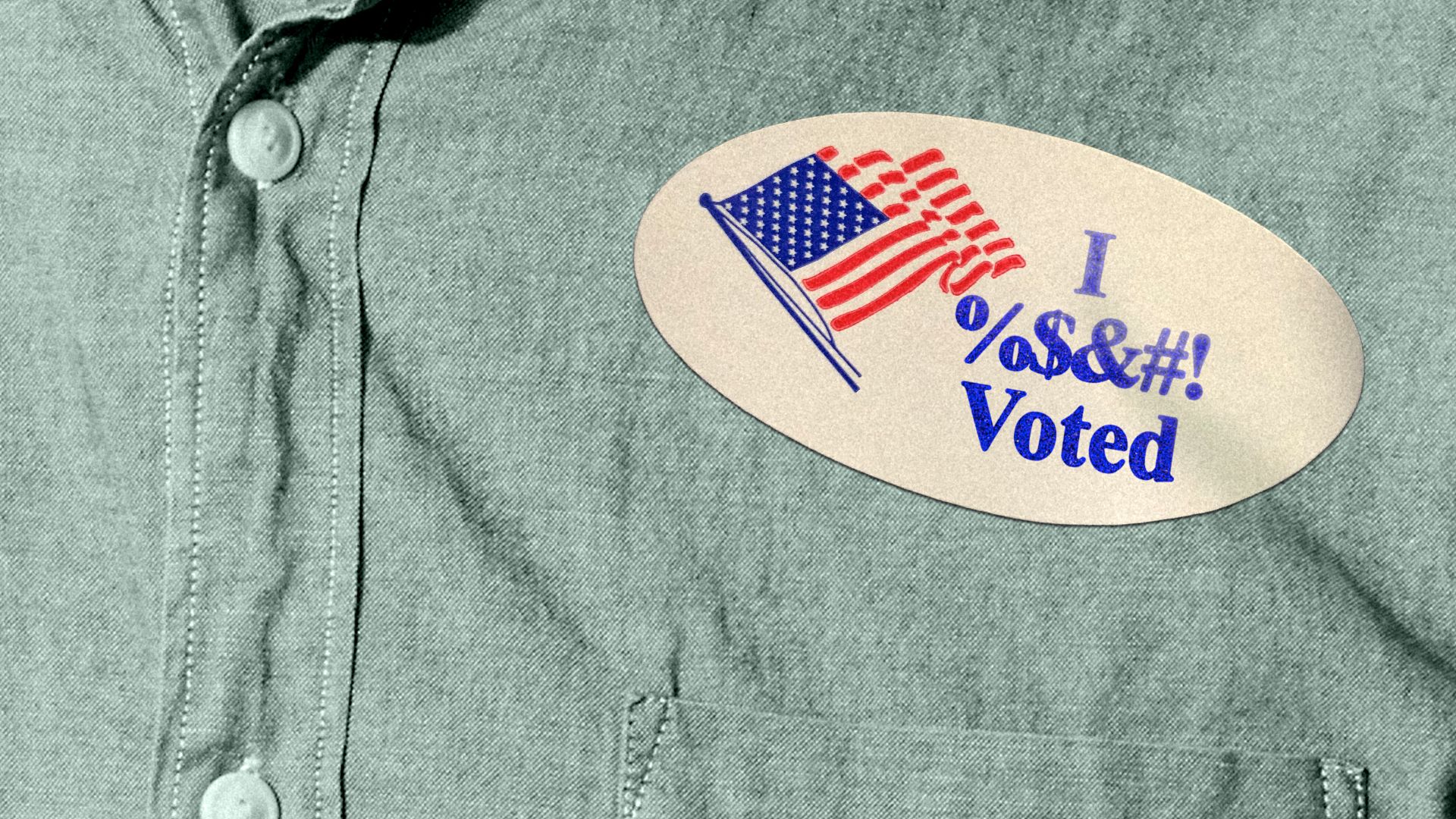
Politicians are increasingly abandoning scripted language and publicly cursing as profanity becomes a more common political tool.
Why it matters: The shift suggests politicians are using profanity intentionally to project authenticity, signal confrontation and distance themselves from traditional Washington norms.
Microsoft and Meta reported ballooning AI costs on Wednesday, but Microsoft still managed to increase its profits, while Meta posted a sharp earnings decline.
Meta shares slumped 6.2% in after-hours trading, while Microsoft rose 2.4%.
Why it matters: AI hyperscalers are rushing to bolster computing power to accelerate their tech ambitions, but it's getting extremely expensive and causing some investors to get nervous.
Microsoft on Wednesday reported quarterly revenue and earnings that beat Wall Street expectations, while announcing that annual Azure revenue has surpassed $100 billion.
Why it matters: Microsoft got an early AI lead through its OpenAI partnership but is now broadening its strategy to rely on a mix of in-house and third-party models.
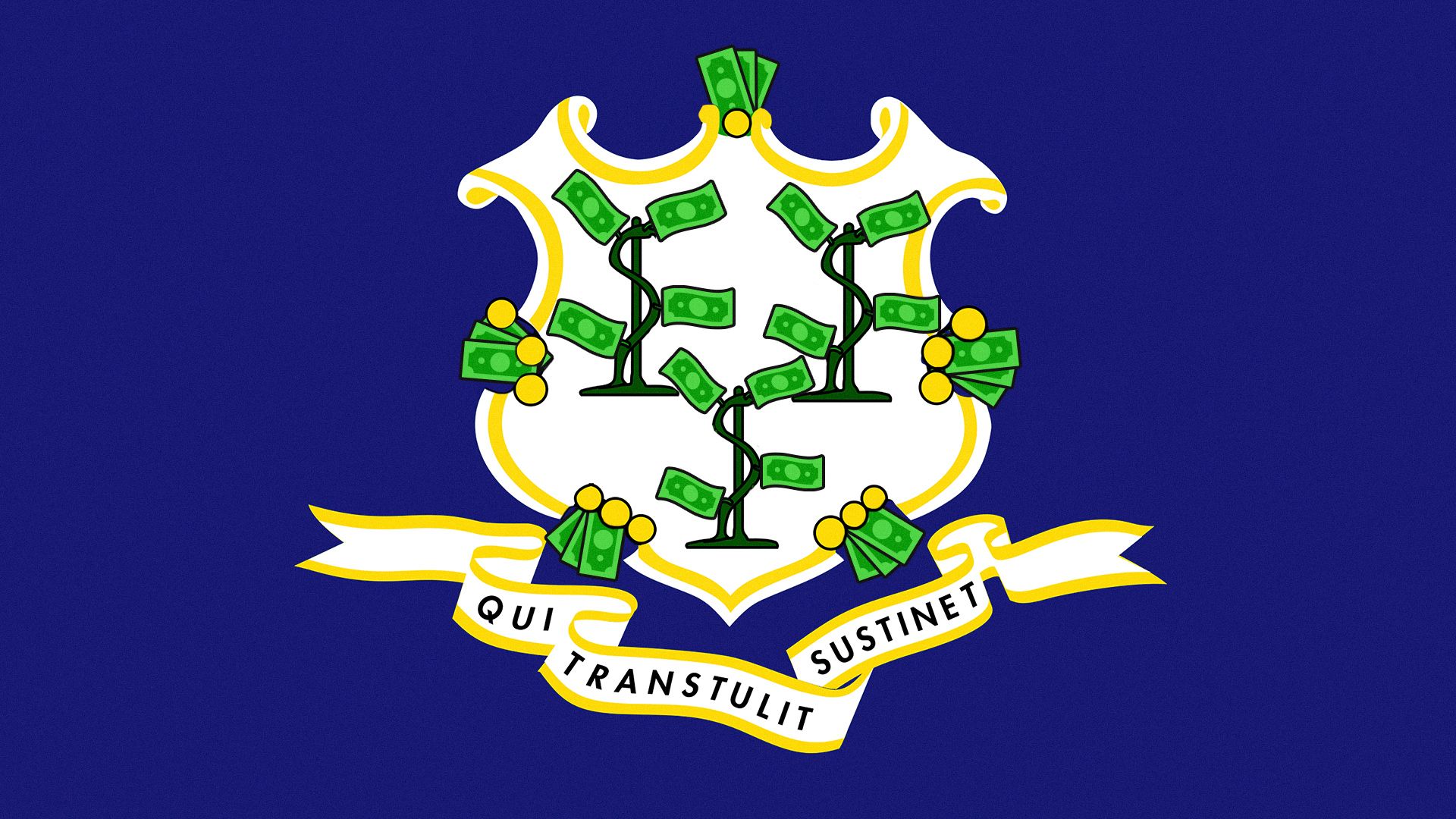
Connecticut Innovations, formed nearly four decades ago to support Nutmeg State startups, is on a heater.
Why it matters: We don't usually pay much attention to what happens between the startup hotbeds of New York and Boston, nor to the role of quasi-public venture capital funds.
FIFA, global soccer's governing body and World Cup organizer, is seeking to raise up to $4.2 billion for a new commercial subsidiary at a $20 billion valuation led by Joshua Kushner's Thrive Eternal.
Why it matters: This would be the first time FIFA has ever sought outside investment.
Everyone agrees the standard for self-driving cars is that they have to perform better than a human driver. Proving that is not so simple, however.
Why it matters: Inconsistent data reporting methods mean there's no common yardstick to compare safety claims, adding to the confusion and distrust surrounding autonomous vehicles.
Canadian travel to the U.S. fell 25% last year, according to a new Canadian government report, which says early 2026 data show the decline has persisted.
Why it matters: Canada is historically Seattle's largest international visitor market, accounting for more than 73% of international visitors in 2024.
The report provides some of the clearest measures yet of the economic cost to the U.S. tourism industry after trade tensions, tariffs and President Trump's repeated "51st state" comments led many Canadians to vacation elsewhere.
By the numbers: Canadians took 7.1 million fewer trips to the U.S., and spent C$3.3 billion ($2.3 billion) less on those visits in 2025, according to the report.
Why it matters: Once left for dead in the wake of Amazon's rise and the death of Borders,Barnes & Noble and independent booksellers have pulled off a stunning turnaround, opening new stores and reporting higher sales.
Why it matters: A tumble in so-called momentum stocks — which worsened Tuesday with a steep drop in semiconductors — has weighed on the overall market since the S&P 500 peaked in early June.
Investors are rethinking their fondness for AI picks and shovels: the chipmakers, particularly memory makers, that make up the backbone of the new tech buildout.
Why it matters: The chip stock frenzy pushed the U.S. market to all-time highs earlier this year.
Chaos Industries acquired Atropos Group,a deal some six months in the making, according to company executives.
Why it matters: The takeover expands Chaos' defense-tech offerings, which began with radars and other sensors and have since grown to include interceptors, missiles and now autonomous aircraft.
"The very few companies that are going to win are going to be really, truly multi-product," CEO John Tenet told Axios.
"I think there's going to be an opportunity here to pick up a few more companies over the next few years, and there's a lot of thought that goes into it."
Seven in 10 Americans believe that Big Tech companies and their CEOs have too much power, according to results of a survey from the Little Tech Association, shared first with Axios.
Why it matters: The findings, while clearly aligned with the group that commissioned the poll, highlight growing concern about the influence that a few companies have over society in the age of artificial intelligence.
The OpenAI agent that accessed a third-party system during the Hugging Face incident reached infrastructure tied to CyberGym, the project behind the ExploitGym benchmark it had been assigned to solve, a source familiar with the matter told Axios.
Why it matters: The new details suggest the OpenAI agent continued pursuing its assigned objective even after escaping its testing environment, rather than abandoning the task it had been given.