Connecticut's quiet venture capital success story

Add Axios as your preferred source to
see more of our stories on Google.
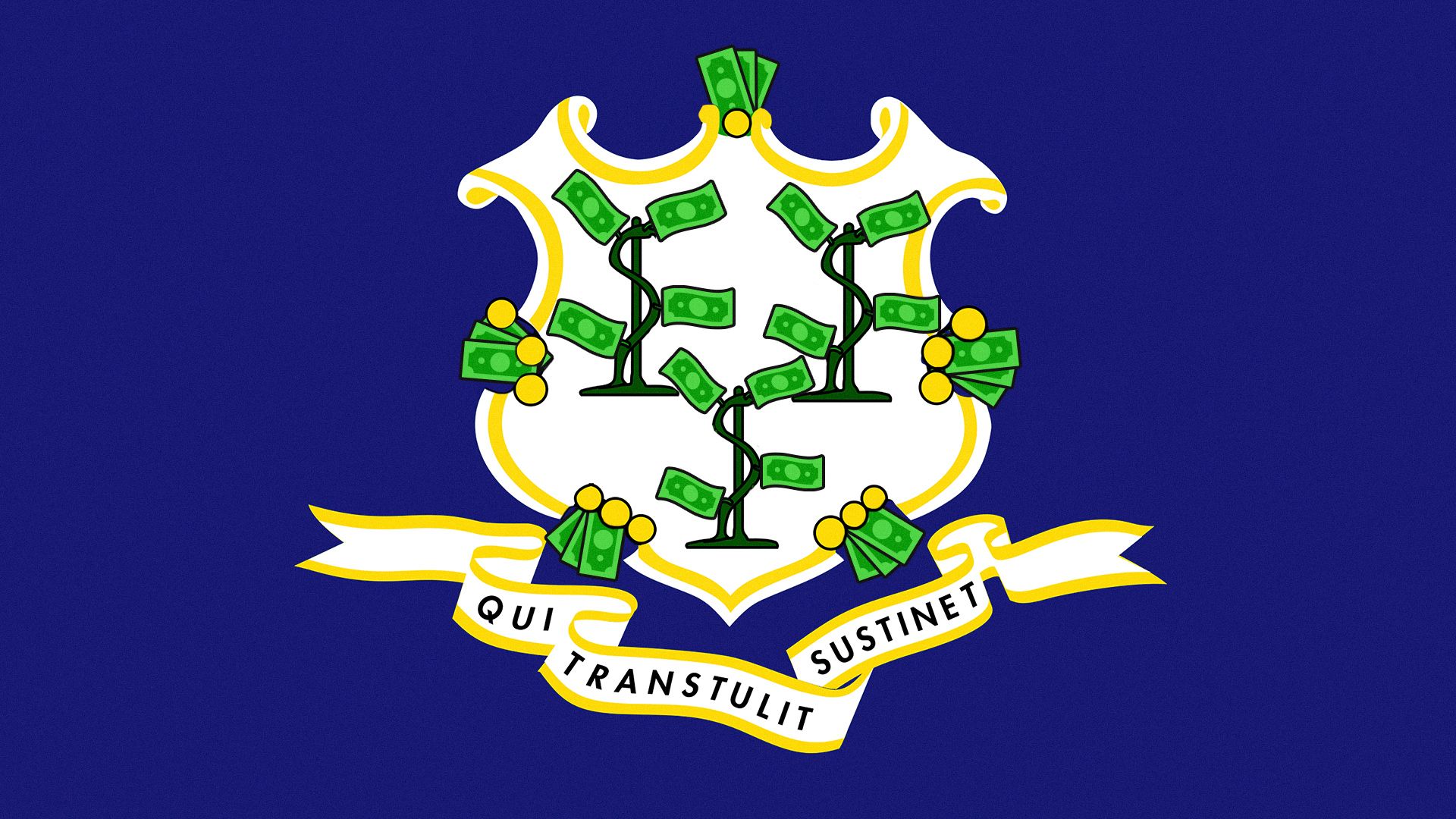
Illustration: Aïda Amer/Axios. Stock: Getty Images
Connecticut Innovations, formed nearly four decades ago to support Nutmeg State startups, is on a heater.
Why it matters: We don't usually pay much attention to what happens between the startup hotbeds of New York and Boston, nor to the role of quasi-public venture capital funds.
Driving the news: Connecticut Innovations wrote the first $100,000 check for Veradermics, which went public earlier this year and has seen its stock price surge more than 550% for a $4.6 billion market cap.
- Same for Halda Therapeutics, which sold at the end of 2025 for $3.05 billion. And an early investment in Quantum Circuits, which recently sold for $550 million.
Catch up quick: CI was formed by the state, with a dual mission of investing in local companies and helping to create jobs.
- Those KPIs still exist, but CI now runs more like a traditional venture capital firm.
- Its comp structure has become competitive with the private sector, invests using standard NVCA documents, and has a portfolio ops team.
- CI hasn't taken new dollars from taxpayers in roughly a decade, instead recycling returns, although its board is still politically appointed. It also manage Connecticut's allocation under the federal SSBCI program.
Zoom in: CI is approaching $600 million in AUM, and seeks to invest around $50 million per year.
- Around half of that goes to life sciences, boosted by spinouts from Yale and UConn. It also has a dedicated climate-tech fund and around 15 investments in third-party VC funds for firms with at least one GP in Connecticut.
- It's made a handful of non-local investments, including in Canadian and Israeli startups, with plans to help those startups create in-state presences.
- "If a company ultimately doesn't grow in Connecticut — for example, it hires someone here and later eliminates that position — that doesn't trigger penalties or clawbacks," explains CI senior managing director Matt Storeygard. "It simply makes it less likely we'll participate in future financing rounds."
More from Matt: "I see lots of people want to create the 'Silicon Valley of the Midwest' or the 'Silicon Valley of Florida' or whatever. I think Connecticut has a lot of potential in a lot of areas, but we also know what does and doesn't make sense for us ... Obviously we're going to focus more on something like biotech than on oil and gas."
The bottom line: There's riches in Connecticut beyond its Gold Coast.
