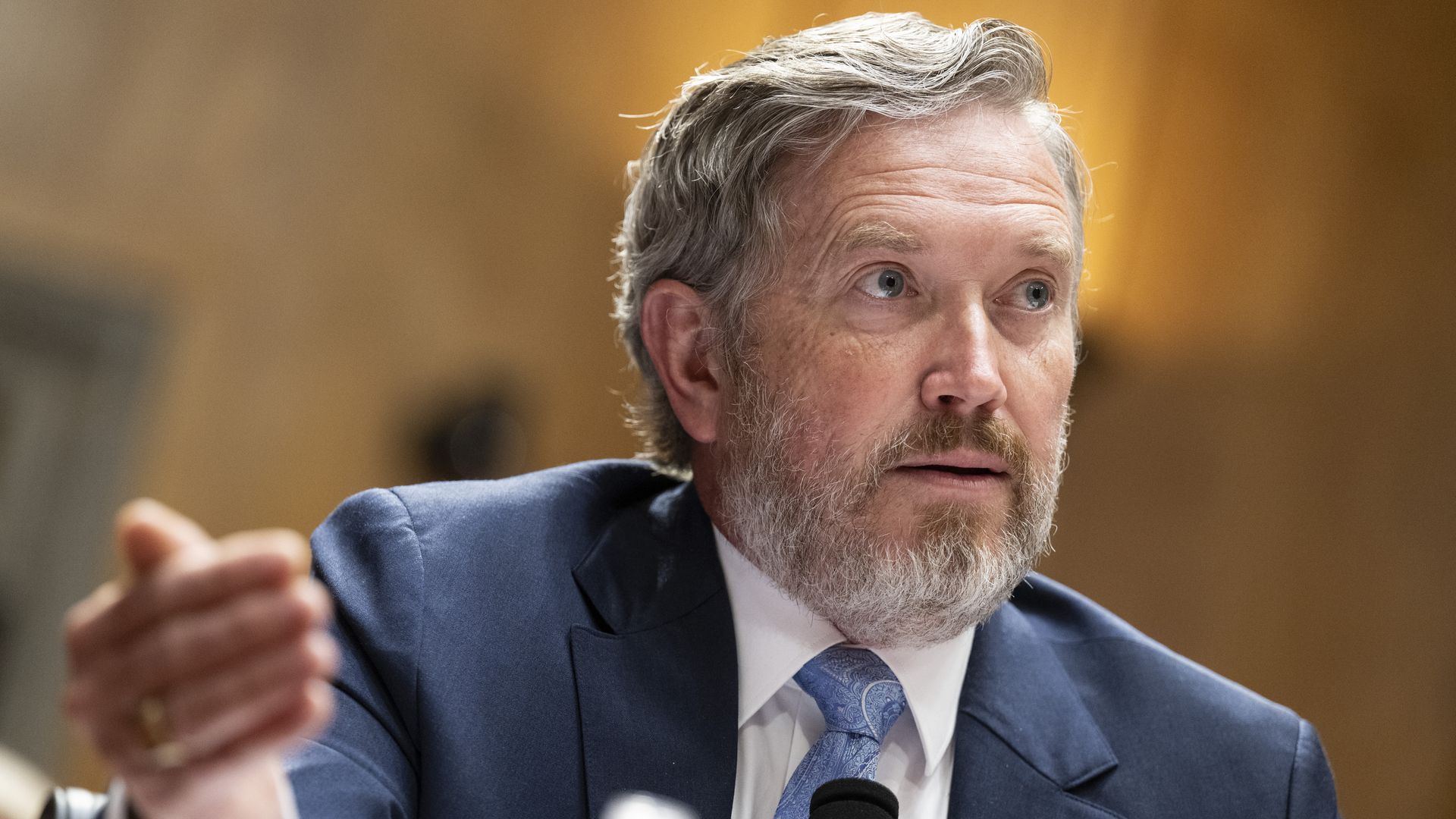
Rep. Thomas Massie has stopped counting on help from Elon Musk, despite a vow of support last year from the world's richest man.
Why it matters: Musk has cut huge checks to Republicans and GOP super PACs this cycle. But with the primary just three weeks away, he's yet to lift a finger for Massie against Navy SEAL veteran Ed Gallrein, who was recruited by President Trump.
The chances of a mega-merger in the airline industry now appear slim, but a spike in jet fuel prices still has the weakest players scrambling for options.
Why it matters: A prolonged rise in jet fuel prices — a quarter of an airline's costs — will widen the divide between the haves and have nots in the industry, potentially winnowing out some of the budget players.
AI is changing how people decide what to buy, raising the stakes for physical stores.
Why it matters: More of the shopping journey is happening before consumers ever enter a physical store, a new report shows — pushing retailers to rethink what brick-and-mortar is really for.
Chinese regulators have ordered Meta to unwind its $2.5 billion acquisition of Manus AI, developer of a general AI agent that it claims can complete real-world tasks
Why it matters: It's an escalation of AI tensions between Beijing and D.C.
Joshua Kushner's Thrive is now investing in pro sports, agreeing to buy a small stake in the San Francisco Giants.
It's being done via a new holding company called Thrive Eternal, which will focus on assets with "qualities that cannot be replicated by technology."
Why it matters: This feels like an asset-gathering gambit by Thrive, which now joins the same IPO watchlist as General Catalyst and Andreessen Horowitz.
Audion has raised a $15 million Series B and is expanding to the U.S. as it aims to turn digital audio into a more measurable, AI-powered performance channel for advertisers, CEO Arthur Larrey exclusively tells Axios.
Why it matters: Audio commands massive attention but has lagged behind search, social and connected TV in attracting ad dollars.
Spotify is pushing deeper into wellness, launching guided workouts and teaming up with Peloton to bring more than 1,400 classes to its platform, the companies announced Monday.
Why it matters: Spotify is pushing beyond audio to become a daily habit, while Peloton gains global distribution as it looks to grow beyond hardware.
Comebacks in the tech industry are rare, but Intel is in the middle of an all-time turnaround: The chipmaker's stock is up 110% for the year, and it reached a new all-time high Friday, 25 years after hitting the last one.
Why it matters: The AI transition is creating clear winners and losers in the tech industry, and right now, pick-and-shovel hardware companies are slaying, while software and services firms are suffering.
Intel I've picked up from top officials in government, AI and business. It was shared confidentially, but with the knowledge I'd use it without sourcing it:
📈 Resistance rises: Three big Trump-skeptical media properties are all surging at once: The New York Times (13M paid subs), The Atlantic (1.5M paid subs) and MSNOW (viewership rising). All three are on hiring binges and racking up bigger audiences on- and off-platform.
We must redesign our companies, integrate AI at every level, and keep top talent focused on the right work in the right order.
Meanwhile, some kid with a team of AI agents is trying to eat our lunch at a fraction of the cost.
Why it matters: The next 18 months will sort CEOs and leaders into two camps: those who figured out how to actually run a bionic organization and those who bought a bunch of AI tools and called it transformation.
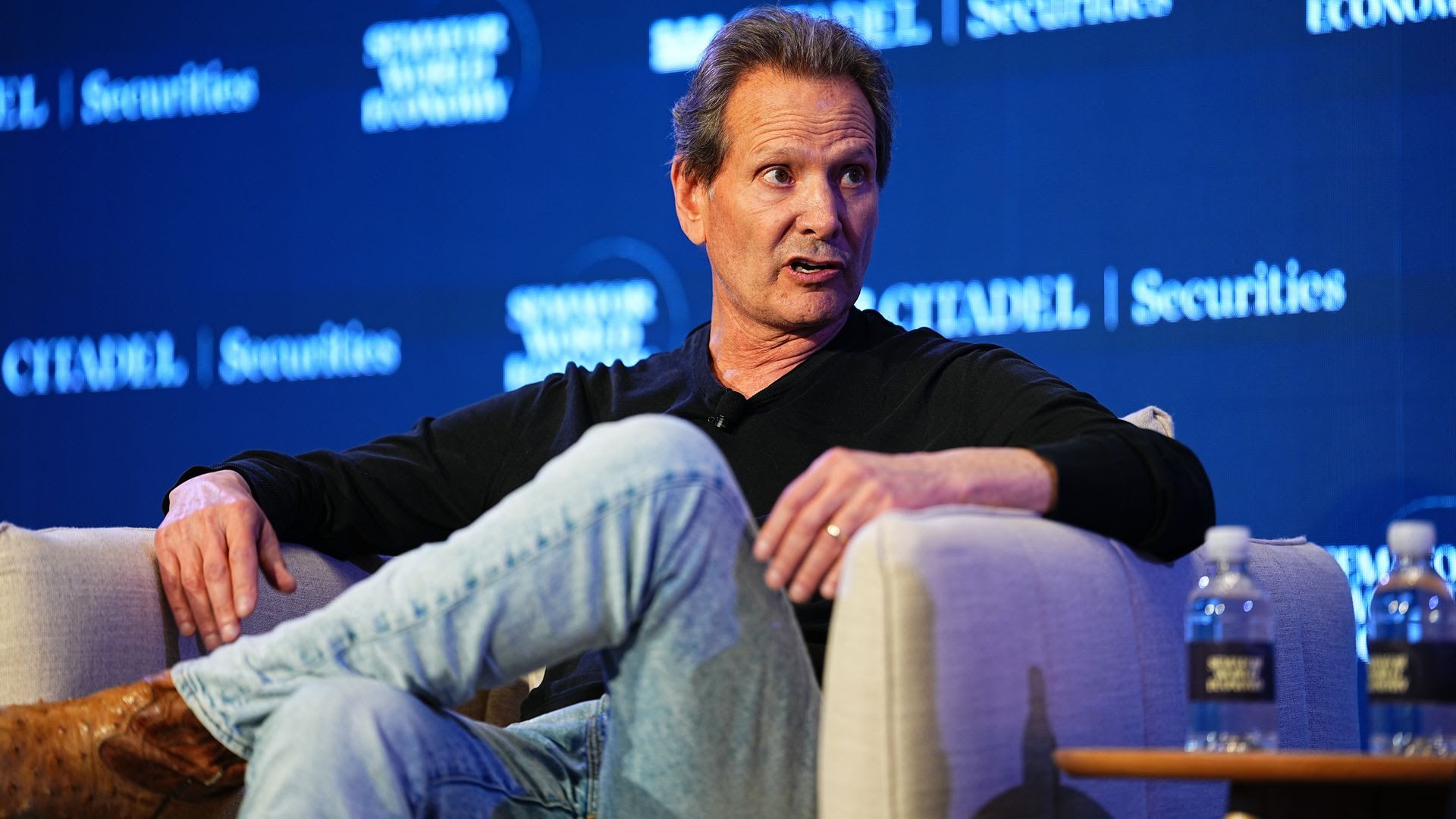
Verizon CEO Dan Schulman is the rare Fortune 100 chief willing to say aloud what many say and think privately: AI could disrupt the labor market, and the CEO class is sleepwalking into the backlash.
Why it matters: Every one of us is running the same quiet playbook — costs out, headcount down, AI in. Schulman is saying it on the record. His candor seems like the smart move, not the risky one.
Ask your employees how the economy feels right now and a decent number will answer with some version of "vibecession" — the idea that Americans feel broke even as the hard data says otherwise.
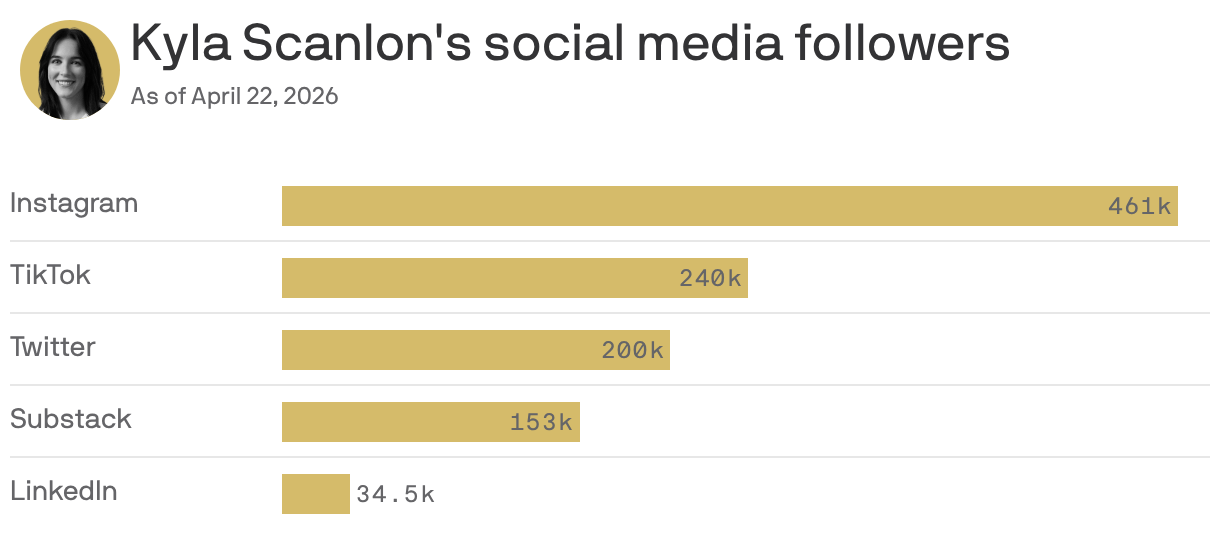
That term didn't come from the Wall Street Journal, CNBC or a Davos panel. It originated in a 2022 Substack newsletter by Kyla Scanlon, then 25 years old.
Why you should care: Your young, high-potential employees are reading her, not the Journal, to understand what tariffs mean for their wallets and whether their jobs survive AI.
The carbon removal industry is reframing its pitch to win support in the Trump era, by focusing on energy dominance over climate change.
Why it matters: Billions of dollars have already flowed into a sector built to fight global warming, and its future may depend on how well it fits President Trump's priorities.
Iran gave the U.S. a new proposal to reopen the Strait of Hormuz and end the war, with nuclear negotiations postponed for a later stage, according to a U.S. official and two sources with knowledge.
Why it matters: The diplomacy is in a stalemate, and the Iranian leadership is divided about what nuclear concessions should be on the table. The Iranian proposal would bypass that issue en route to a faster deal.