Austin and other Texas cities could soon be on the vanguard of aviation, with innovative electric aircraft jetting off their runways.
What's happening: The Texas Department of Transportation (TxDOT) was selected by the Federal Aviation Administration (FAA) this week for one of eight pilot projects nationally, with regional flights linking Dallas, Austin and San Antonio — with Houston planned next.
Partners on the Texas project include the companies Archer, BETA, Joby and Wisk.
The big picture: The U.S. is competing against China to lead in advanced air mobility.
How it works: Most of the U.S. projects involve the use of electric aircraft that can take off or land vertically — imagine giant, low-flying electric drones carrying passengers or cargo that take off like helicopters and fly horizontally like traditional planes.
Some will also include electric or hybrid planes that take off and land conventionally or require only a short runway.
Zoom in: Operations in Texas cities could start later this year, Adam Hammons, a spokesperson with TxDOT, tells Axios.
Initially, in a phase that could last three months, TxDOT will use traditional helicopters and fixed-wing planes alongside electric aircraft to fly the planned routes. These flights will carry equipment and perform tests without carrying commercial passengers, Hammons said.
In a second phase, operations will scale to medical and cargo logistics, such as transporting critical medical supplies or organs between rural facilities and urban medical centers in Austin and San Antonio.
Ultimately, after the electric aircraft receive final federal certifications, the network will scale — in two to three years — to commercial passenger "air taxi" flights, Hammons says.
What they're saying: "Rather than isolated tests in a single city, TxDOT is building the infrastructure to handle the transition between urban, rural and state airspace," Hammons tells Axios.
The bottom line: Together, the U.S. projects will create one of the largest real-world testing environments for next-generation aircraft in existence, the FAA said in a statement.
Editor's note: The headline to this story was clarified to reflect that the electric, propeller-driven aircraft will fly (not jet) in Texas.
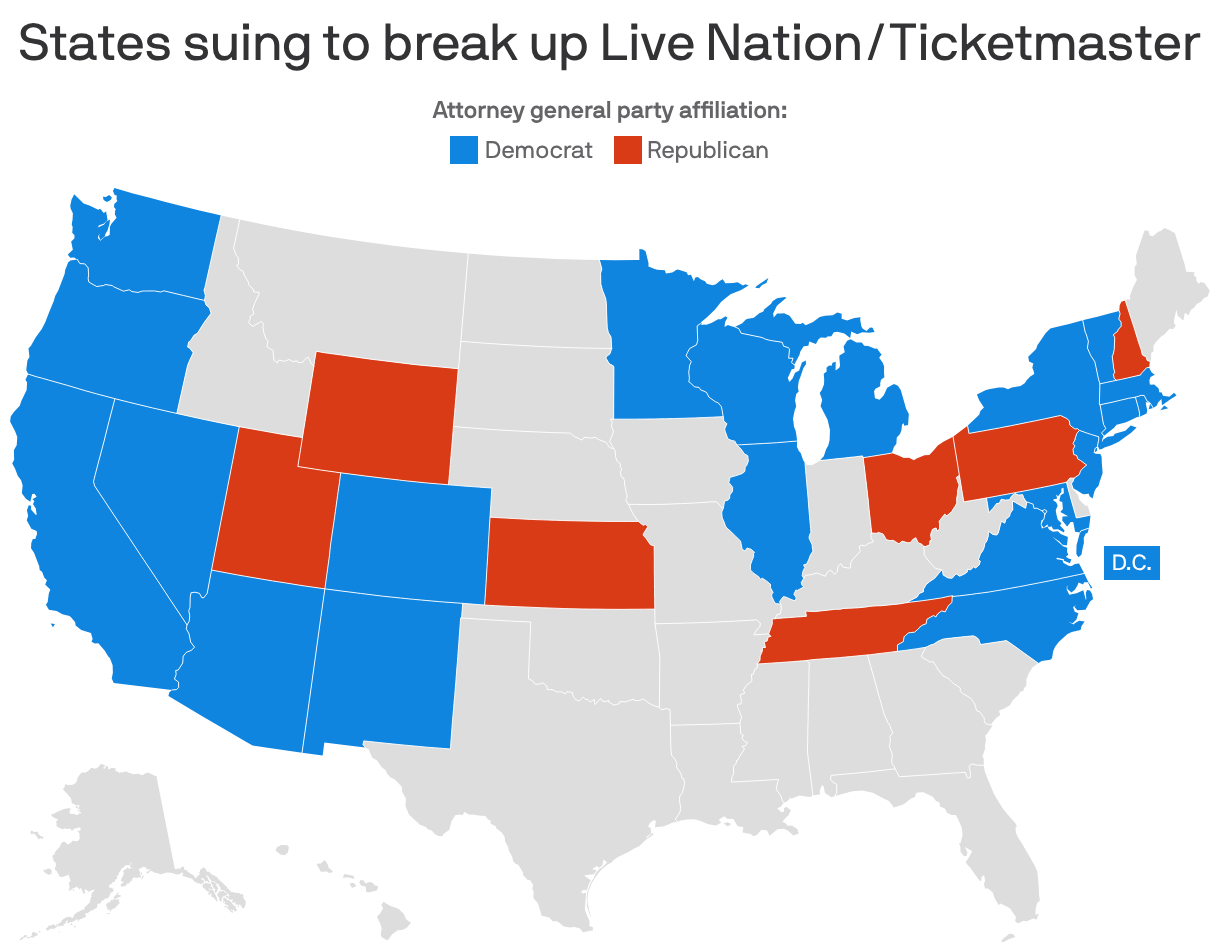
The U.S. government said it reached a settlement in its antitrust lawsuit against Live Nation on Monday, but Virginia is one of the states pushing forward with the legal fight against the ticketing giant.
Why it matters: The settlement — which still needs a judge's sign-off — meansLive Nation won't need to divest Ticketmaster or any other assets.
Oracle shares jumped Tuesday after the cloud computing giant said it expects to "comfortably meet and likely exceed" its previous revenue growth outlook for the next fiscal year "and beyond."
Why it matters: Oracle had been on the hot seat as investors questioned whether it could handle a deluge of business from AI tech giants.
Gracenote, a metadata and identification services company owned by media measurement giant Nielsen, has sued OpenAI for copyright infringement, Axios has learned.
Why it matters:Gracenote is suing OpenAI not just for using its metadata without authorization or compensation, but also for copying the relational framework it uses to connect its metadata, which is in part what makes the data valuable to its enterprise clients and useful for consumers.
The big picture: "The most iconic brands in the world ... are really starting to behave more like entertainment companies," Taco Bell's global chief brand officer Taylor Montgomery tells Axios.
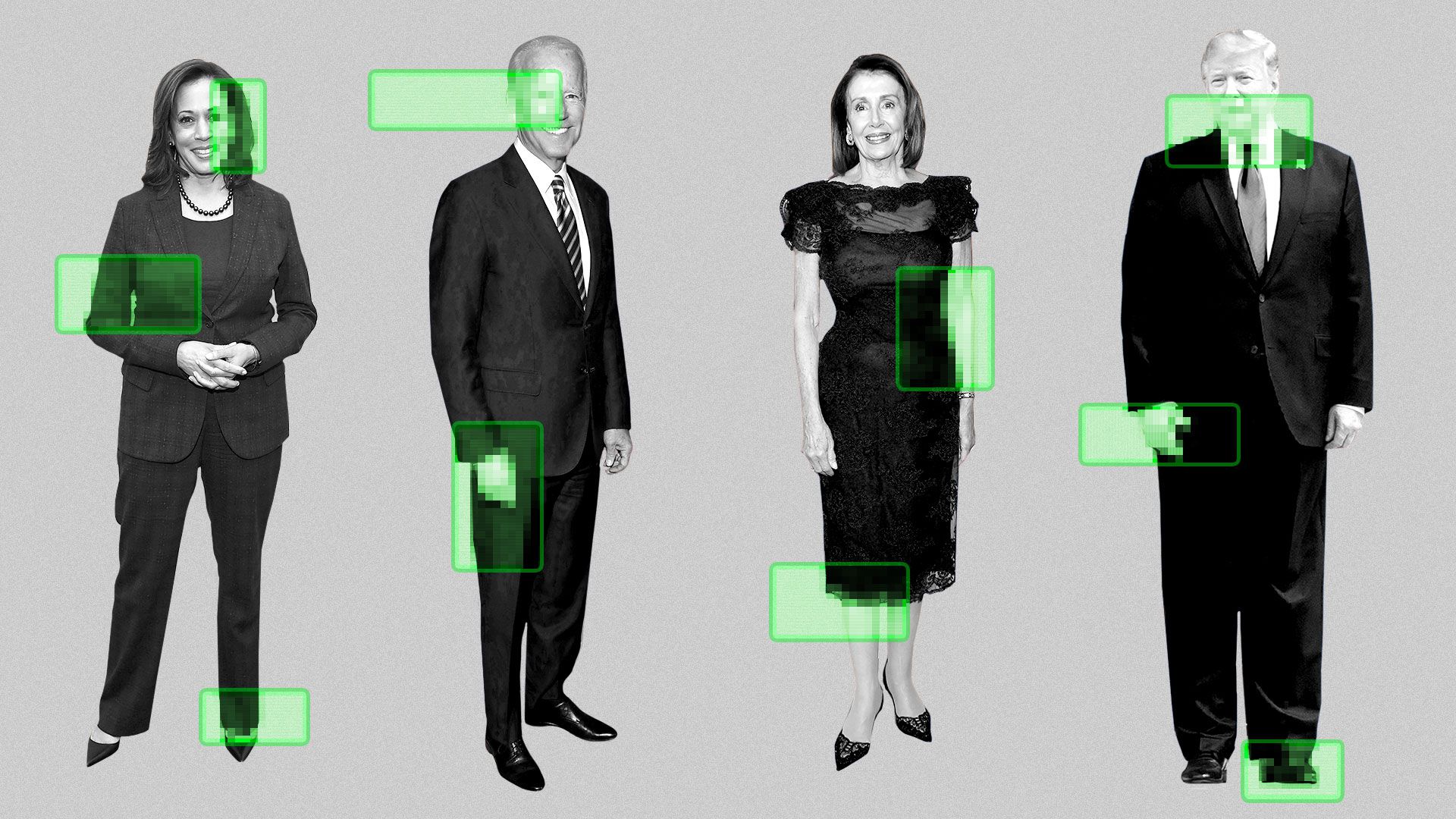
YouTube is expanding a tool that detects impersonations to a select group of government officials, political candidates and journalists.
Why it matters: New AI systems are exacerbating the problem of deepfakes, making it easier to create convincing videos of real people, including President Trump.
Meta has acquired Moltbook, a viral social network designed for AI agents, Axios has learned.
Why it matters: The deal brings Moltbook's creators — Matt Schlicht and Ben Parr — into Meta Superintelligence Labs (MSL), the unit run by former Scale AI CEO Alexandr Wang.
A new coalition of companies that includes Google and Tesla will address energy affordability by tapping into underused electricity grid capacity, coalition officials told Axios exclusively.
Why it matters: It's the latest example of how soaring electricity rates — from AI data centers and other demands — have moved affordability to the front burner.
State attorneys general are moving aggressively to sue corporate giants in an attempt to fill a void they argue is being left by federal antitrust regulators.
Why it matters: Recent examples show states can be effective in blocking big mergers, especially when they band together.
Flared jeans are in style, an oil crisis is driving pain at the pump, and unemployment is rising: It's not 1978, but it kinda feels that way.
The big picture: Talk of stagflation is rising on Wall Street, as investors fret the dreaded pairing of high inflation and high unemployment is making a comeback.
Data: Rolando Pujol/The Retrologist; Map: Sara Wise/Axios
Virginia has five "Pizza Hut Classic" locations, per "retrologist" Rolando Pujol.
Why it matters: The retro-themed restaurantshave everything you remember from the Pizza Huts of the '80s and '90s: red checkerboard tablecloths, branded hanging lamps, original menus — and there are only about 80 left nationwide.
Oil prices would need to stay high for years — not weeks or months — to drive a lasting shift away from the fossil fuel.
The big picture: Every time oil spikes, the same question surfaces: Will this push more people into electric cars or install solar panels onto rooftops?