Saturday's business stories

What cutting junk foods from SNAP could mean for millions of recipients

/2025/03/07/1741388703103.gif?w=3840)

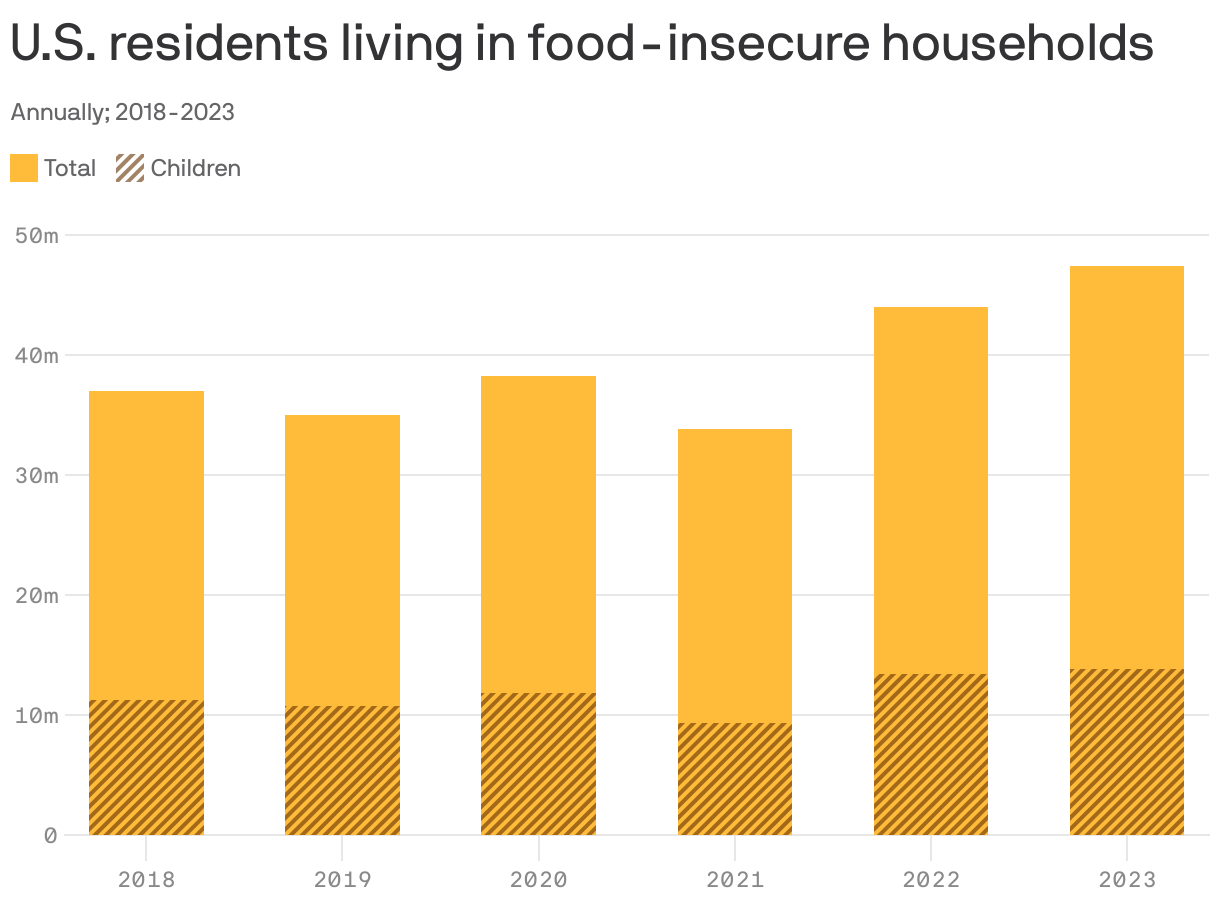
The House districts most exposed to DOGE cuts




Americans are behind on car payments at a record level






U.S. added 151,000 jobs in February, as hiring stays steady


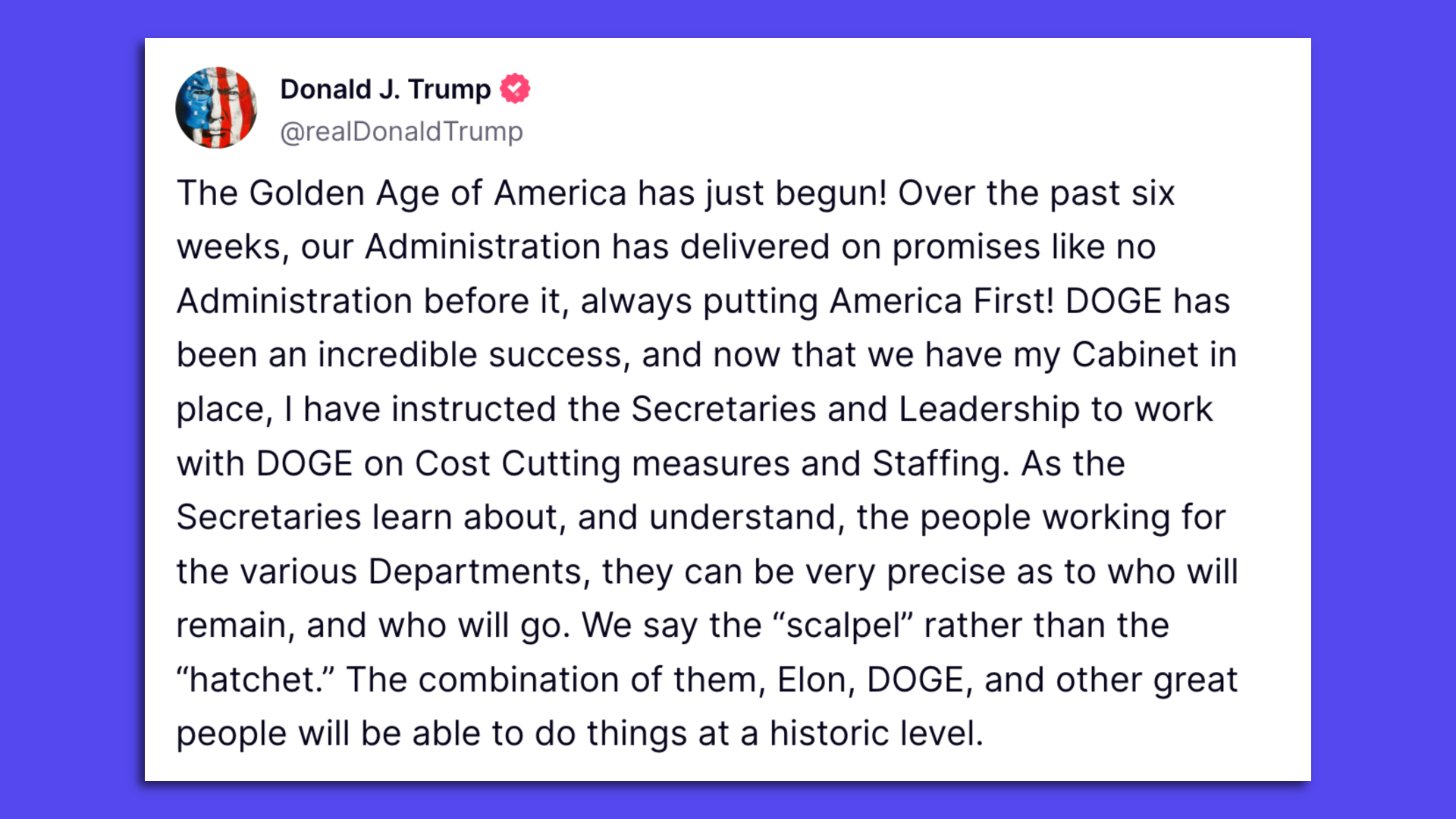
Trump promises "scalpel rather than the hatchet" in cuts to federal workforce

Management is in its Boss Era
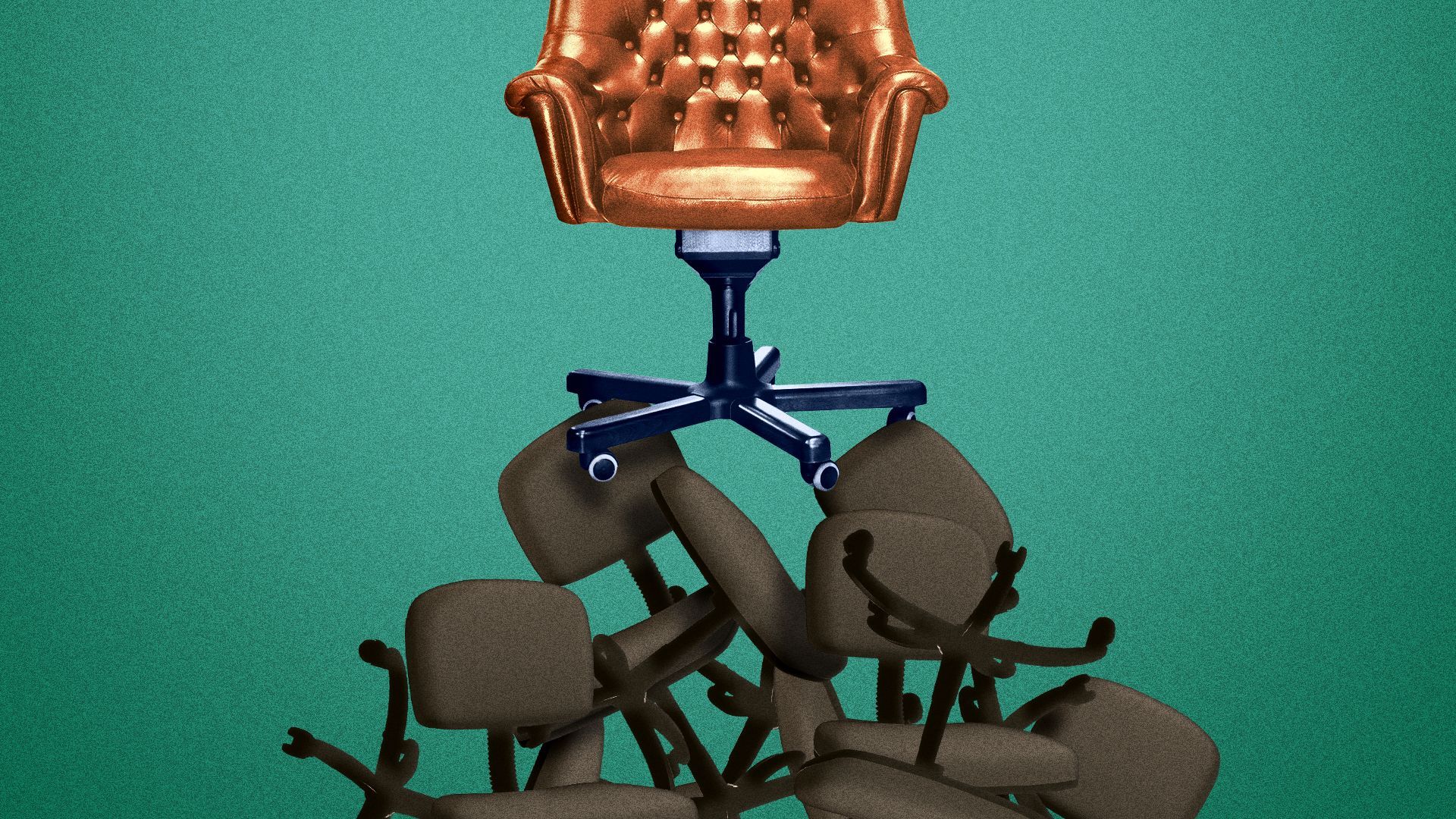
If there's one thing Elon Musk and Donald Trump have made clear: The U.S. is in its Big Boss Era.
Why it matters: Workers had a moment of empowerment in the wake of the pandemic — remember the Great Resignation? Summer of Strikes? Quiet Quitting? Well, forget it. That time is in the rearview.
- A slowing labor market, combined with a vocally pro-management, at times anti-worker White House is giving executives the chance to reclaim their vast power over working schlubs.
What's out: Work-life balance and flexibility. Unions. Diversity and inclusion.
- What's in: The office. Firing people who don't toe the line. Very long work hours.
"This is a boss's administration," says Aaron Sojourner, a labor economist with the W.E. Upjohn Institute for Employment Research.
- "You have a president who's made his mark as an employer," Sojourner points out. Trump's trademark Apprentice catchphrase was "you're fired!'"
And then there's Musk, a proponent of 80-hour work weeks, employing tough tactics honed at his companies, like the Fork in the Road email, to get the federal workforce in line.
- "You have the wealthiest man in the world, who is the CEO of multiple companies, taking a really strong hand in federal policy," says Sojourner.
Zoom out: The White House and Musk have been clear that they're suspicious of federal workers, especially those who worked remotely — they've suggested some were working two jobs, or spending their time golfing.
- Administration officials say fired workers weren't actually doing anything — something thousands have said isn't accurate.
- "Everybody's replaceable," Trump said back in January when asked about workers who take a "buyout" who might otherwise be considered necessary.
For the record: "President Trump is an accomplished business tycoon who spent decades building efficient and successful companies," White House spokesperson Anna Kelly said in a statement.
- "He knows that the real boss is the American taxpayer, and he will continue to demand the high level of dedication and excellence from all government employees that the American people deserve."
Between the lines: During his campaign, Trump made an explicit appeal to union voters. He's also nominated a pro-union Labor secretary, and has said he is pro-worker.
- Part of the stated reasoning behind his tariff push is to bring manufacturing back to the U.S. and create better-paying jobs.
Yes, but: Trump's unprecedented firing of a commissioner at the NLRB left the board without the quorum needed to adjudicate labor complaints. (A judge ruled Thursday one commissioner was fired illegally and should resume work.)
Zoom in: "Experts say what's happening is bigger than just the pendulum swinging back in employers' favor: Leaders in certain industries are trying to reclaim their cultures," is how Korn Ferry, a global consulting firm, puts it in a recent thought leadership piece.
- That culture, particularly in tech and finance, can be one of grueling overwork — particularly tough on those with caregiving roles at home (more likely to be women), or really anyone that seeks to have a life outside the office.
- In a leaked memo viewed by the New York Times, Google co-founder Sergey Brin recently extolled the virtue of the 60-hour work week as the "sweet spot" for productivity in its race to dominate the AI space.


The intrigue: Long gone are the days of the Great Resignation, when workers felt so empowered they could just up and quit their jobs, knowing something better was just around the corner.
- The quits rate — the share of workers who voluntarily leave their jobs each month — is well off where it was during the spree of 2021.
State of play: Those who have a job are somewhat safe at the moment, says Sojourner, the labor economist. (Except federal workers.)
- But the hiring rate is pretty soft and finding a job is harder — especially for knowledge workers. There has been talk of a white collar recession for almost a year now.
- With tens of thousands of highly educated former federal workers now hitting the job market, the fear is things get worse.
Where it stands: Here's what we know now about the labor market:
- The unemployment rate has been low, and is expected to have held steady at 4% in February.
- There are signs that layoffs are becoming more worrying. U.S. employers announced 172,017 job cuts in February, up more than 100% from the same month last year, per a tally from global outplacement firm Challenger, Gray & Christmas.
Stunning stat: Federal government jobs made up more than a third of those cuts — 62,242 jobs lost.