State officials come out in favor of Senate debanking bill

Add Axios as your preferred source to
see more of our stories on Google.
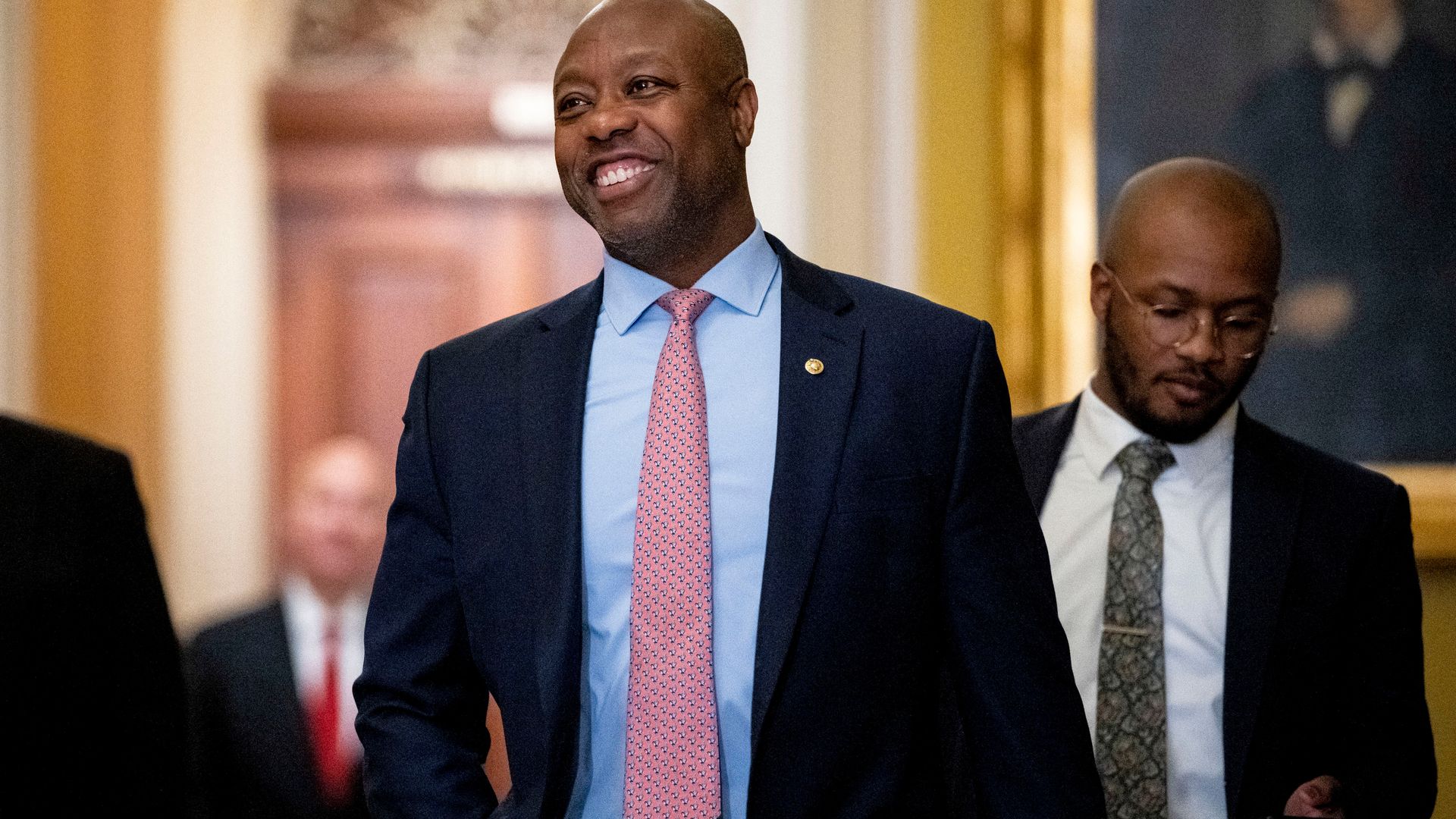
Senate Banking Committee chair, Sen. Tim Scott (R.-S.C.) Photo: Graeme Sloan/Getty
Political forces are lining up behind legislation that would rein in regulators' abilities to pressure banks into denying services to legal but disfavored industries.
The big picture: The case that certain companies, particularly those in the crypto industry, were getting debanked by association looked improbable not so long ago. But mounting evidence to support the claims has brought the issue to the political forefront, and even acknowledged by the Fed chairman.
Driving the news: Senate Banking Committee chair Tim Scott (R.-S.C.) released new legislation Thursday called the Financial Integrity and Regulation Management Act, or FIRM act.
- All 13 Republicans on the committee signed on, but no Democrats were listed on the initial announcement.
- Within hours, a letter from 26 state finance officials from across the country released a letter expressing support for the bill.
What they're saying: "This discriminatory and un-American practice should concern everyone," Scott said in a statement.
- "The historical record reveals a troubling pattern of regulators intentionally misusing their authority to restrict access to banking and financial services for lawful yet disfavored customers," the letter from state officials reads.
Catch up fast: Early in the new Congress, Scott held a hearing on debanking.
- Nearly in sync, the FDIC, compelled through a Freedom of Information Act lawsuit, released almost 200 new letters from its staff to banks, which taken together suggested a consistent pattern of creating friction for supervised banks that wanted to offer crypto services or serve clients in the industry.
- That hearing dealt with the idea that both individuals with out-of-favor political beliefs and companies operating in controversial but legal industries (such as digital assets) were losing access to banking services due to regulatory pressure.
Zoom in: A recurring refrain in that hearing was this idea that, when regulators review risk at banks, they had one highly subjective standard they could use: That standard is called "reputational risk."
- That standard, critics argue, provides too much room for politically motivated pushback not rooted in objective risk.
How it works: The FIRM act leaves other bank oversight measures in place while removing reputational risk from the criteria supervisors use to oversee U.S. banks.
- It also prevents promulgating rules that would put the standard back into its review protocols.
- "This bill is narrowly tailored so that removal of this subjective factor does not affect quantitative supervisory measures (e.g. concentration risk, liquidity risk, etc.)," a summary from the committee says.
The office of the Senate Banking Committee's ranking member, Sen. Elizabeth Warren (D.-Mass.) could not be immediately reached for comment.
The bottom line: According to Senate staff, several banking groups and the Blockchain Association have endorsed the bill, as well.
