Deadly H5N1 bird flu strain has hit all but 1 continent

Add Axios as your preferred source to
see more of our stories on Google.
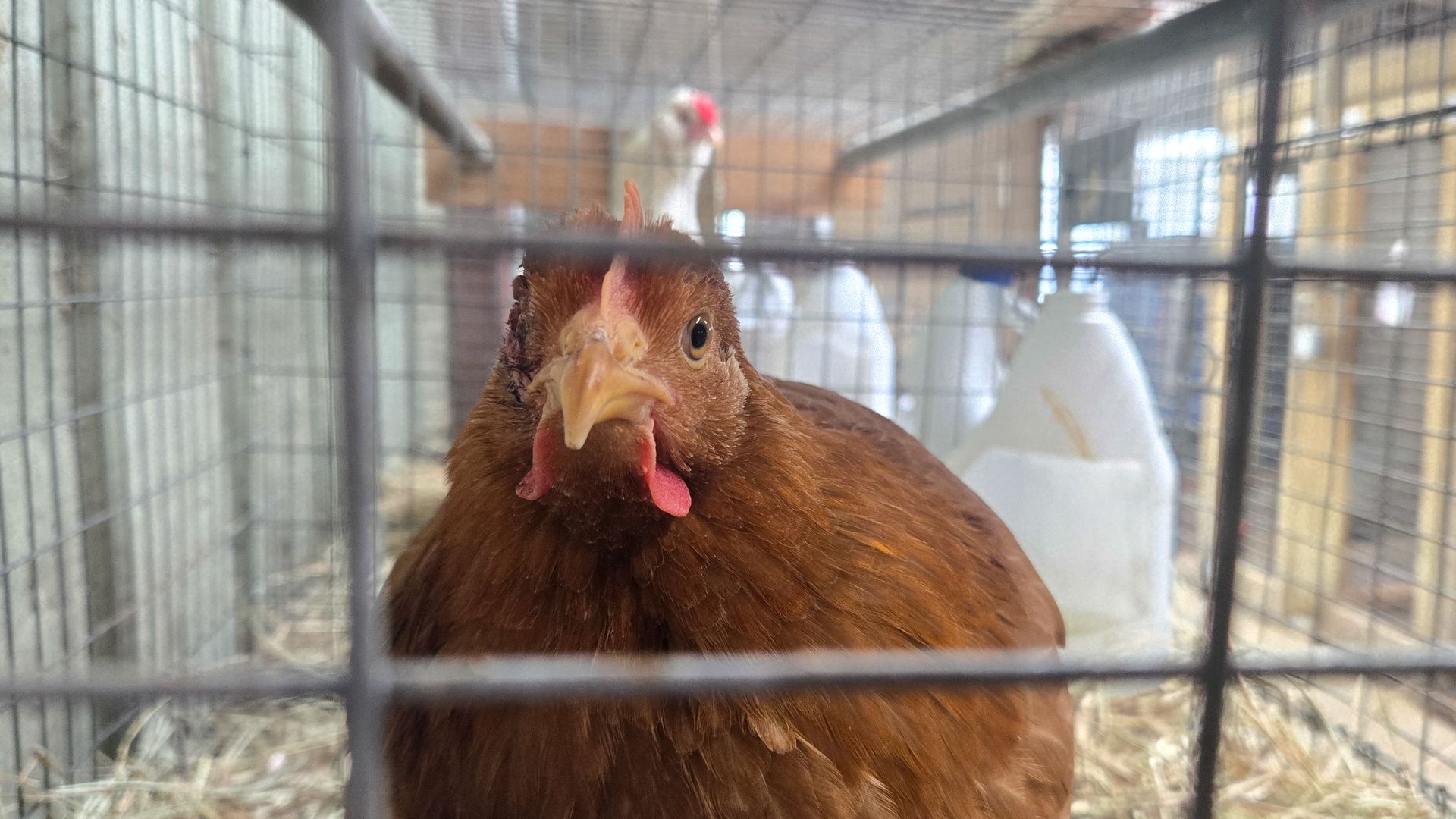
A hen for sale sits in its cage at Wabash Feed & Garden store in Houston, Texas, on February 10, 2025. Photo: Moises Avila/AFP via Getty Images
The H5N1 bird flu strain has infected humans and other animals in every continent except Australia, and scientists say it could serve as a model for other countries.
The big picture: The continent has seen small outbreaks of other strains of avian influenza in recent months and managed to "close those down," said professor Catherine Bennett, an Australian infectious diseases' epidemiologist, in an email Monday.
- She added: "Infection prevention and control in the agricultural industry has been key in containing outbreaks."
State of play: What makes Australasia better positioned than other countries is not just its status as an island continent, but also its people's commitment to "one health," said Bennett, who's chair of epidemiology at Australia's Deakin University.
- This is a "unifying approach to balancing the health of people, animals and ecosystems," and with that comes a "hefty investment" into environmental, animal and human surveillance, she said.
- Professor Jemma Geoghegan, an evolutionary biologist and virologist at New Zealand's University of Otago, said Monday most lineages of H5N1 are only dispersed long distances by migratory waterfowl.
- Australia and New Zealand have been considered "very low risk" because they don't have waterfowl that migrate much, added Geoghegan in an email.
Yes, but: This new strain of bird flu that emerged around 2020 and is now sweeping the world shows "how this virus has now expanded its host range to many different migratory species, including those that travel to and from Australasia," Geoghegan noted.
- "I think it's a matter of when, not if, the virus arrives in Australasia," added Geoghegan, who's co-leading a research project aimed at better understanding how and where avian influenza and other potentially devastating viruses could strike.
- "Research that tracks migratory birds shows us that we are not as isolated as we might think. We are part of a very important migratory flyway and these birds migrate here in their thousands."
Situation report: A World Health Organization spokesperson said in an emailed statement the current global situation shows that avian influenza subtypes have been "spreading widely, with significant impacts" in multiple countries.
- "In 2024 and 2025 to date, 82 human cases were reported from various countries including the Australia, Cambodia, Canada, China, the United Kingdom, the United States of America and Vietnam," the spokesperson added.
- "In 2024, Australia reported 1 human case, a child who contracted the virus in India. Meanwhile, New Zealand and other South Pacific Island nations have not reported any human cases."
Zoom in: Bennett noted that H5N1 has been around for some years now and is continuing to evolve.
- "The U.S. strain, first reported in Chile, has lower death rates when humans are infected compared with elsewhere in the world, but what is not clear is whether that's a strain characteristic or better testing and detection of even mild cases in the USA, or a bit of both," she said.
- Geoghegan said one reason H5N1 has impacted the U.S. so much is "perhaps because of the virus jumped into dairy cattle and adapted" to spread between cattle. "Because humans have ample contact with livestock, this amplifies the risk for human infection, too," she added.
What we're watching: The U.S. Department of Agriculture last month gave conditional approval for an updated bird flu vaccine to protect poultry against the H5N1 strain.
- Geoghegan said field trials of vaccines to respond to the cattle outbreaks had been promising "and may be the needed extra step to bring this under control and hopefully clear the virus" from at least the cattle industry.
Go deeper: Updated bird flu vaccine for poultry gets license
