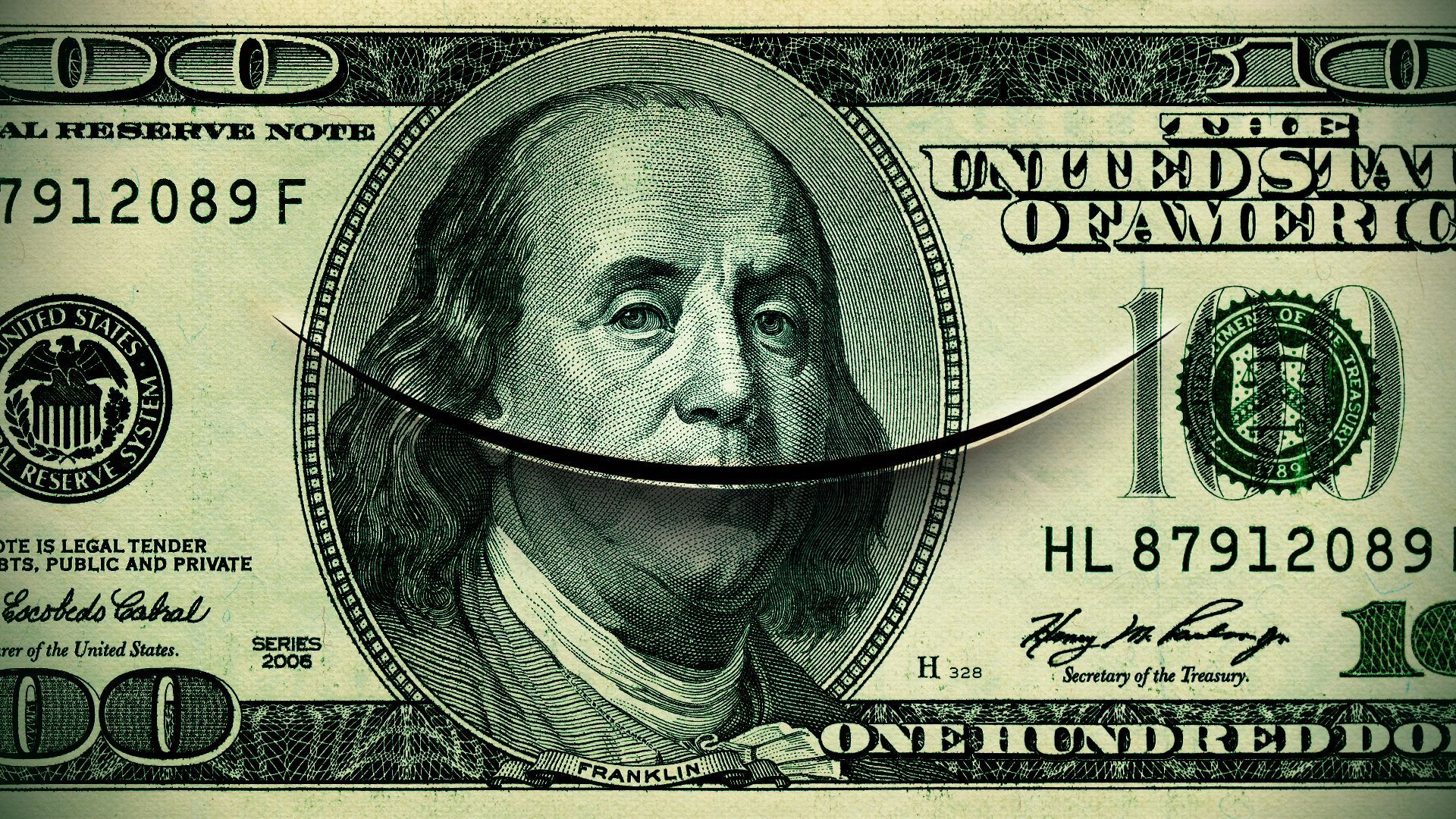
The price of eggs is expected to rise by 41% this year as the bird flu continues to rip through the nation's agricultural economy, the federal government projected in a new report.
Why it matters: That's more than double the 20% increase predicted in January.
Nvidia beat expectations on quarterly revenue and earnings Wednesday afternoon as investors watch closely for clues on how the company is weathering the emergence of a powerful new Chinese AI model.
Why it matters: Nvidia has become a proxy for the health of the AI economy.
President Trump signed an executive order on Wednesday empowering DOGE to scrutinize how federal agencies spend money, the latest expansion of Elon Musk's cost cutting powers.
Why it matters: Trump, who hours earlier backed Musk's email to federal employees asking them to outline what they accomplished at work last week, is giving the billionaire SpaceX founder extra teeth to upend government through his work on DOGE.
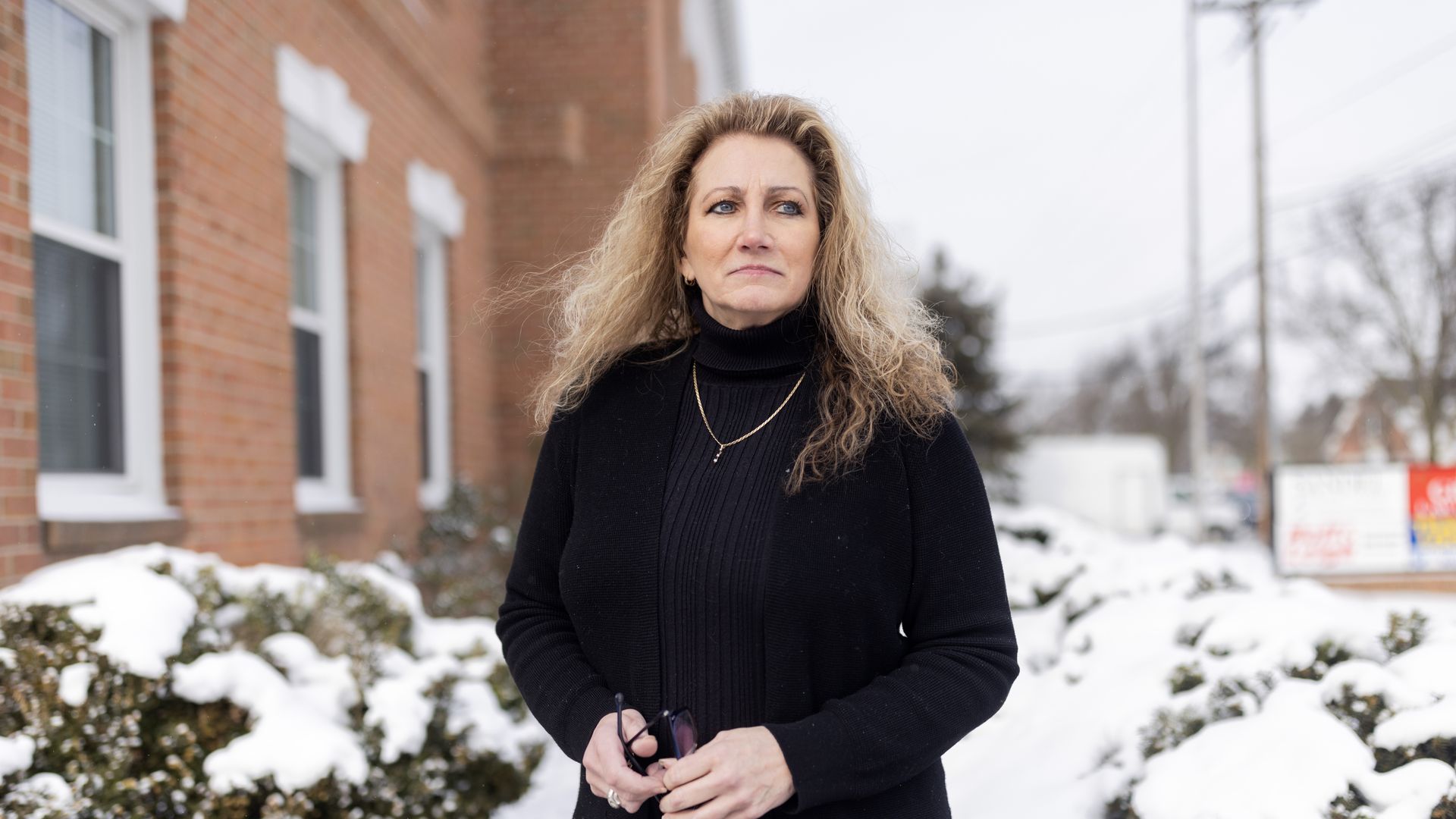
The Supreme Court seemed receptive to a woman's argument Wednesday she was discriminated against at work because she is heterosexual.
Why it matters: A ruling that allows the woman, Marlean Ames, to pursue the claim would open the door for men, white people, and heterosexual people to sue for job discrimination in the future.
The White House still plans to implement 25% tariffs on imports from Canada and Mexico next week, at least for now — despite comments from President Trump on Wednesday that raised hopes of another delay.
Why it matters: The Trump administration has announced a slew of tariffs that could take effect on their respective deadline, or ultimately be pushed off — a prime backdrop for confusion.
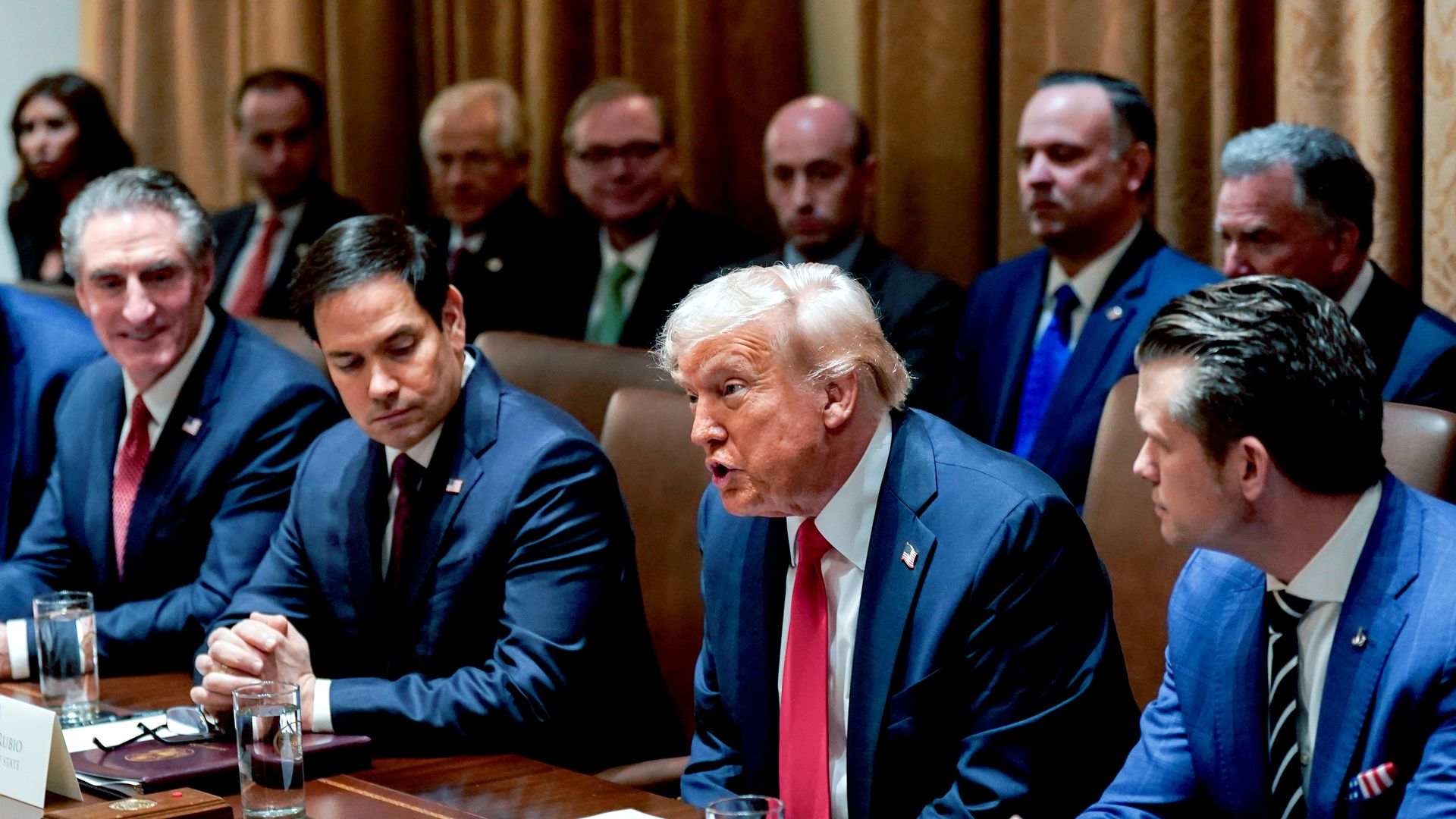
Federal workers who didn't respond to Elon Musk's request to outline what they did at work "are on the bubble," President Trump said during the first Cabinet meeting of his second term.
Why it matters: Trump's comments came as he was flanked by every one of his confirmed agency heads, including some whose departments' explicitly told their federal employees not to respond to Musk's email last week.
The stock market no longer appears to be President Trump's go-toyardstick for success. Bond yields, not the Dow, are the administration's new North Star.
Why it matters: The administration now sees bond yields — which determine long-term interest rates across the economy — as a real-time gauge of investors' confidence in its fiscal agenda.
The White House is directing federal agencies to prepare for large-scale layoffs, so-called reductions in force (RIF), according to guidance sent out by the Office of Management and Budget and the Office of Personnel Management on Wednesday.
Why it matters: To date, job cuts in the federal workforce have mostly affected probationary employees who are relatively easy to fire — RIFs are a more drastic step. Agencies were given two weeks to make plans for "significant" layoffs.
The price of eggs is expected to rise by 41.1% this year as the bird flu continues to rip through the nation's agricultural economy, the federal government projected in a new report.
Why it matters: That's more than double the 20% increase predicted in January.
The Washington Post's Opinion Section editor David Shipley resigned after owner Jeff Bezos mandated the section prioritize two topics, personal liberties and free markets, and not publish dissenting views in those areas.
Why it matters: The changes will dramatically reshape The Post's opinion coverage, which has focused on a broad array of issues, especially politics and policy, for decades.
Private equity entered 2025 with high hopes for a deals boom, to be driven by decreased regulation and interest rate cuts.
The big picture: That second part is increasingly uncertain, which perhaps helps explain why U.S. private equity activity is 53% lower than at this time last year.
OrganOx, a British developer of technologies to maintain organs for transplant, raised $142m in primary and secondary funding led by HealthQuest Capital.
Why it matters: OrganOx says that its solution — which has approval in the U.S. and Europe — can preserve donor livers for up to 24 hours, or around double the preservation time of traditional cold storage.
DoubleVerify (NYSE: DV) has agreed to acquire Rockerbox to help expand its ad tech business beyond understanding media quality to drive performance, executives tell Axios exclusively.
Why it matters: The acquisition aligns with marketers' increased focus on outcomes for their ad spend.
Companies, notably large employers, are pulling back and hushing up about diversity, equity and inclusion, per a survey of executives out Wednesday.
Why it matters: The survey from employment law firm Littler Mendelson was conducted in two waves — once before and once after President Trump's inauguration — and is a stark illustration of the outsized impact of the White House's broad crackdown on diversity initiatives.
By the numbers: After Trump took office last month, 53% of the executives surveyed said his anti-DEI policies will likely lead organizations in general to roll back diversity, equity and inclusion programs.
That's a sharp increase from what executives said before January 20, when only 38% said this.
55% of executives polled said they are now more worried about the risk of DEI-related lawsuits, government enforcement actions, and shareholder proposals.
Those fears are more widespread among federal contractors (74%), public companies (67%) and large employers (65%).
How they did it: 347 C-suite executives, including chief executives, legal officers and diversity heads, were surveyed in December 2024. Then 340 executives were surveyed again in early February.
The most common change firms are making in the DEI space: They're looking to stop talking about this stuff publicly.
61% of executives surveyed said they're weighing whether to remove or reduce DEI-related language from websites, proxy statements, and/or outward-facing communications.
The share jumps to 70% for executives at federal contractors and public companies who are facing more regulatory pressure.
"Diversity has almost become a bad word," an unnamed general counsel told Littler Mendelson, though "we've managed to maintain several previously implemented initiatives regardless of what they are called."
Reality check: Companies really are split here. 47% of executives said their DEI commitments remain the same or might even grow.
"I think it's perceived that everyone is abandoning [their DEI efforts], but think the survey shows that's not the case," said Jeanine Conley Daves, a shareholder at Littler Mendelson.
State of play: On Tuesday afternoon, Apple shareholders rejected an anti-DEI proposal from an activist group, a victory for the company and proponents of diversity work in Corporate America.
Anti-DEI shareholder proposals are becoming more common, more than doubling in 2024 to 13 from six the prior year, according to a tally from the Conference Board out this week. The group is advising companies to prepare for more in the coming months.
The bottom line: "I think the work on diversity will go on," Richard Edelman, CEO of communications firm Edelman, told Axios in an interview, unrelated to the survey, on Monday.
For many firms it's a business imperative to foster a diverse workforce, he said. "It may be going on under a different name, but it will go on."
Editor's Note: This story has been corrected to reflect that surveyed executives were responding to a question about companies in general (not their own companies specifically).
President Trump is setting a new precedent for tight, punitive government control over a free press.
Why it matters: Trump and his administration are doing this systematically, gleefully and unmistakably. But as we've written before, this unprecedented shift could set the precedent for future Democratic presidents, too.
Why it matters: It's risky when any industry hangs so much of its hopes on one company's results, and Nvidia's enviable record of beating expectations means the slightest faltering could trigger a rout.
Vulture, New York magazine's entertainment news brand, is launching a TV version of its popular movie trivia game and expanding Cinematrix to theaters, executives exclusively tell Axios.
Why it matters: Media companies are investing in puzzles and other games to attract and retain subscribers and boost engagement amid ongoing competition for attention and ad dollars.
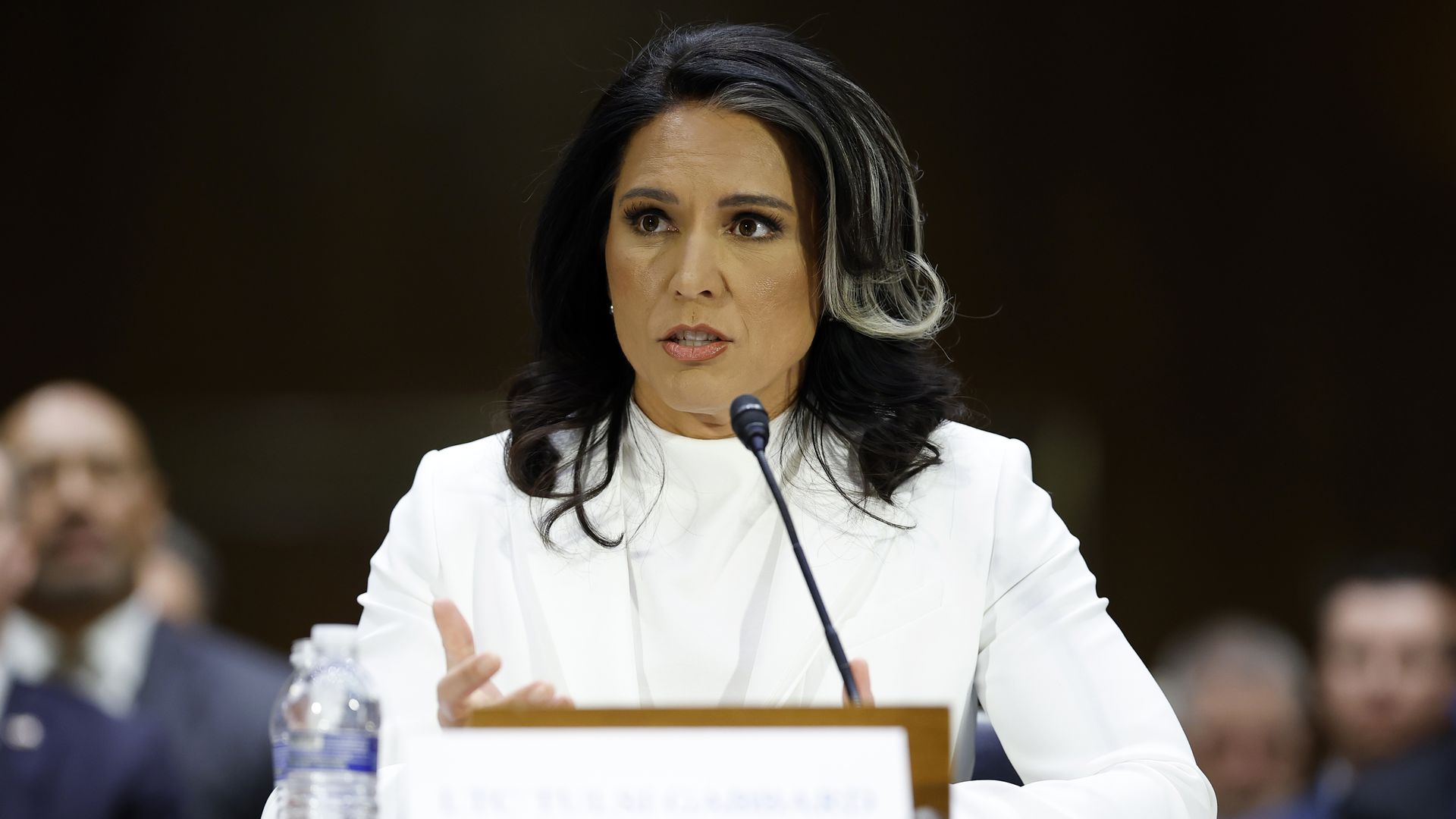
Tulsi Gabbard, director of national intelligence, said Tuesday more than 100 intelligence officers will be fired for taking part in sexually explicit discussions in agency chat rooms.
The big picture: Gabbard said on Fox News she "put out a directive" on Tuesday that those who took part in these chats on the National Security Agency's (NSA) "Intelink" messaging platform will also have their security clearances revoked.
Six probationary federal workers the Trump administration fired can stay in their jobs for now, per a 45-day stay the independent agency that oversees employee complaints against the government issued on Tuesday evening.
The big picture: Hampton Dellinger, who's suing the administration after President Trump moved to fire him from his role leading the Office of Special Counsel, brought the case to the Merit Systems Protection Board due to concerns the agencies' action against the workers may violate the law.
President Trump announced Tuesday the administration plans to offer $5 million "gold cards," which grant individuals permanent U.S. residency.
The big picture: The new system would replace the existing EB-5 program — a system launched in 1990 that offers green cards to individuals who invested in the U.S. — and serve as a route to citizenship, Trump told reporters in the Oval Office.
Fresh off a week of being yelled at back home, Republicans returned to Capitol Hill suddenly pressing Elon Musk to project a kinder, friendlier face of DOGE.
Why it matters: Republican and Democratic congressional districts alike have been rattled by Musk's tactics for slashing government funding and terminating chunks of the federal workforce.
Apple said Tuesday it's working to fix an iPhone bug after some users reported its automatic dictation feature briefly displays "Trump" when they say "racist" before the text-to-speech transcription software corrects itself.
The big picture: A viral TikTok video of the glitch that Apple says erroneously suggests the word "trump" when users dictate some words that also include an "r" consonant caused outrage among conservatives online who've accused Big Tech of political bias.