President Trump's stunning reversal on Ukraine has barely registered in MAGA circles, underscoring how fatigue and indifference have set in after eight months of failure to end the war.
Michaels is trying to remake itself into North America's largest specialty retailer for party supplies and fabric — just as tariffs threaten to raise the cost of both.
Why it matters: The Texas-based retailer wants fuel for its turnaround, even as it contends with trade risks and the same retail headwinds that sank Party City and Joann.
President Trump and White House envoy Steve Witkoff presented Arab and Muslim leaders with a "21-point plan" for ending the war in Gaza and for post-Hamas governance on Tuesday, garnering positive responses from the attendees.
Why it matters: It's the first time Trump has presented a U.S. plan for ending the war in Gaza. On Wednesday, several leaders issued statements praising it.
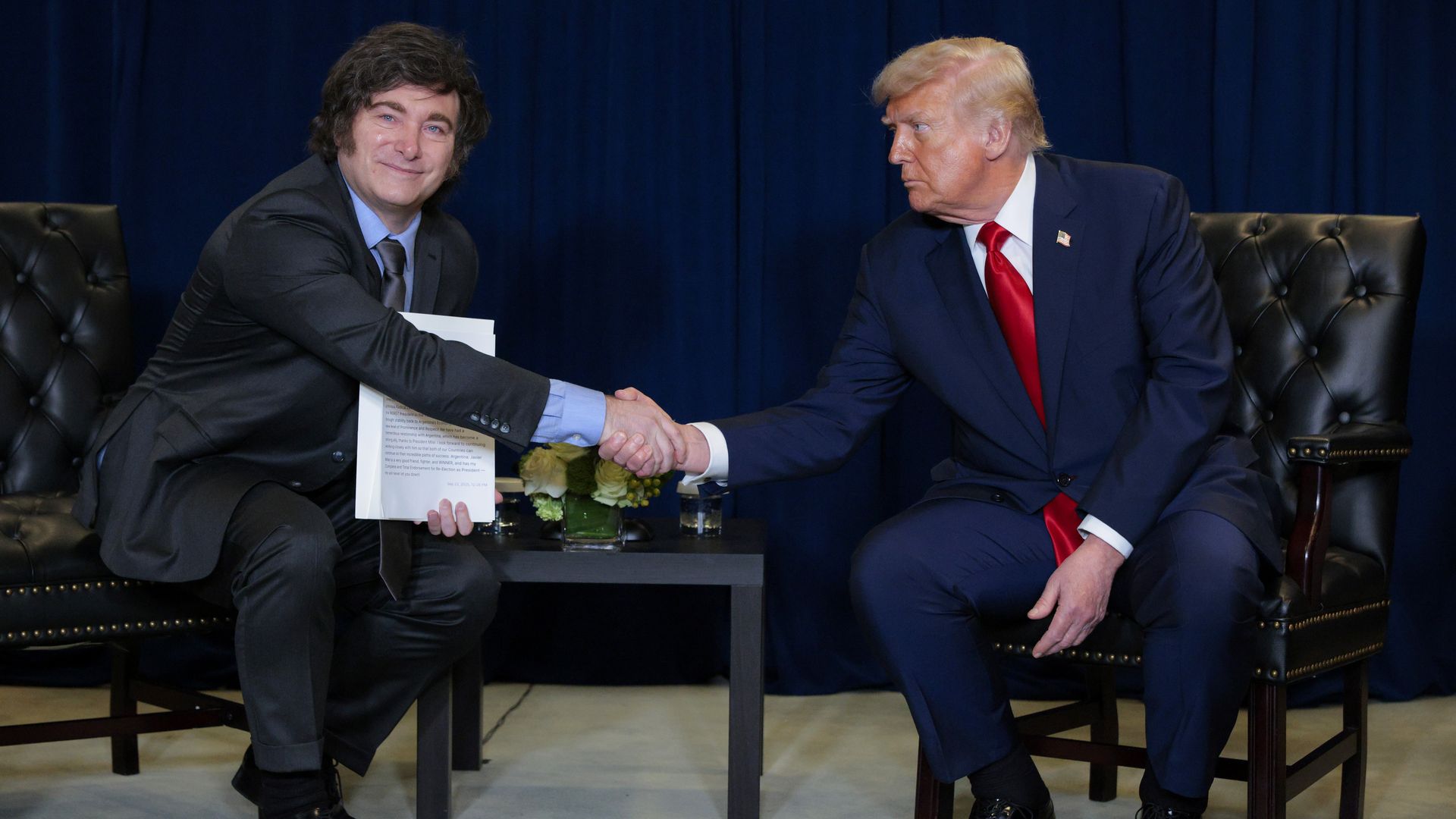
The Trump administration threw Argentina a financial life raft this week, and Argentina promptly responded by offering China an enticement in the form of untaxed soybeans.
Why it matters: It's a harsh blow to already struggling U.S. soybean farmers, and illustrates the complex implications of rescuing a close ally.
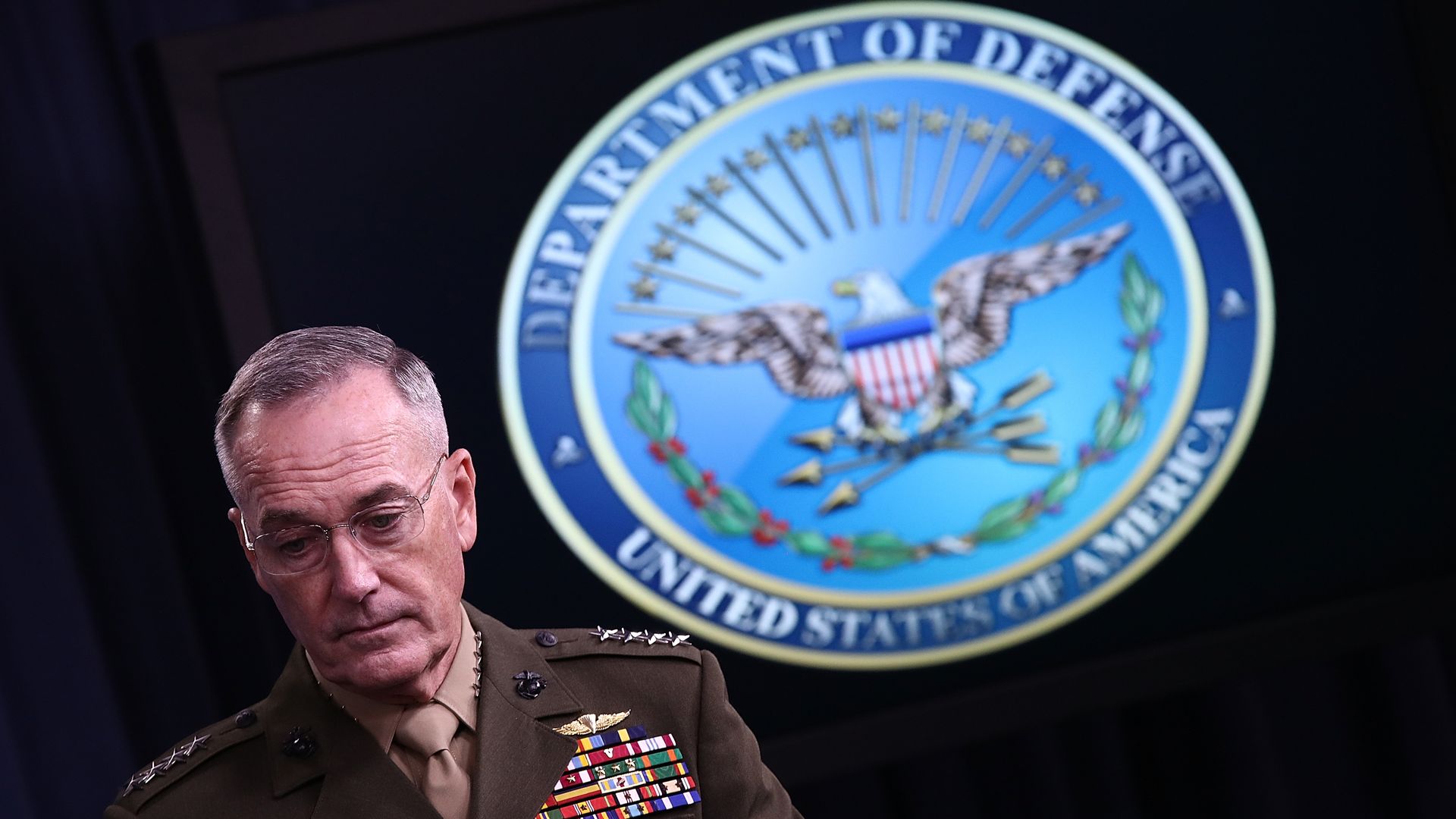
The U.S. must collaborate with friendly Middle Eastern governments to strengthen a global industrial base and prepare for large-scale wars that will chew through raw materials and high-end munitions alike, according to a new study from Joseph Dunford, a former Joint Chiefs chairman, and Eric Edelman, a former undersecretary of defense for policy.
Why it matters: Conflicts are no longer regional. They are worldwide.
Supply chains crisscross borders. Fights transcend singular domains. And countries long considered national security threats in Washington are growing intimate.
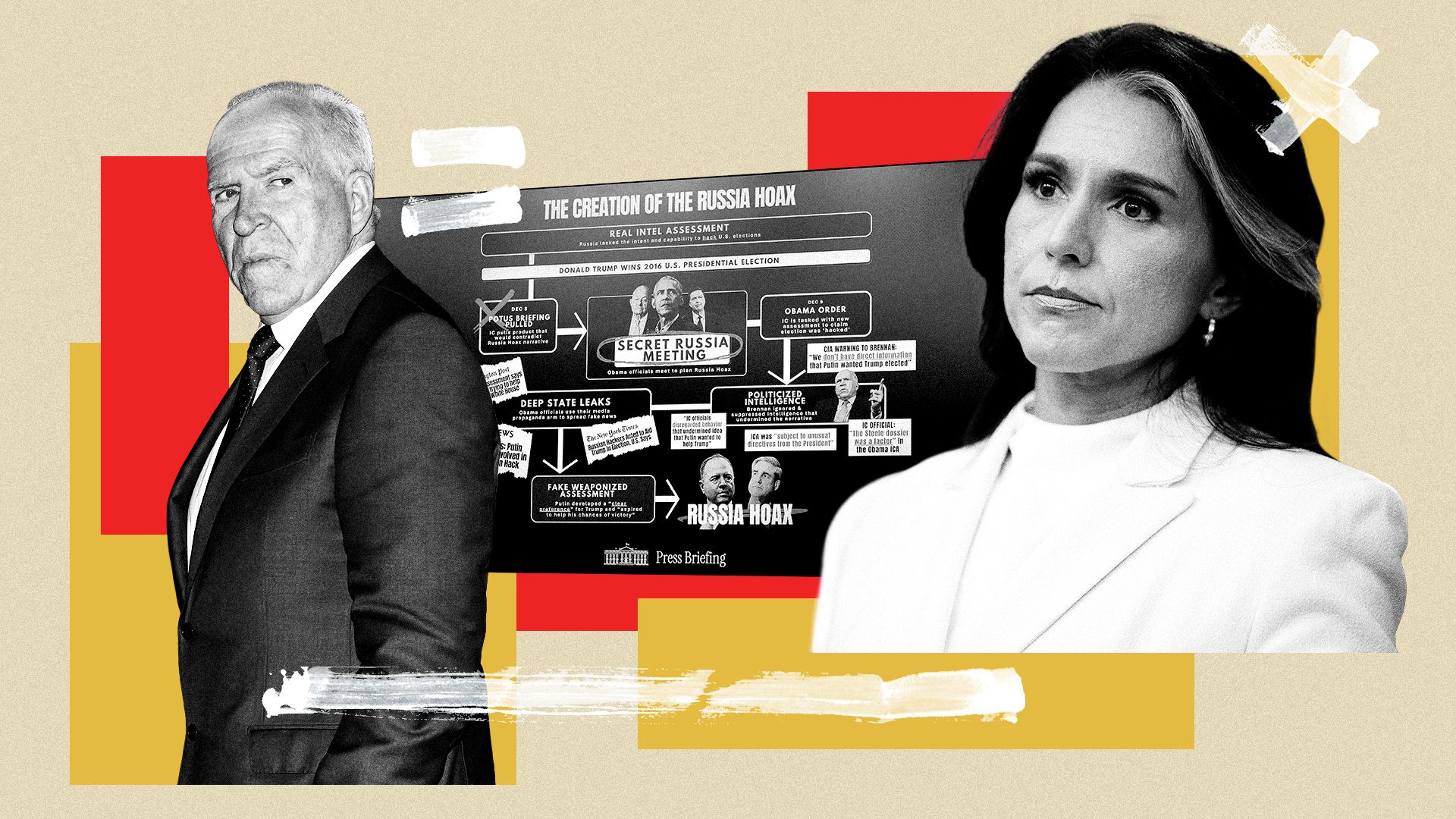
The Justice Department's criminal probe of ex-spy chief John Brennan hit a big roadblock after Director of National Intelligence Tulsi Gabbard withdrew the security clearances of potential witnesses who could have testified against him, four Trump administration officials tell Axios.
Super Typhoon Ragasa unleashed hurricane-force winds and heavy rains on Hong Kong and southern China on Wednesday morning local time, as officials in Taiwan reported 14 deaths from the strongest storm to hit the planet this year.
The big picture: Officials in Taiwan's Hualien County told media that the deaths were due to a lake barrier bursting during the storm and that 124 people remained missing.
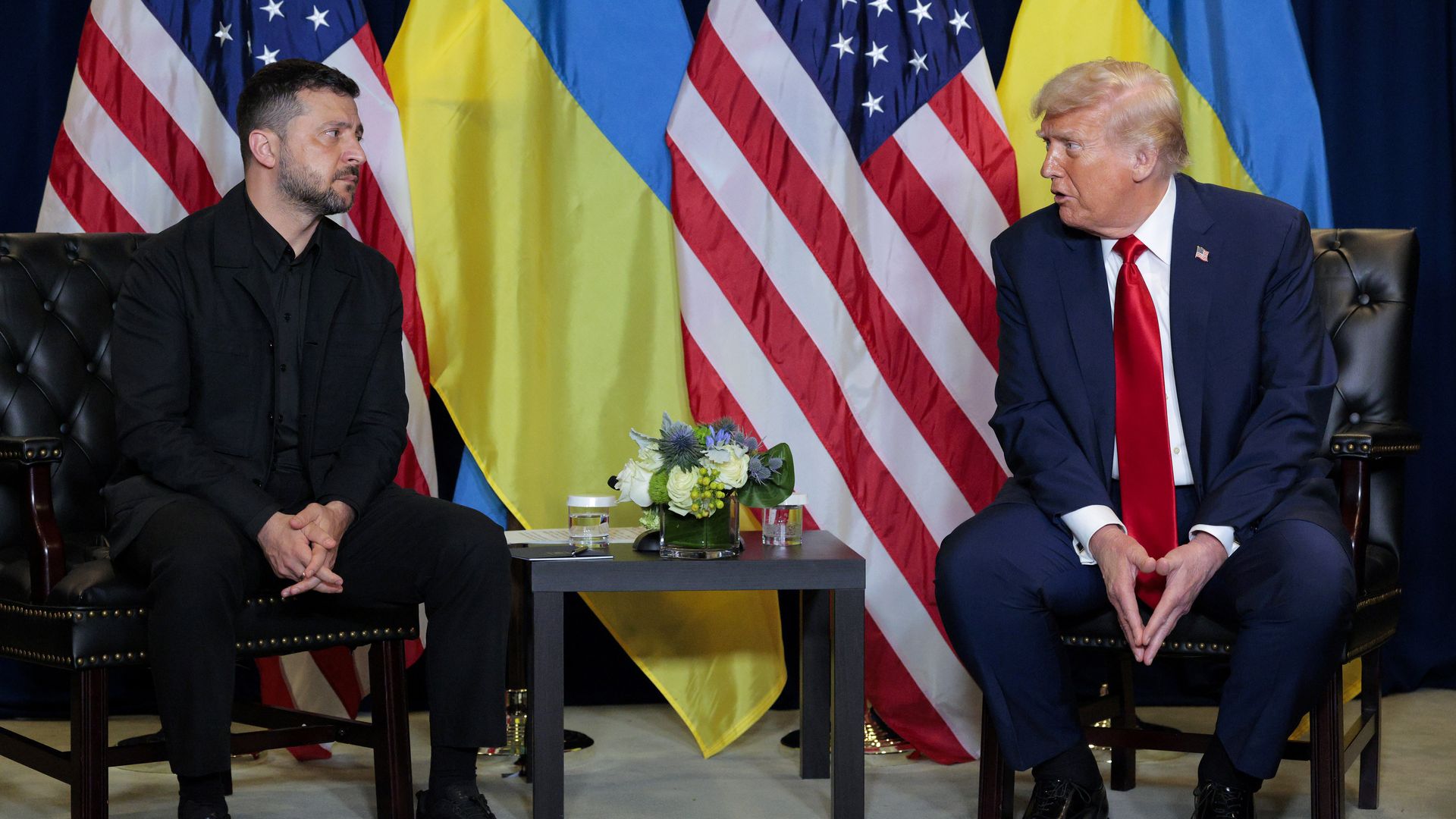
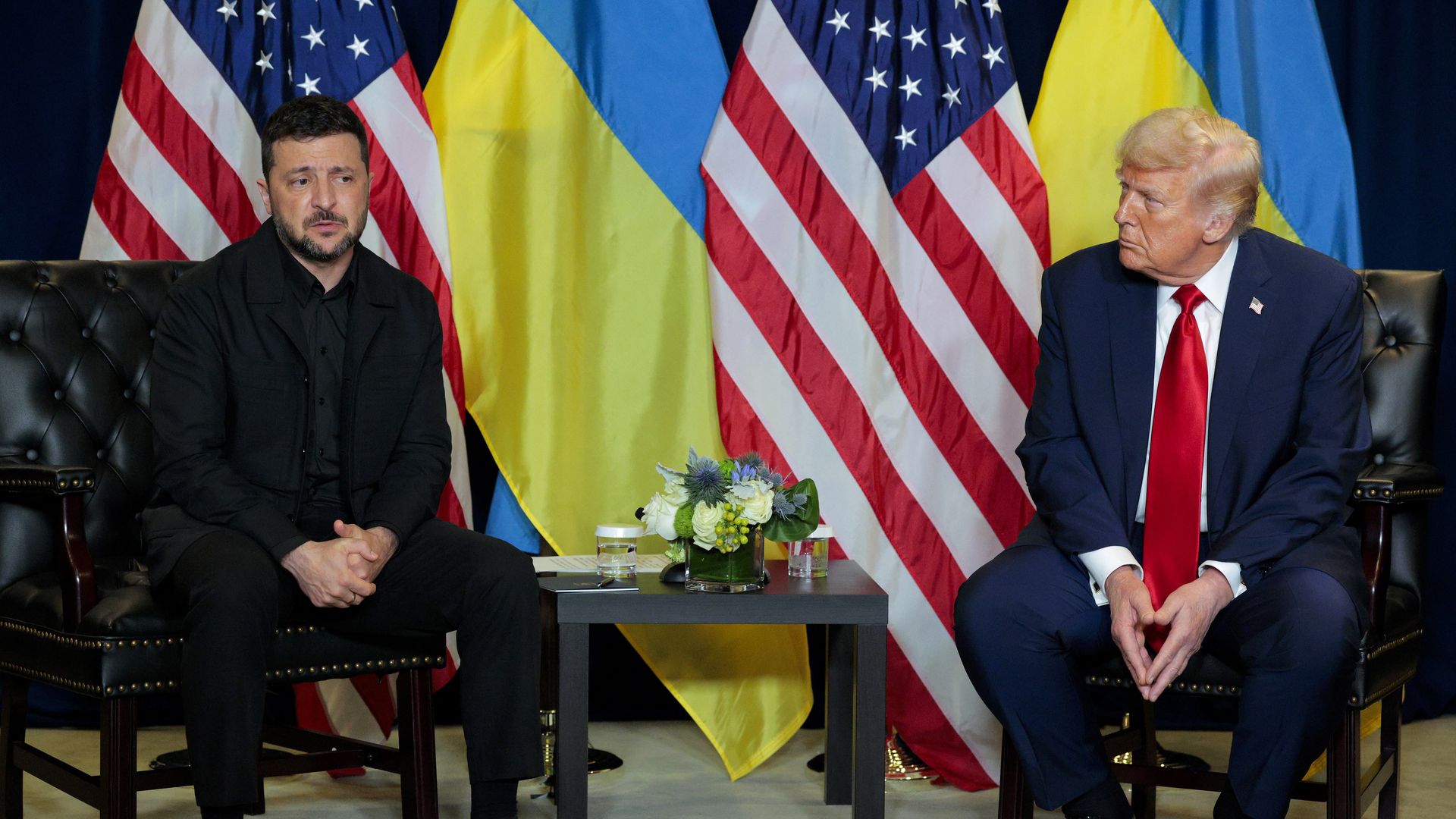
President Trump said Tuesday that he believes Ukraine can "win" the war against Russia and take back all of the territory lost over the course of Moscow's invasion.
Why it matters: Trump's remarks after meeting with Ukrainian President Volodymyr Zelensky in New York represent an extraordinary 180-degree shift in his position on the war.
A North Carolina tribe, whose legitimacy has been questioned by other tribal nations, is seeking to obtain federal recognition through the latest annual defense authorization bill.
Why it matters: The Lumbee Tribe seeks federal recognition to unlock millions of dollars in funding for Native American programs, while other tribes argue that shortcutting the process by using Congress with the Lumbee's past would set a bad precedent.
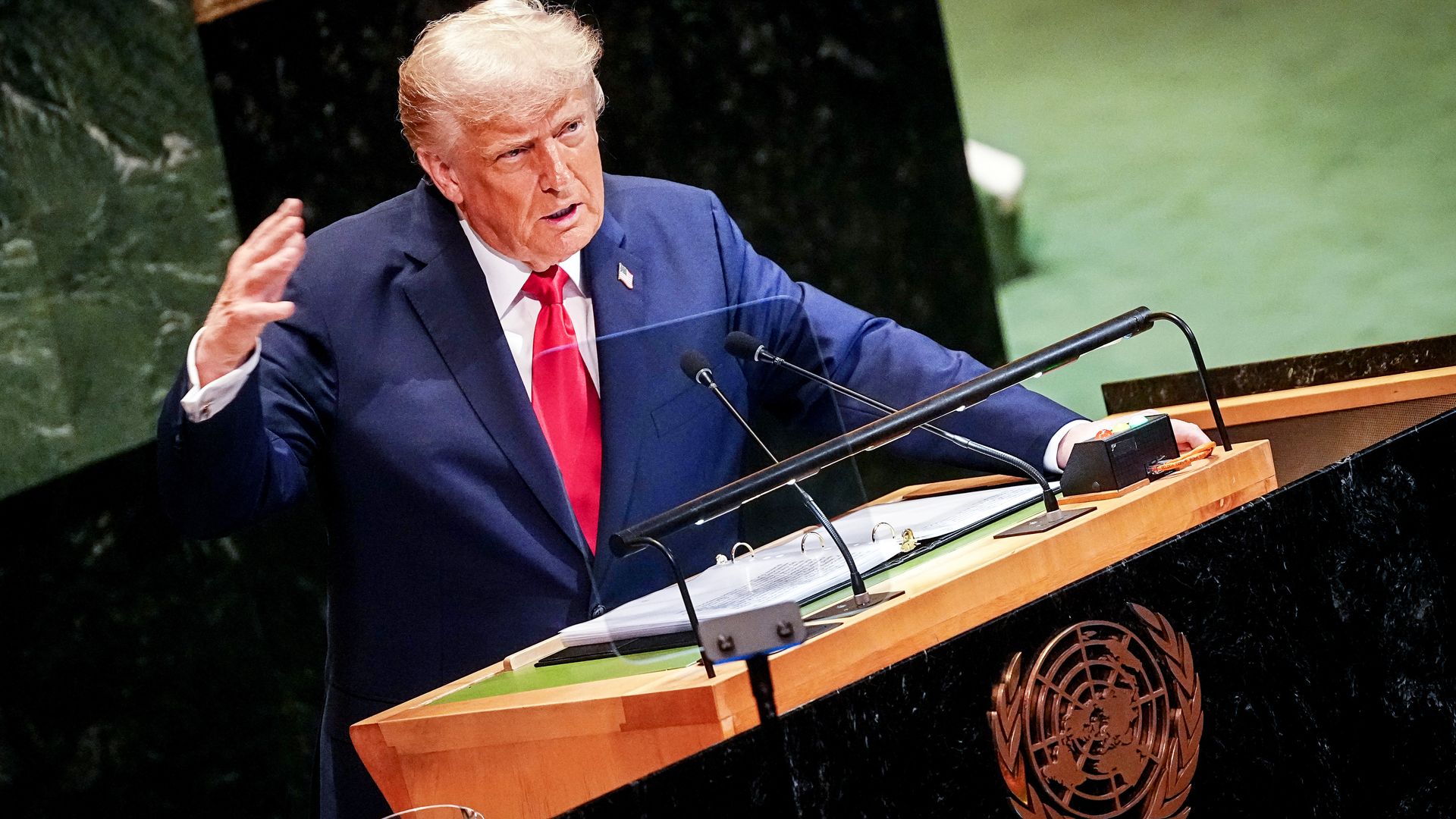
President Trump had a harsh message for fellow world leaders at the UN General Assembly today: "Your countries are going to hell!"
Why it matters: In Trump's depiction, the U.S. is in a "golden age" — but every other country, particularly WesternEuropean allies, are collapsing due to immigration, unreliable green energy sources and weak leadership."
Why it matters: Drops in violence mark progress in cities long hit hardest by crime, but the Trump administration is using crime rates as a pretext to send troops to expand federal control overblue cities.
NEW YORK – The Trump administration is putting oil and gas deals front and center at Climate Week and the UN General Assembly, a senior White House official said at Axios House on Monday.
Why it matters: The White House is focusing on natural gas by making it a strategic asset in global power politics.
Axios' Mike Allen and Amy Harder hosted conversations with Jarrod Agen, executive director of the White House National Energy Dominance Council; Federal Energy Regulatory Commission former chair Neil Chatterjee; and Form Energy co-founder and CEO Mateo Jaramillo. The event was sponsored by GE Vernova.
What they're saying: "We are abundant in natural gas here and it is a huge leverage point we have," Agen said.
Agen stressed that countries are looking to strike deals to stop depending on Russian oil: "It's Europe, it's Asia. They are looking for U.S. energy. They want to get off of Russian energy sources, and we have such a supply."
While many in the sustainability industry disagree with the use of fossil fuels, Chatterjee believes AI is going to "snap us out" of the decades-long fossil fuel versus clean energy debate.
"AI and the national security implications of AI will be the thing that finally breaks us out of our probably two decades long sort of antiquated fight that we've had to where if you're for fossil fuels, you're of the political right, and if you're for clean energy and climate solutions, you're of the political left," Chatterjee said.
"For the political left, there has to be a recognition that in order to win the AI race and keep energy affordable and reliable, we cannot do it without fossil fuels."
"For the political right, I think there has to be a recognition that we cannot possibly do this with fossil fuels alone."
By the numbers: Rising energy costs are a challenge leaders across the spectrum are trying to solve, and Jaramillo says long-term storage could be one of the keys to driving costs down.
"We expect that this will be a sort of a dampener effect on prices," Jaramillo said. "You're utilizing the assets you already have more efficiently, more effectively, and you don't have to go overbuild in the future to get the same result, and so it sort of has a deflationary effect on the system overall."
Sponsored content:
In a View From the Top conversation, GE Vernova CEO Scott Strazik called nuclear power a breakthrough technology that's "moving very rapidly" because of its power density.
"Land is going to become a challenge," Strazik said. "You can take a 300-megawatt small, modular reactor that we're constructing right now, and that one football-field-size solution powers 300,000 homes in the U.S. We're building the first one right now in Ontario, Canada."
"We have our first application into the Nuclear Regulatory Commission to start construction on the first plant in the U.S. that we hope to be there by sometime in '27. … So we're going to need zero-carbon electrons that can run at base load, and nuclear is a good solution for that."
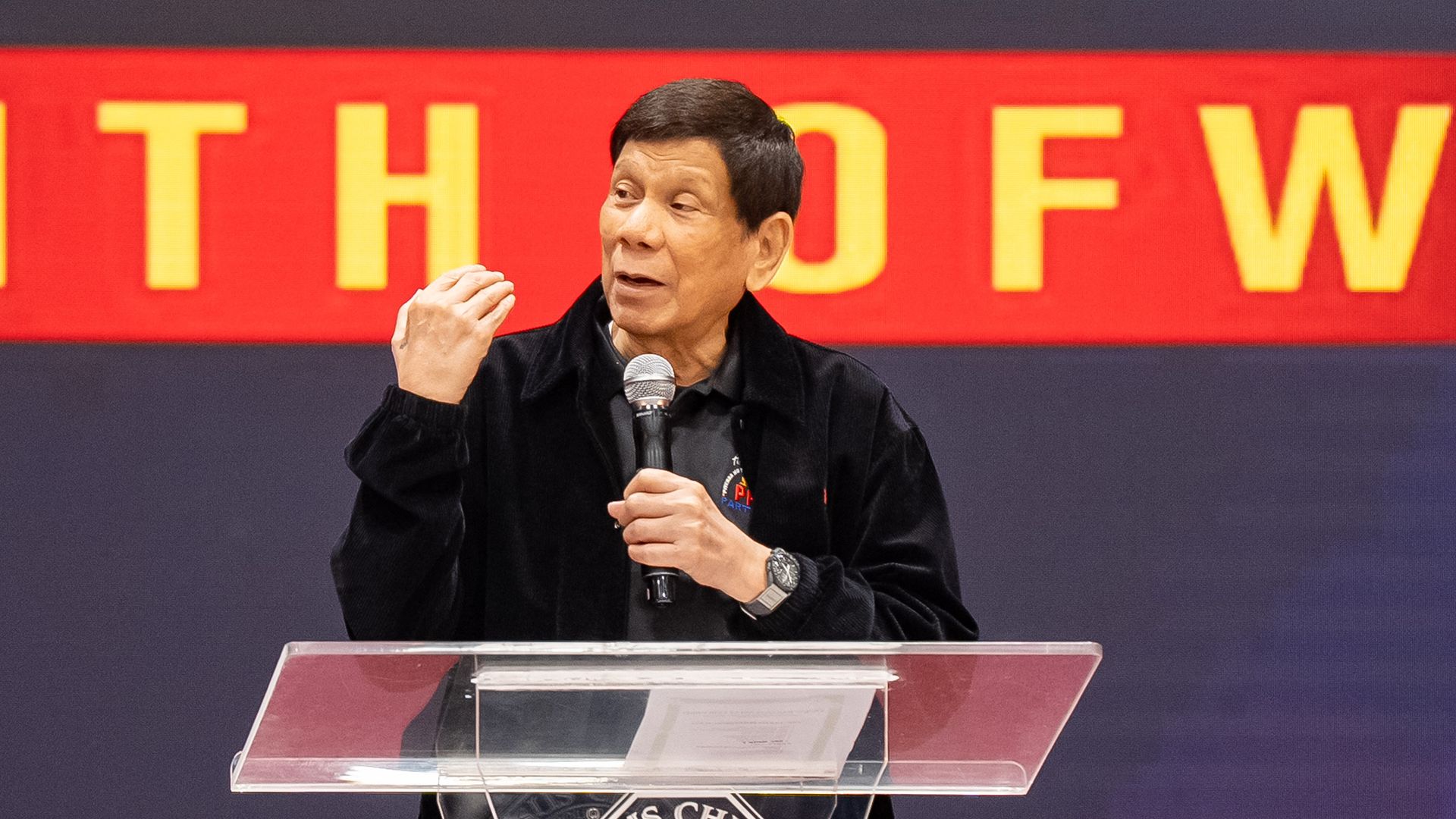
Former Philippine President Rodrigo Duterte is facing three counts of crimes against humanity in connection with his years-long deadly war on drugs, International Criminal Court (ICC) prosecutors announced Monday.
The big picture: Duterte, who said he launched the crackdown to stop drugs from destroying his country, is accused of committing the crimes during his time as mayor of Davao City and later as president.