The U.S. helped Argentina, then Argentine farmers made a deal with China


Add Axios as your preferred source to
see more of our stories on Google.
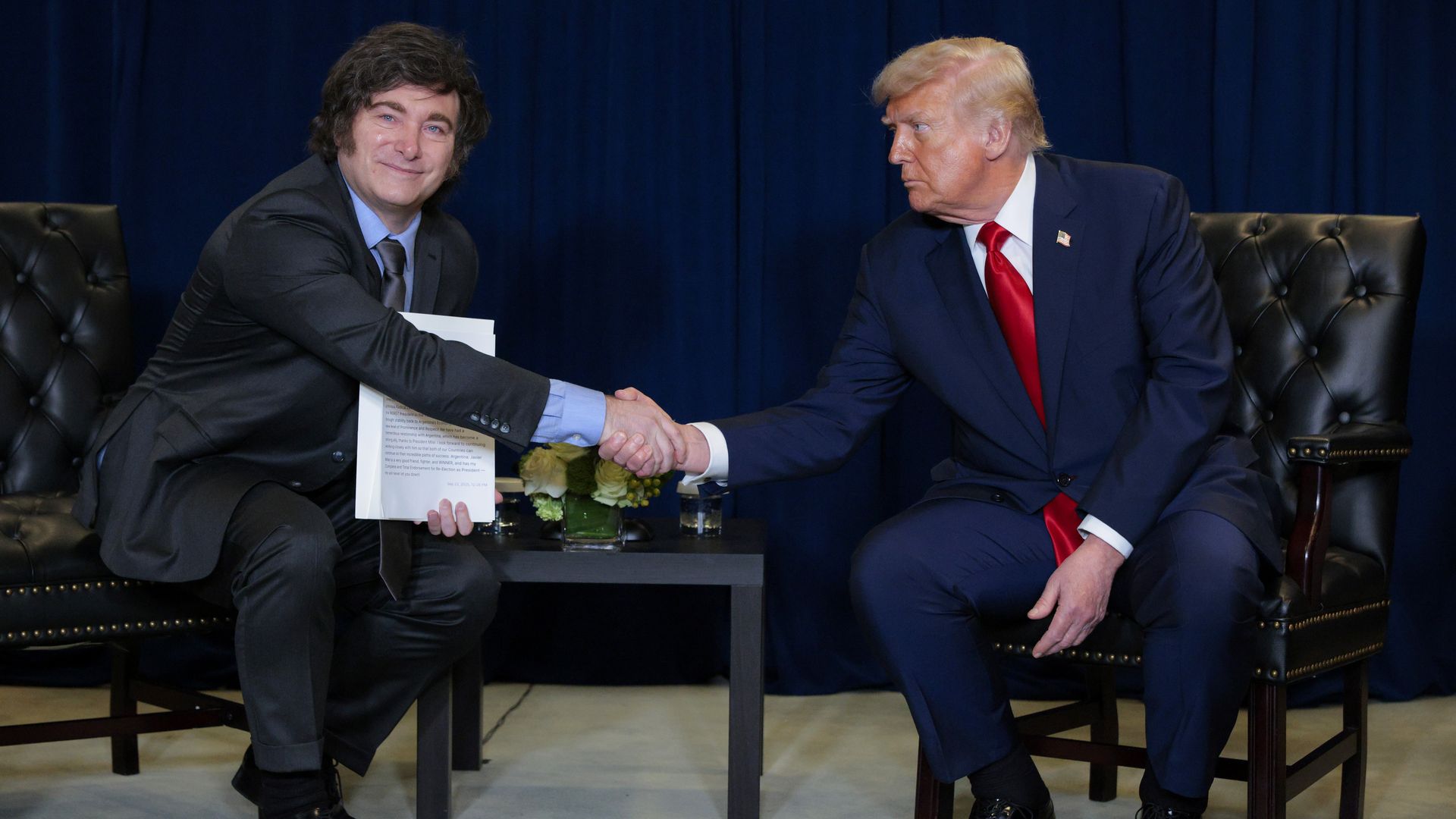
President Javier Milei of Argentina met with President Trump at the U.N. General Assembly on Tuesday. Photo: Chip Somodevilla/Getty Images
The Trump administration threw Argentina a financial life raft this week, and Argentina promptly responded by offering China an enticement in the form of untaxed soybeans.
Why it matters: It's a harsh blow to already struggling U.S. soybean farmers, and illustrates the complex implications of rescuing a close ally.
Driving the news: On Monday, Treasury Secretary Scott Bessent announced concepts for broad financial support to stabilize Argentina's economy, including potential loans, currency purchases and debt buying. Argentina's currency, the peso, rallied on the news.
- Argentina, looking to rake in more capital, suspended its export taxes on several products Monday, including its 26% soybean tax.
- That attracted China, historically the top buyer of U.S. soybeans, to Argentina. China doubled Argentine soybean purchases overnight Tuesday to 20 cargoes, following an uptick earlier in the week.
- This further priced out U.S. soybean farmers, who are already grappling with a 20% tariff imposed by China on their soybeans.
- Several industry experts and farmers told Axios they have received zero orders from China this year and that measures like this are hurting their profits. Most years, China buys more than half the soybeans grown in the U.S., per the New York Times.
What they're saying: "The soybean farmers have been screaming for assistance since we took office," a senior White House administration official tells Axios. "So this isn't new. And the president is going to help."
- The president has two pots of money through which he can distribute aid, and there's talk of diverting some tariff revenue to farmers, the official says.
As for Argentina: "You saw the interaction with Milei," the official notes, referring to President Trump's meeting with the Argentine president and subsequent endorsement of his reelection at the U.N. General Assembly.
- "The president likes him. That goes a long way. But even so, Argentina is an important ally and we're determined to help where we can."
Zoom out: Argentina is of major geopolitical importance to the Trump administration. Unlike previous administrations in recent memory, the Trump administration has made Latin America a focus, especially as China gains a foothold in the hemisphere.
- Along with Chile, Argentina controls one bank of the Strait of Magellan at the southern tip of South America.
- Argentina is rich in natural resources, including oil and gas reserves, uranium and lithium used in batteries.
- Milei is governing in a Trump-like populist style and has repurposed MAGA as "Make Argentina Great Again."
Zoom in: U.S. farmers are bearing the brunt.
- This is "troublesome" for Ohio farmers, Farm Bureau spokesperson Ty Higgins tells Axios.
- "There is a growing concern that as the harvest ramps up, the piles of corn and soybeans will not have the markets they once had, causing further downward pressure on commodity prices and the farmers' bottom line," Higgins says.
Republican House members from soybean country aren't happy, either.
- "It is very unfortunate that as the U.S. is helping Argentina stabilize its economy they would undermine American farmers and weaken President Trump's negotiations with China," said U.S. Rep. Julie Fedorchak (R-N.D.).
- "This is a bitter pill for North Dakota soybean farmers to swallow."
What we're watching: Any developments on bailouts for domestic farmers who are getting hit by tariffs and geopolitical chess moves from the administration.
- A USDA spokesperson shared a contrary sentiment to what Axios heard from farmers across the country, calling Trump the "most pro-farmer president of our lifetime."
- "We are constantly assessing the farm economy and exploring the need for further assistance but have not made a determination if an additional program is needed at this time," the spokesperson said.
The bottom line: The U.S. propped up Argentina, and Beijing reaped the reward, potentially leaving American farmers as collateral damage.
Alissa Widman Neese contributed reporting from Columbus, Ohio, and Kate Santaliz contributed reporting from Capitol Hill.
