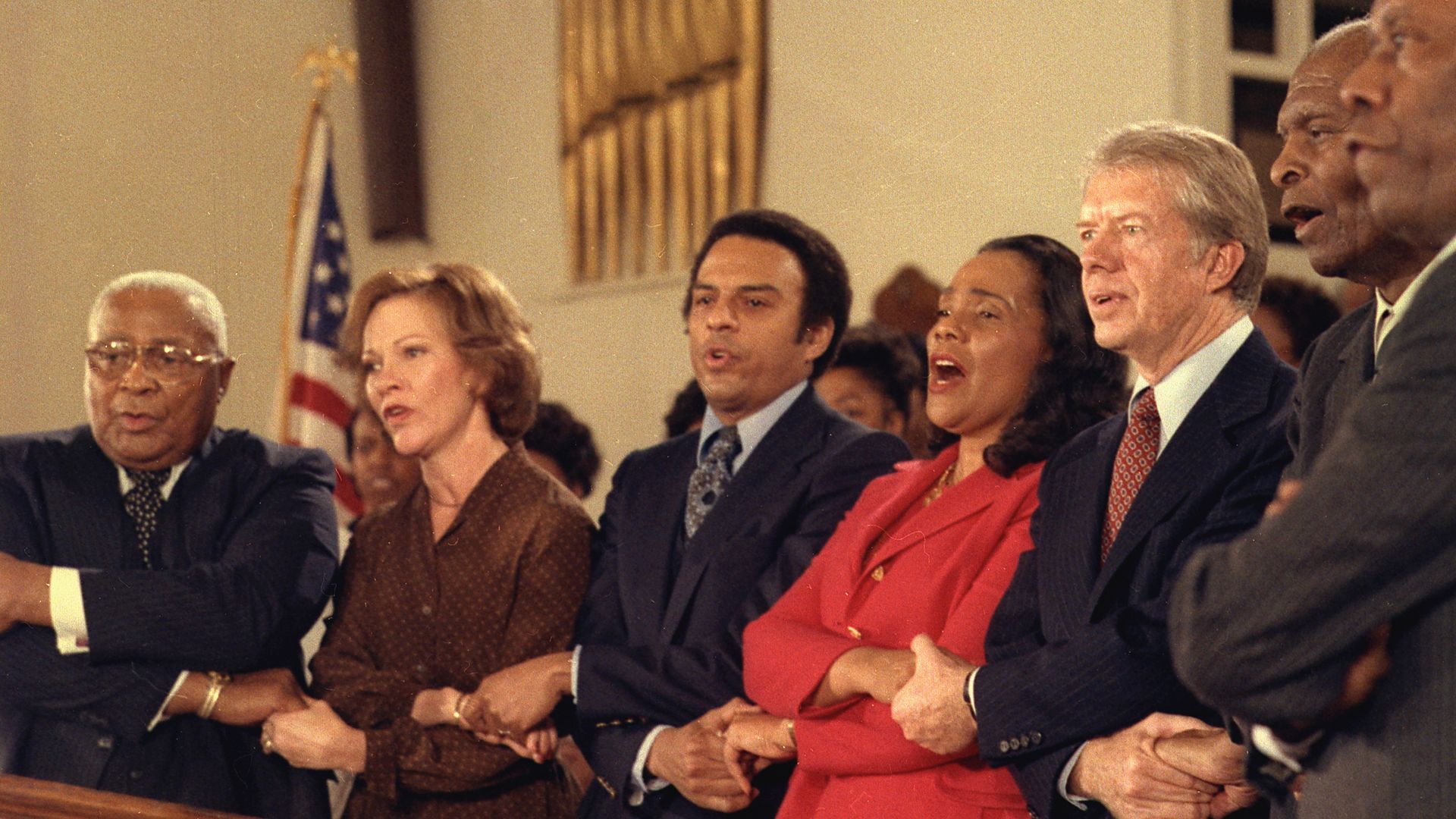
The Trump administration said Friday it will end a court-imposed decree initiated by the Carter administration that eliminated a test for federal job applicants and imposed diversity hiring requirements for federal agencies.
Why it matters: The move follows the administration'sdramatic change to the government's interpretation of civil rights-era laws to focus on "anti-white racism" rather than discrimination against people of color.
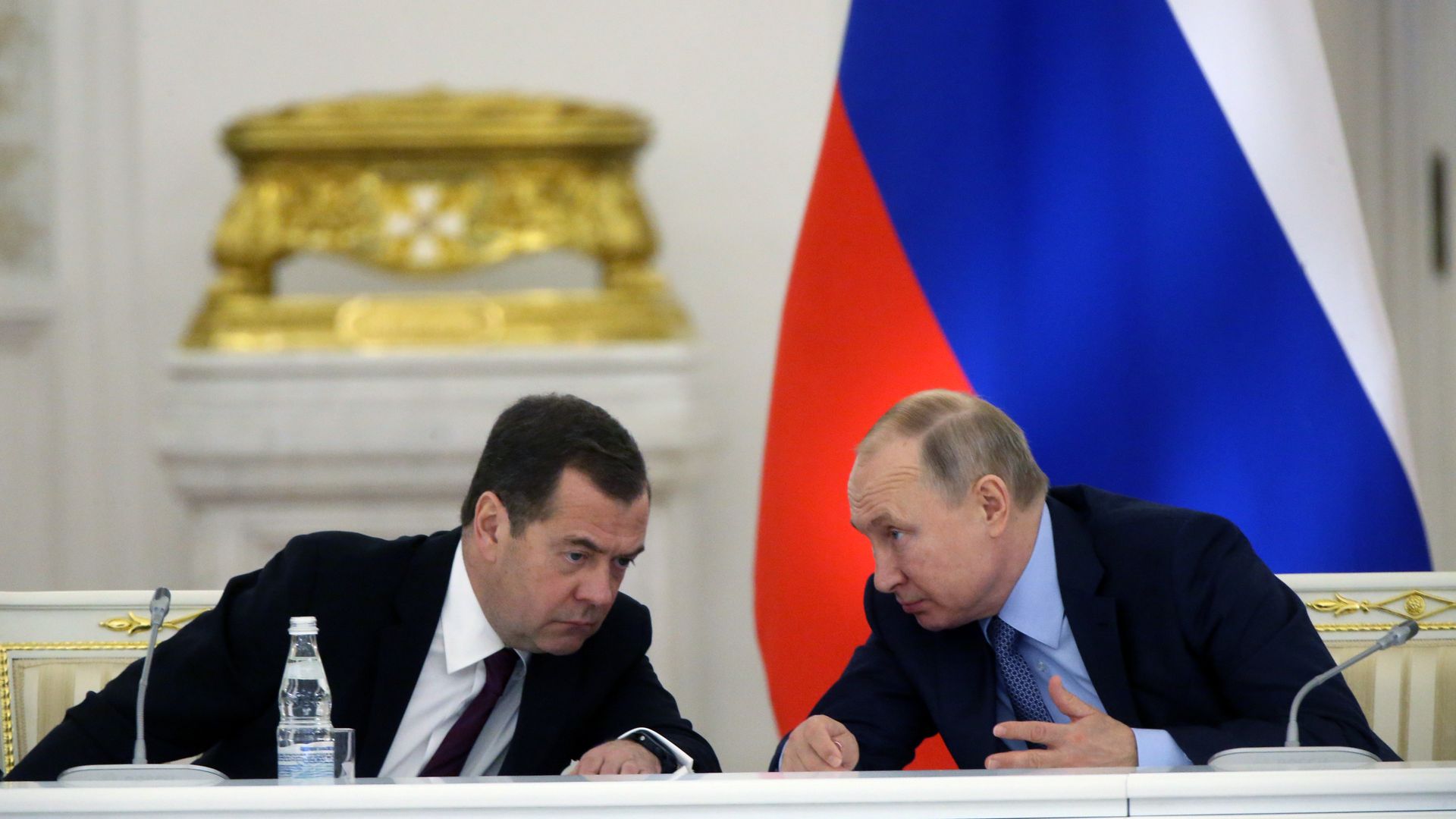
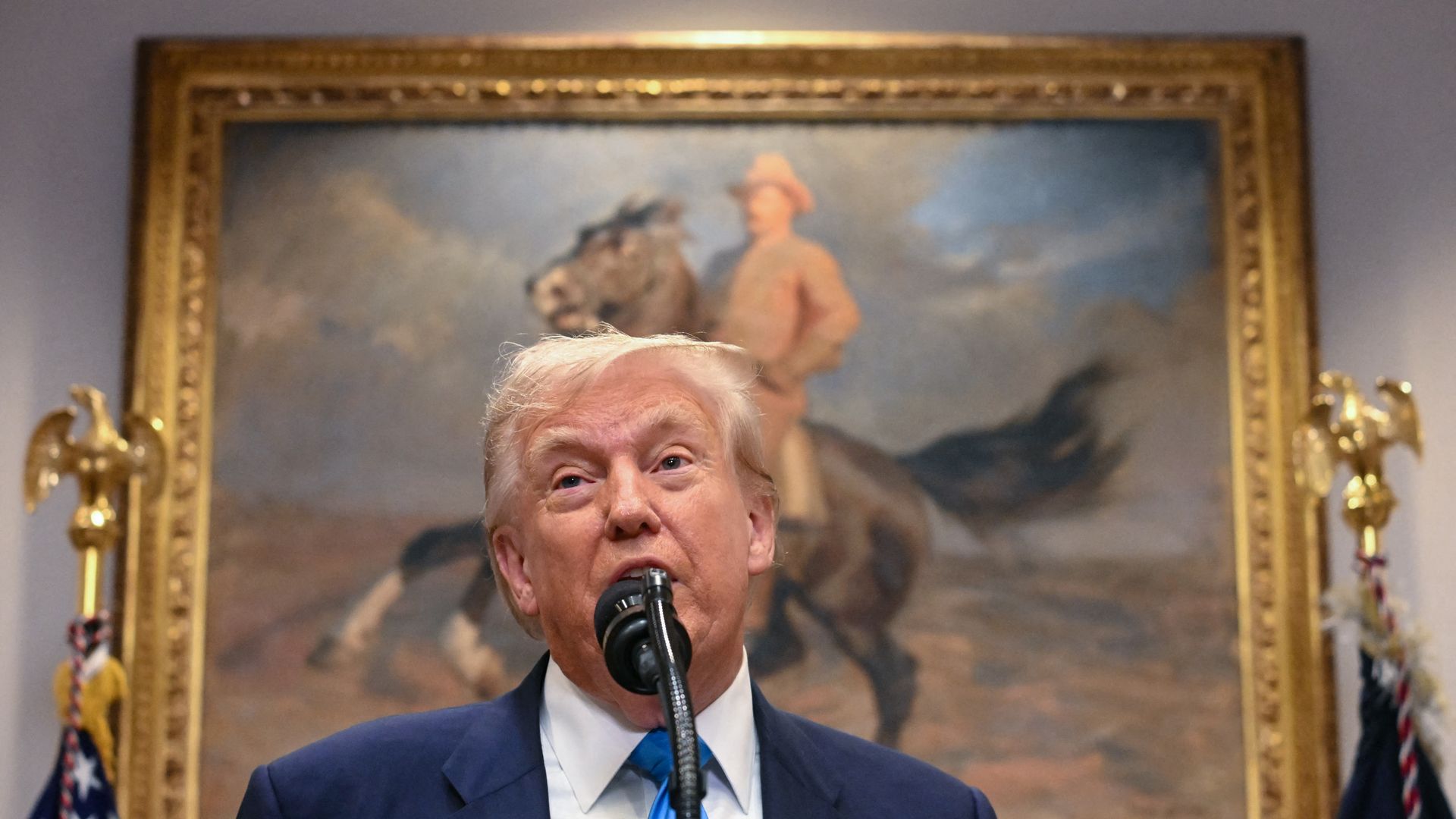
President Trump said Friday that he'd ordered two nuclear submarines close to Russian waters in response to nuclear bluster from former Russian President Dmitry Medvedev.
Why it matters: Trump accused his predecessor, President Biden, of flirting with World War Three after Russia's invasion of Ukraine. Now he's making nuclear threats of his own.
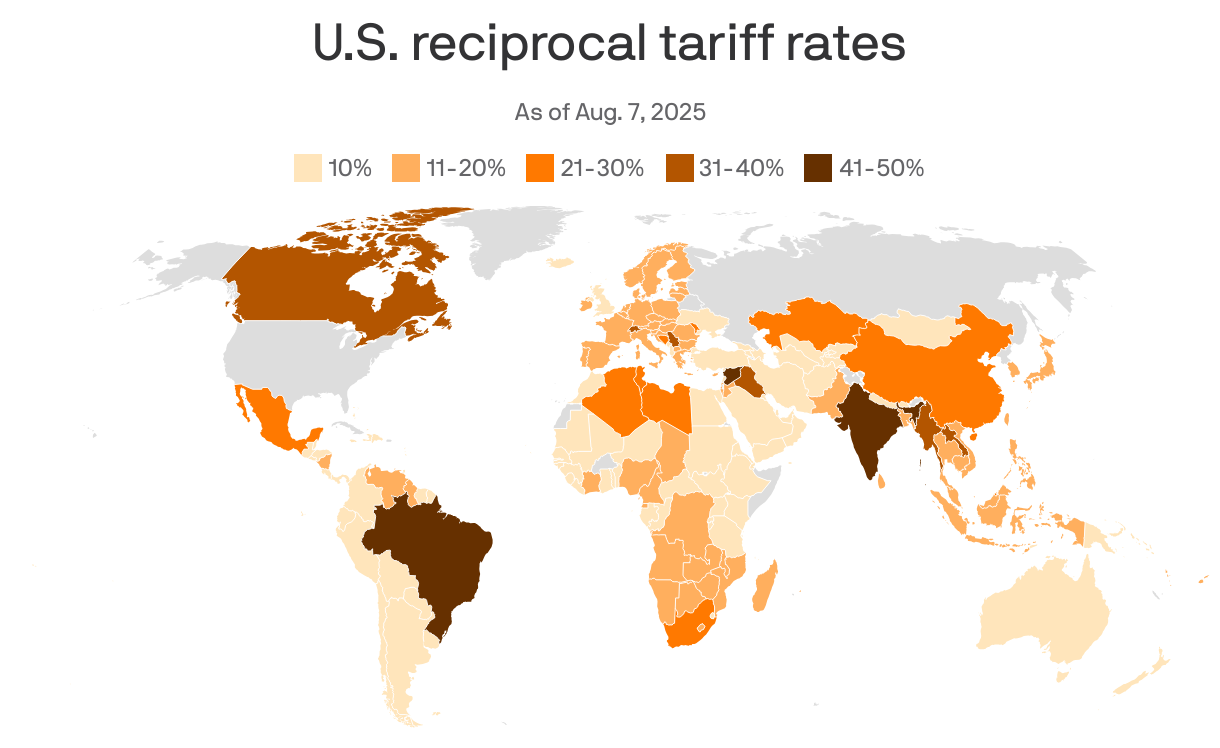
The Trump administration's dozens of reciprocal tariffs will start this month after drawn-out delays.
Why it matters: The tariffs — ranging from 10% to 50% — mark another escalation in President Trump's trade war, as the economy is showing signs of slowing.
President Trump told Axios in a brief phone call on Friday that he's working on a plan to "get people fed" in Gaza.
What he's saying: "We want to help people. We want to help them live. We want to get people fed. It is something that should have happened long time ago," Trump said.
"Leguizamo Does America" director Ben DeJesus tells Axios the show proves that telling Latinos' stories doesn't just make audiences "feel good" — it's "good business."
Why it matters: The first season of "Leguizamo Does America" was the most viewed MSNBC original in over two years on Peacock.
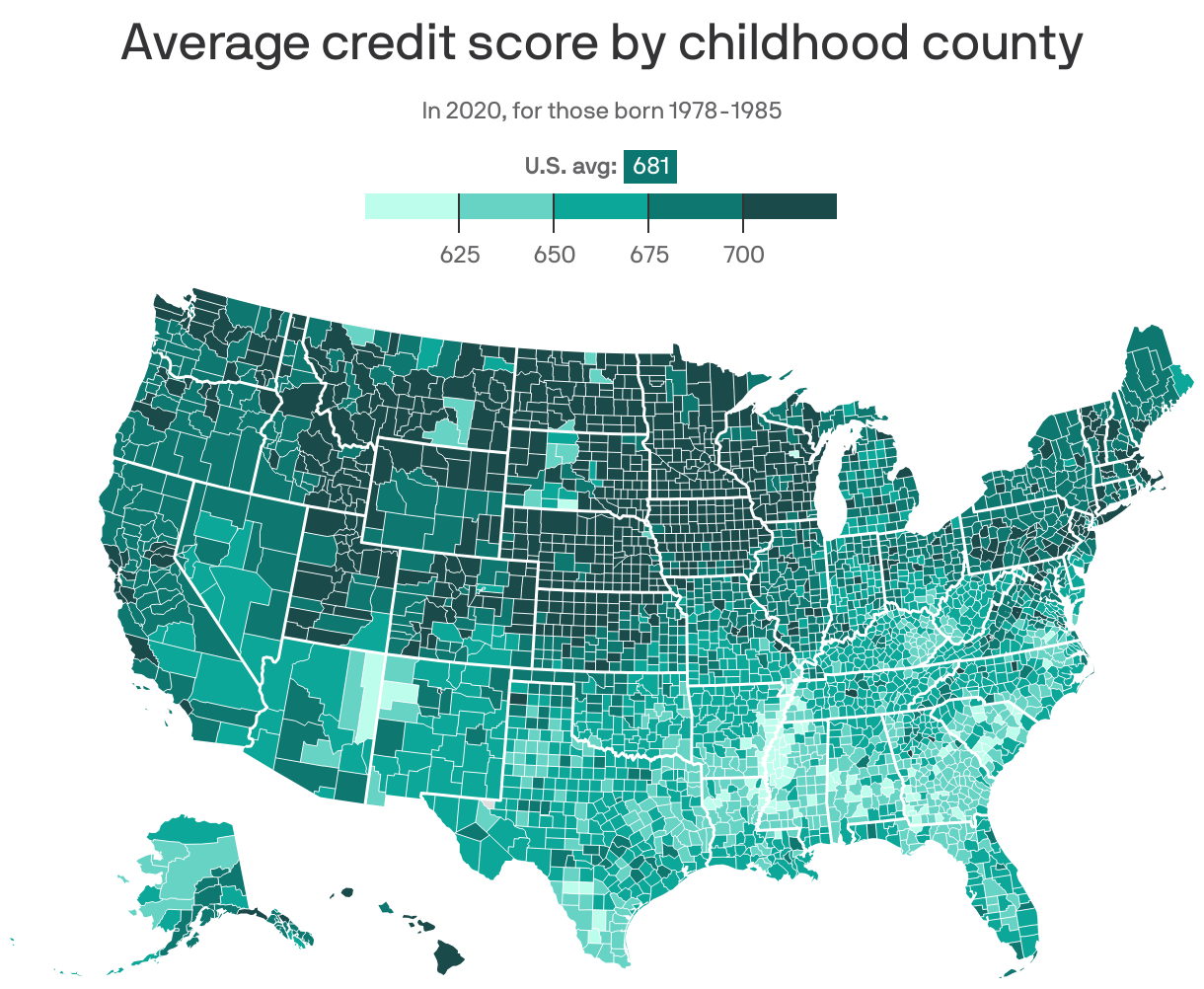
People who grew up in parts of the Upper Midwest and the Northeast tend to have relatively high credit scores in early middle-age, newly released data shows, while those from the South tend to have lower scores.
Why it matters: Credit scores can determine people's access to loans, housing, better interest rates and more — despite their flaws and biases.
President Trump on Thursday confirmed imports from most countries will face a tariff rate of 10%, while raising levies on Canada to 35% and lowering rates on many other countries.
Why it matters: The baseline rate is unchanged from the global duties Trump first set in April, and will come as a relief given his recent hints it could double.
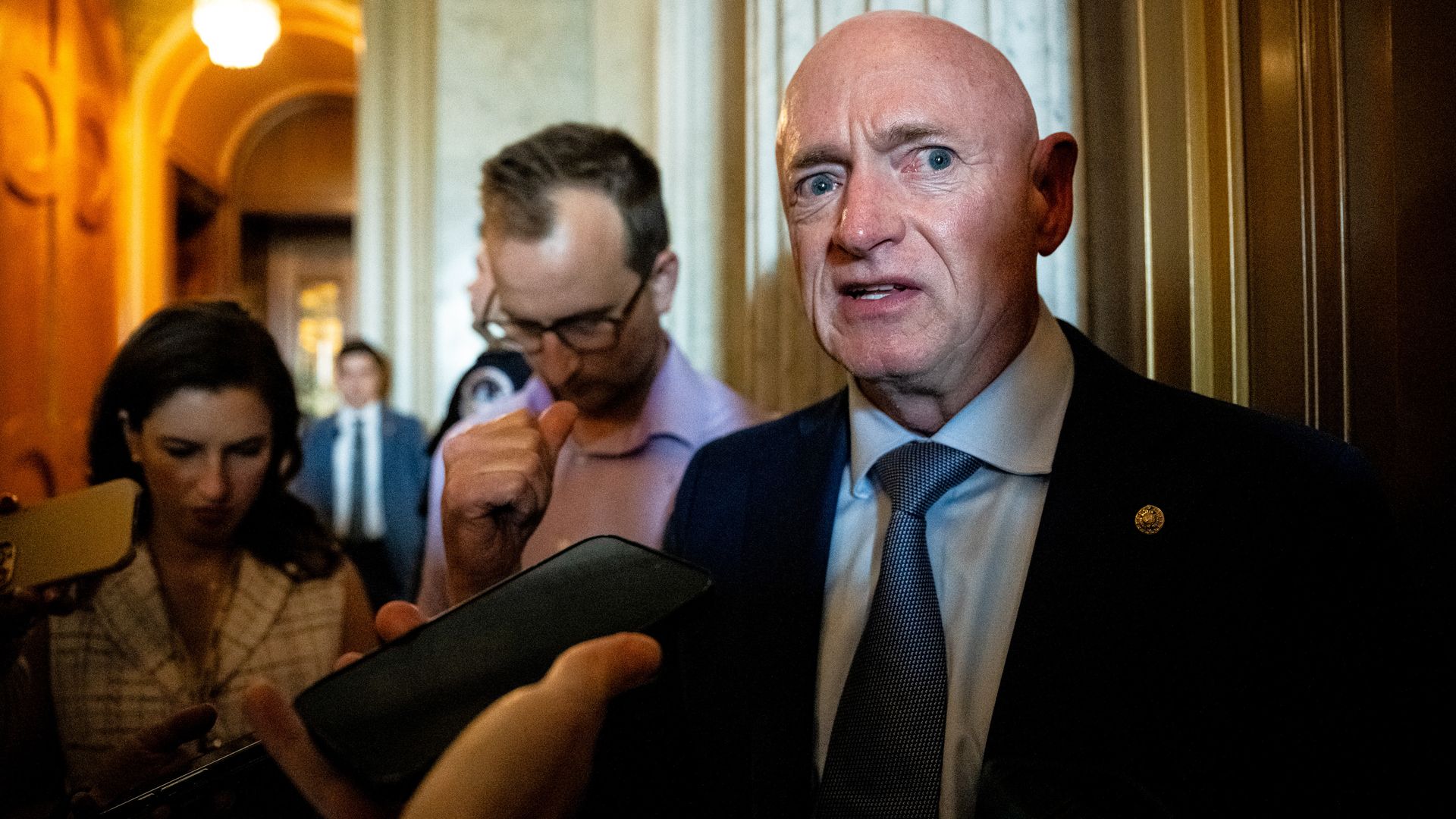
Sen. Mark Kelly (D-Ariz.) is in discussions to move tens of millions of emergency food packages sitting in U.S. warehouses to Gaza and other needy areas, Axios has learned.
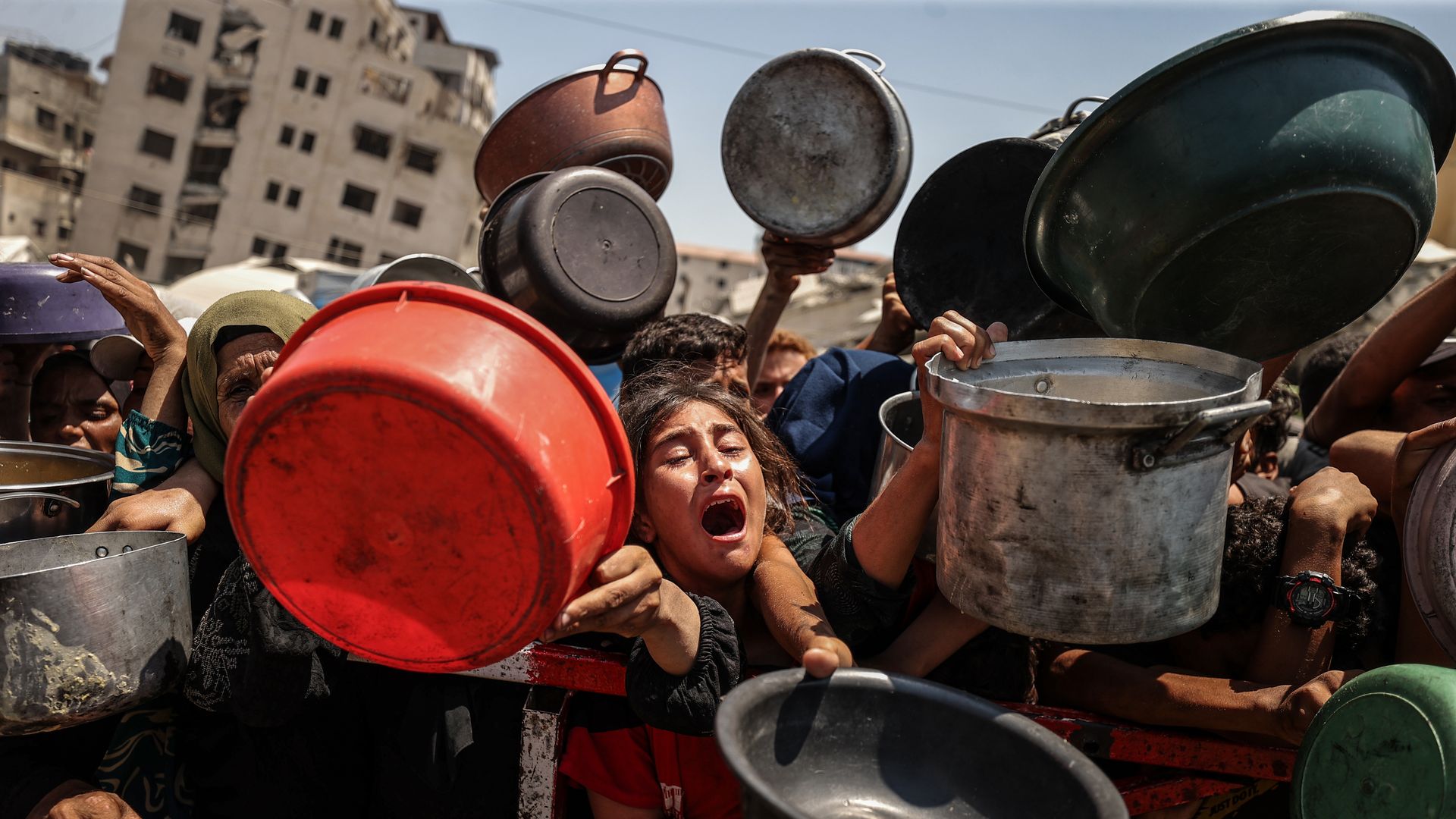
Why it matters: Democrats are mobilizing to try to address the humanitarian void they say the Israeli government is leaving behind in Gaza, where starvation is worsening.
Why it matters: Just before the Senate bolts town, Sens. Jeanne Shaheen (D-N.H.) and Lisa Murkowski (R-Alaska) introduced new legislation to provide Ukraine with an additional $54.6 billion, mostly in arms and ammunition from US manufacturers.
President Trump said on Thursday that White House envoy Steve Witkoff is expected to travel to Russia in the coming days ahead of the sanctions the U.S. plans to impose on Moscow over the war in Ukraine.
Why it matters: Trump's deadline to Russian President Vladimir Putin will expire in eight days. If Putin doesn't agree to a ceasefire with Ukraine by then, the U.S. will impose new sanctions on Russia for the first time since Trump assumed office.
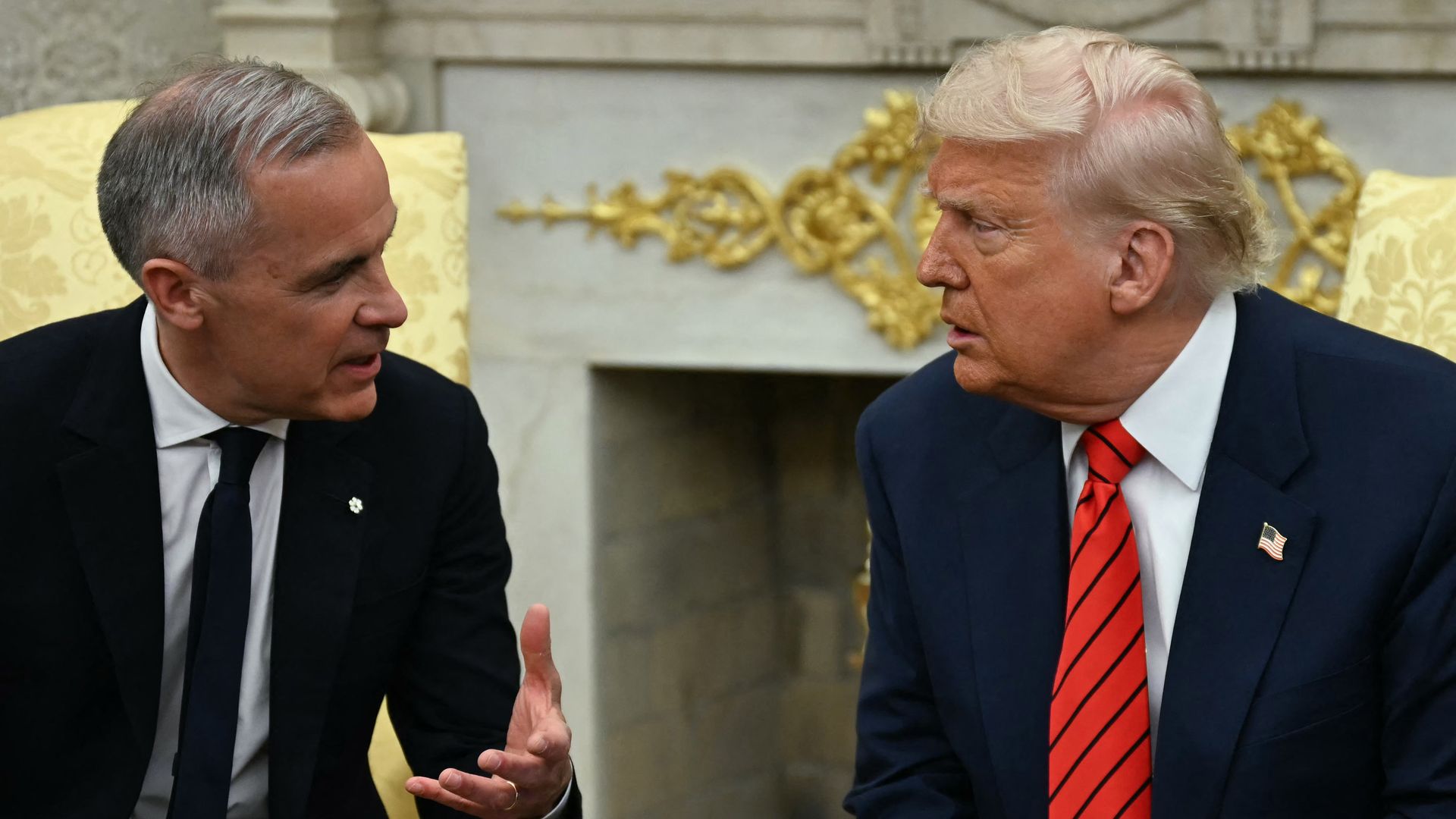
President Trump suggested early Thursday that he won't make a trade deal with Canada after Prime Minister Mark Carney said he intends to recognize the State of Palestine, subject to certain commitments.
Why it matters: The threat comes one day before Trump's Aug. 1 deadline for countries to make a trade deal with the U.S. or face tariffs — in Canada's case, a 35% levy on goods imported from the North American neighbor and significant trading partner.
President Trump is expected to approve a new Gaza humanitarian aid plan on Friday after his envoy Steve Witkoff visits the enclave and briefs him about the situation, White House press secretary Karoline Leavitt said in a briefing on Thursday.
Why it matters: Trump has made clear in recent days that he thinks there is starvation in Gaza and has committed to increasing U.S. aid. At the same time, he said he expects other Western countries and Israel to do their share.
President Trump said on Thursday that Mexico will get at least an additional 90 days to come to an agreement with the White House on tariffs.
Why it matters: Mexico would have been subject to 35% tariffs as of Aug. 1 without a trade deal. Now the nation will continue to face 25% on certain goods until it notches a deal with Trump.
Trade could be an impetusbehind President Trump's threat to impose some kind of penalty on India over its imports of Russian energy.
Why it matters: It would mark the first tangible carry-through from Trump's threats to hit Russian buyers to create leverage for a cease-fire in Ukraine.
President Trump said on Thursday that the humanitarian crisis in Gaza will end if Hamas releases the hostages and surrenders.
Why it matters: The comment from the president marks a change in tone from others he made in recent days that put the onus on Israel to improve the humanitarian crisis in Gaza.
The reliably pro-Israel Republican Party is scrambling to contain a generational revolt over foreign aid, antisemitism and the true meaning of "America First."
Why it matters: Amid scenes of starvation in Gaza, the MAGA movement has become an unlikely epicenter of the national reckoning over America's relationship with Israel.
Federal immigration raids across the U.S. are leaving many immigrants no choice but to abandon their vehicles, work tools and even cherished family dogs and cats.
Why it matters: The forsaken pets and property can pose safety problems for cities and towns, along with ramping up the stress for family members who also fear being detained.
President Trump said Wednesday the U.S. has struck a trade deal with South Korea, matching the structure of pacts with Japan and the EU.
Why it matters: The deal brings clarity to the U.S. relationship with a major trading partner, and will be a relief to automakers and other heavily exposed industries.
The Senate on Wednesday rejected two measures to block over $675 million in arms sales to Israel — but a growing number of Democrats supported the embargo.
Why it matters: Israel's bipartisan coalition in Congress hasn't quite crumbled, but more Democrats are disillusioned by the humanitarian crisis in Gaza.